What a Weekend Fee Compliance Check Looks Like
A weekend fee compliance check can interrupt a ride if your pass is missing, hard to find or tied to the wrong person or vehicle. Knowing what staff may ask to see—and what to prepare before leaving home—makes the stop quicker and helps you avoid confusing a forest pass with permission to ride elsewhere.
What the check is meant to confirm
On a South Carolina national forest OHV trail, a fee compliance check is a practical verification that riders have the required pass for the place and type of visit. It is separate from a vehicle registration check, a private park’s admission process and any review of whether a particular machine is allowed on a trail.
South Carolina’s national forest riding areas include several trail systems with different access details. Before heading out, confirm the current pass and access rules for the specific trail you plan to ride. The overview in South Carolina’s Four National Forest Trails can help you identify the area, while South Carolina Passes Cover All Four Trails explains how the forest pass system applies across those routes.
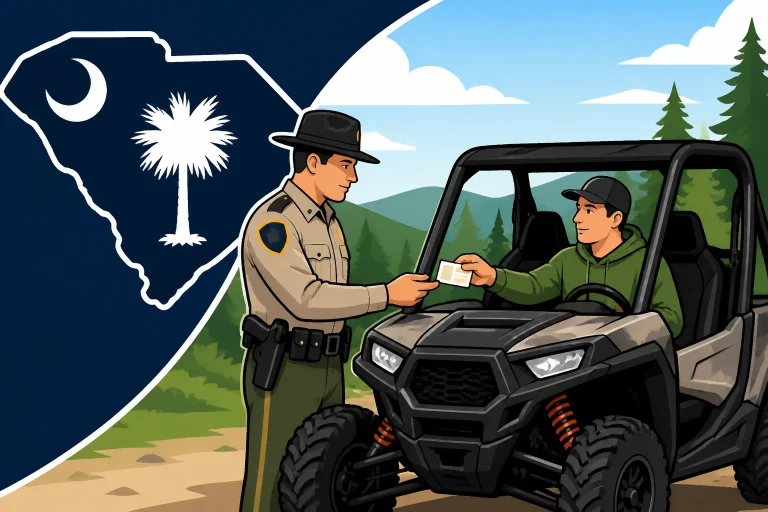
A check may involve staff asking to see the pass, checking the vehicle or license plate information associated with it, and confirming who is using it. Bring a driver’s license, too. That gives staff a way to compare your identity with a pass that is issued to an individual. The exact steps can differ by location and circumstances; don’t assume every stop will look identical.
The pass rules make it important to understand which details are tied to a person and which are tied to a vehicle:
| Pass detail | What to have ready | Common point of confusion |
|---|---|---|
| Day pass | The pass and the tow vehicle’s plate information | A pass associated with one tow vehicle should not be treated as a pass for any vehicle |
| Season pass | The pass and the rider’s identification | A season pass is per person and non-transferable |
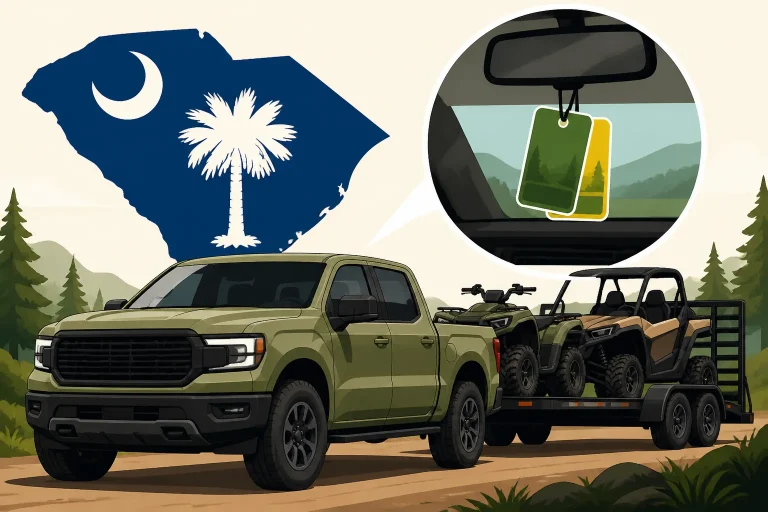
| Pass display | The printed pass displayed in the tow vehicle as required | A pass stored on a phone may not replace required display |
| Trail access | The pass plus confirmation that the trail is open and suitable for your machine | A pass does not make a closed or restricted trail available |
For more on those distinctions, see South Carolina Day Passes Tied to a Plate, South Carolina Season Passes Are Per Person and South Carolina Pass Display Rules. Those details matter when a group arrives in more than one truck, changes tow vehicles at the last minute, or shares equipment among riders.
A forest pass is not a general permit to ride anywhere in the state. It does not give permission to ride on private land, and it does not override trail closures or machine restrictions. In particular, South Carolina WMA Riding Is Prohibited explains why having a hunting license or forest pass does not open wildlife management areas to ATV riding.
What to expect at a weekend stop
The purpose of the stop is usually straightforward: establish that the pass requirement is being met and that the pass shown corresponds to the rider or vehicle it is meant to cover. Staff may approach riders at or near a trail access point, staging area or other place where compliance can be checked. A check is not necessarily a sign that you or your group did something wrong.
Keep the interaction simple. Stop where directed, turn off the machine if asked, and make the pass easy to see. If the pass is displayed in your tow vehicle, tell the staff member where it is rather than leaving the conversation to search for it. If asked for identification, provide it. If there is a mismatch—such as a different plate number or a pass issued to another rider—explain the situation plainly and show any relevant information you have.
A calm, organized response can help resolve an ordinary paperwork question. It does not guarantee that staff will accept a pass that does not meet the rules, so it is better to fix a mismatch before arriving at the trailhead.
A stop may focus on one or more of these things:
- Whether a pass is present. Have the required pass available and follow the display instructions that apply to it.
- Whether the pass matches the visit. A day pass and a season pass are not interchangeable in how their details are associated.
- Whether the person using the pass is the person it covers. Season passes are per person and non-transferable.
- Whether the vehicle information is consistent. A day pass may be tied to the tow vehicle’s plate, so check that information before departure.
- Whether the trail is open and appropriate for your machine. A valid pass does not waive closures, access restrictions or width limits.
For broader preparation, South Carolina License Checks at a Fee Compliance Stop covers the role of identification, and How Rangers Read Your Plate at a Trailhead explains why correct plate details matter. Keep in mind that a compliance check is not the same as a full inspection of every item on a machine. Staff may raise a separate safety or access issue if they observe one, but don’t assume a pass check is a complete equipment inspection.
The key distinction is that a forest pass answers a fee-access question; it does not settle every other rule. A rider can have a valid pass and still be on a closed trail, riding a machine that does not fit a trail’s restrictions, or missing required safety equipment. Check South Carolina Trails That Ban Full-Size Vehicles if you are taking a side-by-side, and confirm current conditions before towing to a trailhead.
How to prepare before you haul
Most avoidable problems are easy to catch at home. Do not wait until you are in a line of vehicles or standing beside a trail to find out that your pass is in the wrong truck, that the plate information does not match, or that a group member has been relying on someone else’s season pass.
Use this checklist before leaving:
- Confirm the destination and its current status. Check the official trail information for closures, access rules and machine restrictions. Weather, maintenance and other conditions can affect whether a route is available.
- Confirm which pass applies. Make sure you understand whether the visit uses a day pass or season pass and which person or vehicle the pass is associated with.
- Check the vehicle details. For a day pass tied to a tow vehicle plate, compare the pass information with the plate on the vehicle you will actually use. If you switch trucks, resolve the issue before you set out.
- Bring identification. Keep your driver’s license accessible for a fee compliance check.
- Display the pass as directed. If a printed pass must be displayed in the tow vehicle, place it where it can be seen without obstructing the driver’s view. A clear document sleeve from an office-supply shop or Amazon can help keep paper in place, but it should not block visibility.
- Brief the whole group. Tell everyone which person holds a season pass, which tow vehicle is associated with a day pass, and where the displayed pass is located.
- Keep proof accessible. Store any purchase confirmation or other relevant information in a place you can retrieve without holding up the stop. Do not rely on a phone screenshot as a substitute for a required printed display.
A little coordination matters especially when several riders travel in separate trucks. A season pass belongs to its named rider, not to the whole group or every person riding in a machine. A day pass associated with a tow vehicle should not be assumed to follow a rider to another vehicle. The details are covered in A South Carolina Pass That Follows the Rider and South Carolina Pass for a Second Machine.
If you use a rented machine, do not assume the rental includes the forest pass you need. Confirm the pass arrangement with the rental provider and check the forest’s current requirements. The pass requirement and the machine’s rental paperwork are separate matters. The same caution applies if you borrow a machine or ride in a group where someone else arranged the permits.
If there is a problem with your pass
If staff say the pass is missing, mismatched or not valid for the visit, listen to the specific issue before responding. It may be a display problem, a plate mismatch, a pass assigned to another person, or a misunderstanding about which pass applies. Ask what detail needs to be corrected and what options are available at that location.
Do not assume you can solve the problem by showing a friend’s season pass, moving a pass between vehicles or continuing to ride while you sort it out. A season pass is non-transferable, and a pass associated with one vehicle or rider should be used only as allowed by its terms. If you cannot demonstrate that the requirement is met, follow the staff member’s direction and pause the ride until the question is resolved.
If you believe the pass information is correct, calmly show the relevant documentation and explain the discrepancy. For example, you might have brought a different tow vehicle than planned or the pass information may not be displaying clearly. Keep explanations factual and avoid arguing about what another rider was allowed to do at a different trailhead. Rules and procedures can differ by pass type and location.
If a citation or other formal notice is issued, read it carefully and use the instructions on that notice to understand what happens next. Do not treat an informal conversation as a substitute for the formal process. If the issue is a purchase or account record, contact the pass provider through its official channel and keep records of the response.
A pass problem can also expose a more general access misunderstanding. Forest access is not the same as access to every public parcel. The forest pass does not grant permission on private timberland, does not open a wildlife management area to riding, and does not override a posted closure. If your route crosses or approaches private property, confirm the landowner’s rules and get permission where needed. South Carolina Public Land Compared to Private is a useful starting point for keeping those permissions separate.
For a smooth weekend, treat the pass as one part of trip preparation, not as the only thing to check. Confirm the trail is open, verify that your machine is allowed, carry your identification, and make sure the pass details match the actual rider and tow vehicle. That simple routine reduces confusion at a compliance stop and helps keep the group focused on the ride.
Disclaimer
This article is for general informational purposes only and does not constitute professional advice. Laws, prices and regulations vary by location and change over time. Consult a qualified professional for guidance on your specific situation.