South Carolina Pass Display Rules
If you’re riding a South Carolina national forest OHV trail, buying the right pass is only part of the job: it also has to be displayed or matched to the correct vehicle. The key distinction is that an annual pass is tied to a rider, while a day pass is tied to the tow vehicle’s plate. Here’s how to handle each so a trailhead check is straightforward.
What South Carolina forest passes are tied to
A forest pass is for access to designated OHV trails, not a substitute for a vehicle title, road registration, insurance, or permission to ride somewhere else. South Carolina’s national forest OHV trails have their own pass requirements. For the trail systems and access details, see South Carolina National Forest OHV Passes and South Carolina’s Four National Forest Trails.
The main display question depends on which pass you bought:
| Pass type | What it is associated with | What to have ready at the trailhead |
|---|---|---|
| Season pass | The individual rider; it is not transferable to another person | The printed pass displayed as instructed, plus identification if requested |
| Day pass | The tow vehicle’s license plate | The printed pass and the vehicle whose plate was used for the purchase |
The distinction matters when a group travels together. A season pass should not be treated as a shared vehicle pass that anyone in the truck can use. It belongs to the named rider. A day pass, by contrast, is checked against the tow vehicle’s plate, so using the wrong vehicle can create a mismatch even if the pass itself was purchased.
Passes are sold online, and the purchase and display directions can depend on the pass type. Before heading out, review How to Buy a South Carolina Forest Pass and South Carolina Passes Sold Only Online. If you already have a pass, follow the instructions that came with it rather than assuming that a phone screen or receipt will serve as the pass.
A forest pass is also separate from permissions and rules for private parks, wildlife management areas, and other public land. Having a valid pass does not open a trail that is closed, authorize riding outside a designated route, or replace a private landowner’s permission. South Carolina Public Land Compared to Private explains why the type of land matters.
Displaying a season pass
A South Carolina forest season pass is associated with one rider, not transferred from one person to another. If several people in a group ride, each rider should understand which pass applies to them and carry or display their own pass as directed. One rider should not buy a season pass and expect the rest of the group to use it in rotation.
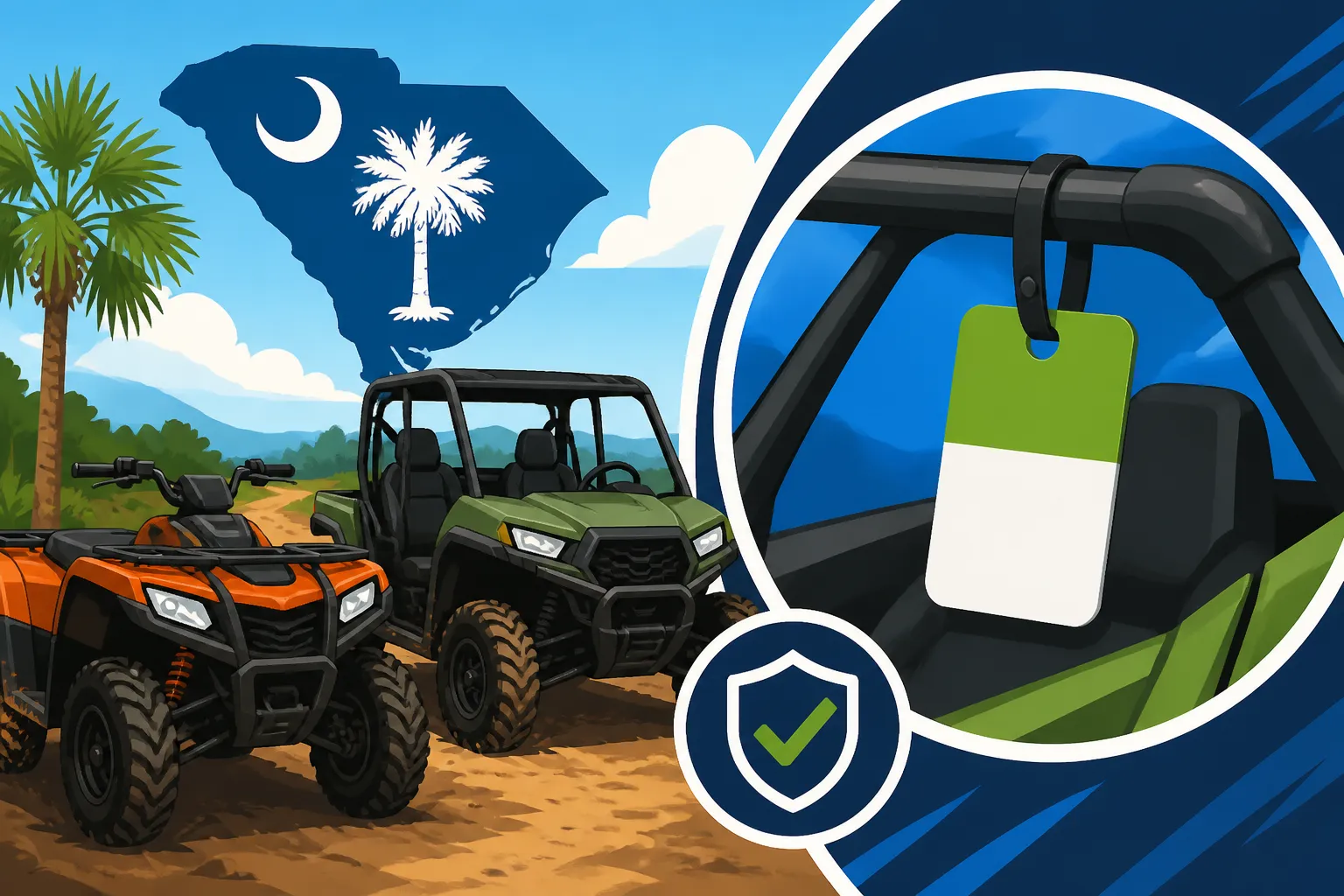
Print the annual pass and follow its display instructions in the tow vehicle. The practical purpose is to make the pass available for a trailhead or fee-compliance check while the machine is being transported. The annual pass display guidance is covered in South Carolina Annual Passes Displayed in a Tow Vehicle and Printing Your Annual Pass for the Tow Vehicle.
Put the pass where it can be checked
If the instructions call for the printed pass to be placed on the dashboard, leave it visible from outside the vehicle. Keep it flat and readable, rather than folded under other papers or buried in a glove compartment. Do not place it where it blocks the driver’s view. If the pass has a rider’s name or other identifying information, make sure it remains legible.
A clear sleeve or transparent document holder can help protect a paper pass from moisture, dust, or a wet dashboard. Whatever you use, do not cover information that an officer or ranger may need to read. A phone photo can be useful as a backup, but it is safer to carry the required printed pass when the directions call for one. A screenshot of a purchase confirmation is not necessarily the same thing as the pass.
Keep the right rider with the right pass
If the named rider is riding, that person should be available to show the pass and identify themselves if asked. This is especially useful when a group shares a tow vehicle or arrives in separate vehicles. Do not rely on a pass left in a truck if the rider it belongs to is somewhere else in the group and cannot readily confirm it.
Passes are generally not transferable between people or vehicles when the pass terms say they are not. See South Carolina Passes Are Non-Transferable and A South Carolina Pass That Follows the Rider for the season-pass distinction. If someone joins the ride at the trailhead, check whether that rider needs a separate pass rather than assuming the group’s existing pass covers them.
Displaying a day pass
A day pass is associated with the tow vehicle’s license plate. Use the plate for the vehicle that will actually transport the machine to the trailhead, and check it carefully before completing the purchase. A typographical error, a vehicle swap, or towing with a different truck can make the pass details and the vehicle present at the trailhead disagree.
Keep the printed day pass available and display it as directed. Staff may compare the pass information with the tow vehicle, so the vehicle needs to be the one connected to the purchase. The details are addressed in South Carolina Day Passes Tied to a Plate, Day Passes Checked Against Your Tow Vehicle Plate, and Leaving a Printed Pass on Your Dashboard.
If you change tow vehicles
If your plans change after buying a day pass, do not assume the pass automatically transfers to another truck. Check the pass terms or contact the official seller before driving to the trail. The same caution applies if you rent a tow vehicle, borrow one from a friend, or switch to a different vehicle in your household.
The machine you ride and the vehicle used to reach the trailhead are not necessarily the same thing. A day pass tied to a tow vehicle plate should not be treated as a pass attached to the ATV or UTV’s VIN. Make sure the plate shown on the pass matches the vehicle that arrives, and keep the pass with that vehicle during the visit.
If you are bringing more than one machine or more than one tow vehicle, check the current pass instructions before purchase. Do not infer that one day pass covers every vehicle in a convoy simply because the riders are traveling together. The governing instructions for the specific pass control.
Before leaving home and at the trailhead
A short check before departure can prevent an avoidable delay. Confirm the pass type, its rider or vehicle association, and the display requirement. Then check the trail’s current operating status separately; a valid pass does not guarantee that a trail is open.
- Confirm the trail and pass type. Make sure the pass is for the intended national forest OHV trail and visit date. Do not confuse a forest pass with a private riding-area admission or another kind of permit.
- Check whose information is on the pass. For a season pass, confirm that the rider using it is the person associated with it. For a day pass, check the tow vehicle’s plate.
- Print the pass if required. Keep the printed copy intact and readable. Bring a backup copy if practical, but do not assume a receipt or phone image replaces the required pass.
- Display it as instructed. Place it where it can be checked from outside the tow vehicle if that is what the instructions require, while keeping the driver’s sightlines clear.
- Bring identification and purchase details. These can help resolve a question if the pass information or plate is difficult to read. They do not replace the pass.
- Check trail conditions and closures. A pass does not override a temporary closure, seasonal restriction, or trail-specific vehicle limit. See South Carolina Trail Conditions Before You Haul and Why Forest Trails Close on Short Notice.
At a fee-compliance stop, stay calm and make the pass easy to inspect. If an officer or ranger asks, show the printed pass and the relevant vehicle or rider information. If a pass appears to be missing or does not match, explain the situation and follow the official instructions rather than altering the pass or relying on someone else’s credential.
If a pass is lost, damaged, or printed with incorrect information, contact the official seller before riding to ask what correction or replacement process applies. Keep any confirmation of the purchase until the problem is resolved. Replacement procedures and acceptable display methods can vary, so do not count on a handwritten note or a screenshot being accepted.
The simplest rule is to match the pass to what it covers: display a season pass for the rider it belongs to, and use a day pass with the tow vehicle whose plate is connected to it. Print and position the pass according to its instructions, then check the trail’s status before you haul.
Disclaimer
This article is for general informational purposes only and does not constitute professional advice. Laws, prices and regulations vary by location and change over time. Consult a qualified professional for guidance on your specific situation.