South Carolina License Checks at a Fee Compliance Stop
South Carolina License Checks at a Fee Compliance Stop
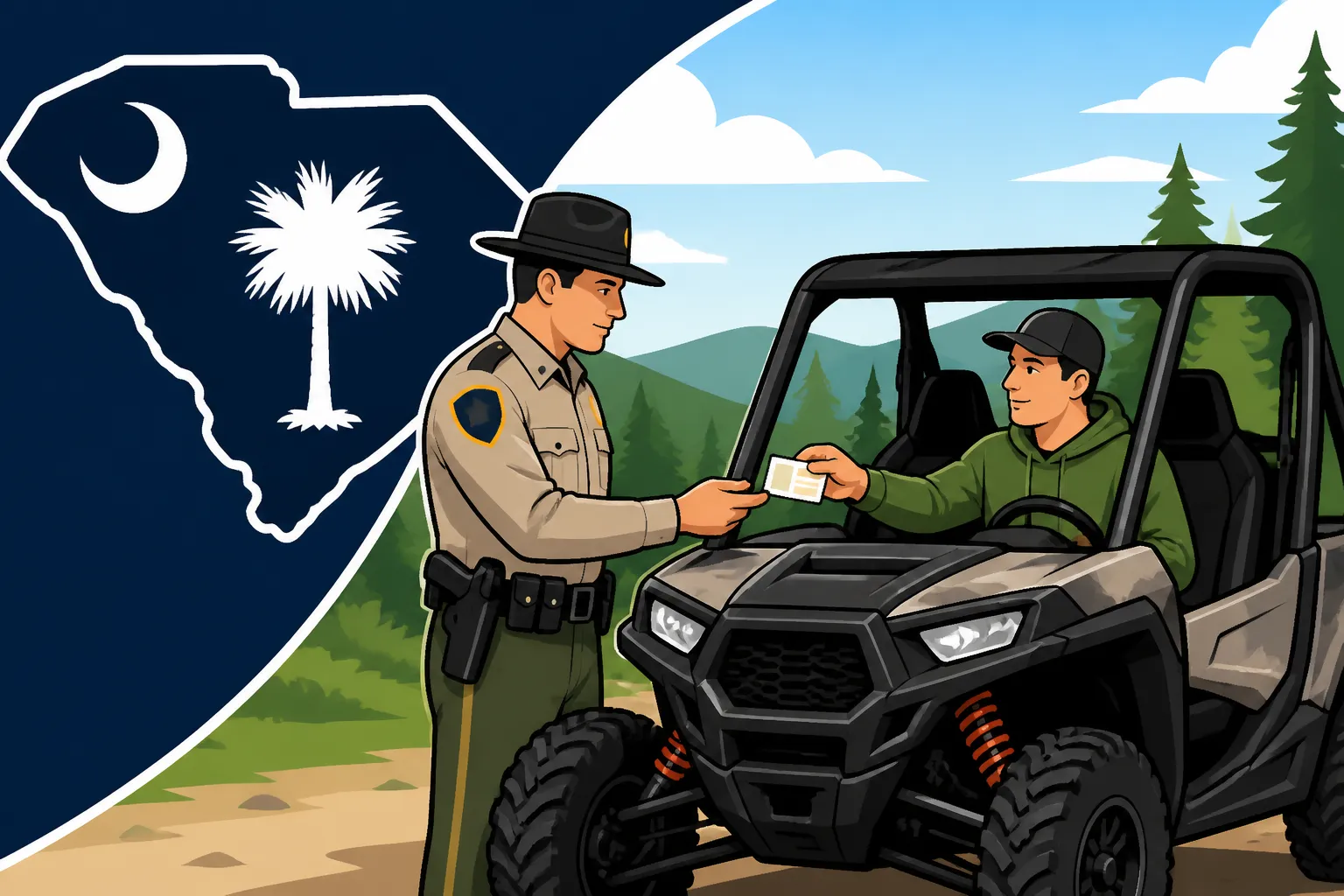
A fee compliance stop at a South Carolina national forest trailhead can feel like a traffic stop, but its purpose is usually to confirm that riders have the required pass and are using it correctly. Knowing what a ranger may check, what to keep handy and how pass rules work can make the stop quicker—and help you avoid a trip back to the trailhead.
What a fee compliance stop checks
A fee compliance check is about whether the required forest-use fee has been paid for the vehicle or rider using the trail system. It is separate from a general roadside traffic stop and from the rules at a private riding park. A ranger or other authorized official may check the pass, compare it with the vehicle or rider it applies to, and ask questions needed to confirm that it is valid.
South Carolina’s national forest OHV trails operate under pass requirements. The forest pass program covers the designated trails, including Enoree, Parsons Mountain, Cedar Springs and Wambaw. Rules for a pass can vary by pass type, so do not assume that a pass bought for one person, vehicle or outing automatically covers everyone in your group. For an overview of the different passes, see South Carolina National Forest OHV Passes.
A fee check does not, by itself, mean you have been accused of a violation. It may be a routine check at a staging area or trail access point. The official may want to verify that the pass is present and that its terms match the rider and vehicle being used.
That can involve more than looking for a piece of paper or a displayed pass. Depending on the pass you bought and its display instructions, an official may need to confirm:
- Which rider or vehicle the pass is assigned to
- Whether the pass is valid for the day or season
- Whether the vehicle information matches the pass record
- Whether the pass is displayed or carried as required
- Whether the person using a non-transferable pass is the person it was issued to
A fee compliance check is not the same thing as checking whether a machine is registered for public-road use. Off-road trail access, street use and private-property use are different situations. A forest pass does not make an ATV street legal, and a title or road plate does not replace a required trail pass. If you are sorting out which rules apply to an off-road machine, South Carolina Permit Questions Riders Ask gives a broader starting point.
What to have ready when an official approaches
The simplest way to make a stop go smoothly is to know where your pass is and understand what it covers before unloading. Keep the relevant pass information accessible rather than buried under riding gear, tools or camping supplies.
Have the pass details available
Pass requirements can depend on the product you purchased. A day pass and a season pass may not be used in the same way. South Carolina forest passes are associated with specific rider or vehicle details, and season passes are per person and non-transferable. A day pass may be tied to the tow vehicle’s plate information. Check the instructions attached to your pass and follow them rather than relying on what another rider says they did.
If the pass is digital or its purchase record is available online, keep the confirmation or other required proof accessible. If the pass instructions require a printed copy or a particular display location, follow that direction. Do not assume that a receipt alone satisfies a display rule, or that a displayed pass is enough if the terms also require the pass holder to be present.
For an annual pass, the tow vehicle display requirement matters even if the ATV or UTV is the machine going onto the trail. The vehicle carrying the machine may be part of how the pass is verified. For a day pass, make sure the plate information used when buying it matches the tow vehicle you brought. See South Carolina Day Passes Tied to a Plate for why that detail matters.
Carry identification, but distinguish it from a pass
An official may ask for identification while confirming who is using a pass. Having a driver’s license or other appropriate identification within reach can help establish that the person present is the pass holder. That is different from saying a driver’s license is the trail pass: it is not.
Do not treat the identification request as proof that every off-road rider must have a road driver’s license just to ride a forest trail. Trail-pass rules and operator licensing rules are separate questions. Age, supervision, safety-course and equipment requirements may apply to riders even when a conventional road license is not the issue. For the age and course rules, see South Carolina Safety Courses for Riders 15 and Under and South Carolina Has No Adult Course Requirement.
If the person who purchased a non-transferable season pass is not riding with the group, do not assume another person can use that pass instead. A family member’s or friend’s pass may not be transferable simply because the group arrived together or shares the same tow vehicle.
Make the vehicle information easy to confirm
Before departure, check the pass record against the actual tow vehicle. A digit entered incorrectly, a plate change or a different vehicle than expected can complicate verification. If your setup has changed since you purchased the pass, review the official instructions and resolve the mismatch before heading to the trail.
A plate check does not mean officials are asking you to register an off-road ATV with the state. It may be used to match a day pass to the tow vehicle listed with that purchase. The details are important because a pass is not necessarily a general admission ticket that can be moved freely between vehicles or riders. More on the check is available in How Rangers Read Your Plate at a Trailhead.
How to respond during the stop
A calm, organized response is usually the most practical approach. Stay with your vehicle unless the official tells you otherwise, listen to the request, and provide the pass information being asked for. If your group has several machines or pass holders, explain clearly which pass goes with which person or vehicle.
A straightforward sequence can help:
- Stop safely and follow directions. Do not drive away, unload a machine or move through a controlled access point while an official is speaking with you.
- Identify the pass holder. If the pass is assigned to an individual, have that person available to answer questions.
- Show the pass or its required proof. Use the form of proof and display method specified in the pass instructions.
- Provide the matching vehicle details. If the pass is linked to a plate, point out the tow vehicle and let the official compare the information.
- Answer questions accurately. If you are unsure about a pass term, say so rather than guessing.
- Ask for clarification if something does not match. A calm question about the specific issue can help you understand whether the problem is a missing display, a mismatched plate or a pass that does not cover the person using it.
A fee check is a poor moment to debate every forest rule or rely on an online comment. If you think the official has misunderstood your pass, explain the facts plainly and ask what part of the pass requirement is not being met. Keep the conversation respectful. If you receive a citation or formal notice, read it carefully and follow the instructions for responding; do not assume that an informal conversation at the trailhead resolves it.
A pass check may happen alongside other safety or access checks, but those are not all the same thing. An official might also ask about machine equipment or whether you are on an approved trail. A valid pass does not grant permission to ride on closed land, an unauthorized road or a wildlife management area where ATV use is prohibited. For land-access distinctions, see South Carolina Public Land Compared to Private and South Carolina WMA Riding Is Prohibited.
If you are visiting from another state, do not assume an out-of-state registration or recreational pass substitutes for the South Carolina forest pass. Reciprocity questions and trail-fee requirements are separate. Check South Carolina Rules for an Out-of-State Machine before travelling, and verify the current forest pass instructions for your intended trail.
Common reasons a pass check becomes complicated
Most avoidable problems come from misunderstanding who or what a pass covers, rather than from a complicated dispute. Review these situations before leaving home.
| Situation | Why it can cause a problem | Practical step |
|---|---|---|
| The season-pass holder is absent | Season passes are per person and non-transferable | Make sure the assigned rider is present and using the pass |
| The day-pass plate does not match | The pass may be associated with the tow vehicle’s plate | Check the plate information entered at purchase |
| The pass is not displayed as instructed | Officials may be unable to verify it promptly | Follow the exact display and proof instructions |
| A receipt is mistaken for the pass | A purchase receipt may not satisfy every pass condition | Check what the pass instructions require you to show |
| The group assumes one pass covers everyone | Pass coverage depends on its terms, not just group size | Confirm whether each rider or vehicle needs separate coverage |
| A private-park pass is presented at a forest trail | Private riding areas and national forests have separate systems | Use the pass required by the specific riding area |
| The rider thinks a road plate replaces the forest pass | Road registration and forest fee compliance serve different purposes | Carry the required trail pass even if the machine has a plate |
| The group arrives at a closed trail | A pass does not override a closure or access restriction | Check current trail status before hauling out |
A mismatch is not always deliberate. Someone may have bought a day pass using a different tow vehicle, switched trucks at the last minute or misunderstood whether a pass followed the rider or the plate. Those mistakes can still leave the group unable to demonstrate that the pass applies to the outing. The fix is to check the terms before the trip, not to hope that an official will accept an explanation afterward.
The forest system is also distinct from private riding parks. Private parks set their own access, pass, vehicle and rider requirements. A private-park wristband or entry record should not be treated as a national forest OHV pass. Likewise, a forest pass does not grant admission to a private park. Before choosing a destination, confirm the fee system and access rules for that specific property.
Trail access can change independently of pass status. A paid pass does not guarantee that a route is open on the day you arrive. Maintenance, weather, safety concerns or other land-management decisions may affect access. Check the latest information before towing a machine to a trailhead; Why Forest Trails Close on Short Notice explains why a previously open route may not remain available.
Prepare before you tow
A few minutes of preparation can prevent a long delay at the trailhead. The useful checks are simple: confirm the riding area, buy the correct pass through the accepted channel, verify the pass details, and make sure the people and vehicles in your group match those details.
Confirm the destination and pass type
Start with the specific trail system, not just the general label “South Carolina trails.” Forest trails, private parks and other public lands can have different fees and access rules. A pass for one system does not automatically work elsewhere.
Then confirm whether you need a day or season pass and how it is assigned. South Carolina forest passes are sold online through the designated sales channel, and the relevant purchase information should be checked directly before you go. Do not rely on old screenshots or advice from a previous season when pass instructions may have been updated.
Check every detail before leaving
Before loading, compare the pass information with your actual plan:
- Is the pass for the forest or park you are visiting?
- Does it cover the rider, vehicle or outing as required?
- Is the person named or assigned to a season pass going?
- Does the tow vehicle plate match the day-pass record, if applicable?
- Is the pass displayed or carried in the required way?
- Does the group have the identification and purchase details needed for verification?
- Is the selected trail open, and is your machine permitted on it?
Keep a photo or copy of relevant details only if it helps you retrieve them; do not assume a photo replaces an official display requirement. If the pass record needs correction, contact the official sales or land-management channel before travelling. An officer or ranger at a compliance stop may not be able to amend a purchase on the spot.
Keep separate paperwork separate
Riders sometimes carry a stack of documents and assume that one item will answer every question. It helps to keep them organized by purpose:
- Forest pass information shows compliance with the trail-use fee.
- Machine ownership paperwork relates to ownership, but may not be the only way ownership is established for an off-road machine.
- Road registration or a plate relates to road use where applicable.
- Identification helps establish who is present.
- Insurance information may be relevant to a different vehicle category or road-use requirement.
A fee check is not a substitute for knowing the rules that apply to the machine itself. A street-legal UTV, a trail-only ATV and a golf cart can fall under different requirements. A forest pass does not resolve questions about road use, insurance, registration or operator age. If the machine is intended for public roads, review the applicable rules separately, including South Carolina Street UTV Insurance Rules.
Frequently Asked Questions
Does a fee compliance stop mean I am in trouble?
Not necessarily. A stop may be a routine check to confirm that riders have the required forest pass and that it applies to the person or vehicle using the trail. Follow directions and provide the pass information requested.
Does a driver’s license count as a forest pass?
No. Identification and a forest pass serve different purposes. An official may ask for identification to verify who is using a pass, but identification does not replace the required trail-use pass.
Can I use someone else’s season pass?
Do not assume so. South Carolina forest season passes are per person and non-transferable. The assigned pass holder should be the person using the pass.
Does a day pass follow my ATV to another tow vehicle?
A day pass may be tied to the tow vehicle’s plate information. Check the pass terms and make sure the information matches the vehicle you bring. Do not assume it transfers automatically.
Does a forest pass let me ride anywhere in South Carolina?
No. It applies to the designated forest trail system under its terms. It does not authorize riding on closed routes, wildlife management areas where ATV use is prohibited, private land without permission or public roads where the machine is not legally allowed.
Disclaimer
This article is for general informational purposes only and does not constitute professional advice. Laws, prices and regulations vary by location and change over time. Consult a qualified professional for guidance on your specific situation.