The First Hour After an ATV Crash
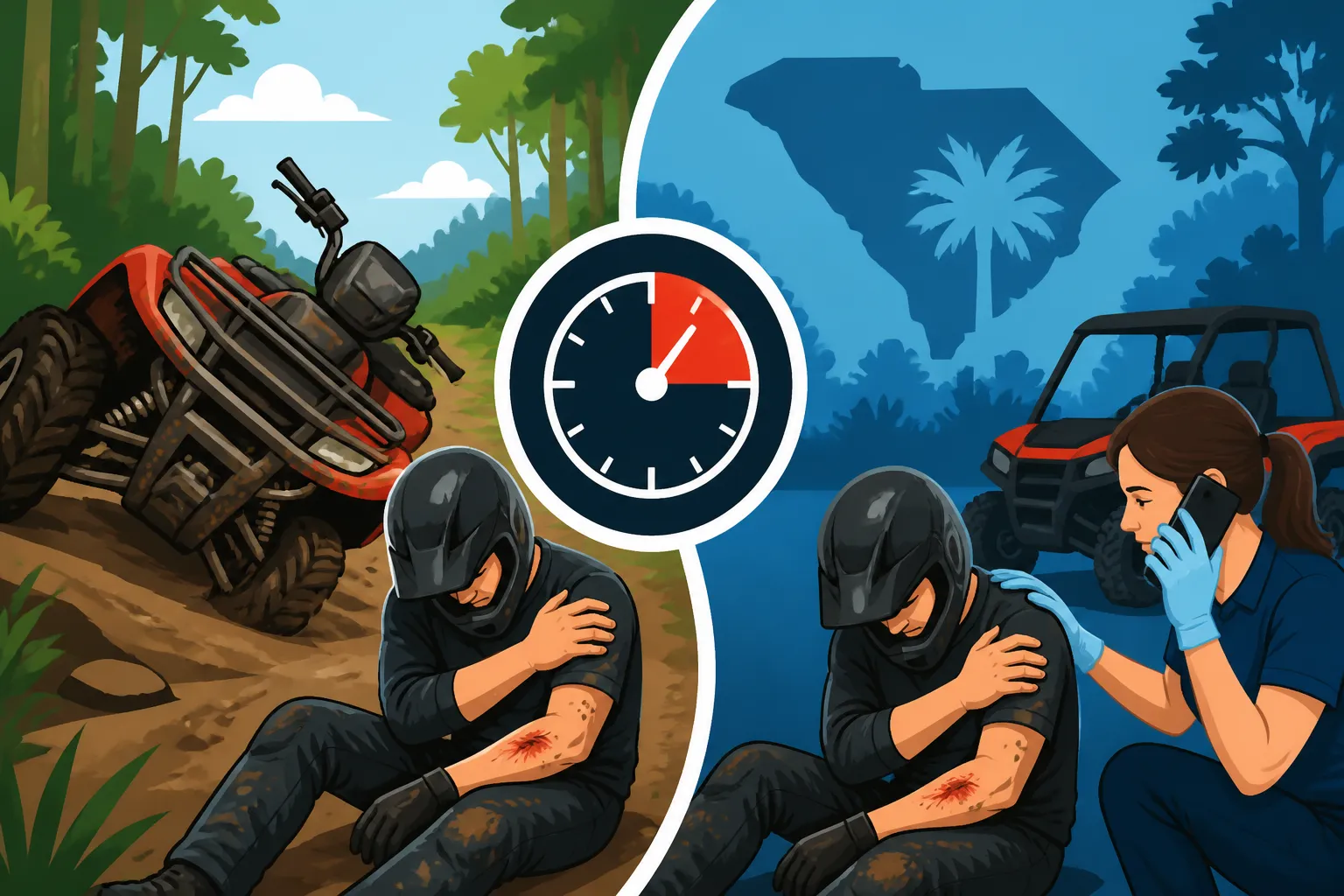
A crash on a South Carolina trail can turn a good ride into a confusing scramble: someone may be hurt, machines may block the path, and everyone is trying to remember what to do next. The first hour is for safety, medical help, clear communication, and preserving useful information—not rushing back onto the trail or deciding who was at fault.
First minutes after an ATV or UTV crash
Make the scene safer before approaching
Take a breath and look for immediate hazards before moving toward the rider. Watch for traffic, unstable machines, fire, leaking fuel, downed trees, steep slopes, water, and other riders coming around a blind bend. If you can do so safely, shut off the machines and keep bystanders away from fuel, hot components, and moving traffic. Ask someone to warn approaching riders from a safe distance.
Do not put yourself at risk trying to lift a vehicle or reach someone in a dangerous position. A UTV on its side, for example, can shift unexpectedly, and a machine near a creek bank may slide if someone pulls on it. If the scene is unstable or the injured person may be in danger, tell the 911 dispatcher exactly what you see and follow their instructions.
If you’re riding in a group, give people clear jobs. One person can call 911, another can meet responders at the trail entrance, and another can keep the scene clear. On a remote forest road or trail, a vague location can cost time. Use the trail name, nearest entrance or staging area, road markers, a map pin from a phone, and any recognizable landmark. If you’re at a managed park, ask someone to contact park staff as well as emergency services.
Check the rider without making an injury worse
Speak calmly and ask the person to tell you their name and what hurts. Check whether they are responsive and breathing normally. If they are not breathing normally, or you cannot tell, call 911 and follow the dispatcher’s directions. If someone trained in CPR or first aid is present, ask them to help.
Treat a head, neck, or back injury as possible even if the rider says they feel fine. A helmet, shoulder, or back impact can leave someone confused or shaken, and adrenaline can temporarily mask pain. Unless there is immediate danger—such as fire, oncoming traffic, or a machine that could shift—avoid moving the rider or removing their helmet. Keep them as still and comfortable as possible while waiting for help.
Heavy bleeding needs prompt attention. If you can do so safely, use clean gauze or cloth and apply firm, steady pressure to the wound. Do not press directly on an embedded object; apply pressure around it instead. If the person becomes pale, clammy, weak, confused, or unusually drowsy, tell the dispatcher. For more on the information that may matter after a collision, see [South Carolina Accident Reporting for an ATV Crash].
Call for help and communicate clearly
When to call 911
Call 911 if anyone is seriously injured, unconscious, confused, having trouble breathing, bleeding heavily, or experiencing severe pain. Call if you suspect a head, neck, or back injury, or if the crash involves a child, a trapped rider, fire, or another immediate hazard. When you’re unsure whether an injury is serious, explain what happened and let the dispatcher help assess the situation.
Give the dispatcher a concise account: how many people are hurt, whether anyone is trapped or unresponsive, what hazards are present, and how responders can reach you. Mention if the crash is on a trail with limited vehicle access. Don’t hang up until the dispatcher says you can. If the injured person’s condition changes, call back or update the dispatcher.
A minor-looking crash can still deserve medical attention. A person who walked away may later notice worsening pain, dizziness, nausea, numbness, or difficulty concentrating. Encourage anyone who hit their head or feels unwell to be evaluated by a medical professional. Don’t let embarrassment, a long drive, or concern about delaying the group decide the issue.
Prepare for responders to find you
Remote riding areas can be difficult to describe, especially when trails split or cell service is weak. Send a location pin if you can, but don’t rely on it as the only directions. Write down or say the nearest named road, trailhead, gate, staging area, or campground. If a group member can safely reach a more accessible entrance, send them to meet responders and guide them in.
Keep one person available to answer the phone. Emergency crews may need a callback, a clearer route, or details about the rider’s condition. Make space for responders to work, and move other machines only when doing so is safe and does not interfere with care. If the crash happened on a road, stay out of traffic and use hazard lights or other safe warnings where appropriate.
Do not assume that a familiar trailhead is obvious to someone who has never been there. If you ride somewhere regularly, it helps to discuss an emergency meeting point before setting out. Carrying a paper map can also help when phone service drops; [Carrying a Paper Map in a Carolina Forest] covers why a backup location reference can be useful.
After the injured person is receiving care
Record basic facts without delaying medical help
Once immediate care is underway, write down what you remember while the details are fresh. Note the approximate time and location, trail or road conditions, weather, direction of travel, and what happened immediately before the crash. Record the names and contact details of witnesses if they are willing to share them. Keep the notes factual—“the front tire slid on wet clay” is more useful than a guess about blame.
Take photographs only when it is safe and does not interfere with responders. Useful images may include the overall scene, the trail surface, visibility, damage, and where the machines came to rest. Avoid moving an injured person or disturbing evidence just to get a better picture. Don’t post photos or speculate about fault on social media while people are still dealing with the crash.
If law enforcement or park staff attend, provide accurate information and ask how to obtain any report or incident reference. Reporting requirements and procedures can depend on where and how the crash happened, so don’t assume every trail incident follows the same process. Keep receipts, medical paperwork, and any written communications together in one place. If insurance may be involved, notify the relevant insurer and ask what documentation it needs.
| First-hour task | What to do | What to avoid |
|---|---|---|
| Secure the area | Watch for traffic, fuel, fire, and unstable machines | Taking risks to move a vehicle |
| Check the rider | Assess responsiveness and breathing; follow dispatcher guidance | Moving someone with a possible head, neck, or back injury unless danger requires it |
| Get help | Call 911 for serious symptoms, uncertainty, or immediate hazards | Delaying a call because the rider wants to “walk it off” |
| Share the location | Give trail, road, entrance, and landmark details | Relying only on a phone pin |
| Preserve details | Record facts and take safe, relevant photos | Guessing about fault or posting speculation |
Don’t rush to ride again
Even if nobody appears badly hurt, take a pause before deciding what happens next. A rider may be in shock or may not recognize an injury yet. Give the person time to be assessed, and don’t pressure them to continue the ride or drive home if they feel dizzy, confused, weak, or unsteady.
The machine also needs a careful inspection before anyone operates it again. Look for damaged steering, brakes, tires, suspension, fuel lines, battery connections, and safety restraints. A bent component or leaking fluid may not be obvious from a quick glance. If you’re unsure, arrange recovery rather than attempting a trail-side repair that could fail later. This is particularly important after a rollover or hard impact.
Aftermarket accessories are not a substitute for medical care or a professional inspection. If a machine has doors, bumpers, a roof, or other equipment from brands such as SuperATV, note any damage and have the relevant parts assessed before riding again. Even a component that looks intact may have shifted or taken an impact. SuperATV accessories may be part of a machine’s setup, but their presence does not establish that the vehicle or rider is safe after a crash.
Protect riders and reduce confusion on future rides
Make an emergency plan before leaving
A little planning can make the first hour much less chaotic. Before riding, agree on who carries a phone, first-aid supplies, and a map; how the group will regroup if separated; and which entrance a member should use to meet emergency responders. Check whether the area has posted contact or access information, and make sure someone knows where the group is riding.
Carry a first-aid kit that matches the length and remoteness of the ride, and know how to use its contents. At minimum, riders should know how to call for help, control bleeding with direct pressure, and avoid moving someone who may have a serious injury. If you have never taken a first-aid course, consider one before relying on improvised knowledge in a stressful situation.
For forest and trail riding, also plan around access limits. A trail may be narrow, muddy, or closed to certain vehicle types, and a large group may take longer to move out of the way. Check current access information before hauling out, and review [South Carolina Trail Conditions Before You Haul] and [South Carolina Trail Closures After Rain] when planning a ride. Conditions that seem manageable on the way in can complicate an emergency response later.
Build safer habits into the ride
Ride at a speed that leaves room to react to blind corners, loose surfaces, washouts, and other trail users. Keep enough distance between machines to avoid running into a rider who brakes suddenly or loses control. On a group ride, agree on signals and stopping points so a rider who falls behind isn’t left to guess which direction everyone went.
Wear protective equipment that fits and is in good condition. A helmet that has taken a significant impact should be evaluated and replaced when appropriate; don’t assume it is still protective because the outer shell looks fine. Make sure passengers use the vehicle’s intended seating and restraints, and avoid carrying people in positions that the machine was not designed for. A properly packed first-aid kit and a charged phone are useful, but they cannot compensate for unsafe riding choices.
If you’re organizing a longer outing, share the route and expected return time with someone who is not riding. Review the group’s emergency plan at the trailhead, not after a crash. These small steps are easy to skip when everyone is eager to get moving, but they make it easier to respond calmly if a ride goes wrong. For more on preparing for a remote outing, see [First Aid on a Long Carolina Loop] and [South Carolina Group Ride Planning].
Disclaimer
This article is for general informational purposes only and does not constitute professional advice. Laws, prices and regulations vary by location and change over time. Consult a qualified professional for guidance on your specific situation.