South Carolina Rules for Towing a Trailer
It’s a common scenario: you’ve got a job to do, whether it’s hauling firewood on your hunting lease, moving tools across your property, or maybe even wanting to take a small utility trailer to the dump. You look at your trusty ATV or UTV, perfectly capable of pulling a load, and wonder: what are the actual rules for towing a trailer in South Carolina? Many riders get confused about where they can tow, what equipment they need, and what the law says, especially when public roads are involved. This guide is going to walk you through everything you need to know about legally and safely towing a trailer with your off-road machine in the Palmetto State.
Understanding South Carolina's ATV and UTV Road Rules
Before you even hitch up a trailer, it’s absolutely essential to understand the fundamental laws governing where ATVs and UTVs can operate in South Carolina. This forms the bedrock of whether you can legally tow anything on a public thoroughfare. Getting this wrong can lead to serious headaches, from fines to accidents, and nobody wants that.
Off-Road Machines and Public Roads
Let’s be clear from the start: standard All-Terrain Vehicles (ATVs) are generally not street-legal in South Carolina. These machines are built for dirt, mud, and trails, not paved highways. This means that if your machine is a traditional ATV, designed purely for off-road use and not specifically modified and registered for street use, you cannot legally operate it on public roads, streets, or highways in South Carolina. Period.
This general prohibition extends directly to towing. If your ATV can’t be on the road, then it certainly can’t be on the road pulling a trailer. Imagine trying to explain to a state trooper why your trail quad is hauling a utility trailer down a county road. It’s simply not going to fly. While you might use your ATV to haul a deer out of the woods on a private hunting lease, or pull a small cart of tools around your farm, these activities occur strictly off the public road system. The laws are designed to keep these powerful, often quick-steering machines where they belong – off the pavement and in the dirt. If you're curious about the overarching rules, check out [Can You Ride an ATV on the Road in South Carolina?].
The primary legislation governing ATVs in the state, often referred to as [Chandler's Law and South Carolina ATV Rules], focuses heavily on rider safety and off-road operation, with no provisions for general street use or towing on public roads. This means that for the vast majority of ATV owners, any towing activity will be confined to private property or designated off-road areas. You won’t find a section in the South Carolina code about [South Carolina Has No Off-Road ATV Registration] that permits towing a trailer on Main Street.
Street-Legal UTVs and Their Towing Privileges
Now, this is where things get a bit more nuanced. In recent years, South Carolina has introduced legislation allowing certain Utility Terrain Vehicles (UTVs), often called side-by-sides, to become street-legal. This is a game-changer for many UTV owners who want to use their machines for both recreation and utility on and off the pavement. If your UTV meets all the requirements to be designated a "street-legal UTV" and you've gone through the proper [South Carolina Street-Legal UTV Registration Arrives] process, then the possibilities expand.
A properly registered and plated street-legal UTV can operate on certain public roads in South Carolina. This includes roads with a speed limit of 55 mph or less, and it comes with other specific rules, like those outlined in [South Carolina Street UTV Road Speed Limits]. Because these machines are recognized as road-worthy vehicles, they fall under a different set of rules regarding towing.
If your UTV is street-legal, it can, in principle, tow a trailer on public roads, just like any other motor vehicle. However, this isn't a free pass. The trailer itself must meet all road-legal requirements, including proper lighting (brake lights, turn signals), safety chains, and potentially its own braking system depending on its weight. And, critically, the UTV’s manufacturer-specified towing capacity still applies and must never be exceeded. While a street-legal UTV opens up road access, it doesn't exempt you from standard towing safety and legal requirements that apply to all vehicles on the road.
Towing on Private Land vs. Public Roads
The distinction between private land and public roads is the most crucial factor when it comes to towing a trailer with your ATV or UTV in South Carolina. What's perfectly acceptable on your own property can quickly become illegal and dangerous the moment you roll onto public asphalt.
Private Property: Freedom to Haul
When you're on your own land, a friend's property with permission, a designated off-road park, or a private hunting lease, your ATV or UTV truly shines as a versatile workhorse. On private property, the rules for towing are largely dictated by common sense, safety, and the machine's capabilities rather than strict state statutes.
On a farm, for instance, an ATV or UTV can be invaluable for moving fence posts, hauling feed to livestock, or transporting tools from one field to another. You might use a small utility trailer to bring firewood from the back forty to the house, or perhaps a sprayer rig for gardening. On a hunting lease, a deer cart or small game trailer pulled by your quad makes retrieving that trophy buck a whole lot easier. These are the environments where ATVs and UTVs are designed to operate, and their towing capacities are fully utilized. Many private parks, like Carolina Adventure World or Gulches ORV Park, even allow you to bring small trailers for camping gear or to help with recovery, as long as you follow their specific rules.
In these private settings, while legal constraints are minimal, safety should always be paramount. Overloading your machine, failing to secure your load, or towing at excessive speeds can still lead to accidents, injury, or damage. But from a legal standpoint, as long as you have permission to be on the land, you're generally in the clear regarding state towing laws. This is where exemptions like [South Carolina Farm and Ranch Exemptions] and [South Carolina Hunting and Trapping Exemptions] really make sense, acknowledging the utility of these machines in specific, non-public environments.
Public Roads: Navigating the Restrictions
Stepping onto public roads with an ATV or UTV and a trailer is where things get significantly more restrictive, especially for ATVs. As previously mentioned, a traditional ATV has no business on a public road, and that prohibition extends to towing a trailer. If you attempt to tow a trailer with an ATV on a public road, you're not only breaking the law by operating the ATV on the road, but you're also adding another layer of potential violations related to improper vehicle operation and unsafe towing.
For owners of street-legal UTVs, the situation is different but still demands careful attention. If your UTV is properly titled, registered, insured, and equipped to be street-legal in South Carolina, then it can technically tow a trailer on permissible public roads. However, there are crucial caveats:
- Roads with Speed Limits: Street-legal UTVs are generally restricted to roads with speed limits of 55 mph or less. Towing on any road, especially with a trailer, means you should reduce your speed even further for safety.
- Trailer Legality: The trailer itself must be road-legal. This means it needs to have working brake lights, turn signals, and often reflective tape. It must be securely hitched with safety chains, and its tires must be in good condition. If the trailer is of a certain size or weight, it might also require its own braking system, though this is less common for the smaller utility trailers typically pulled by UTVs.
- Weight Limits: Never exceed the UTV manufacturer's specified towing capacity, including tongue weight. Exceeding these limits can compromise braking, steering, and suspension, leading to loss of control.
- Driver's License: The operator of a street-legal UTV must possess a valid driver's license.
- Insurance: Your street-legal UTV must carry the minimum required liability insurance, which is critical if you're involved in an accident while towing.
While a street-legal UTV provides more flexibility, the state's intent is primarily for general transportation and utility use, not necessarily heavy hauling on public roads. Think about towing a small landscape trailer to pick up plants, or a lightweight boat to a nearby lake – not pulling a substantial construction trailer. Always err on the side of caution and safety when mixing towing and public roads.
Equipment and Safety Considerations for Towing
Regardless of whether you're on private land or, with a street-legal UTV, on a public road, proper equipment and safety practices are non-negotiable for towing. Neglecting these can turn a simple task into a dangerous ordeal.
Essential Towing Equipment
The right equipment is your first line of defense against accidents and machine damage. Most ATVs and UTVs come from the factory with some form of hitch, often a ball hitch or a receiver hitch.
- Hitches: A receiver hitch, common on many UTVs, allows you to swap out different size ball mounts or even use specialized accessories. For ATVs, a simple ball hitch is more common, usually integrated into the frame or swingarm. Make sure your hitch is properly installed and rated for the weight you intend to tow. If you're looking to upgrade your UTV's towing capability, especially if you plan to frequently move heavier loads on your property, companies like SuperATV offer heavy-duty receiver hitches and suspension components designed to handle more demanding tasks. These can provide a more robust connection point and better stability.
- Trailer Types: The type of trailer depends on your task. Common choices include small utility trailers, log trailers, deer carts, small boat trailers, or even dedicated hunting accessories. Ensure the trailer is in good condition, with working lights if you're on a public road, and that its tires are properly inflated and rated for the load.
- Safety Chains: For any road towing, and highly recommended for private land, safety chains are a must. These provide a backup connection if your primary hitch fails. They should be crossed under the tongue of the trailer to cradle it in case of detachment.
- Brakes: For lighter loads pulled by most ATVs and UTVs, trailer brakes might not be required or even available. However, for heavier trailers, particularly those used with street-legal UTVs on public roads, trailer brakes are a crucial safety feature. Always check your UTV's owner's manual for recommendations on when trailer brakes are advised or required.
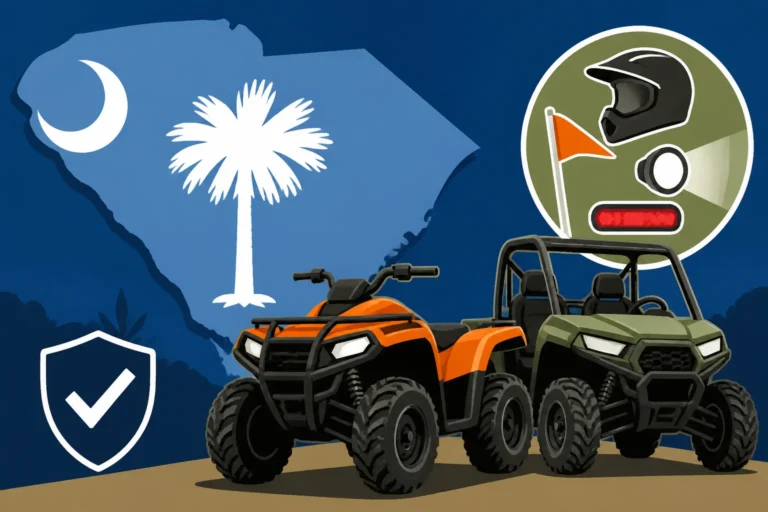
- Lights and Reflectors: If you're towing on a public road with a street-legal UTV, your trailer must have functional brake lights, turn signals, and taillights, plus appropriate reflectors. Even on private property, adding reflectors or a bright flag to your trailer greatly improves visibility, especially in wooded areas or low light.
Safety Practices and Weight Limits
Beyond the right gear, smart towing practices are paramount. This isn’t just about following the law; it's about protecting yourself, your machine, and those around you.
- Know Your Limits: Every ATV and UTV has a manufacturer-specified towing capacity. This is the absolute maximum weight the machine is designed to pull safely. Never, ever exceed this. This information is always in your owner's manual. Exceeding this limit can cause severe stress on the engine, transmission, brakes, and suspension. Even with a robust hitch from a brand like SuperATV, it’s crucial to respect your machine's manufacturer-specified towing capacity.
- Tongue Weight: This refers to the downward force the trailer's tongue exerts on the hitch. Too much tongue weight can lift the front wheels of your ATV/UTV, affecting steering and traction. Too little can cause the trailer to sway violently. A good rule of thumb is 10-15% of the total trailer weight should be on the tongue.
- Secure the Load: This seems obvious, but it's often overlooked. Use straps, ropes, or cargo nets to secure everything in your trailer. Loose items can shift, affecting balance, or even fall out, creating hazards. If you're on a public road, flying debris is a serious infraction.
- Adjust Your Speed: When towing, significantly reduce your speed. Braking distances increase, and your machine's handling characteristics change dramatically. Off-road, adjust speed to terrain, being extra cautious on inclines, declines, and uneven surfaces. On public roads, adhere strictly to [South Carolina Street UTV Road Speed Limits] and always drive slower than the posted limit when towing.
- Visibility: Ensure your trailer doesn't block your ATV/UTV’s lights or your view. Consider using extended mirrors if your trailer is wide. Make sure your trailer's lights are visible and working.
- Braking: Anticipate stops and begin braking earlier. Remember that your machine now has to stop a much heavier load. Avoid sudden braking, which can lead to jackknifing.
- Turns: Take turns wider and slower than usual to prevent the trailer from clipping obstacles or swaying excessively.
Here's a quick checklist for safe towing:
| Category | Private Land Towing (ATV/UTV) | Public Road Towing (Street-Legal UTVs Only) |
|---|---|---|
| Machine Status | Safe operating condition | Fully street-legal, registered, insured |
| Trailer Lights | Recommended for visibility, not strictly required | Required: Brake lights, turn signals, taillights, reflectors |
| Hitch & Ball | Securely attached, rated for load, proper size | Securely attached, rated for load, proper size, safety chains required |
| Weight Limits | Never exceed manufacturer's towing capacity | Never exceed manufacturer's towing capacity and applicable road limits |
| Tongue Weight | 10-15% of total trailer weight | 10-15% of total trailer weight |
| Load Security | Essential to prevent spills and shifting | Essential, securely fastened, cover loose items for road travel |
| Speed | Adjust to terrain, reduce significantly with load | Strict adherence to UTV road speed limits, reduce for towing |
| Visibility | Use flags, reflectors as needed | Ensure trailer lights are visible, consider extended mirrors |
| Driver's License | Not required by state law (but recommended skill-wise) | Required: Valid driver's license |
Legal Consequences of Improper Towing
Ignoring South Carolina's towing rules, especially on public roads, can lead to more than just a ruined day. The legal consequences can range from costly fines to serious liability issues in the event of an accident. It's simply not worth the risk.
Penalties and Citations
If you're caught towing a trailer improperly with an ATV or UTV on a public road, you could face a cascade of penalties. First, if you're on a non-street-legal ATV, the primary violation is operating the vehicle itself on a public road. This alone can result in fines and potentially impoundment of your machine. South Carolina's off-road laws, specifically [South Carolina Equipment Requirements for ATVs], make it clear that ATVs are for off-road use.
Adding an improperly equipped or loaded trailer to this scenario only compounds the problem. Potential citations could include:
- Operating an unregistered or non-street-legal vehicle: For ATVs, this is almost always the case. For street-legal UTVs, if you've let your registration lapse or don't have the proper plate, you're in violation.
- Unsafe equipment: This could relate to the hitch, trailer lights, safety chains, or general condition of the trailer itself.
- Improperly secured load: If anything falls off your trailer, or is not tied down correctly, that's another ticket.
- Exceeding posted speed limits (for street-legal UTVs): Even if your UTV is street-legal, if you're towing too fast, you'll be ticketed.
- Driving without a valid driver's license (for street-legal UTVs): A basic requirement for any road-legal vehicle.
Fines for these types of violations can vary, but generally, [South Carolina Fines of $50 to $200] are common for many ATV-related infractions. A deputy who pulls you over will likely ask to see specific paperwork, as detailed in [What a South Carolina Deputy Can Ask to See], and if your machine or trailer isn't up to snuff, you'll be facing a citation. Repeated offenses or more severe violations could lead to higher fines, court appearances, and even suspension of driving privileges for road-legal vehicles.
Insurance and Liability Issues
Perhaps the most daunting consequence of improper towing is the potential for insurance and liability nightmares. Your off-road machine's insurance policy is designed to cover specific types of incidents in specific environments.
- Lack of Coverage: If you're operating a non-street-legal ATV on a public road, whether towing a trailer or not, it's highly probable your insurance policy will deny any claims arising from an accident. These policies are usually for off-road use only. Similarly, if your street-legal UTV's registration or insurance is not current, you could be driving uninsured. This leaves you completely exposed to financial ruin if you cause an accident.
- Personal Liability: If your insurance refuses coverage, you are personally liable for all damages and injuries resulting from an accident. This could include medical bills for injured parties, repairs to other vehicles or property, and even legal fees. Imagine an unsecured load falling off your trailer on a county road, causing another vehicle to swerve and crash. You could be on the hook for hundreds of thousands of dollars.
- Policy Specifics: Even with a street-legal UTV and valid insurance, always check your policy's fine print regarding towing. Some policies may have exclusions or limitations on what types of trailers or weights are covered, or under what conditions. [Does an Off-Road Quad Need Insurance in South Carolina?] is a question many ask, and for street-legal UTVs, the answer is a definitive yes, making the policy details critical.
In short, understand the rules, use the right equipment, and prioritize safety. Trying to cut corners when towing a trailer with your ATV or UTV in South Carolina can lead to costly fines, legal battles, and profound financial and personal hardship. It’s far better to stay within the bounds of the law and ensure everyone’s safety.
Disclaimer
This article is for general informational purposes only and does not constitute professional advice. Laws, prices and regulations vary by location and change over time. Consult a qualified professional for guidance on your specific situation.