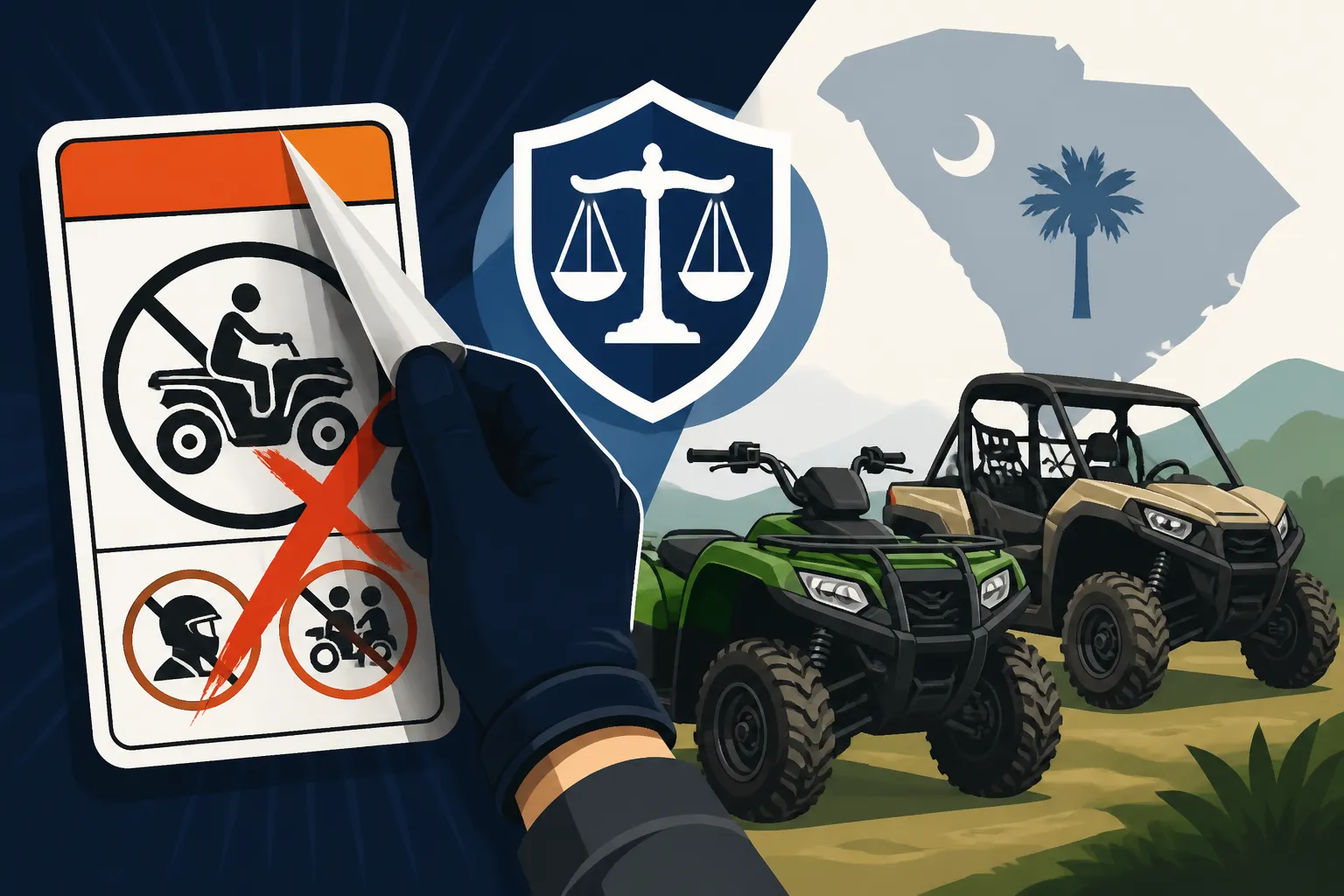
Removing the Age Warning Label Is Unlawful
It's a common itch many of us feel when we first get a new ATV or UTV – that urge to personalize it, to make it truly yours. But amidst all the exciting upgrades and modifications, there’s one small, unassuming detail that carries a surprising amount of legal weight: the age warning label. Many folks don't realize that peeling off or defacing these seemingly minor stickers can actually land you in hot water in South Carolina. This guide will dive deep into why these labels exist, the specific legal consequences of removing them in our state, and how to maintain compliance while still enjoying your ride.
Understanding the Purpose of ATV and UTV Age Warning Labels
Before we even get to the legalities of removing them, it's crucial to understand why those brightly colored, often prominently placed, warning labels are there in the first place. They aren't just an arbitrary design choice by the manufacturer; they're a cornerstone of rider safety and a critical part of product liability.
Manufacturer Responsibility and Safety Guidelines
Think about any other vehicle or piece of power equipment you own. There are always warnings, right? ATVs and UTVs are no different. Manufacturers spend a great deal of time and resources developing machines that are fun, capable, and, most importantly, as safe as possible when used correctly. Part of that safety strategy involves clearly communicating potential hazards and usage limitations, especially concerning age and rider experience. These labels are a direct output of industry safety standards and legal requirements designed to protect both the consumer and the manufacturer. They're a quick, visual reminder of essential information that might otherwise be overlooked in an owner's manual.
When you purchase a new machine, the manufacturer is providing a product with certain inherent risks. These warning labels are a legal and ethical way for them to inform buyers of those risks and to specify the conditions under which the machine should be operated safely. For instance, many ATVs are designed with specific weight distribution and power delivery that makes them unsuitable for younger, lighter, or less experienced riders. The labels are there to communicate these critical design parameters in a way that's hard to miss. Ignoring them, or worse, intentionally removing them, essentially bypasses a layer of safety protocol.
Industry Standards and Best Practices
The ATV and UTV industry, particularly through organizations like the Specialty Vehicle Institute of America (SVIA) and the Recreational Off-Highway Vehicle Association (ROHVA), sets voluntary standards for machine design, safety features, and, yes, warning labels. These standards are developed with extensive research, accident data analysis, and expert input to promote safe riding practices. The age warning label, for example, often reflects the recommendations from these groups regarding rider maturity, physical capability, and cognitive development needed to operate a particular machine safely.
These standards also play a role in how insurance companies view claims or how courts might interpret liability in the event of an accident. If a machine designed for riders 16 and older is operated by a 12-year-old, and the warning label indicating the age restriction was removed, it could significantly impact the outcome of any legal or insurance proceedings. It suggests a willful disregard for established safety guidelines. Even if you're an adult riding the machine yourself, having these labels intact reinforces the safety-conscious environment that manufacturers and safety organizations strive to create. Remember, it's not just about what you know; it's about the information being clear for anyone who might encounter or operate the machine.
What Constitutes an "Age Warning Label" on Your Machine?
It’s easy to think of these as just stickers, but they are much more. These labels are deliberately designed to catch your eye and convey vital information at a glance. They aren't hidden; they're meant to be seen.
Identifying the Key Warning Decals
Typically, you'll find age warning labels prominently placed on the front fenders, fuel tank, or handlebars of an ATV, and often on the dash or near the seating area in a UTV. They usually feature large, bold text, often in contrasting colors like red, orange, or yellow, and might include pictograms that graphically represent the warning.
For example, an ATV designed for adult use might have a sticker stating "WARNING: Not recommended for riders under 16 years of age" or "WARNING: Passenger only on designated models and only if properly equipped." They often come with additional safety information about helmets, protective gear, and the dangers of stunts or riding on paved surfaces. For youth models, the labels will clearly state the minimum recommended age, often coupled with requirements for adult supervision. These aren't just general "caution" signs; they are specific, actionable instructions tied directly to the safe operation and appropriate user base for that particular machine. It's about ensuring the right rider is on the right machine.
The Information They Convey
Beyond just age, these labels often communicate a range of critical safety instructions. This can include warnings about operating the machine with passengers (if not designed for it), the necessity of wearing a helmet and other protective gear, the dangers of drinking and riding, or operating on paved roads. They are a concise summary of the most critical safety guidelines found in your owner's manual, distilled into an easily digestible format.
Think of them as your machine's safety CliffsNotes. They remind you that while ATVs and UTVs are incredibly fun, they are also powerful pieces of machinery that demand respect and adherence to safety protocols. When you remove one of these labels, you're not just taking off a sticker; you're intentionally obscuring a direct safety warning from the manufacturer. This can have serious implications, not just for your personal safety, but also in the eyes of the law, as we’ll discuss shortly. It’s also important to remember that these labels are often part of a broader set of safety features and guidelines designed to work together, and removing one can compromise the integrity of that entire safety ecosystem.
The Legal Ramifications of Removing Age Warning Labels in South Carolina
In South Carolina, our state takes ATV and UTV safety very seriously, especially when it comes to youth riders. This commitment is largely enshrined in what we know as [Chandler's Law and South Carolina ATV Rules]. While the law doesn't explicitly state, "Thou shalt not remove warning labels," the spirit and intent of the legislation, combined with broader legal principles, make such an action unlawful and potentially very costly.
South Carolina Code Section 50-26-50
South Carolina Code Section 50-26-50 outlines specific responsibilities for ATV owners and operators. While it primarily focuses on operational rules, age restrictions, and safety equipment, the underlying theme is the promotion of safe ATV use, particularly by minors. The law specifies age restrictions for operating ATVs, the need for safety certificates, and helmet requirements for younger riders. For instance, riders under 16 are subject to specific helmet rules, and those under 15 need a safety certificate. The existence of these laws clearly indicates the state's concern with ensuring ATVs are operated by appropriate individuals in a safe manner.
When you remove a manufacturer's age warning label, you're actively undermining the very information that helps enforce these state laws. Imagine a situation where a child, under the legal age to operate a particular ATV, gets on a machine that should have an age warning label, but it's been removed. In the event of an accident, a law enforcement officer or even a court might view the removal of that label as contributing to the unsafe operation, demonstrating a disregard for safety, and potentially making the owner liable. This is where the "unlawful" aspect truly comes into play: you are intentionally obscuring safety information that is vital to adhering to state-mandated safety practices. It’s not just about a sticker; it’s about the integrity of safety communication.
Potential Fines and Civil Liability
While South Carolina law doesn't have a specific fine for "removing an age warning label," the act can fall under broader categories that carry penalties. For example, if a minor is operating a machine that they are not legally old enough for, and the warning label that would have indicated this age restriction was removed, the owner could face fines related to allowing an underage rider, or even more severe consequences if an accident occurs. [South Carolina Penalties Under Chandler's Law] often range from $50 to $200 for violations of the state's ATV laws.
More importantly, the civil liability aspect can be far more devastating. If an accident occurs involving a machine with removed warning labels, especially if a minor or an inexperienced rider is involved, the owner could be held personally liable for injuries and damages. The argument could be made that by removing the warning label, the owner actively created a more dangerous situation by concealing crucial safety information. This could expose you to significant lawsuits, medical bills, and other costs that far exceed any minor fine. Insurance companies may also take a dim view of such modifications, potentially denying coverage or increasing premiums if they discover safety labels have been intentionally removed. For serious riders who rely on their gear, perhaps even upgrading with components from a brand like SuperATV for enhanced performance, it’s critical to understand that physical upgrades are distinct from altering safety information.
Here’s a quick overview of how a removed label can complicate things:
| Scenario | Legal Ramification (South Carolina) | Potential Consequences |
|---|---|---|
| Underage rider on adult machine | Violation of [South Carolina ATV Age Requirements] | Fines, potential loss of riding privileges |
| Accident with removed label | Increased owner liability | Lawsuits, medical costs, denial of insurance coverage |
| Inspection by law enforcement | Interpretation of unsafe modification | Possible citation, scrutiny of other safety features |
| Sale of machine without label | Ethical and legal disclosure issues | Buyer dissatisfaction, potential for legal claims |
This table illustrates that while there might not be a direct "label removal" fine, the consequences cascade from undermining the explicit safety information those labels provide.
Beyond the Label: South Carolina's Comprehensive Age-Related ATV and UTV Rules
Removing an age warning label might seem like a small act, but it often stems from a misunderstanding or disregard of the broader age-related laws governing ATVs and UTVs in South Carolina. Our state has clear guidelines designed to protect riders, especially the young and vulnerable.
[South Carolina ATV Age Requirements] and Supervision
South Carolina law, specifically Chandler's Law, is very precise about who can ride an ATV and under what conditions. For example, riders under the age of six are outright banned from operating an ATV on public lands, private property, or even during organized events. This is a hard-and-fast rule designed to protect very young children who lack the physical and cognitive development to safely control such a machine.
For those between the ages of 6 and 15, there are additional layers of protection. Riders in this age group must be supervised by an adult at least 18 years old when operating an ATV off private land. Furthermore, they must possess an ATV safety certificate, which usually comes from completing an approved safety course. [South Carolina Safety Certificate Requirements] are not just recommendations; they are mandatory for this age group to ensure they have received proper training. Removing an age warning label from a machine doesn't negate these laws; it simply removes a crucial visual cue that helps parents and guardians make informed decisions about who should be riding. When you put a 10-year-old on an adult-sized quad, even on private land, you're not just risking injury, you're potentially violating state law if proper supervision and certification aren't in place.
[South Carolina Helmet Rules for Young Riders] and Safety Certificates
Beyond just age limits, South Carolina also mandates specific safety equipment, particularly helmets, for younger riders. All ATV operators and passengers under the age of 16 must wear a safety helmet that meets federal standards. This is a non-negotiable rule, and again, removing an age warning label doesn't change this requirement. The label often reinforces the need for helmets and other protective gear, acting as a constant reminder.
The safety certificate requirement for riders 15 and under is another critical component. These courses teach vital skills like proper control, hazard perception, and safe riding practices. The state wants to ensure that young riders aren't just physically capable but also mentally prepared and trained to handle the complexities of off-road riding. You can learn more about this by looking at [The Safety Certificate Riders 15 and Under Need]. These rules are in place because ATVs and UTVs, even youth models, are powerful machines, and accidents can happen quickly, especially without proper training and protective gear. When we talk about safety, it's a multi-faceted approach, and the warning labels are just one part of a larger system that includes age restrictions, supervision, training, and equipment.
Common Misconceptions About ATV/UTV Labels and Modifications
The world of ATVs and UTVs is full of passion, customization, and sometimes, a few misunderstandings about what's legal, what's safe, and what's simply a bad idea. Let's clear up some common myths surrounding warning labels and machine modifications.
"It's My Machine, I Can Do What I Want!"
This is a sentiment many of us can relate to when we're working on our beloved machines. After all, you bought it, you maintain it, you ride it – so why can't you tweak it to your heart's content? The truth is, while you certainly have a lot of freedom to customize your ATV or UTV, that freedom isn't absolute, especially when it comes to safety features and legal compliance. Just like you can't drive your car on public roads without seatbelts, even if you remove them from your personal vehicle, there are limitations on what you can legally alter on an off-road vehicle.
Removing a warning label might feel like a minor aesthetic choice, but legally, it's seen as tampering with a safety feature designed to prevent harm. It's similar to removing the "read owner's manual" sticker from a chainsaw; it doesn't make the chainsaw less dangerous, and if someone gets hurt because they didn't get that warning, the owner could be held responsible. Even if you're only riding on private land, the law in South Carolina still governs certain aspects of ATV use, particularly regarding minors. So while you can make many modifications, like adding a winch, new tires, or suspension components (you might even be looking at options from SuperATV), altering mandated safety information crosses a different line.
How Aftermarket Parts Differ from Safety Label Removal
There's a vast and vibrant aftermarket for ATVs and UTVs, offering everything from performance upgrades to utility enhancements. Brands like SuperATV provide countless options for lift kits, heavy-duty axles, skid plates, winches, and lighting, allowing riders to truly tailor their machines for specific terrains and uses. This kind of modification is generally encouraged and celebrated within the riding community, as long as it's done safely and doesn't compromise the fundamental integrity of the vehicle.
The key difference between adding aftermarket parts and removing warning labels lies in their intent and impact on safety communication. Aftermarket parts are typically designed to enhance performance, durability, or utility, often with their own set of installation instructions and safety warnings. They don't typically involve removing existing safety information. In contrast, removing an age warning label deletes crucial information that the manufacturer deemed necessary for safe operation, especially concerning who should operate the machine. It's about obscuring knowledge rather than adding capability. While a lift kit might change the center of gravity, it doesn't hide the manufacturer's original safety recommendations. Always differentiate between purposeful, enhancing modifications and alterations that compromise the safety communication inherent in the original design.
Responsible Ownership: Keeping Your Machine Safe and Legal
Being a responsible ATV or UTV owner in South Carolina isn't just about having fun; it's about making smart choices that prioritize safety and legal compliance. This involves everything from proper maintenance to understanding the nuances of state law.
Prioritizing Safety Over Aesthetics
It's tempting to want a "cleaner" look for your machine, free of stickers and warnings. However, true responsibility means putting safety above superficial aesthetics. Those labels are there for a reason, and they serve as a constant, visual reminder of important operating parameters. Especially if you have multiple riders in your family, including younger ones, these labels act as an immediate educational tool. When someone unfamiliar with the machine approaches it, those warnings are their first line of defense in understanding its limitations and proper use.
Instead of removing safety labels, consider integrating other safety measures that enhance your machine's protection without compromising its original warnings. For instance, invest in high-quality helmets, proper riding gear, and perhaps even a first aid kit for longer rides. Ensure your machine is regularly maintained, with proper tire pressure, brake function, and fluid levels. These proactive steps contribute far more to overall safety than simply removing a sticker. A machine that is well-maintained and clearly communicates its safety parameters is a machine that contributes to a safer riding environment for everyone.
Adhering to Manufacturer Guidelines and State Laws
Ultimately, being a responsible owner means respecting both the manufacturer's intent and the laws of South Carolina. The manufacturer designed the machine with certain specifications and warnings, and the state has enacted laws like Chandler's Law to ensure these powerful vehicles are operated safely, especially to protect minors. [South Carolina Code Title 50 Chapter 26] is a good place to familiarize yourself with the full scope of these regulations.
If you're buying a used machine, always check for intact warning labels and ensure all safety features are present and functional. If a label is damaged or missing due to wear and tear, contact the manufacturer to see if a replacement can be obtained. When operating your UTV on secondary roads where permissible, remember to comply with [South Carolina Street UTV Rules From November 2026] and ensure all required equipment is in place. Whether it's ensuring your youth rider has their [South Carolina Safety Certificate Requirements] or making sure your new [South Carolina Street-Legal UTV Registration Arrives] on time, attention to detail and adherence to rules are paramount. Responsible ownership protects not only yourself and your family but also helps maintain a positive image for the entire off-road riding community.
Disclaimer
This article is for general informational purposes only and does not constitute professional advice. Laws, prices and regulations vary by location and change over time. Consult a qualified professional for guidance on your specific situation.