South Carolina Golf Cart Permit Rules
Trying to figure out where you can legally cruise your golf cart in South Carolina without getting a ticket can feel like navigating a maze blindfolded. You just want to enjoy the breeze and get to the beach or the neighborhood pool, but the rules seem to change depending on who you ask or what town you're in. This guide is going to cut through all that confusion, breaking down the specific South Carolina golf cart permit rules, where you can drive, and how to get your permit so you can ride with confidence and peace of mind.
What Exactly is a Golf Cart in South Carolina's Eyes?
Before we dive into the nitty-gritty of permits and road rules, it's absolutely crucial to understand what South Carolina defines as a golf cart. This isn't just semantics; it's the fundamental classification that dictates whether your ride needs a permit, what kind of roads it can use, and even what safety equipment is required. Many people mistakenly believe that any small, electric vehicle is a golf cart, but the state has very specific criteria that, if not met, could land you in trouble for operating an unregistered or improperly classified vehicle.
The Official Definition That Matters
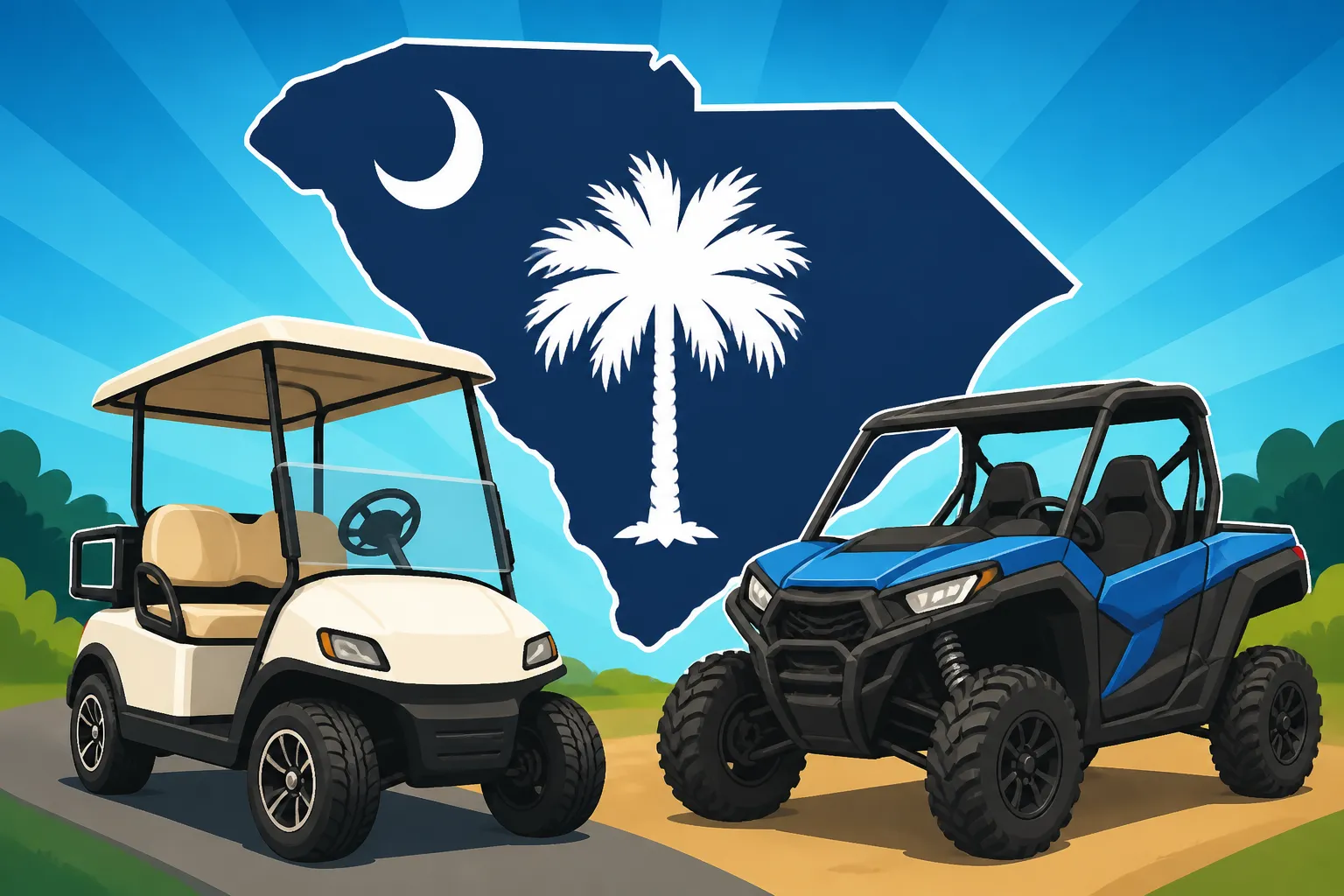
In South Carolina, a "golf cart" isn't just a vehicle used for playing golf. The state law outlines specific characteristics. Generally, it's a motor vehicle that is designed and manufactured for operation on a golf course for sporting or recreational purposes, and it's not capable of exceeding a speed of 20 miles per hour. This speed limit is a big one. If your vehicle can go faster than 20 mph, even if it looks like a golf cart, it's likely classified differently under state law, possibly as a low-speed vehicle (LSV) or even an off-road vehicle, each with its own set of rules and requirements.
This distinction is important because a Low-Speed Vehicle (LSV) has different requirements altogether. LSVs are designed to go between 20 and 25 mph, must have specific safety features like headlights, taillights, turn signals, seatbelts, and a windshield, and require a different type of registration and plate, similar to a regular car. A golf cart, on the other hand, is specifically limited in speed and has fewer mandatory equipment requirements, precisely because its road use is so restricted. Knowing this difference from the start can save you a lot of headache and potential fines.
Why This Definition is Crucial for Your Permit
The permit you apply for and the rules you must follow are entirely dependent on whether your vehicle truly fits the state's definition of a golf cart. If you apply for a golf cart permit for a vehicle that technically qualifies as a low-speed vehicle, you'll be operating it illegally. It's not uncommon for people to modify their golf carts, perhaps to increase speed or add aftermarket parts like those you might find from a company like SuperATV. While customization can be fun, any modification that pushes the vehicle's top speed over that 20 mph threshold means it's no longer a golf cart in the eyes of the law.
Think about it this way: the state is giving you a special privilege to operate a slow-moving vehicle on certain public roads where a typical car or truck would normally be required. This privilege comes with strict limitations that are designed for safety. If your vehicle exceeds those limitations, it becomes a different class of vehicle entirely, with greater responsibilities. So, before you even fill out the application, take an honest look at your vehicle and its capabilities. If it’s capable of going faster than 20 mph, you might need to explore [South Carolina Low-Speed Vehicle Plates] instead.
Getting Your South Carolina Golf Cart Permit: The Nitty-Gritty Steps
Once you're sure your vehicle truly qualifies as a golf cart, the next step is to actually obtain the permit. It might seem like a straightforward process, but there are specific requirements you need to meet and documents you need to gather. Missing even one piece of paperwork or misunderstanding a requirement can lead to delays and frustration, especially when you're eager to get out and enjoy the beautiful South Carolina weather.
Who Can Even Apply for a Permit?
First and foremost, not just anyone can get a golf cart permit. In South Carolina, the driver of the golf cart must hold a valid driver's license. This isn't like a bicycle or scooter where younger riders might be allowed; you need to be a licensed driver. This means generally being at least 16 years old and possessing a full, unrestricted driver's license. A learner's permit or a provisional license typically won't cut it for operating a golf cart on public roads.
Beyond having a valid license, the permit is issued to the owner of the golf cart. This means you need to be able to prove ownership of the vehicle. While South Carolina doesn't title off-road vehicles like golf carts, you'll still need some form of documentation to show you are the rightful owner, such as a bill of sale or a manufacturer's certificate of origin if it's a new machine. It's a fairly simple process, and you can find more details on [South Carolina Golf Cart Permit Steps].
Gathering Your Paperwork and What to Expect
To get your golf cart permit, you'll need a few key items to bring with you to the Department of Motor Vehicles (DMV). First, you'll need a completed application form. This form typically asks for details about you and your golf cart. Second, proof of ownership is critical. A bill of sale with the serial number clearly listed is usually sufficient for a used golf cart. For a brand new one, the Manufacturer's Certificate of Origin (MCO) is what they'll be looking for.
Additionally, you will need to provide proof of insurance. While a golf cart permit doesn't require the same extensive liability coverage as a car, you will still need to show proof of at least basic liability insurance. This is a crucial step that many people overlook, assuming that because it's a golf cart, insurance isn't necessary. However, if you plan to operate it on public roads, even those few designated for golf cart use, you must be insured. It’s always best to check with your insurance provider to ensure you have adequate coverage for your specific situation.
Where to Go and What it Costs
The place to get your golf cart permit is your local South Carolina Department of Motor Vehicles (DMV) office. You can usually find the nearest office by checking the SCDMV website. It's often a good idea to check their hours and perhaps even call ahead to confirm what documents they require, as processes can sometimes vary slightly by location or change over time. Being prepared with all your documents can save you a lot of time and a second trip.
The cost for a South Carolina golf cart permit is quite nominal. You can expect to pay a small, affordable fee to obtain the permit. This fee covers the administrative cost of processing your application and issuing the decal. Compared to the costs associated with titling and registering other vehicles, [South Carolina Golf Cart Permit Fees] are generally very low, making it an accessible option for many residents. This permit will come with a decal that you'll need to display on your golf cart, which signals to law enforcement that you are operating legally.
Understanding South Carolina's Golf Cart Road Rules
Having the permit is one thing, but knowing where and when you can actually drive your golf cart on public roads in South Carolina is an entirely different, and equally important, challenge. Many people get this part wrong, leading to citations or dangerous situations. South Carolina law is quite specific about golf cart operation on public thoroughfares, and there are key distinctions between state laws and local ordinances that every rider needs to understand.
The Infamous 4-Mile Radius Rule
The most talked-about rule for golf carts in South Carolina is often the "4-mile radius" rule. Generally speaking, a permitted golf cart may only be operated on secondary highways or streets within four miles of your home or the address where the golf cart is typically stored. This means you can't just take your golf cart on a joyride across town or to another municipality unless it falls within that specific radius. This rule is designed to allow residents to access nearby amenities like parks, beaches, or neighborhood shops without requiring a full-fledged vehicle.
There are also specific types of roads where golf carts are allowed. They can be operated on secondary roads or streets, but only during daylight hours. They are strictly prohibited from primary highways or roads with a speed limit greater than 35 miles per hour. This is a critical safety measure, as golf carts are not designed for high speeds or heavy traffic. Familiarizing yourself with these limitations will help ensure you stay safe and legal on your rides. You can learn more about these limitations in [South Carolina Cart Rules 4 Miles From Home].
Speed Limits and Daylight Riding
Beyond the radius rule, strict adherence to speed limits and time-of-day restrictions is crucial. As mentioned earlier, golf carts are generally not capable of exceeding 20 mph, and when operating on public roads, you must respect this limitation. Driving slower than the posted speed limit (if it's 35 mph or less) is expected, as golf carts are not meant to keep pace with regular vehicular traffic.
Furthermore, golf carts are restricted to daylight hours only. This means from a half-hour after sunset to a half-hour before sunrise, your golf cart should not be on any public roads. This restriction is due to the limited lighting equipment typically found on golf carts, which simply isn't sufficient for safe nighttime operation. Even if you've added extra lights, perhaps with components sourced from a vendor like SuperATV, the state law still dictates daylight-only operation for golf carts. This helps prevent accidents that could occur due to poor visibility. For a deeper dive into these specifics, check out [South Carolina Golf Cart Daylight Rules].
Where You Absolutely Cannot Take Your Golf Cart
It's just as important to know where you cannot drive your golf cart as it is to know where you can. As a general rule, golf carts are expressly prohibited on:
- Primary Highways: These are typically main thoroughfares, state routes, and interstates. Even if they pass through a residential area, if it's classified as a primary highway, golf carts are not allowed.
- Roads with a Posted Speed Limit Over 35 MPH: This is a hard and fast rule. If the sign says 40, 45, or 55, your golf cart does not belong there.
- Sidewalks and Bike Paths (Unless Explicitly Permitted): Generally, sidewalks are for pedestrians and bike paths for bicycles. Do not assume you can ride your golf cart on these unless a local ordinance specifically allows it.
- Off-Road Trails: Despite their appearance, golf carts are not considered off-road vehicles for trail riding. Public OHV trails are usually restricted to ATVs, UTVs, and dirt bikes that meet specific requirements, not golf carts.
Ignoring these prohibitions can lead to significant fines and puts you at risk of serious accidents. Always err on the side of caution when in doubt about a specific road or area.
Local Ordinances: The Rules Beyond State Law
Here's where it gets a little trickier and causes a lot of confusion: while state law provides the general framework, individual cities, towns, and counties in South Carolina have the authority to enact their own ordinances regarding golf cart use. This means that while state law sets the minimum standard, a local municipality can implement stricter rules. For example, a town might reduce the 4-mile radius, designate specific golf cart-friendly streets, or even require additional safety equipment beyond what the state mandates.
It is your responsibility as the golf cart operator to be aware of and abide by both state law and any applicable local ordinances for the area you are riding in. If you live in a coastal town like Myrtle Beach or Hilton Head, or a lakeside community, it is highly likely that they have specific local rules in place. Always check with your local municipal government or police department for their specific golf cart ordinances before you ride, especially if you're visiting or recently moved to a new area. These local rules are critical and often define the specifics of [South Carolina Golf Cart Radius and Speed Rules].
Renewing and Maintaining Your South Carolina Golf Cart Permit
Getting the permit is just the first step; keeping it current and understanding what to do if circumstances change is equally important. A lapsed permit or an out-of-date decal can lead to the same legal troubles as never having had one in the first place. You've gone through the effort to get legal; make sure you stay legal!
When and How to Renew Your Permit
Unlike vehicle registrations that might be annual, South Carolina golf cart permits are typically renewed every five years. This longer renewal cycle can sometimes lead people to forget about it, so it's a good idea to mark your calendar or set a reminder. The permit decal will have an expiration date printed on it, so keep an eye on that. When it's time to renew, you'll generally follow a similar process to your initial application.
You'll need to visit the DMV, present proof of ownership and insurance, and pay the nominal renewal fee, which is often the same as the initial application cost. The DMV will then issue you a new decal to display on your golf cart. This periodic renewal ensures that the state has up-to-date information on permitted golf carts and that owners are still meeting the basic requirements, such as carrying valid insurance. This process is detailed further in [South Carolina Golf Cart Permit Renewal].
Replacing Lost Decals or Updating Information
Life happens, and sometimes a decal can get lost, damaged, or simply fade over time from exposure to the elements. If your golf cart decal becomes unreadable or goes missing, you'll need to apply for a replacement. This usually involves a visit to the DMV, where you can request a new decal for a small fee. It's important to do this promptly, as operating without a visible, valid decal can draw unwanted attention from law enforcement.
Similarly, if you move to a new address, especially if it's outside the original 4-mile radius you were permitted for, you'll need to update your permit information. Moving might mean your old permit is no longer valid for your new location, or you might need a new decal reflecting the change. This is especially relevant if you are moving across town or to a new county. The DMV can guide you through the process of updating your address and ensuring your permit remains valid. For example, [Moving House Means a New Cart Decal] covers exactly this scenario.
What Happens if You Don't Follow the Rules?
Operating a golf cart on public roads in South Carolina without a valid permit, outside the designated hours, beyond the allowed radius, or on prohibited roads can lead to a range of penalties. Law enforcement officers are well aware of the golf cart rules, especially in communities where they are commonly used.
The consequences can include fines, which can range from minor to more significant, depending on the severity of the violation and whether it's a repeat offense. In some cases, your golf cart could even be impounded if you're found to be operating it in a dangerous or grossly illegal manner. Beyond legal penalties, there's the very real risk of accidents. Golf carts are not built for collisions with full-sized vehicles, and operating them outside their legal parameters significantly increases the danger to yourself, your passengers, and others on the road. Always prioritize safety and adherence to the law to ensure your golf cart riding experience remains enjoyable and trouble-free.
Here's a quick summary of key rules:
| Feature/Requirement | South Carolina Golf Cart Rules |
|---|---|
| Maximum Speed | 20 mph |
| Driver's License | Required (Valid, unrestricted) |
| Insurance | Required (Liability) |
| Permit Decal | Required, issued by SCDMV |
| Renewal Cycle | Every five years |
| Road Type | Secondary roads/streets only |
| Speed Limit on Road | 35 mph or less |
| Operating Hours | Daylight hours only |
| Radius from Home | Within 4 miles (state law) |
| Local Ordinances | Can be stricter |
Disclaimer
This article is for general informational purposes only and does not constitute professional advice. Laws, prices and regulations vary by location and change over time. Consult a qualified professional for guidance on your specific situation.