Four Hundred Fifty Cubic Centimeters
It's incredibly confusing trying to navigate all the rules and regulations for ATVs and UTVs in South Carolina, especially when you start hearing specific numbers like "450 cubic centimeters" thrown around. You're trying to figure out if your machine can hit the road or if you're just looking at a trail warrior, and that engine size detail can feel like a make-or-break piece of information. This guide is here to untangle the significance of engine displacement in South Carolina, clarifying what 450cc means for different machines and how it fits into the broader picture of street legality and off-road use.
The Significance of Engine Displacement: Beyond Just Horsepower
When you hear a specific engine size like "450cc," it often comes with a lot of assumptions. Many riders immediately associate it with power, or perhaps a certain class of machine. In South Carolina, however, that 450 cubic centimeter mark isn't just about how fast you can go; it often acts as an informal threshold, particularly when discussing youth riders or the general categories of off-road vehicles. It helps distinguish smaller, typically single-rider ATVs from their larger, more powerful counterparts and the increasingly popular side-by-side UTVs. It’s a number that helps frame different sets of rules and expectations.
The engine's displacement, measured in cubic centimeters (cc), refers to the total volume of air and fuel an engine can push through its cylinders in one complete cycle. A higher CC generally means more power and torque, but it also often correlates with a physically larger and heavier machine. This physical difference is where the distinction in regulations often begins, as the state looks at not just raw power but also the overall size and intended use of the vehicle when crafting its laws.
How 450cc Relates to Youth and Smaller Machines
For many years, the 450cc mark has been a common benchmark for what's considered a "full-size" ATV. Machines under 450cc are often youth models or smaller, more agile recreational quads. This distinction becomes particularly important when we talk about rider age and safety. South Carolina's [Chandler's Law and South Carolina ATV Rules] sets specific guidelines for young riders, and these rules often implicitly, if not explicitly, consider the size and power of the machine being operated.
Think about a youngster just starting out on a 90cc or 125cc mini-quad. The state has an interest in ensuring they're riding something appropriate for their skill level and physical capabilities. While Chandler's Law doesn't strictly say "no 450cc for a 12-year-old," it does mandate safety certificates and adult supervision for those 15 and under. The general industry practice is to match rider age to engine size, and machines under 450cc are typically seen as more manageable for younger, less experienced operators. So, while you won't find a direct "450cc rule" for youth use, the conversation around engine displacement is intrinsically tied to rider safety and the capabilities of the machine.
The Shift Towards Larger Engines and Street UTVs
Contrast the smaller ATVs with the powerful utility and sport UTVs that have become so popular. Most of these machines boast engines significantly larger than 450cc, often ranging from 500cc all the way up to 1000cc or more. This substantial difference in engine size points to a different class of vehicle entirely, one designed for heavier work, carrying multiple passengers, or tackling more extreme terrain. These larger engines are necessary to move the increased weight and bulk of a side-by-side.
When we talk about street-legal machines, this distinction becomes even more critical. While traditional ATVs, regardless of their engine size, are generally not permitted on public roads in South Carolina (more on that in a moment), certain UTVs can be made street-legal. The requirements for these street-legal UTVs focus on safety equipment, dimensions, and weight, rather than a specific engine displacement limit like 450cc. In fact, most UTVs that people want to make street-legal are well over 450cc, because they need the power and torque to safely operate in traffic conditions and carry their intended loads. The 450cc mark essentially helps us mentally categorize machines: smaller quads often under that mark, and larger UTVs generally well above it, with different regulatory paths for each.
Street-Legal UTVs and the Engine Size Conversation in South Carolina
This brings us to the core of the matter: how does that 450cc number fit into the world of street-legal vehicles in South Carolina? The answer is that for street-legal UTVs, the 450cc mark itself isn't a direct regulatory cutoff for their road legality. Instead, South Carolina's recent laws focus on different characteristics to determine if a UTV can earn a license plate and legally travel on secondary roads. It's a common misconception that all off-road vehicles are treated the same, but the state has made clear distinctions, especially with the advent of specific legislation for UTVs.
Understanding these nuances is crucial for any rider or buyer in the Palmetto State. Trying to apply ATV rules to a UTV, or vice-versa, will only lead to confusion and potentially, costly mistakes or fines. It's about recognizing that while engine size is a factor in categorizing some off-road machines, it's not the primary gatekeeper for hitting the pavement in a UTV.
Understanding South Carolina's Street UTV Requirements
For a UTV to become street-legal in South Carolina, the state looks at a very specific set of criteria that goes far beyond just engine size. The law, which started coming into effect in late 2026, allows UTVs to be registered and driven on roads with a speed limit of 55 mph or less, provided they meet certain equipment and dimensional requirements. You're looking at things like:
- Weight: The UTV must weigh no more than 4,000 pounds.
- Width: It must be no more than 80 inches wide.
- Safety Equipment: This is where many aftermarket modifications come in. A street-legal UTV needs headlamps, taillamps, brake lights, turn signals, a horn, a rearview mirror, a windshield, seatbelts for all occupants, and working brakes.
- Tires: It must have tires that are approved for highway use.
Many companies, like SuperATV, offer conversion kits and individual components to help UTV owners meet these stringent requirements. Whether you're adding a full windshield, a turn signal kit, or DOT-approved tires, these modifications are about making the machine safe and compliant for road travel, irrespective of its engine displacement. As you can see, [South Carolina Street UTV Requirements Explained] focus on these features, not on whether the engine is exactly 450cc or any other specific size. Most street-legal UTVs will naturally have engines much larger than 450cc to meet performance expectations on public roads.
Why Off-Road ATVs (Regardless of Engine Size) Are Different
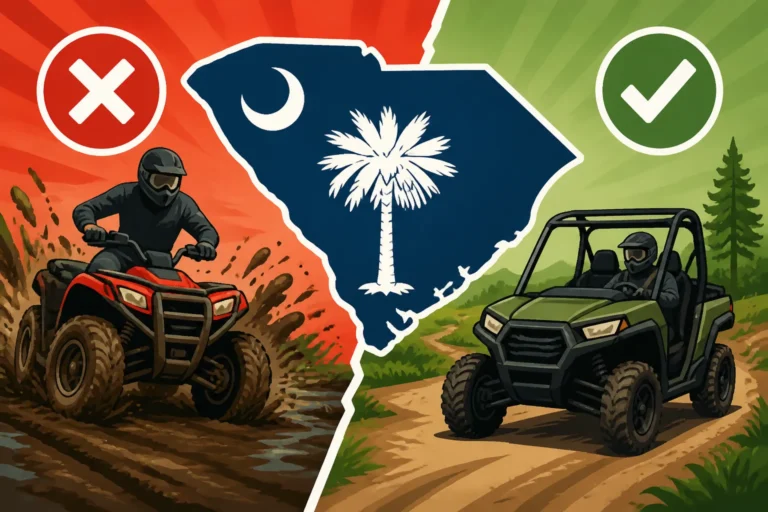
This is a really important distinction to grasp in South Carolina: an ATV, even a powerful 700cc sport quad or a utility quad well over 450cc, is generally not permitted on public roads. The law that created the street-legal UTV class was specific to side-by-side utility vehicles, not traditional straddle-seat ATVs. This means if you have a quad, no matter how big its engine, how many lights you put on it, or how much you wish it could take you to the corner store, it's likely meant for off-road use only.
The state explicitly states that [South Carolina Does Not Register Off-Road ATVs]. This means there's no path to getting a license plate for a traditional ATV and making it street-legal in the same way a UTV can be. The design and inherent characteristics of ATVs are seen as different from UTVs when it comes to road use, largely due to rider seating, control, and inherent stability. So, while 450cc might be a benchmark for comparing ATV models, it doesn't open the door to road travel for ATVs themselves. It's vital to remember that a UTV is not an ATV, and the rules reflect that fundamental difference.
Practical Implications for Riders and Buyers
Navigating the landscape of South Carolina's ATV and UTV laws can feel like a minefield, especially when trying to understand how engine size plays into street legality. But once you understand the distinctions, it empowers you to make much better decisions, whether you're looking to purchase a new machine or wondering if your existing one can be used on public roads. It's about being informed and avoiding those frustrating moments at the DMV or, worse, a roadside stop with a curious deputy.
The takeaway from the 450cc discussion, particularly in the context of street legality, is that while it's a useful benchmark for understanding different classes of ATVs and often relates to youth riding, it's not the critical factor for UTVs wanting to get a license plate. For street-legal UTVs, it's all about meeting those specific safety and dimensional requirements.
Choosing the Right Machine for Your Needs
Knowing the distinctions around engine size and street legality helps you figure out what kind of machine is truly right for you. If your primary goal is to hit the trails, forests, and private lands, a traditional ATV, regardless of its engine size (whether it's [South Carolina Rules for a Machine Under 450cc] for a youth rider or a larger model for an adult), might be perfect. These machines are designed for agility and single-rider adventure.
However, if you're dreaming of driving your machine to the local fishing hole, running errands on secondary roads, or cruising down a country lane with a passenger, then a street-legal UTV is what you need to be looking at. These machines, often well over 450cc, come with the added cost of conversion and registration, but they offer the versatility of both on-road and off-road capability. When you're talking to a dealer or looking at private sales, this knowledge helps you ask the right questions and ensure you're not mistakenly buying an off-road-only ATV when you really want a street-capable UTV.
What to Expect at the DMV and on the Road
When it comes to getting a street-legal UTV ready for the road, the process at the DMV will be focused on proving it meets all the state's requirements. You'll need documents like the Manufacturer's Certificate of Origin (MCO) if it's new, or a properly assigned title if it's used. Importantly, you'll need to demonstrate that the machine has all the necessary safety equipment installed. The DMV staff will guide you through the [South Carolina Title Applications at the DMV] process, and once approved, you'll get that coveted license plate.
On the road, expect law enforcement to be familiar with the new street-legal UTV laws. They'll be checking for proper registration, your driver's license (yes, you need a standard driver's license for a street UTV, and specific age rules apply, such as [Do You Need a License for a UTV in South Carolina?]), and that your UTV is equipped with all the required safety features. They might also verify that you're staying on roads within the permitted speed limits, usually 55 mph or less as detailed in [South Carolina Street UTV Road Speed Limits]. Failing to comply could result in [South Carolina Fines of $50 to $200]. For ATVs, you generally won't be on public roads, and officers will be looking for compliance with off-road rules like safety certificates and helmet laws, particularly for younger riders.
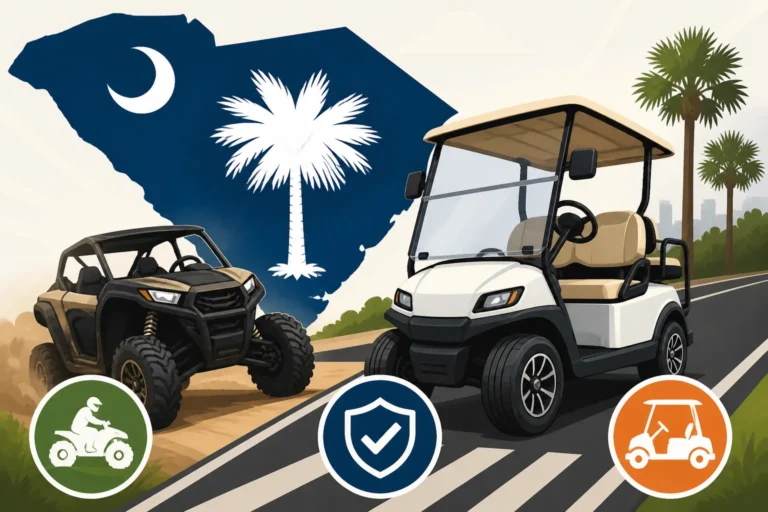
Here's a quick overview comparing ATVs and Street-Legal UTVs in South Carolina:
| Feature | Traditional Off-Road ATV (e.g., often <450cc for youth, or larger for adults) | Street-Legal UTV (e.g., typically >450cc) |
|---|---|---|
| Engine Size Significance | Often related to youth rider guidelines and machine classification | Not a direct limiting factor for street legality; most are well over 450cc |
| Road Legality | Generally NOT permitted on public roads | Permitted on roads 55 mph or less, if compliant |
| Registration/Titling | Titling is optional for off-road use; no state registration available | Titling is mandatory; requires specific street-legal registration and a plate |
| Required Equipment | Minimal state requirements (e.g., spark arrester, brakes) | Extensive (headlights, brake lights, turn signals, horn, mirrors, seatbelts, windshield, DOT tires) |
| Driver's License | Not required for off-road use (age/safety certificate rules apply) | Standard driver's license required |
| Insurance | Often not mandatory for off-road use, but recommended | Mandatory for liability as a registered motor vehicle |
Disclaimer
This article is for general informational purposes only and does not constitute professional advice. Laws, prices and regulations vary by location and change over time. Consult a qualified professional for guidance on your specific situation.