South Carolina Visitors From Georgia
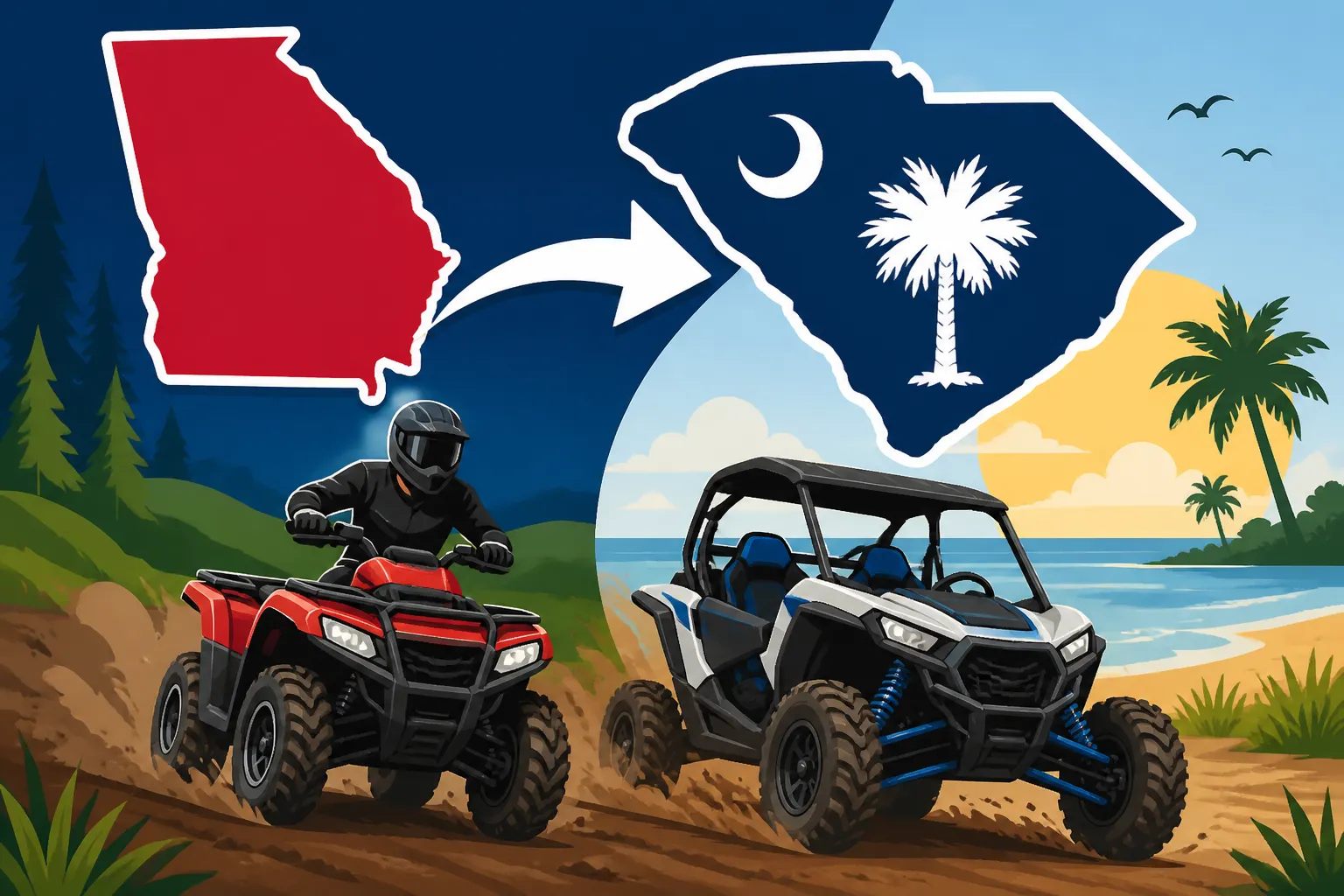
A Georgia plate does not automatically grant access to South Carolina’s off-road trails, and a pass from home may not cover a ride across the state line. The key is to separate trail access from vehicle paperwork and road rules. Here’s what Georgia visitors should check before loading an ATV or UTV, including passes, trail fit, safety requirements and practical trip planning.
What Georgia Visitors Need to Know About South Carolina Trail Access
South Carolina does not operate a general statewide registration system for off-road ATVs. That means a Georgia registration or permit is not something South Carolina can simply exchange for a matching statewide ATV registration. But trail access is a separate matter: a machine that is legal to own and transport may still need a South Carolina forest pass before it can use a designated trail.
For a trip to a national forest trail, check the current pass rules for the specific riding area. South Carolina’s forest OHV pass program covers designated trails, not every road, track or piece of public land in the state. The overview at South Carolina National Forest OHV Passes explains the pass system and where it applies.
| Question | What a Georgia visitor should do |
|---|---|
| Does a Georgia plate or registration replace a South Carolina forest pass? | No. Check and obtain the pass required for the South Carolina trail you plan to ride. |
| Does a Georgia trail pass automatically work in South Carolina? | Do not assume so. Confirm whether it is accepted at the destination; South Carolina forest passes are a separate program. |
| Does every South Carolina trail allow every ATV or UTV? | No. Check vehicle type, width and trail designation before hauling. |
| Does trail access allow riding on public roads? | No. Trail permission and road-use rules are separate. |
| Should you bring proof of ownership? | Yes. Carry paperwork that connects you to the machine, especially if its title or registration documents are from another state. |
The straightforward rule is to plan around the destination’s requirements, not the paperwork you already have in Georgia. If the trip includes one of the four national forest OHV trail areas, a South Carolina pass may be required even if your machine is registered or documented elsewhere. South Carolina Passes Cover All Four Trails provides a useful overview of that coverage.
Also keep trail access distinct from ownership documentation. South Carolina’s lack of off-road registration does not mean an officer or land manager can never ask who owns the machine. Bring a title, bill of sale, registration document or other reasonable proof of ownership. The details are covered in [South Carolina Proof of Ownership on the Trail].
Passes, Reciprocity and Buying the Right Permit
The term “reciprocity” can be misleading here. It often refers to one state accepting another state’s registration or permit. For an off-road ATV, South Carolina does not have a statewide registration program to reciprocate with Georgia’s system. That does not remove the need to follow South Carolina’s local access requirements.
For designated national forest OHV trails, check the pass options and instructions before leaving home. South Carolina forest passes are tied to the forest trail program, not to a Georgia resident’s home-state status. A visitor should not expect a Georgia permit, an out-of-state registration card or a pass for a private riding park to substitute for the required forest pass.
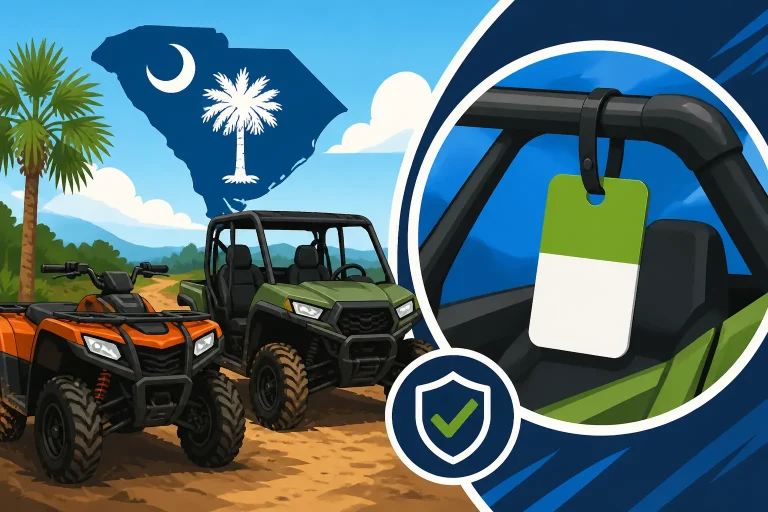
Pass details can matter when several people or machines are travelling together. Annual forest passes are issued to individual riders, and they are not transferable between people. A day pass may be associated with the tow vehicle’s plate rather than functioning as a separate pass for every machine. Confirm the current terms before buying; the practical distinctions are explained in South Carolina Season Passes Are Per Person and South Carolina Day Passes Tied to a Plate. For the transfer rule, see South Carolina Passes Are Non-Transferable.
A simple way to avoid a trailhead problem is to handle the pass before the trip:
- Choose the specific trail system and confirm that it is open.
- Read the current pass instructions for that trail, including who needs a pass and how it must be displayed.
- Buy through the authorized channel and save a digital copy or receipt.
- Print the pass if the rules call for a printed copy, and keep it where it can be checked.
- Bring the tow vehicle’s plate information and a driver’s license in case a pass or fee check requires them.
- Keep a backup copy on your phone, but do not assume a phone image replaces a required printed display.
If your group is bringing multiple riders, do not assume one annual pass covers everyone. If you are using a day pass, make sure it is associated with the correct vehicle and that the pass arrangement matches the number of riders and machines in your group. Those small checks are easier at home than at a closed trailhead or a fee-compliance stop.
Private riding parks have their own admission systems. A national forest pass does not automatically get you into a private park, and a private park pass does not automatically authorize riding in a national forest. Check each destination separately if your itinerary mixes public forest trails and privately operated riding areas.
Trail Rules, Machine Fit and Safety Requirements
A South Carolina pass is permission to use the relevant trail system under its rules. It is not blanket permission to ride anywhere in the forest. Trails can differ by machine type, width, access conditions and temporary closures. A trail marked for motorcycles, for example, may not accommodate a quad or side-by-side. Some narrow trails or gates exclude full-size UTVs even when the vehicle is otherwise suitable for off-road use.
Before towing from Georgia, compare your machine to the trail’s stated limits. Check the allowed vehicle class and maximum width, and do not rely on a trail map alone to establish that a particular UTV is permitted. South Carolina’s forest routes include distinct systems, including a cycle trail; a destination’s name or general “OHV” label does not guarantee that every ATV and UTV can use every segment.
Conditions can also change. Maintenance, weather, hunting activity or other land-management decisions may close a trail or change access. Check official trail status shortly before departure, not just when you first plan the trip. South Carolina Trail Conditions Before You Haul is a helpful starting point for trip planning.
South Carolina’s rider-safety rules also apply to visitors while riding in the state. Pay particular attention if a child or teenager is in the group. Age limits, supervision, passenger restrictions, helmets and safety-course requirements can affect whether a young rider may operate or ride on a machine. Review South Carolina Safety Courses for Riders 15 and Under and verify the requirements that apply to the rider’s age and situation.
A forest pass does not authorize riding on wildlife management areas. Those areas have separate access rules, and South Carolina prohibits ATV use on its wildlife management areas outside applicable exceptions. Do not treat a forest pass as a general public-land permit. See South Carolina WMA Riding Is Prohibited before planning a route through or near a WMA.
Pack the equipment and paperwork the destination requires. Forest rules may cover items such as spark arresters, sound levels and how a pass is displayed. Requirements can vary by land manager and may change, so check the current rules for the exact trail. Carry proof of ownership, a photo ID and any required pass documents. A Georgia title or registration can help identify the machine, but it does not replace a South Carolina trail pass.
Road Use Is Different From Trail Use
A common planning mistake is assuming that a forest pass, Georgia registration or road plate allows an ATV or UTV to use South Carolina roads. These are separate questions. A pass covers access to the trail system named in its terms; it does not convert an off-road route into a public road or make an off-road vehicle street legal.
If your route includes roads, check the rules for the specific vehicle and road before riding. South Carolina has different regimes for off-road machines, street-legal UTVs and golf carts. A vehicle that qualifies for one category does not automatically qualify for another. Nor should visitors assume their home-state road permission applies unchanged after crossing the state line.
For a trail-focused visit, the safest plan is to tow the machine to an authorized riding area and ride only on designated routes. Do not use a public road as a shortcut between trail sections unless that road’s rules clearly allow your vehicle and you meet the applicable requirements. If road riding is part of your plan, review South Carolina Registration Questions for Visitors and the relevant rules for your vehicle category before departure.
The same caution applies to forest roads and private timber roads. A road that looks open may have access restrictions, gates or landowner rules. A forest pass is not permission to cross private land, pass a locked gate or ride on an undesignated route. When in doubt, turn back and confirm access rather than relying on a map line or a route shared by another rider.
A Practical Checklist Before Leaving Georgia
A little preparation can prevent the most common problems: arriving without the right pass, bringing a machine too wide for the trail or assuming a Georgia document answers a South Carolina rule.
- Pick an eligible destination. Confirm that the trail allows your type and width of ATV or UTV.
- Check current openings. Trail status can change, so verify conditions shortly before loading.
- Get the right pass. Use the pass program and purchase method required for that specific destination.
- Check how the pass works. Confirm whether it applies per rider, is tied to the tow vehicle, or has display instructions.
- Carry ownership documents. Bring a title, bill of sale, registration document or other proof that connects you to the machine.
- Review youth rules. If anyone under 16 is riding, check age, supervision, passenger, helmet and course requirements before the trip.
- Keep road riding off the plan unless verified. A trail pass is not a road permit, and out-of-state paperwork does not by itself establish South Carolina road eligibility.
- Prepare for a dead zone. Save directions and pass information offline. A waterproof map sleeve from Amazon can keep a printed map or trail information legible in wet conditions, but it is a backup—not a substitute for current official trail information.
- Confirm rules for each stop. Public forest trails and private parks do not necessarily share passes, closures or vehicle limits.
The useful mental model is simple: Georgia paperwork helps establish your machine’s identity and ownership, while South Carolina’s trail pass and land-use rules determine where you may ride there. Keep those jobs separate, check the rules for the exact trail, and confirm road eligibility on its own before travelling.
Disclaimer
This article is for general informational purposes only and does not constitute professional advice. Laws, prices and regulations vary by location and change over time. Consult a qualified professional for guidance on your specific situation.