South Carolina National Forest OHV Passes
South Carolina’s national forest OHV pass system can be confusing because day and season passes don’t work the same way. The right choice depends on how often you ride, which machine you bring, and who is riding with you. This guide explains what the pass covers, how to buy and display it, and what to check before towing to a trailhead.
What a South Carolina National Forest OHV pass covers
A pass is for riding designated OHV trails in the South Carolina national forests where a fee is required. It is not a general permit to ride anywhere on National Forest land. You still need to use an open, designated route and follow its vehicle restrictions, closures and operating rules.
The forest OHV system includes Enoree, Parsons Mountain, Cedar Springs and Wambaw Cycle trails. They don’t all offer the same kind of riding or admit the same machines. For example, Wambaw is a cycle trail, while some other routes have different vehicle-width or machine restrictions. Check the specific trail before you choose a destination; a valid pass does not make an unsuitable trail suitable for your vehicle.
A forest pass is also separate from a title, state registration, insurance policy or permit from a private riding park. South Carolina does not register off-road ATVs for ordinary trail use, but that does not remove trail-specific pass requirements. If you need to sort out ownership paperwork, see South Carolina Does Not Register Off-Road ATVs and South Carolina Proof of Ownership Without a Title.
Think of the pass as permission to use the designated fee trail under the applicable conditions—not as a substitute for every other rule. It does not:
- Open a trail that is closed.
- Allow a machine onto a route that prohibits its type or width.
- Grant access to private land or a Wildlife Management Area.
- Replace landowner permission where permission is required.
- Make a machine street legal.
- Exempt a rider from state safety laws or forest operating rules.
Before a trip, check three things separately: whether the trail is open, whether your machine is allowed, and what pass or fee applies. Those checks can save a long tow to a locked gate or a trailhead your machine cannot enter.
Choosing between a day pass and a season pass
The main choice is between paying for a particular riding day and buying a season pass. The pricing and eligibility details can change, so confirm the current options and terms in the official pass listing before you buy. The practical difference is the pass unit: a day pass is associated with a vehicle, while a season pass is issued to an individual rider.
| Pass type | Generally suits | What to keep in mind |
|---|---|---|
| Day pass | An occasional visit or a one-off ride | It is associated with a vehicle and plate details, not simply sold as one pass for every person in the group. Follow the listing’s instructions for the vehicle and dates. |
| Season pass | A rider who expects to return during the pass period | It follows the named rider and is non-transferable. It is not a pass you can lend to a friend when you are not riding. |
| Private-park pass | Riding at a privately operated park | A national forest pass does not cover a private park. The park sets its own admission and operating rules. |
| No pass or expired pass | Not a safe assumption | Confirm whether a fee applies to the specific trail and whether your pass is valid for the planned visit. |
A day pass is not simply a pass for each person in the truck. Its vehicle and plate details matter, so enter the correct information when purchasing. If you’re taking more than one machine, don’t assume one day pass automatically covers all of them. Check the product description and follow its instructions for each vehicle.
A season pass works differently. It is associated with the rider, not treated as a transferable vehicle pass. If several people in your group ride regularly, each person should check whether they need their own season pass. A passholder can’t assume that family members or friends are covered just because they arrive in the same truck or share a machine.
Your break-even point depends on how often you’ll actually ride, not how often you hope to ride. A day pass can make sense for a trial visit, an occasional outing or a rider who expects to go only once. A season pass may be more convenient for frequent visits, but it is only useful if you will ride enough during its validity period to justify buying it. Compare the current listed costs and expiration terms rather than relying on an old receipt or a price someone remembers.
Also consider the kind of riding you plan to do. If you mostly ride at a private park, a forest season pass may see little use. If you visit more than one eligible forest trail, check whether the pass covers those trails; don’t assume that a pass for one location is local-only or, conversely, that it covers every public riding area in the state. The forest system’s pass information explains which trails are included.
If you’re planning a first visit, South Carolina Passes Cover All Four Trails and South Carolina Day vs Season Pass Value can help you think through the system and compare the options. The official listing should settle the current terms.
Buying the pass and entering the right details
Forest OHV passes are sold online through Recreation.gov. Don’t count on buying one from a cash tube at the trailhead: the old approach of arriving and paying cash on site is not a reliable plan. Buy before you travel, and allow enough time to resolve an account, payment or printing issue while you still have internet access.
Use the official pass listing and check that you are buying a pass for the South Carolina national forest OHV trails—not a campground reservation, a general recreation pass, or admission to a private park. Read the product description all the way through. Confirm the pass type, the covered trail system, dates or validity period, rider or vehicle requirements, and instructions for showing proof.
For a day pass, take extra care with the vehicle information. A plate number entered incorrectly can make it harder to show that the pass matches the vehicle at the trailhead. If you’re towing several machines, clarify how the pass applies before checkout rather than trying to sort it out during a fee check.
For a season pass, make sure the purchaser and the person who will ride are understood correctly. Since the pass is for an individual and is non-transferable, a household should not assume that one name covers everyone who takes turns riding. Keep the confirmation or pass record available, but don’t treat the purchase email as permission to ignore any required display instructions.
A dependable purchase routine is:
- Open the official Recreation.gov listing for the forest OHV pass.
- Confirm that it covers the trail you intend to ride.
- Choose the day or season option that fits your trip.
- Read the current rules for who or what the pass covers.
- Enter the requested rider, vehicle and plate information carefully.
- Save the confirmation and any pass document.
- Follow the listing’s instructions for printing, displaying or carrying the pass.
- Check the trail’s opening status again before leaving home.
A phone screenshot is useful as a backup, but it may not satisfy a display requirement. If the instructions call for a printed pass in the tow vehicle, print one. A small waterproof document sleeve can protect a paper copy from rain and mud; you can find basic sleeves through stores such as Amazon, but the sleeve itself is not a substitute for the required pass.
Don’t wait until you reach a trailhead to find out whether the pass was purchased for the wrong date or vehicle. If the listing is unclear, contact the responsible forest office or the pass seller before the trip. Save the answer along with your confirmation so you can refer to it later.
For a broader checklist of what to bring, see How to Buy a South Carolina Forest Pass and South Carolina Pass Display Rules.
Displaying the pass and handling a fee check
The display rules differ by pass type, which is one reason a single universal instruction can lead to trouble. Follow the directions attached to the pass you purchased, not a photo from another rider’s dashboard.
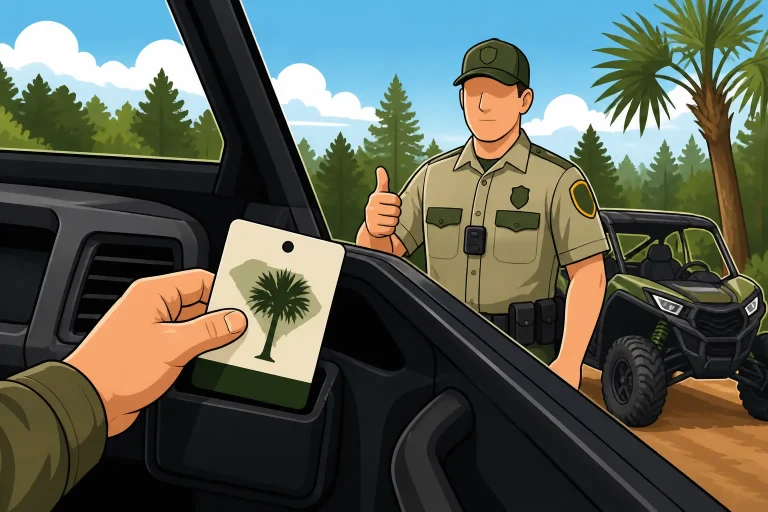
An annual or season pass should be handled as the pass instructions require for the tow vehicle. Keep it visible as directed, and make sure the correct rider is the one using it. A day pass is tied to the vehicle details provided at purchase; its plate information can help identify the vehicle covered. Read the current instructions about whether you need to place a printout in the tow vehicle, carry it, or do both.
A simple setup at home reduces the chance of leaving the pass behind:
- Print the pass if the instructions require a printed copy.
- Put the copy where it can be seen or retrieved as directed.
- Keep a second copy or saved confirmation as a backup.
- Check that the printed details are readable.
- Make sure the plate information matches the vehicle.
- Remove or replace an expired pass rather than relying on a faded old one.
- Keep the pass accessible when you switch tow vehicles or bring a different machine.
A document sleeve can be useful if the pass is displayed inside a windshield or kept with vehicle papers. If you buy one through Amazon or another retailer, choose a format that keeps the document readable and doesn’t obstruct the driver’s view. Don’t tape a pass where it blocks visibility or covers required vehicle information.
Rangers or other authorized personnel may check whether a vehicle has a valid pass. They may also check the plate, the displayed document or the rider’s identification, depending on the pass and the circumstances. Be prepared to show the relevant information calmly. If you have a valid pass but the printout is missing or the plate was entered incorrectly, explain the situation and show your purchase record; don’t assume the record guarantees that the pass requirements were met.
A pass is not proof that your machine meets trail requirements. A fee compliance stop may involve questions beyond payment, and trail staff can enforce route restrictions and closures. If you’re unsure what documents to carry, South Carolina License Checks at a Fee Compliance Stop and [South Carolina Proof of Ownership on the Trail] are useful related reads.
Trail eligibility, closures and equipment rules
Buying a pass is only one part of being ready to ride. Before you load the machine, check the trail’s current status and whether the route permits your machine. Forest roads, OHV trails and motorcycle trails are not interchangeable categories. A trail that appears on a forest map may be closed to the vehicle you brought, closed for maintenance, or temporarily unavailable because of weather or another safety issue.
The South Carolina forest OHV routes have different characteristics. Enoree and Parsons Mountain are popular destinations, while Cedar Springs is a separate trail included in the forest trail system. Wambaw is a cycle trail, so riders with a full-size ATV or side-by-side should verify eligibility rather than assume it is open to them. Route width limits matter too: if a trail has a narrow gate or vehicle-width restriction, a current pass will not help a machine that cannot legally or physically fit through.
Trail conditions can change quickly after heavy rain, maintenance work, storm damage or seasonal management needs. A trail that was open last weekend may not be open on your riding day. Check for current notices close to departure, not just when you first start planning. For weather-related planning, see South Carolina Wet Weather Trail Closures and South Carolina Trail Conditions Before You Haul.
The machine itself should be ready for public-land riding. Inspect the brakes, tires, steering, lights and controls. If the forest trail has a spark-arrester requirement, make sure the machine’s equipment complies. Keep sound levels within applicable limits, and don’t remove or modify safety equipment to get around a trail rule. A mechanical failure can become more than an inconvenience if it leaves a machine blocking a narrow route.
Do a quick check before each trip:
- Is the trail open today?
- Is my machine allowed on this particular trail?
- Does the route have a width restriction?
- Do I have the correct pass for this visit?
- Does the machine meet equipment requirements?
- Are there seasonal rules or notices I need to follow?
- Do I know where the trailhead and staging area are?
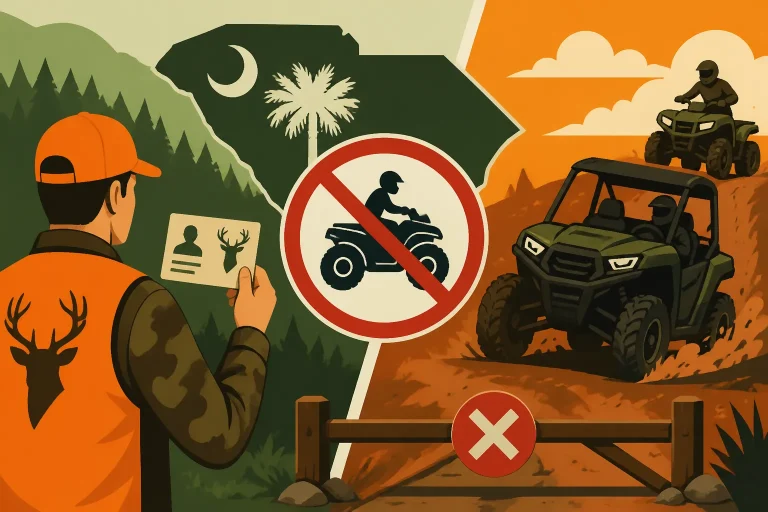
The pass does not authorize riding on a Wildlife Management Area. South Carolina WMAs have their own vehicle restrictions, and riders should not infer that a nearby forest trail pass opens adjacent wildlife land. Similarly, a national forest boundary doesn’t mean every dirt road or open-looking track is an OHV route. Follow signs and maps, and stay on routes open to your machine.
If your plans involve a private park instead of a forest trail, check that park’s admission, age, vehicle and equipment rules independently. The forest pass does not transfer to private riding areas, and a park pass does not cover forest trails. South Carolina Public Land Compared to Private explains why it helps to keep those systems separate.
Planning a smooth trailhead visit
A little preparation is especially worthwhile when you’re hauling a machine. Forest trailheads may have limited services, and you may not have reliable phone reception once you are on the road or in the forest. Download or print the information you need before leaving.
Start with the trail’s current status and directions. Confirm that the staging area is open, that you can park your truck and trailer, and that the route suits the machine and riders in your group. Bring the pass in the format required, along with a backup record of the purchase. Don’t rely on mobile data at the gate to open an email or load a pass page.
Plan for basic needs beyond the pass: fuel, water, appropriate riding gear, a first-aid kit, tools and a way to communicate if someone is delayed. A paper map can help when a phone loses signal or battery. A map case or other weather-resistant storage is easy to find through outlets such as Amazon; use it to protect your own printed route information, not as a substitute for official maps or current closure notices.
If you are riding with a group, sort out pass coverage before the vehicles arrive at the trailhead. Each rider should know whether they are using a personal season pass or riding under the terms of a vehicle-specific day pass. Don’t assume a group leader’s pass automatically covers everyone. Make sure that the driver knows which tow vehicle details were entered for a day pass, and that any season-pass holder is present and riding.
Keep the parking area orderly. Unload where it is safe, avoid blocking other vehicles or access points, and don’t leave trash or loose gear behind. Trailhead etiquette matters: other riders may be trying to unload at the same time, and emergency or maintenance access must remain clear.
For a full trip checklist, South Carolina Trailhead With Trailer Parking and South Carolina Trail Conditions Before You Haul can help you plan the logistics. If you’re deciding between locations, start with South Carolina’s Four National Forest Trails and then check the individual trail’s current machine and access rules.
Common pass mistakes and how to avoid them
Most pass problems come from assuming the system works like a state registration sticker or a private park wristband. It doesn’t. Day and season passes have different coverage rules, and a valid purchase does not override trail restrictions.
Assuming one pass covers every rider
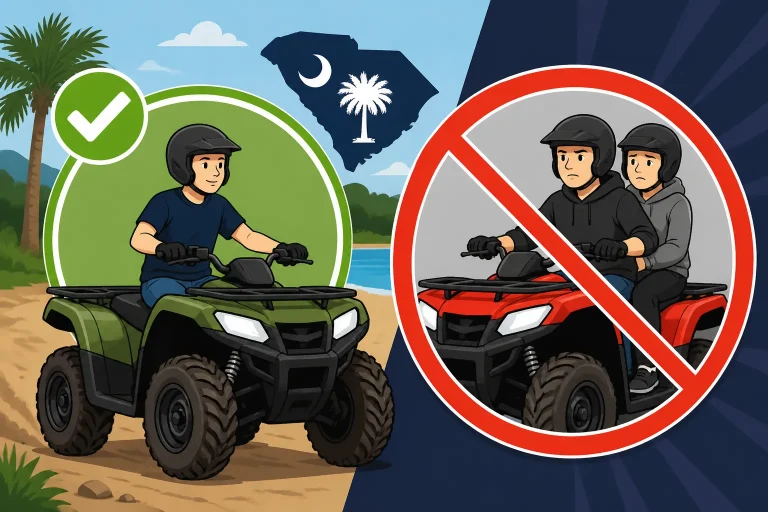
A day pass is associated with the vehicle, while a season pass is tied to a named rider. That distinction matters when friends share a truck, take turns riding or arrive in separate vehicles. Read the specific pass terms before buying, and don’t lend a season pass to someone else.
Entering the wrong plate
A day pass may be tied to the plate information entered at purchase. A simple typo can create an avoidable question during a check. Review the details before submitting the order, and confirm that you’re using the vehicle that will actually be at the trailhead.
Buying the wrong kind of pass
A forest pass is not a private-park pass, and a general recreation pass may not be the OHV pass you need. Check the product name and coverage before checkout. If the listing is confusing, get clarification before you travel rather than guessing.
Treating a receipt as a display pass
A purchase confirmation is valuable backup, but it may not satisfy a requirement to print or display the pass. Follow the pass-specific instructions. Keep a digital copy as extra proof, while still meeting any display requirement.
Assuming the trail will be open
Passes don’t guarantee access on a particular day. Closures, maintenance, weather and seasonal restrictions can affect availability. Check current notices shortly before departure and have a backup plan.
Taking an unsuitable machine to a trail
Trail width and vehicle type restrictions are not suggestions. A side-by-side may be too wide for a route, and a motorcycle-only trail is not a general ATV trail. Check the trail rules before loading, especially if you’re riding an unfamiliar location.
Expecting to pay cash at the trailhead
Don’t make the trip assuming there will be a staffed booth or a cash collection tube. The online purchase process is the practical route. Buy ahead, save the proof and follow the display directions.
If you discover a mistake before traveling, return to the official pass listing and look for the correct process to amend or repurchase. If you’re already at the trailhead, don’t improvise a workaround or ride without confirming the requirement. Contact the responsible forest office or pass support, and wait for a clear answer.
A pass can be inexpensive compared with the fuel, time and trailer effort involved in a riding day, but the important part is buying the right one and using it correctly. For the current validity period, terms, purchase options and display instructions, check the official Recreation.gov listing and forest notices before every trip.
Disclaimer
This article is for general informational purposes only and does not constitute professional advice. Laws, prices and regulations vary by location and change over time. Consult a qualified professional for guidance on your specific situation.