South Carolina Rules for a 6-Year-Old Rider
It's incredibly common for parents and guardians in South Carolina to wonder about the rules for letting their youngest adventurers ride ATVs. There's a lot of confusing information out there, and navigating state laws for a 6-year-old rider can feel like deciphering ancient texts. This comprehensive guide will break down South Carolina's specific regulations, safety requirements, and permissible riding areas, ensuring you have all the facts to keep your little one safe and legal on their off-road machine.
The Core Law Affecting Young Riders in South Carolina
When it comes to ATV riding with young children in the Palmetto State, the conversation always begins and ends with Chandler's Law. This isn't just a suggestion; it's the bedrock of ATV safety regulations here, designed specifically to protect our youngest riders. It can feel a bit overwhelming, but understanding its core principles is the first step to ensuring a safe and fun experience for everyone.
Understanding Chandler's Law and Its Impact
Chandler's Law, officially known as the South Carolina All-Terrain Vehicle Safety Act, was enacted to prevent tragic accidents involving ATVs, especially among minors. It's a comprehensive piece of legislation that outlines everything from age restrictions to supervision requirements and safety gear. For a 6-year-old, this law is particularly stringent, emphasizing protection above all else. The state recognized that an ATV, while an exciting piece of equipment, can be incredibly dangerous in the hands of an untrained or undersized rider. The law aims to mitigate these risks by setting clear boundaries and responsibilities.
One of the most significant impacts of Chandler's Law is its explicit stance on who can operate an ATV based on age and machine size. It's not a free-for-all; there are specific guidelines that must be followed. This means that simply having a youth-sized ATV isn't enough; the rider themselves must meet certain age and supervision criteria. The law is quite clear: it applies to all off-road vehicles with three or more wheels, excluding golf carts, farm equipment, and certain utility vehicles. For a 6-year-old, this means their riding experience is heavily regulated for their safety. You might also want to look into [Chandler's Law and South Carolina ATV Rules] for a broader understanding of this critical legislation.
Age Restrictions on ATV Operation
Now, let's get down to the nitty-gritty for a 6-year-old. South Carolina law is quite specific about minimum operating ages. A child under 6 years old is absolutely prohibited from operating an ATV, no exceptions. However, simply turning six doesn't grant unfettered access. For riders between the ages of 6 and 15, there are very strict conditions. They can only operate an ATV designed for their age and under direct adult supervision on private property. What does "designed for their age" mean? It typically refers to youth-model ATVs with smaller engines, speed restrictors, and appropriate ergonomics. You absolutely cannot put a 6-year-old on an adult-sized machine, even with supervision. The risks of injury from a machine that's too powerful or too large are simply too great. This distinction between adult and youth machines is paramount and often where people make critical errors.
Furthermore, a 6-year-old is also prohibited from being a passenger on an ATV unless they are riding on a machine specifically designed and equipped to carry a passenger, and even then, specific age rules apply to passengers. Generally, children under 6 cannot be passengers. So, the idea of having your child ride along with you on a standard adult ATV is a non-starter under South Carolina law. The law's intent is to prevent situations where a child, due to their size, strength, or cognitive development, is placed in undue danger. It’s a common misconception that if you’re a good rider, you can safely carry a child, but the law in South Carolina sees things differently when it comes to young children. For more details on what younger riders can operate, check out [What a 5-Year-Old May Ride in South Carolina] to understand the nuances around age.
Essential Safety Requirements for a 6-Year-Old
Beyond age restrictions, South Carolina law places a strong emphasis on practical safety measures for young ATV riders. This isn't just about avoiding tickets; it's about genuinely protecting a child who might not fully grasp the dangers involved in operating these powerful machines. Equipping them correctly and ensuring they are supervised are non-negotiable aspects of responsible ATV ownership in the state.
Helmets and Eye Protection for Young Riders
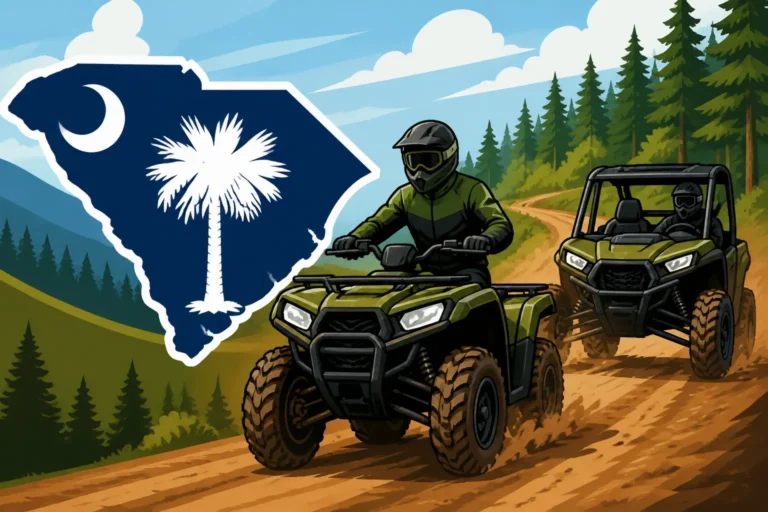
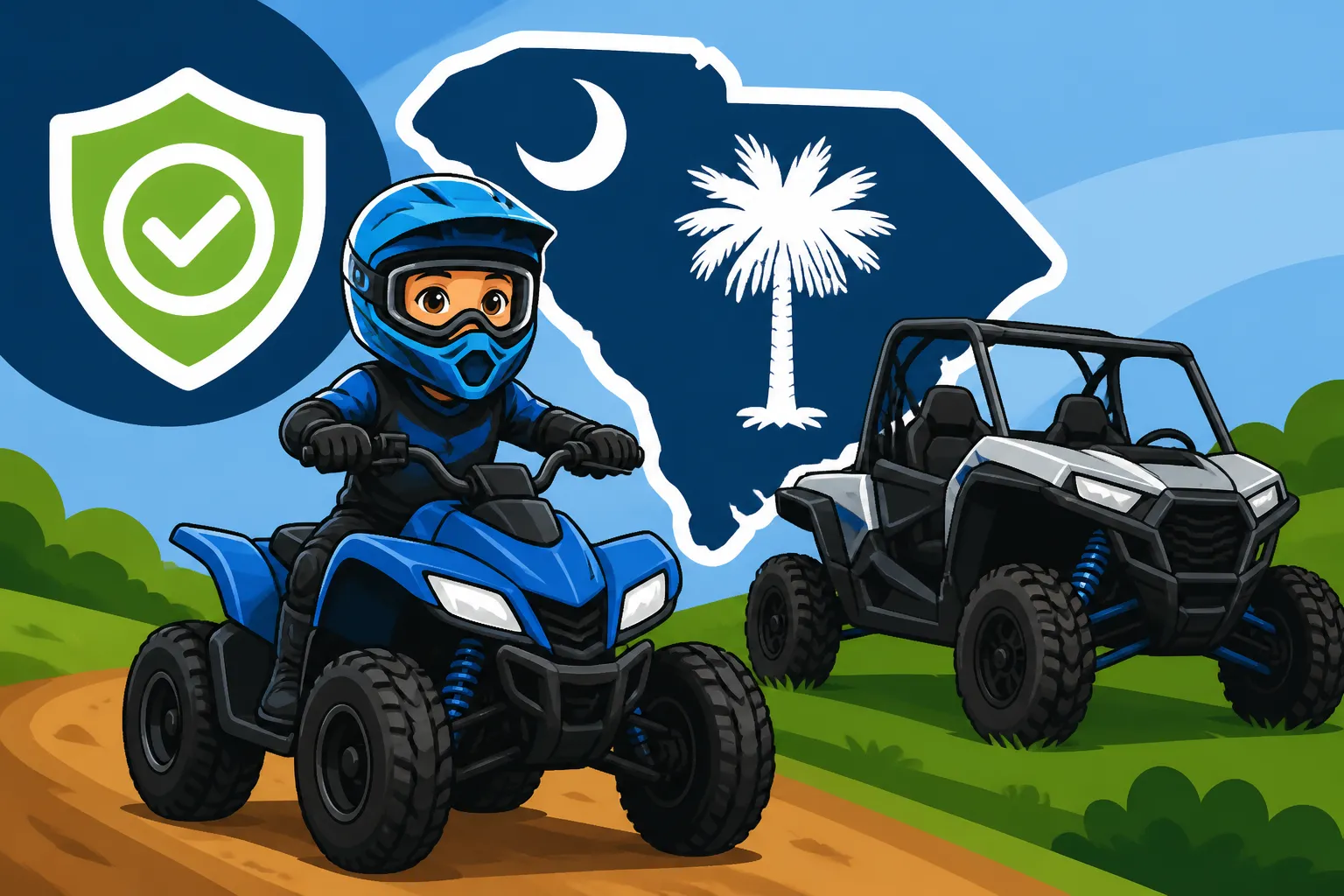
This is one area where the law is crystal clear: any ATV rider under the age of 16 in South Carolina must wear a safety helmet. Not just any helmet, mind you, but one that meets federal safety standards, such as those set by the Department of Transportation (DOT). This isn't a suggestion; it's a legal requirement. A helmet can literally be the difference between a minor bump and a life-altering injury in the event of an accident. Helmets protect the most vulnerable part of a child's body, and choosing one that fits correctly and is in good condition is crucial. It should fit snugly without being uncomfortable, and the chin strap should always be fastened.
In addition to a helmet, eye protection is also mandatory for riders under 16. This means goggles or a face shield. Riding an ATV, even at slow speeds, exposes the rider to dust, debris, insects, and even low-hanging branches. Any of these can cause significant eye injury or, just as dangerously, obscure a child's vision, leading to an accident. Imagine a stone flying up from the tire of a lead rider or a branch whipping back on a trail; without eye protection, a child's vision could be instantly compromised, leading to a loss of control. So, before your 6-year-old even starts the engine, ensure they are properly outfitted with both a DOT-compliant helmet and appropriate eye protection. You can read more about this requirement specifically in [South Carolina Helmet Rules for Young Riders] and [Eye Protection Beside a Helmet].
The Importance of Supervision on Private Land
For a 6-year-old, direct adult supervision is not just recommended; it is mandated by Chandler's Law when they are operating an ATV on private property. This isn't about letting them ride around while you're inside the house or across the field; it means direct, visual, and immediate supervision. The supervising adult must be capable of providing immediate assistance and intervention if needed. This could mean riding on another ATV nearby, or walking alongside if the child is just learning at very slow speeds. The supervisor should be able to communicate effectively with the child and guide them through safe riding practices.
The rationale behind this rule is simple: a 6-year-old lacks the judgment, quick reflexes, and strength to handle unexpected situations on an ATV. They might encounter an obstacle, lose control, or simply make a poor decision. An alert and engaged supervisor can prevent these mishaps from escalating into serious accidents. This adult accompaniment rule extends to riders up to 16 years old, but it's especially critical for the youngest demographic. Think of it like teaching a child to swim; you wouldn't just throw them in the deep end. The same cautious, hands-on approach is needed for ATV riding. Learn more about broader supervision rules in [South Carolina Adult Accompaniment at 16 and Under].
Age Warning Labels and Machine Matching
South Carolina law also addresses the manufacturer's age warning labels that are affixed to ATVs. It is unlawful to knowingly remove, alter, or deface these warning labels. These labels are there for a reason: to inform owners and operators about the recommended age range for a particular machine. For a 6-year-old, this is crucial. You must ensure the ATV they are riding is explicitly rated for their age group. Trying to make an older, larger ATV "work" for a small child by adding blocks to the pedals or reducing throttle is incredibly dangerous and a violation of the spirit of the law, if not the letter.
This ties into the concept of machine matching – ensuring the ATV’s size, weight, power, and speed capabilities are appropriate for the child’s age, size, and skill level. A 6-year-old simply doesn't have the physical strength or developmental readiness to safely control anything but the smallest, slowest youth models. A machine that is too heavy can tip easily, too fast can lead to loss of control, and too large can make it difficult for the child to reach controls or shift their weight properly. Reputable manufacturers like those whose parts might be found at a place like SuperATV (for instance, aftermarket speed limiters or specific throttle controls for youth models, though always check for compatibility and safety) are aware of these needs and design machines accordingly. Always consult the manufacturer’s recommendations for the specific ATV. This isn't just a suggestion; it's a vital part of keeping your young rider safe.
Where a 6-Year-Old Can (and Cannot) Ride an ATV
Understanding where a 6-year-old can legally and safely ride an ATV in South Carolina is just as important as knowing the age and safety gear rules. The state differentiates significantly between public lands, public roads, and private property, and these distinctions are particularly stringent for minors. Ignoring these boundaries can lead to severe penalties and, more importantly, put your child at risk.
Restrictions on Public Roads and Land
Let's be unequivocally clear: a 6-year-old cannot operate an ATV on public roads in South Carolina. This includes secondary roads, dirt roads, or any road maintained by the state, county, or municipality, regardless of how remote or quiet it might seem. ATVs are not street-legal vehicles in South Carolina, and this prohibition is universal for all ages, with very limited exceptions for things like farm use or specific utility tasks under strict conditions, none of which apply to recreational riding by a child. There are no special permits or allowances for young riders to use public thoroughfares.
Similarly, riding an ATV on public lands, such as state parks or national forests, is highly regulated. While some national forest trails in South Carolina do allow ATVs, such as those in the Sumter National Forest like the Enoree OHV Trail or Parsons Mountain OHV Trail, these usually have age restrictions for operators and specific requirements for permits and safety certifications. It's highly unlikely that a 6-year-old would meet the requirements to ride independently on these designated public trails. In fact, many public trails have width restrictions like [South Carolina's 50-Inch Trail Width Limit], which primarily affect larger side-by-sides, but the general rule is that public land use for ATVs is for experienced riders, not young children learning the ropes. Always check with the specific land management agency (e.g., USDA Forest Service, SC State Parks) for their current rules, which often go above and beyond state law for added safety.
Riding on Private Property with Permission
The most common and generally safest place for a 6-year-old to ride an ATV in South Carolina is on private property, provided you have the landowner's express permission. This could be your own land, a friend's farm, or a designated private riding park. Even on private land, all the rules we've discussed still apply: proper age-appropriate machine, helmet, eye protection, and direct adult supervision. Private land offers a controlled environment where you can monitor terrain, eliminate unexpected traffic, and gradually introduce your child to riding skills. It's the ideal setting for learning and practicing safely.
However, "private property" isn't a blanket permission slip for anything. If you're riding on someone else's land, ensure you have written permission, as this can protect you if any issues arise. [South Carolina Private Property Exemptions] in Chandler's Law allow for riding on private land, but they don't waive the safety requirements for minors. Even on private land, you're responsible for ensuring your 6-year-old is operating their ATV in a safe and legal manner according to state law. The beauty of private land is the ability to create a safe, clear course where a young rider can build confidence without the unpredictable variables of public spaces.
Specific Rules for Youth-Sized Machines
The law implicitly supports the use of youth-sized ATVs for young riders. These machines are designed with smaller engines (e.g., typically under 90cc for this age group), lower top speeds, and a chassis that fits a smaller rider. They often come equipped with features like throttle limiters, remote engine cut-offs, and adjustable suspension to grow with the rider. It's important to remember that a "youth ATV" isn't just a miniature version of an adult machine; it's engineered with a child's capabilities and safety in mind.
While the law doesn't specify cubic centimeters for each age, it mandates that the machine must be "designed for the operator's age." This means you need to be very diligent in selecting an ATV that matches your 6-year-old's size and skill level. Don't be tempted to get a machine they'll "grow into" too quickly. Starting with a machine that is too powerful or too large will inevitably lead to frustration, fear, and increased risk of injury. The goal is to build confidence and skills incrementally, and the right-sized machine is foundational to that process. Make sure to consult the manufacturer's age recommendations, which are usually clearly marked on the machine itself and in the owner's manual.
Consequences of Non-Compliance
It's easy to think that if you're out in the woods or on your own property, nobody is watching. But South Carolina takes ATV safety very seriously, especially concerning minors. The consequences of not adhering to Chandler's Law can range from financial penalties to more severe legal ramifications, not to mention the immense personal cost if an accident occurs due to negligence.
Penalties for Violating South Carolina's ATV Laws
Violating Chandler's Law, particularly the provisions regarding minors, can result in significant penalties. Fines typically range from $50 to $200 for each offense. While a $50 fine might not seem like a lot, multiple violations can add up quickly. More importantly, these fines serve as a stark reminder of the state's commitment to safety. If an injury occurs while a child is operating an ATV illegally (e.g., without a helmet, on an oversized machine, or unsupervised), the legal repercussions for the supervising adult can be much more severe, potentially involving civil lawsuits or even criminal charges, depending on the circumstances. The goal of the law isn't just punishment, but deterrence and protection.
Beyond financial penalties, there could be other consequences. For instance, if an incident leads to law enforcement involvement, the ATV itself could be impounded. This is a rare occurrence but highlights the state's authority to enforce these regulations. The focus here is on the adult who is responsible for the child's safety and ensuring compliance with the law. Ignorance of the law is generally not considered an excuse, so it's critical for every parent or guardian to be fully informed. Understanding [South Carolina Penalties Under Chandler's Law] can help emphasize the seriousness of these regulations.
Insurance Implications and Liability Concerns
Another critical aspect of non-compliance, often overlooked until it's too late, is the impact on your insurance and potential liability. If your 6-year-old is involved in an accident while riding an ATV in violation of state law (e.g., not wearing a helmet, unsupervised, or on an inappropriate machine), your homeowner's insurance policy may deny coverage for any injuries or damages. Most policies have exclusions for illegal activities or activities not in compliance with state regulations. This could leave you personally liable for substantial medical bills, property damage, or legal fees.
Considering the unpredictable nature of off-road riding, securing proper insurance for your ATV, especially one operated by a minor, is paramount. While South Carolina does not require insurance for off-road ATVs, it's a wise investment. However, even with ATV-specific insurance, policy terms often stipulate that the operator must be in compliance with all state laws. Therefore, knowingly allowing a 6-year-old to ride in a manner contrary to Chandler's Law could void your coverage. Before allowing your child to ride, have a frank conversation with your insurance agent to understand your policy's specifics and ensure you are adequately covered, should the unthinkable happen. It's a small step that can save you immense heartache and financial burden down the line.
| Rule Category | Requirement for a 6-Year-Old Rider | Details |
|---|---|---|
| Age Eligibility | Age 6 to 15 (min. 6 years old) | Prohibited if under 6. Must ride age-appropriate machine. |
| Machine Type | Age-appropriate ATV | Must be designed for their age, size, and skill. Unlawful to remove age warning labels. |
| Supervision | Direct adult supervision | Mandatory on private land. Adult must be capable of immediate intervention. |
| Safety Gear | DOT-compliant helmet | Mandatory for riders under 16. Must fit properly and be fastened. |
| Eye Protection | Goggles or face shield | Mandatory for riders under 16. Protects against debris and impacts. |
| Riding Location | Private property only | Prohibited on public roads. Restrictions apply on public lands (check specific rules). Need landowner permission. |
| Passenger Rule | Generally prohibited | Cannot be a passenger unless on a machine specifically designed for it, and even then, age restrictions apply. |
| Safety Certificate | Not explicitly required at 6 | Required for riders 6-15 when operating on public lands, but private land usually doesn't need it. (Check South Carolina ATV Safety Certificate Requirements for specifics on age.) |
Disclaimer
This article is for general informational purposes only and does not constitute professional advice. Laws, prices and regulations vary by location and change over time. Consult a qualified professional for guidance on your specific situation.