South Carolina Rules for a 10-Year-Old Rider
As a parent in South Carolina, trying to figure out the exact rules for your child to safely and legally enjoy an ATV can feel like navigating a maze blindfolded. You just want your 10-year-old to have fun, learn responsibility, and stay safe, but the conflicting information and legal jargon can be incredibly frustrating. This guide is here to cut through that confusion, giving you a clear, empathetic, and comprehensive breakdown of everything you need to know about South Carolina's rules for a 10-year-old rider, from the specific laws to essential safety practices.
Understanding South Carolina's Age Restrictions for Young Riders
It's natural to wonder, "Can my 10-year-old even ride an ATV legally?" The answer is yes, but with some very important stipulations. South Carolina takes the safety of young riders seriously, and our state has specific laws designed to protect them, primarily under what's known as Chandler's Law. This isn't just a suggestion; it's the legal framework governing ATV use for minors, and understanding it is your first step as a responsible parent.
The Core of Chandler's Law: Age 6 to 15 Rules
For a 10-year-old, the crucial part of South Carolina's ATV law, often referred to as [Chandler's Law and South Carolina ATV Rules], places them squarely in a category requiring specific oversight and training. The law states that riders aged 6 to 15 must be under the direct supervision of an adult. This isn't a "watch them from the porch" kind of supervision; it means the adult must be close enough to immediately intervene if a problem arises. Think of it as hands-on, constant vigilance. This adult must be at least 18 years old and competent to operate the ATV themselves.
The intent behind this rule is crystal clear: to ensure that young, developing riders have an experienced eye constantly on them, ready to guide, correct, or assist. A 10-year-old is still building critical judgment skills, understanding risk, and refining their physical coordination. Having an adult right there is paramount to their safety, preventing situations from escalating into accidents. Imagine your child encountering unexpected terrain, like a sudden drop or a hidden rut; an experienced adult nearby can signal them, guide them around, or even quickly stop them before they get into trouble.
What a 10-Year-Old Can Legally Ride
While the law doesn't specify an exact engine displacement (CC) limit for a 10-year-old based on age, it very clearly mandates that the ATV must be "appropriate for the rider's age and weight." This is where parental judgment, combined with manufacturer guidelines, becomes vital. Most ATV manufacturers will list recommended age ranges for their machines. A 10-year-old should generally be on a youth-model ATV, typically with smaller engines and restricted speeds, not a full-size adult machine. Placing a child on a machine that is too powerful, too heavy, or too large for their stature significantly increases the risk of accidents, loss of control, and injury.
Consider the ergonomics: can your child comfortably reach the handlebars, footpegs, and controls like the throttle and brake? Can they easily shift their weight to maneuver the ATV effectively? If they're stretching or struggling, the machine is too big. A good rule of thumb is that a child should be able to operate the controls without overextending themselves, stand on the footpegs, and shift their weight to control the machine. Investing in the right size machine for your child is perhaps one of the most important safety decisions you'll make. Many manufacturers offer youth models specifically designed with these considerations in mind, often featuring adjustable throttles or speed limiters that can grow with your child's skill level. You might even find performance and safety upgrades for youth machines from brands like SuperATV that help tailor the ride even more effectively.
Mandatory Safety Equipment and Training for a 10-Year-Old
Beyond supervision and appropriate machine size, South Carolina law is very specific about the protective gear and formal training required for young riders. These aren't just good ideas; they are legal necessities that can literally be life-savers. Ignoring these requirements not only puts your child at severe risk but also exposes you to potential legal penalties.
Helmets and Eye Protection: Non-Negotiables
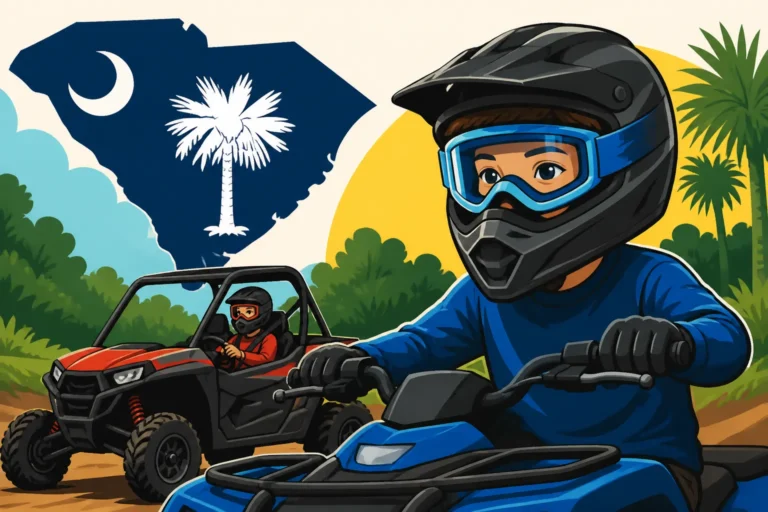
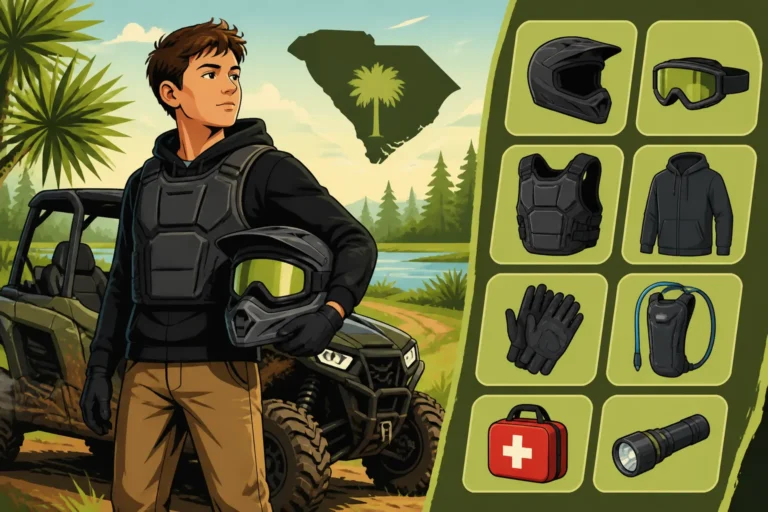
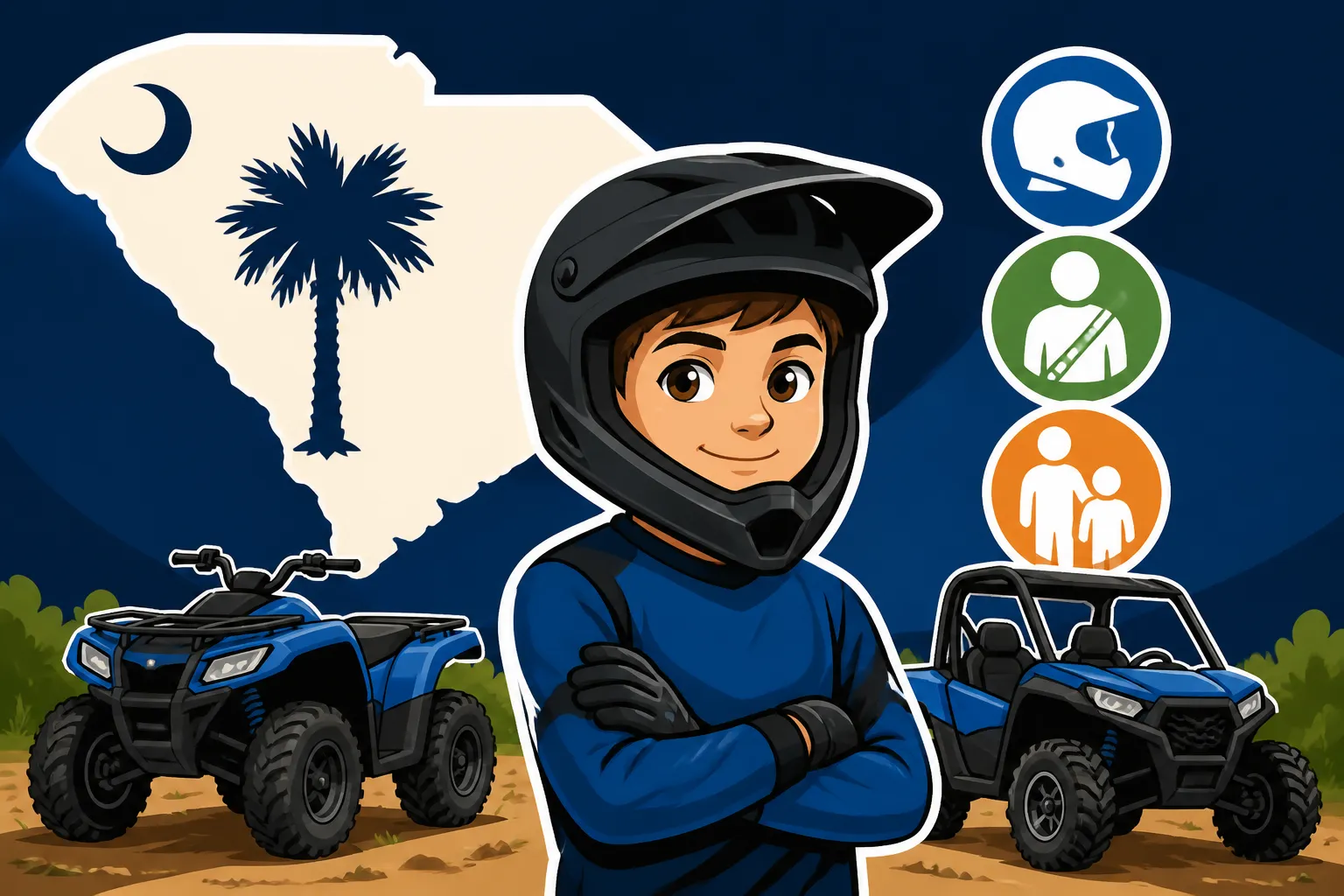
Let's be absolutely clear: if your 10-year-old is riding an ATV in South Carolina, they must wear a helmet and eye protection. [South Carolina Helmet Rules for Young Riders] are strict on this point. For riders under the age of 16, their helmet must meet federal safety standards (such as DOT certification). This isn't a cheap bicycle helmet; it needs to be an ATV-specific or motorcycle-specific helmet designed to withstand the types of impacts common in off-road riding. It must also fit properly – snug, but not uncomfortable, with the chin strap securely fastened. A helmet that's too loose can come off in a crash, while one that's too tight can be distracting and painful.
In addition to a helmet, eye protection is also mandatory. Goggles or a helmet with a full face shield are essential to protect your child's eyes from flying debris, dust, branches, and insects. An unexpected sting or a piece of gravel to the eye can cause a child to lose control instantly, even at low speeds. These pieces of equipment work together to protect the most vulnerable parts of a rider's body: their head and face. Think about the types of terrain in South Carolina – dusty trails, wooded areas with low-hanging branches. Without proper eye protection, your child is constantly at risk of injury and distraction. Furthermore, make sure to leave [South Carolina Age Restriction Warning Labels] on the machine, as their removal is considered unlawful.
The Crucial ATV Safety Certificate
This is perhaps one of the most overlooked, yet absolutely critical, requirements for young ATV riders in South Carolina. Any person 15 years of age or younger must possess a valid ATV safety certificate to operate an ATV. Your 10-year-old falls directly into this category. The process for obtaining this certificate typically involves two parts: an online course and a hands-on riding course. [South Carolina Safety Certificate Requirements] are not just about checking a box; they are designed to teach fundamental safety principles, riding techniques, and responsible operation that significantly reduce the risk of accidents.
The online course often covers topics like pre-ride inspections, protective gear, riding strategies, and understanding terrain. This foundational knowledge is crucial before a child even sits on a machine. Following the online portion, a hands-on course provides practical experience under the guidance of certified instructors. Here, your child will learn how to properly start, stop, turn, shift weight, and handle different types of terrain safely. [The Safety Certificate Riders 15 and Under Need] ensures that young riders develop skills in a controlled environment before heading out onto trails. Imagine trying to teach a child to swim without lessons; it's risky and inefficient. The same applies to ATV riding. These courses are invaluable for building confidence and competence. You can often find providers approved by the ATV Safety Institute, offering sessions at various locations across the state. Remember, getting this certificate is a legal requirement, and failure to have it can result in penalties. Parents often start with the [South Carolina Online Course Prerequisite] before moving to the [South Carolina Hands-On Course Length].
Where a 10-Year-Old Can and Cannot Ride in South Carolina
Understanding the legal and safe places for your 10-year-old to ride their ATV is just as important as knowing the gear and training requirements. South Carolina has clear distinctions between private and public lands, and violations can lead to serious legal trouble, not to mention safety hazards.
Private Property: The Primary Riding Zone
For a 10-year-old, private property is overwhelmingly the safest and most legally permissible place to ride an ATV in South Carolina. If you own land, or have explicit, written permission from a landowner, your child can ride there. This is where the direct adult supervision requirement mentioned earlier becomes especially practical. On private land, you control the environment, you know the terrain, and you can mitigate risks far more effectively than on unfamiliar public trails. Many families create their own small riding areas or specific trails on their property, tailoring the difficulty to their child's skill level.
It's crucial to stress the "explicit permission" part. Just because a field looks abandoned, or a timber tract seems open, doesn't mean it's fair game. Riding on someone else's land without permission is trespassing, a legal offense that can result in fines and other penalties. Always seek and carry written permission, especially if you're riding on land owned by a friend or family member. [South Carolina Private Property Exemptions] clarify that certain rules might not apply on private land, but direct supervision and appropriate safety gear remain paramount. This is also where you might consider upgrading your machine for added safety and performance – for example, a high-quality set of tires from a company like SuperATV can make a big difference in traction and handling on various private property terrains, from muddy fields to rocky trails.
Public Lands and Road Restrictions
This is where the rules become much stricter, and for good reason. Generally speaking, ATVs are not allowed on public roads or highways in South Carolina. These machines are designed for off-road use, and their characteristics (speed, handling, lack of traditional safety features) make them unsafe for sharing roads with cars and trucks. Even dirt roads or unpaved county roads are typically off-limits for recreational ATV use, unless specifically designated. There are very limited, specific exemptions for agricultural purposes, hunting, or emergency services, but these rarely apply to a 10-year-old riding recreationally.
Furthermore, many public lands, such as Wildlife Management Areas (WMAs) in South Carolina, have strict prohibitions against ATV use. [South Carolina WMAs Ban ATVs] is a common regulation you'll encounter. Even the national forests in South Carolina have designated OHV trails, and while these are fantastic for riding, they often have specific rules regarding age, machine type, and required permits. A 10-year-old should only ever ride on these designated trails if all other state and forest-specific regulations are met, including having the required safety certificate and adult supervision. It's a completely different regime than riding on private land. For instance, [South Carolina Street UTV Rules From November 2026] describe a new class of street-legal utility vehicles, but these are distinct from ATVs, and a 10-year-old would not be licensed or permitted to operate one on public roads.
Protecting Your Child: Penalties and Best Practices
As parents, our primary goal is to keep our children safe. While understanding the law is crucial, it's equally important to instill a sense of responsibility and safe riding habits that go beyond mere compliance. Knowing the penalties for violating the rules can also help underscore the seriousness of ATV safety.
Understanding the Legal Consequences
South Carolina's ATV laws, particularly Chandler's Law, carry penalties for non-compliance. If a 10-year-old is caught riding an ATV without the required safety certificate, without proper supervision, or without a helmet and eye protection, there can be fines. [South Carolina Fines of $50 to $200] are typical for these types of violations. It's important to understand that as the parent or legal guardian, you are ultimately responsible for ensuring your child complies with these laws. The citations will typically be issued to the supervising adult or the owner of the ATV.
These penalties aren't meant to be punitive for the sake of it; they're designed to encourage adherence to safety standards that demonstrably reduce injuries and fatalities. Imagine the legal and emotional fallout if your child were involved in an accident while violating these laws. The repercussions could be far more severe than a fine, involving serious injury or even criminal charges in some circumstances. Therefore, compliance isn't just about avoiding a ticket; it's about safeguarding your child's future and well-being.
Beyond the Law: Cultivating Responsible Riders
While the law sets the minimum standard, responsible parenting means going beyond the letter of the law to cultivate truly safe and responsible riders. Here are some best practices:
- Pre-Ride Inspections: Teach your 10-year-old the importance of a quick check before every ride. This includes checking tire pressure, oil and fuel levels, chain tension (if applicable), and ensuring brakes are functioning properly. This builds good habits and teaches them to be attuned to their machine.
- Riding Within Limits: Encourage your child to always ride within their skill level and never push beyond what they are comfortable with. The fastest rider isn't always the best or safest. Emphasize smooth, controlled riding over speed or daring stunts. For youth machines, consider adding robust aftermarket protection, like skid plates or brush guards from SuperATV, which can help protect the machine and rider from unexpected impacts on the trail.
- Terrain Awareness: Teach them to scan the terrain ahead, identify potential hazards like rocks, roots, holes, or water crossings, and adjust their speed and line accordingly. South Carolina's diverse terrain, from sandy coastal areas to rocky Upstate trails, demands constant vigilance.
- Setting a Good Example: As the supervising adult, your actions speak louder than words. Always wear your helmet and eye protection, follow all safety rules, and demonstrate responsible riding behavior. If you cut corners, your child will likely mimic that behavior. [South Carolina Adult Accompaniment at 16 and Under] isn't just a rule, it's an opportunity for mentorship.
- Ongoing Practice and Education: Riding is a skill that improves with practice. Continue to reinforce the lessons learned in the safety course. Discuss different scenarios and how to handle them. The more comfortable and practiced your child is, the safer they will be.
By combining strict adherence to South Carolina's ATV laws with a commitment to comprehensive safety practices, you can ensure your 10-year-old enjoys the thrill of ATV riding responsibly and safely for years to come.
Disclaimer
This article is for general informational purposes only and does not constitute professional advice. Laws, prices and regulations vary by location and change over time. Consult a qualified professional for guidance on your specific situation.