Do You Need a License for a UTV in South Carolina?
One of the biggest head-scratchers for anyone looking to enjoy the vast outdoor opportunities here in South Carolina is figuring out what paperwork you actually need for your UTV. There's a lot of conflicting information out there, and it's easy to get confused about whether you need a special license, registration, or even a title for your side-by-side. This guide is here to untangle all that confusion, specifically focusing on whether you need a driver's license to operate a UTV on South Carolina's roads and trails.
The Confusion Around UTV Licensing in South Carolina
It’s completely understandable why folks get so bewildered when it comes to UTV regulations. You see side-by-sides everywhere – on farms, in the woods, even cruising down secondary roads in some areas – and each scenario seems to have its own set of unwritten rules. This patchwork of usage creates a real headache when you're trying to figure out what's legally required of you, especially regarding something as fundamental as a driver's license. The truth is, the answer isn't a simple "yes" or "no" because it really depends on how and where you intend to use your UTV.
Why the Rules Feel So Murky
For years, UTVs were largely considered off-road recreational vehicles, similar to ATVs, and the rules were relatively straightforward: keep them off public roads. But as these machines became more versatile and capable, with features like turn signals and seatbelts becoming standard, a movement grew to allow them limited street use. South Carolina, like many other states, eventually responded to this demand, creating a new class of "street-legal UTVs." This legislative shift was a big step forward for enthusiasts, but it also layered a new set of rules on top of the existing ones, making the whole situation feel more complex than it needs to be. It's like trying to bake a cake with two different recipe books open at once – you know you want cake, but you're not sure which ingredients to grab.
Adding to the murkiness is the fact that many people use UTVs for a blend of purposes. One day you might be hauling feed on private land, where a license isn't a concern, and the next you're planning a trip to a local store on a designated public road. This dual nature means you really have to think about your intended use before you even turn the key. It's not just about the machine itself, but also about the operator and the environment they're in. This is why a clear understanding of the law is so crucial, to avoid those frustrating run-ins with law enforcement or, worse, accidents due to misunderstanding.
The Big Distinction: Off-Road vs. Street-Legal
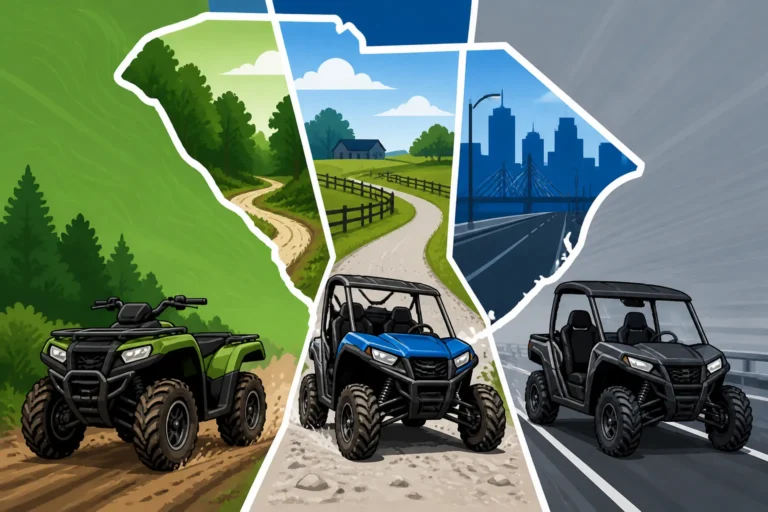
The most important distinction to grasp when discussing UTV licensing in South Carolina is whether your vehicle is truly "off-road only" or has been designated and equipped as "street-legal." This isn't just a casual term; it's a legal classification that dramatically alters what's required of you, the operator. An off-road UTV, often used for recreation, hunting, or farm work exclusively on private property or designated off-road trails, operates under one set of guidelines. For these machines, the need for a driver's license is virtually nonexistent, focusing instead on age and supervision for younger riders.
However, once you decide to take your UTV onto public roads, even secondary or low-speed ones, it enters the realm of "street-legal." This designation brings with it a whole new set of requirements designed to ensure safety and integrate these vehicles into the existing traffic system. It's like the difference between driving a golf cart around your neighborhood and driving your pickup truck on the highway. Both are vehicles, but their legal status and the rules governing them are vastly different. Understanding this core difference is the first step to figuring out your licensing needs, as everything else flows from whether your UTV is street-legal or not. [South Carolina Street-Legal UTV Registration Arrives] marks a significant change for enthusiasts looking to take their side-by-sides onto public roads, formalizing the process for the first time.
Licensing Requirements for Street-Legal UTVs
So, you've got a UTV that meets all the specifications for street-legal operation, or you're planning to modify one to do so. This is where the question of a driver's license becomes very relevant. While the idea of a "UTV license" might pop into your head, the reality in South Carolina is a bit simpler, though no less important to understand. The state's approach is designed to treat these road-going UTVs much like other motor vehicles when they are on public thoroughfares, which means the operator needs to be properly qualified.
Your Driver's License Is Key
For a street-legal UTV to be operated on public roads in South Carolina, the person behind the wheel must possess a valid South Carolina driver's license. This is a standard Class D driver's license, the same one you'd use to drive your car or truck. There isn't a special "UTV endorsement" or a separate license you need to obtain just for a side-by-side. The state views the operation of a street-legal UTV on public roads as requiring the same basic driving competency and legal authorization as any other motor vehicle. This makes sense when you think about it: if you're going to share the road with cars, trucks, and motorcycles, you need to understand traffic laws and demonstrate a fundamental ability to operate a vehicle safely.
This requirement ensures that anyone driving a street-legal UTV on public roads has passed the necessary tests for vision, knowledge of traffic laws, and practical driving skill. It's not about the size or type of the vehicle, but the environment it's operating in. So, before you even think about hitting a paved road, make sure your wallet contains that current, unexpired Class D license. If you're wondering about the specifics, you can find more details under [South Carolina Street UTV License Requirements]. It's a fundamental step that ensures everyone on the road, whether in a car or a UTV, meets a baseline level of qualification.
Age Matters for Street-Legal Operation
Beyond simply having a valid driver's license, age plays a crucial role when it comes to operating a street-legal UTV on South Carolina roads. The law is quite clear: you must be at least 17 years old to drive a street-legal UTV on public roads. This age requirement aligns with many other states' rules for similar vehicle classes and is in place to ensure a certain level of maturity and experience in drivers navigating shared roadways. It’s an extra layer of safety, acknowledging that operating any vehicle on public roads carries inherent risks and responsibilities.
This means that even if you have a junior driver's license that allows you to drive a car with certain restrictions, it typically won't grant you the privilege of driving a street-legal UTV on your own until you hit that 17-year mark. The state wants to make sure that the operators of these newly legalized vehicles have reached an age where they are considered more capable of making sound decisions in traffic and reacting appropriately to various road conditions. For those exploring their options, understanding [South Carolina Street UTV Age of 17] is essential for compliance and safety. This specific age limit helps to clarify who can and cannot legally operate these vehicles in a road-going capacity.
What About a Beginner's Permit?
A common question that arises, especially from younger enthusiasts eager to get their street-legal UTVs out and about, is whether a beginner's permit or learner's permit is sufficient. The short answer, generally speaking, is no. In South Carolina, a beginner's permit (often called a "learner's permit") comes with significant restrictions, including the requirement to have a licensed adult passenger in the vehicle at all times and often limitations on driving hours or locations. These permits are designed for supervised learning in traditional cars, not for independent operation of a street-legal UTV on public roads.
The intent behind the 17-year-old age requirement and the need for a full Class D driver's license for street-legal UTVs is to ensure the operator has demonstrated full driving competency and is not under the learning restrictions of a permit. Allowing permit holders to operate UTVs, which can handle differently than cars and may attract different types of attention on the road, could potentially create safety hazards. So, if you're currently holding a beginner's permit, your focus should be on completing the requirements to earn your full, unrestricted driver's license before you plan to take that street-legal UTV onto any public pavement. It's all about ensuring everyone's safety on our shared roads.
What About Off-Road UTVs?
Now, let's switch gears and talk about the UTVs that are strictly used for off-road adventures, farm work, or private property cruising. This is where a lot of the initial confusion probably stems from, because the rules are quite different. If your UTV isn't equipped for the street and you have no intention of ever taking it on a public road, your licensing requirements (or lack thereof) will be very different from those of your street-legal counterparts.
No License, No Problem (Off-Road Only)
If your UTV is used exclusively off-road—meaning on private property, designated off-road trails, or at an approved OHV park—you generally do not need a driver's license to operate it in South Carolina. This applies whether you're working on the back forty, exploring trails at a place like Carolina Adventure World, or just enjoying some mudding on your own land. The state's regulations for off-road machines focus more on rider safety, age restrictions for minors, and responsible operation rather than a formal driving qualification. This exemption acknowledges that off-road environments are different from public roads and don't require the same licensing oversight for safe operation.
However, "no license, no problem" doesn't mean "anything goes." While you might not need a Class D driver's license, there are still crucial rules regarding age, supervision, and safety equipment, especially for younger riders. For instance, even off-road, carrying a certain level of [South Carolina Insurance Proof at Registration] isn't explicitly required for off-road quads or UTVs, but it's always a smart move to protect yourself and your machine. Many responsible private park operators and landowners will still expect safe behavior, and local laws against reckless operation or DUI still apply, even on private land.
Age and Supervision for Young Riders Off-Road
Even though a driver's license isn't required for off-road UTV use, South Carolina has specific age and supervision rules in place, particularly concerning minors. These rules, often referred to under what's known as Chandler's Law, are designed to protect young riders and ensure they gain experience safely. For instance, riders under 16 years of age operating an ATV or UTV off-road must be under the direct visual supervision of an adult who is at least 18 years old. This adult must be physically present and able to immediately intervene if necessary.
Furthermore, riders 15 years old and younger are required to possess an ATV Safety Certificate. This certificate proves they've completed an approved safety course, which teaches critical skills for safe off-road operation. You’ll find details on this under [South Carolina Safety Certificate Requirements]. There are also strict rules about [South Carolina Age Restriction Warning Labels] on machines and specific guidelines for [South Carolina Adult Accompaniment at 16 and Under]. These regulations emphasize safety and responsibility over formal licensing for minors in off-road settings, aiming to prevent accidents and serious injuries. Companies like SuperATV, which provide accessories for all types of UTVs, also advocate for safe riding practices across the board, recognizing the importance of proper training and supervision for all riders.
Private Land vs. Public Trails
The distinction between riding on private land and designated public trails is also vital for off-road UTVs. On your own private property, or land where you have explicit permission, you generally have more leeway regarding who can ride and under what conditions, as long as you adhere to basic safety and age requirements for minors. The key is that the land is private and not accessible to the general public.
When you venture onto public lands or designated OHV (Off-Highway Vehicle) trails, such as those in our National Forests, you'll encounter additional rules, even without the need for a driver's license. These might include trail width restrictions, spark arrester requirements, designated operating hours, and sometimes even fees or permits. These rules are put in place by the land management agencies to protect natural resources, minimize conflicts with other users, and ensure a safe experience for everyone. Always check the specific rules of any public riding area before you go, as they can vary greatly. For example, [South Carolina WMA Riding Is Prohibited] means you won't find UTV trails in Wildlife Management Areas, even for hunting. This differentiation ensures that while you might not need a license, you still need to be an informed and responsible rider wherever you choose to operate.
Other Requirements for Street-Legal UTVs (Beyond the License)
So, you've got your valid driver's license, you're over 17, and you're ready to make your UTV street-legal. That's a huge step, but having the right license is just one piece of the puzzle. Converting an off-road machine into something that can legally share public roads involves several other critical requirements that you need to be aware of. Neglecting any of these can lead to fines, citations, or even having your UTV impounded, which nobody wants. It’s a bit like getting a boat ready for the water – the captain needs a license, but the boat itself needs to be registered, titled, and properly equipped for safety and compliance.
Registration, Title, and Insurance
Once your UTV is deemed street-legal, it essentially becomes a new class of motor vehicle in South Carolina. This means it will require a proper title, registration, and proof of insurance, just like your car or truck. You'll need to apply for a [South Carolina Title for a Side-by-Side] through the DMV, which establishes legal ownership. Following that, you'll need to register your UTV to obtain a license plate, allowing it to be identified as a legitimate road-going vehicle. This registration process also involves paying any associated fees.
Crucially, you'll also need to carry [South Carolina Insurance Proof at Registration]. Liability insurance is a mandatory requirement for any street-legal vehicle operating on public roads in the state. This insurance protects others in case you're involved in an accident that's deemed your fault. Without a valid title, current registration, and adequate insurance, even with a driver's license, your street-legal UTV cannot legally be on public roads. It's a comprehensive package of requirements designed to ensure accountability and safety for all road users.
Equipment That Makes a UTV Street-Legal
Getting a UTV street-legal isn't just a matter of paperwork; it's also about physical modifications and equipment. South Carolina law specifies a list of components that your UTV must have to qualify for street-legal status. These are not optional add-ons; they are essential safety features required to bring the UTV up to a standard acceptable for road use. We're talking about things like headlights, taillights, brake lights, turn signals, and mirrors (both side and rear-view). Your UTV also needs a horn, a windshield, and seat belts for all occupants. Furthermore, the tires must be D.O.T. approved, and the exhaust system must be quiet enough to meet noise regulations.
These requirements are spelled out in detail in [South Carolina Street UTV Requirements Explained]. Ignoring any of these can not only prevent you from getting registered but also put you at risk on the road. Many aftermarket companies, like SuperATV, offer street-legal conversion kits and individual components designed to help UTV owners meet these precise specifications, making the process much easier than sourcing everything separately. It’s an investment in safety and compliance, ensuring your UTV can truly blend in with regular traffic, rather than just appearing to.
Where You Can Actually Ride Them
Even after your UTV is fully street-legal, registered, titled, insured, and you have your license, there are still limitations on where you can actually drive it in South Carolina. These aren't like cars that can go anywhere; street-legal UTVs are typically restricted to secondary roads with speed limits of 55 mph or less. You won't be taking your UTV on interstates or major highways. This is a crucial distinction and one that many new street-legal UTV owners sometimes overlook.
The law specifies [South Carolina Street UTV Road Speed Limits] and often includes [South Carolina Street UTV Radius Exceptions] that dictate how far you can travel from your home or property, though the radius rules are often specific to golf carts and not always applicable to street-legal UTVs, which have broader travel allowances within speed limits. The intent is to allow UTVs to be used for transportation in communities and on rural roads where their lower speed capabilities are less of a hindrance, and safety concerns are mitigated. Always check local ordinances, as some towns or counties might have additional restrictions or specific zones where UTVs are permitted or prohibited. Understanding these geographical and speed limitations is just as important as having the right license and paperwork. And remember, [A Low-Speed Vehicle Is Not a South Carolina UTV] – they have their own, even stricter, rules.
Summary of Licensing and Key Requirements for UTVs in South Carolina
To help clarify everything, here’s a quick overview of the key differences in requirements for off-road versus street-legal UTVs when it comes to licensing and other crucial factors.
| Feature | Off-Road UTV (Private Land/Designated Trails) | Street-Legal UTV (Public Roads) |
|---|---|---|
| Driver's License | No | Yes, valid SC Class D driver's license |
| Minimum Age | Varies for operation (e.g., adult supervision for under 16) | 17 years old to operate on public roads |
| Safety Certificate | Required for riders 15 and under | Not specifically required, but safe driving skills are assumed |
| Title | Optional | Required (must obtain) |
| Registration | No | Required (license plate issued) |
| Insurance | Not required, but recommended | Required (liability coverage minimum) |
| Equipment | Spark arrester, helmet for minors (e.g.) | Headlights, brake lights, turn signals, mirrors, horn, windshield, seat belts, D.O.T. tires, etc. |
| Road Use | Prohibited on public roads | Restricted to roads 55 mph or less, no interstates |
In conclusion, the question of whether you need a license for a UTV in South Carolina boils down entirely to how and where you plan to use it. If your UTV stays strictly off the pavement, a driver's license isn't necessary, but age and safety rules for minors still apply. However, if you intend to make your UTV street-legal and drive it on public roads, a valid South Carolina Class D driver's license is a must, along with a host of other requirements like titling, registration, and proper equipment. Always stay informed and ensure your machine and your operating practices are fully compliant with state and local laws to enjoy your rides safely and legally.
Disclaimer
This article is for general informational purposes only and does not constitute professional advice. Laws, prices and regulations vary by location and change over time. Consult a qualified professional for guidance on your specific situation.