South Carolina Street UTV Road Speed Limits
The excitement of finally being able to drive your UTV on paved roads in South Carolina is real, but it often comes with a heap of questions about what's actually allowed. Many folks are eager to embrace the open road, only to find themselves scratching their heads when it comes to speed limits, especially with all the nuances of state and local laws. This guide will cut through the confusion and explain exactly what South Carolina's street-legal UTV laws say about how fast you can go on public roads, helping you enjoy your ride safely and legally without an unexpected ticket.
Understanding South Carolina's Street-Legal UTV Laws
South Carolina has made some significant strides in allowing UTVs on public roads, a change many of us have been waiting for. It's a game-changer for getting to the trails, running quick errands, or just cruising around without having to load up on a trailer every time. But this newfound freedom isn't without its rules, and understanding the foundation of these laws is crucial before you even think about putting your pedal to the metal on a paved surface.
The Legislative Push for Road Access
For years, UTV owners in South Carolina faced a real dilemma: how to legally get their machines from point A to point B without a trailer. There was a lot of grassroots effort and legislative push to get UTVs recognized as viable on-road vehicles. This culminated in [South Carolina Act 164 and Street UTVs], which finally opened up opportunities for UTVs to gain street-legal status. This act laid the groundwork, defining what a street-legal UTV is and where it can operate, marking a significant shift from the previous regulations that largely confined UTVs to private land or designated off-road trails.
The passage of this act wasn't just a simple wave of a wand; it involved careful consideration of safety, vehicle specifications, and public road infrastructure. Lawmakers had to balance the enthusiasm of the UTV community with the practical realities of sharing roads with traditional cars and trucks. It meant setting clear parameters for what modifications and equipment were necessary to make a UTV roadworthy, which is something every UTV owner needs to pay close attention to.
Defining a Street-Legal UTV
So, what exactly makes a UTV "street-legal" in the eyes of South Carolina law? It’s not just about slapping a license plate on it and calling it a day. There's a specific set of criteria that your machine must meet, which are detailed in [South Carolina Street UTV Requirements Explained]. This includes everything from proper lighting—headlights, taillights, brake lights, and turn signals—to a windshield, seatbelts, and a horn. These aren't suggestions; they're legal requirements designed to ensure your UTV is visible and controllable on public roads, just like any other vehicle.
Many UTV owners, myself included, have found that transforming an off-road beast into a road-legal cruiser often requires more than just a few tweaks. For example, ensuring your UTV has compliant turn signals and brake lights, perhaps from a brand like SuperATV, is a common upgrade for many. These modifications are essential not only for compliance but, more importantly, for your safety and the safety of others sharing the road. Skimping on these requirements isn't just risking a ticket; it's risking an accident.
The "Secondary Road" Definition and Speed Limits
The core of understanding South Carolina's street-legal UTV speed limits lies in how the state defines "secondary roads." This isn't just bureaucratic jargon; it's the specific type of road where your UTV is generally permitted to operate, and critically, it dictates how fast you can legally travel. Failing to grasp this distinction can quickly lead to trouble with local law enforcement, who are often out there making sure everyone is following the rules.
What Qualifies as a Secondary Road
In South Carolina, a secondary road is typically a paved road that isn't part of the primary highway system—think state highways or interstates. These are often your county roads, rural routes, and many suburban streets. They're the veins and capillaries of the road network, not the main arteries. The law is quite specific about this distinction because UTVs, by their nature, aren't designed for the high speeds and heavy traffic found on major highways. You'll find these roads are generally less busy and have lower posted speed limits to begin with.
It’s easy to get confused, especially when a secondary road might look just like a primary road in some areas. The key is to pay attention to the signage and understand that interstates and major state highways (those often numbered in the 100s or 200s, or even higher, depending on the route) are generally off-limits for street-legal UTVs. The intent of the law is to provide UTV access for local travel, not cross-state journeys at highway speeds.
The Maximum Speed Allowed
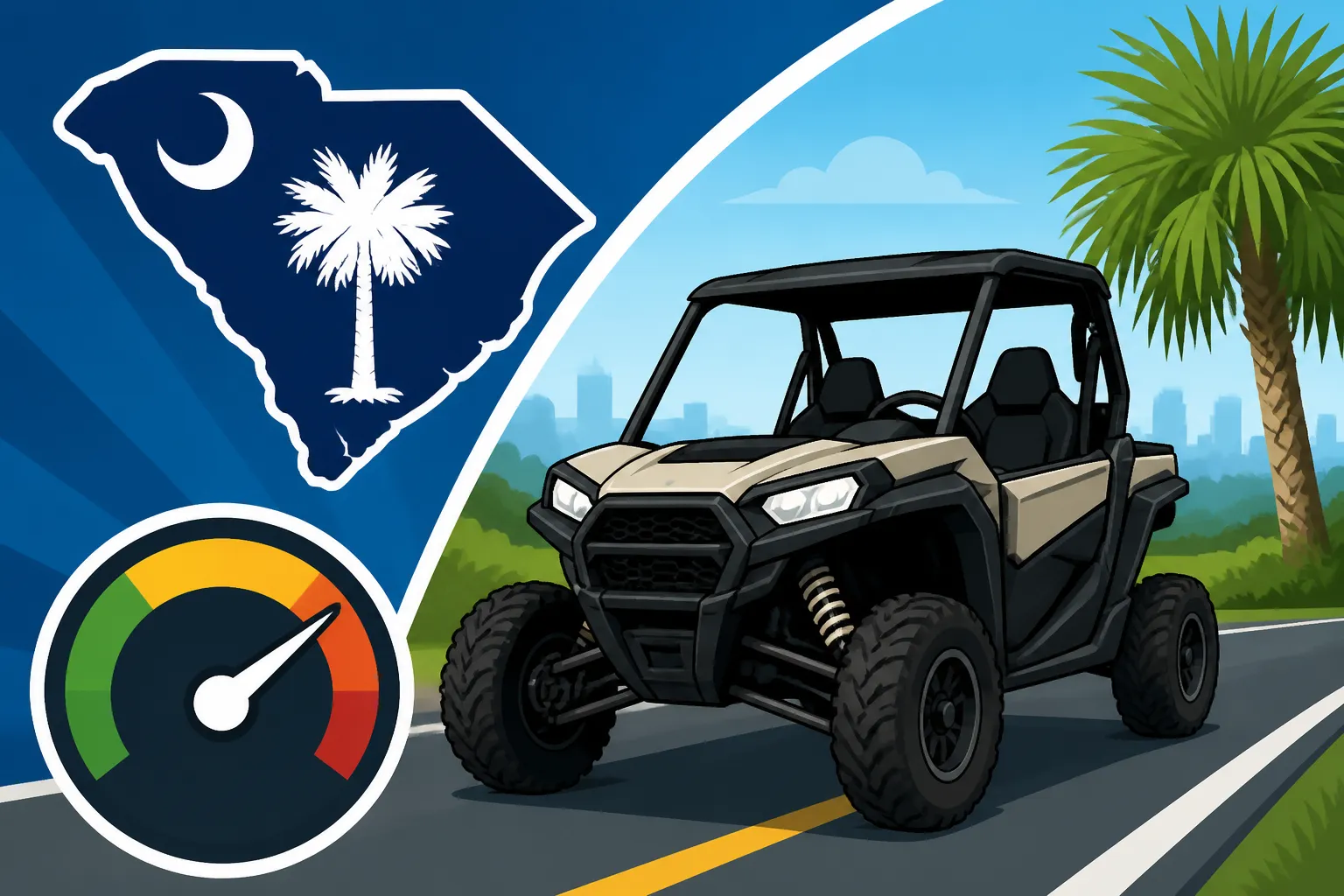
For street-legal UTVs operating on these secondary roads, South Carolina law sets a clear maximum speed limit: [Secondary Roads at Fifty-Five or Less]. This means that even if a secondary road has a posted speed limit of, say, 60 mph for other vehicles, your UTV is capped at 55 mph. This is a critical detail that many UTV owners overlook, thinking they can go the posted speed limit no matter what. This restriction is primarily due to the design and safety characteristics of UTVs, which typically have a higher center of gravity and different braking and handling capabilities compared to a standard car.
Think about it: your UTV, while rugged and capable off-road, isn't engineered for sustained high-speed travel like a passenger car. The 55 mph cap acts as an additional layer of safety, preventing riders from pushing their machines beyond their designed limits on pavement. It's about recognizing that a UTV, even when street-legal, is fundamentally different from a sedan or a truck. So, when you see that 60 mph sign on a secondary road, remember your UTV's specific limitation.
Exceptions and Local Ordinances
While the 55 mph cap on secondary roads is a statewide rule, it's important to be aware of potential exceptions, primarily those governed by local ordinances. Just like with golf cart permits, individual counties, cities, or towns have the authority to create their own rules regarding speed limits for street-legal UTVs within their specific jurisdictions. This means that while the state allows 55 mph, a town like Conway or Myrtle Beach might have an ordinance that further restricts UTV speeds on certain streets to, say, 35 mph or even lower, especially in congested areas. [South Carolina Street UTV Radius Exceptions] can also come into play, although those primarily relate to where you can ride rather than how fast.
It's absolutely essential to check with the local police department or municipal offices of any town or county you plan to ride through. What's legal on a secondary road outside of Charleston might be different once you enter the city limits. Ignorance of these local rules won't save you from a [South Carolina Ticket Costs for Riders], so a quick call or visit to the local government website can save you a lot of headache and expense. Always err on the side of caution and obey any posted local speed limits if they are lower than the state maximum.
Navigating Different Road Types with a Street UTV
Understanding the general rules is one thing, but applying them to the diverse network of roads you'll encounter in South Carolina is another. From winding rural paths to bustling suburban streets, each environment presents its own set of challenges and speed considerations for street-legal UTV riders. It's about being observant and making smart, safe choices on the fly.
Rural Back Roads
These are often the bread and butter for street-legal UTV riders in South Carolina. Rural back roads are typically secondary roads, and many offer scenic routes where the 55 mph speed cap will be your main guide. On these roads, you'll often encounter varying conditions, from perfectly paved sections to stretches that might be a bit rougher around the edges. Always be mindful of the actual posted speed limits for the road itself, as many rural roads might be posted at 35 or 45 mph due to curves, blind spots, or intersections. Even if you could go 55 mph, a 35 mph posted limit means you stick to 35.
When riding these roads, it's not just about speed. You're sharing them with farm equipment, log trucks, and local traffic that might not expect a UTV. Visibility can be a factor, especially at dawn or dusk, so make sure your UTV's lighting, possibly enhanced with aftermarket upgrades, is top-notch. And remember, while these roads might feel like off-road trails sometimes, they are public roadways, and rules like [South Carolina DUI Law and Off-Road Machines] still apply.
Suburban Streets and Neighborhoods
Navigating your street-legal UTV through suburban streets and neighborhoods is where local ordinances really come into play. Many residential areas have lower posted speed limits, often 25 or 35 mph, and you must strictly adhere to these. Even if the state allows up to 55 mph on secondary roads, a neighborhood street is almost certainly going to have a lower, explicit speed limit that overrides the general state cap. This is crucial for safety, especially with children, pets, and pedestrians often present in these areas.
You might also encounter speed bumps, stop signs every block, and heavy pedestrian traffic, especially around schools or parks. This is not the place to push your machine's limits. Being a considerate and safe rider in these areas not only prevents accidents but also helps maintain a positive image for the UTV community, which can be important for the continued acceptance of street-legal UTVs. A loud UTV speeding through a quiet neighborhood can quickly sour public opinion.
When You Might Encounter a Higher Speed Limit
Here's where it gets a bit tricky, and it ties back into the fundamental definition of a "secondary road." You will not encounter higher speed limits for your street-legal UTV on primary state highways or interstates because, by law, street-legal UTVs are generally prohibited from these roads altogether. [The New South Carolina Law Opening Secondary Roads] explicitly targets secondary roads. The 55 mph maximum is for the type of road UTVs are allowed on, not a blanket speed limit for all roads regardless of type.
Therefore, if you find yourself on a road with a posted speed limit of, say, 65 mph or 70 mph, you should assume that road is a primary highway and is not legal for street-legal UTV operation. Attempting to ride your UTV on such a road would be a violation, regardless of your speed. Always remember the distinction: UTVs are allowed on secondary roads up to 55 mph, not on high-speed highways.
Safety Considerations Beyond the Speed Limit
While adhering to speed limits is paramount for safe street-legal UTV operation, there are other critical safety factors that every rider in South Carolina needs to consider. Your machine's capabilities, your personal riding experience, and the environment around you all play a significant role in preventing accidents and ensuring a smooth, enjoyable ride. It's not just about what the law says; it's about common sense and responsibility.
Vehicle Capabilities and Modifications
Even with the 55 mph cap, it's vital to remember that your UTV's handling characteristics are different from a car's. A UTV, especially one lifted for off-road use, can have a higher center of gravity, making it more prone to rollovers if you take turns too fast or make sudden maneuvers. This is where quality components, perhaps from a brand like SuperATV, can make a difference in performance and safety, but they don't negate the fundamental design differences. Things like wider stances, upgraded suspension, and proper tire selection for on-road use become critical.
Before you ever hit the pavement, ensure your UTV is in peak mechanical condition. Check your tires, brakes, and steering. If you've made significant modifications for off-road prowess, consider how those changes might affect on-road stability and handling at higher speeds. Just because your UTV can reach 55 mph doesn't mean it handles like a sports car at that speed. Always drive within your machine's capabilities and your own comfort level.
Rider Experience and Training
Your personal riding experience plays a huge role in how safely you can navigate public roads. If you're new to UTVs or new to driving one on pavement, take it easy. Don't immediately push the speed limits. Get a feel for how your UTV handles on asphalt, especially when braking and turning. Wet roads, gravel shoulders, and uneven pavement can all dramatically change how your UTV responds. [South Carolina Safety Certificates at 15 and Under] are mandatory for younger riders, and while there's no equivalent for adults, the spirit of learning and caution is still relevant.
Consider taking an ATV/UTV safety course, even if it's not strictly required for adult street-legal operation. These courses teach valuable skills in hazard perception, braking techniques, and vehicle control that translate directly to safer road riding. Being prepared for unexpected situations, like another vehicle suddenly pulling out or debris in the road, can make all the difference.
Environmental Factors and Visibility
South Carolina weather can be unpredictable, and environmental factors significantly impact road safety. Rain-slicked roads can reduce traction dramatically, increasing stopping distances and the risk of skids. Strong winds can affect UTV stability, especially if you have a top or windshield that catches the wind. Visibility is another huge factor: fog, heavy rain, or even just riding at dusk or dawn requires extra caution.
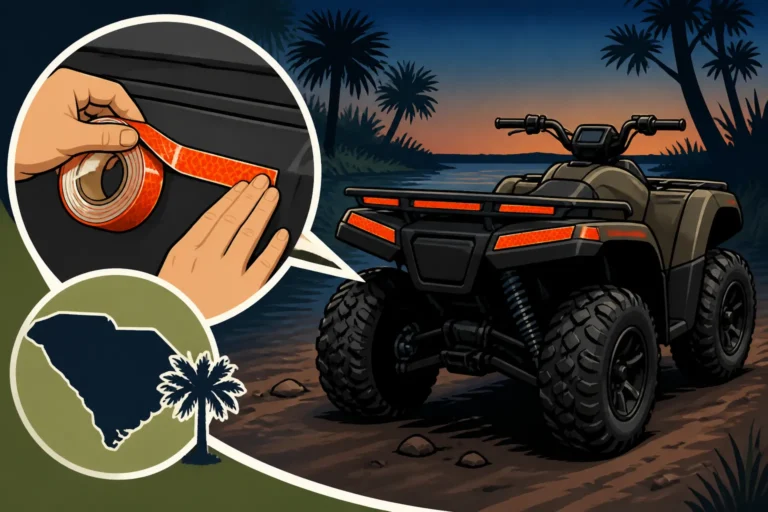
Ensure your UTV's lighting system is fully functional and optimized for road use. Some aftermarket light bars, while great for trails, might be too bright for oncoming traffic on the road. Consider adding reflective tape or brightly colored flags, especially if you're riding a darker-colored UTV. Always assume other drivers might not see you, especially because UTVs are still a relatively new sight on South Carolina roads.
Common Misconceptions and How to Avoid Fines
Despite the clear laws and increasing popularity of street-legal UTVs, there are still quite a few misconceptions out there that can lead riders into trouble. Understanding these pitfalls and how to steer clear of them is just as important as knowing the speed limits themselves. Nobody wants to deal with a fine or, worse, an accident due to a misunderstanding of the rules.
The "Golf Cart Rule" Myth
One of the most persistent myths is that street-legal UTVs operate under the same rules as golf carts. This is absolutely not true. While South Carolina has specific laws for golf cart permits and their limited operation on public roads (e.g., [South Carolina Golf Cart Permit Rules] or [South Carolina Cart Rules 4 Miles From Home]), street-legal UTVs are a distinct category with their own set of regulations. Golf carts typically have much lower speed limits and geographical restrictions.
Comparing the two can lead to significant violations. A street-legal UTV, with its higher top speed and broader road access, is treated more like a traditional motor vehicle in terms of licensing, registration, and insurance. Don't make the mistake of assuming your UTV can follow the same path as a golf cart; the laws, and the potential penalties, are very different.
Assuming All Roads Are Fair Game
Another common misconception is that once your UTV is street-legal, you can take it on any public road. As we've discussed, this is not the case. The law specifically states "secondary roads" and explicitly excludes interstates and primary state highways. I've heard stories of riders getting pulled over on roads where they thought they were legal, only to find out they were on a prohibited highway. It's a frustrating situation that can easily be avoided.
Always double-check your route. If you're unsure whether a road is a secondary road or a primary highway, it's safer to assume it's prohibited or find an alternative route. Using a GPS that can highlight road classifications might be helpful, or simply sticking to roads you know are safe bets. Being caught on a prohibited road can result in fines and potentially even impoundment of your machine. [South Carolina Code Title 50 Chapter 26] is where many of these regulations are laid out.
The Importance of Proper Documentation
Beyond just knowing the speed limits and road types, always ensure you have all your required documentation with you. This includes proof of registration, your driver's license (yes, you need a standard driver's license to operate a street-legal UTV in South Carolina), and proof of insurance. [South Carolina Street UTV Insurance Rules] mandate liability coverage, and showing proof of that coverage is essential if you're stopped.
A deputy or highway patrol officer has every right to ask for these documents during a traffic stop. Being unable to provide them can lead to further citations or delays. Make it a habit to keep all necessary paperwork in a waterproof pouch on your UTV, easily accessible but secure. This small step can save you a lot of hassle and help you avoid unnecessary fines or complications.
Making Sure Your UTV Meets the Specs
Before you even think about hitting those South Carolina secondary roads and worrying about speed limits, your UTV absolutely has to meet all the equipment requirements to be considered street-legal. This isn't just about avoiding a ticket; it's about ensuring your machine is safe for public road use and can be properly identified and operated within the state's framework. Ignoring these basic requirements is like trying to build a house without a foundation – it’s just not going to work out.
Essential Equipment Checklist for Road Legality
South Carolina has a clear list of what your UTV needs to be street-legal. This goes beyond just the engine and tires. You'll need properly functioning headlights, taillights, and brake lights – just like a car. Don't forget about turn signals on both the front and rear, making sure they're visible and working. A rearview mirror is a must, and many riders opt for a side mirror or two for better visibility. A horn that actually works is also required. You also need a windshield to protect you from debris, and seatbelts for all occupants. Furthermore, your UTV must have a unique vehicle identification number (VIN) for titling and registration.
Many riders find that their off-the-dealer-floor UTV needs significant upgrades to meet these standards. This is where many turn to aftermarket solutions, some from companies like SuperATV, to get all the necessary lights, mirrors, and even windshield wipers installed. It’s an investment, but a crucial one for your safety and for legal operation on the asphalt.
Weight, Width, and Engine Displacement Limits
Beyond the visible equipment, South Carolina also sets physical specifications for what qualifies as a street-legal UTV. For example, [South Carolina Street UTV Machine Specs] dictate that your UTV must be 80 inches wide at most and weigh no more than 4,000 pounds. There are also stipulations regarding engine displacement, with a general understanding that these machines are not designed to be underpowered. These limits are put in place to ensure that UTVs on public roads can safely share space with other vehicles and fit within road lanes without becoming a hazard.
These specifications are generally aimed at preventing overly large or heavy machines, which might handle more like small tractors, from operating on public roads. If your UTV is exceptionally modified for, say, extreme rock crawling and falls outside these dimensions, it may not qualify as street-legal, regardless of how many lights and mirrors you bolt on. Always check your machine's manufacturer specifications against the state's requirements to avoid any surprises at the DMV or on the road.
Getting Registered and Titled
Once your UTV is properly equipped, the final step is to get it registered and titled through the South Carolina Department of Motor Vehicles (DMV). This involves applying for a title, which is essentially proof of ownership, and then registering it to receive your license plate. This plate is what officially marks your UTV as a legal road-going vehicle. You'll need to pay the appropriate fees, which includes the biennial registration fee for street UTVs mentioned in [South Carolina's Biennial Street UTV Fee].
The registration process also typically requires proof that your UTV meets the insurance requirements, which are mandatory for street-legal operation. [South Carolina Insurance Proof at Registration] is a key step, demonstrating that you have the necessary liability coverage. Don't delay this step; riding an unregistered or untitled UTV on public roads is a surefire way to invite penalties, regardless of how perfectly you adhere to the speed limits.
| Road Type | UTV Status | Max Speed Limit (SC) | Notes |
|---|---|---|---|
| Secondary Roads | Street-Legal UTV | 55 mph | State maximum. Local ordinances may impose lower limits. Adhere to posted signs if lower than 55 mph. |
| Residential/Local | Street-Legal UTV | As Posted | Typically 25-45 mph. Always obey local posted signs. Check local ordinances for specific rules. |
| Primary Highways | Street-Legal UTV | Prohibited | These are roads with higher speed limits (e.g., 60 mph+). UTVs are not permitted on these roads. |
| Interstates | Street-Legal UTV | Prohibited | Absolutely no UTV access. |
| Off-Road Trails | Off-Road ATV/UTV | Varies | Follow trail rules and park regulations. No state-mandated speed limit for off-road use. |
| Private Property | Off-Road ATV/UTV | Varies | Owner's discretion. Still adhere to South Carolina Safety Certificate Requirements for young riders. |
Disclaimer
This article is for general informational purposes only and does not constitute professional advice. Laws, prices and regulations vary by location and change over time. Consult a qualified professional for guidance on your specific situation.