South Carolina Rules for Riding After Dark
Riding your ATV or UTV after the sun dips below the horizon in South Carolina can feel like a whole different ballgame. The familiar trails and roads take on an entirely new character, and with that comes a unique set of challenges and, often, a lot of confusion about what's actually legal. This guide is here to untangle the South Carolina rules for riding after dark, whether you're on an off-road quad, a street-legal side-by-side, or even a golf cart, so you can stay safe and on the right side of the law.
Off-Road ATVs and Night Riding in South Carolina
Navigating trails or private land on your ATV after dark brings a certain thrill, but it also demands a clear understanding of the state's lighting regulations. It's not just about seeing where you're going; it's about being seen and ensuring your machine is properly equipped to handle the reduced visibility.
The Basic Rule for Off-Road Quads: Headlights and Taillights
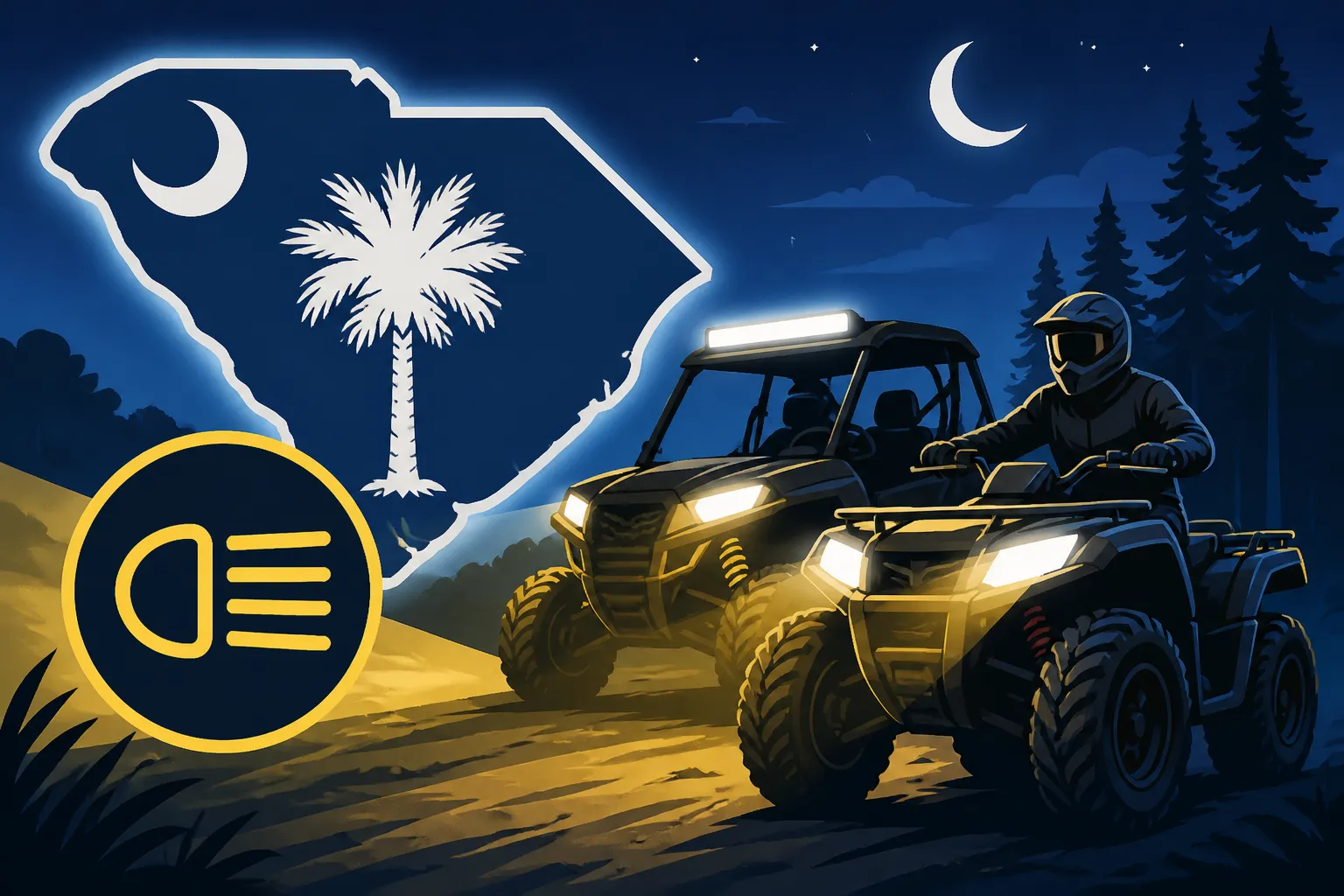
For off-road ATVs, the primary regulation regarding night riding falls under what's commonly known as Chandler's Law. This law is pretty straightforward: if you're riding your quad from a half-hour after sunset to a half-hour before sunrise, or at any time when conditions limit visibility to less than 500 feet, you must have your headlights and taillights on. This isn't just a suggestion; it's a legal requirement designed to enhance safety for you and anyone else who might be in the vicinity.
Think about it: whether you're on a remote hunting lease, traversing your own sprawling farm, or enjoying one of the state's designated OHV trails, suddenly being plunged into darkness without proper illumination is a recipe for disaster. Your headlights cut through the gloom, revealing obstacles like fallen branches, hidden ruts, or unexpected wildlife that might otherwise be invisible. Taillights are equally crucial, especially if you're riding with a group, allowing other riders to track your position and avoid collisions. Many riders upgrade their stock lighting with more powerful LED setups, sometimes even adding light bars from companies like SuperATV, which greatly improve visibility but you must ensure they comply with local rules, especially if you venture onto public trails where specific brightness limits might apply. This basic lighting rule is outlined in [South Carolina Code Title 50 Chapter 26].
Equipment Requirements Beyond Just Lights for Off-Road
While working headlights and taillights are non-negotiable for night riding, your off-road ATV needs more than just illumination to be considered safe and legal after dark. The law also mandates other essential equipment that plays a critical role in safe operation, day or night. For instance, your ATV must have effective brakes that are in good working order. Imagine trying to stop suddenly in the dark if your brakes are faulty – it’s a terrifying thought. The ability to stop quickly and reliably is even more vital when your field of vision is restricted.
Another key piece of equipment, often overlooked but critical for environmental safety, is a spark arrester. This device prevents hot carbon particles from escaping your exhaust and potentially igniting dry vegetation, which is a significant fire hazard, especially in wooded areas during drier months. While a spark arrester isn't strictly a "night riding" item, it's an all-the-time requirement for many riding areas, particularly within national forests. Beyond legal requirements, consider enhancing your personal safety: wearing reflective gear can make you more visible to others, whether they are on foot, another machine, or a passing vehicle if you're near a road. Carrying a powerful flashlight or headlamp in addition to your ATV's lights is also a smart move for roadside repairs or navigating off the machine. Understanding [South Carolina Equipment Requirements for ATVs] provides a broader context for what your machine needs to be trail-ready. When considering riding on properties like a large farm or timberland, remember that [South Carolina Rules for Riding a Farm Road] might also have specific requirements, even if less formal than state trails.
Street-Legal UTVs and Night Riding on South Carolina Roads
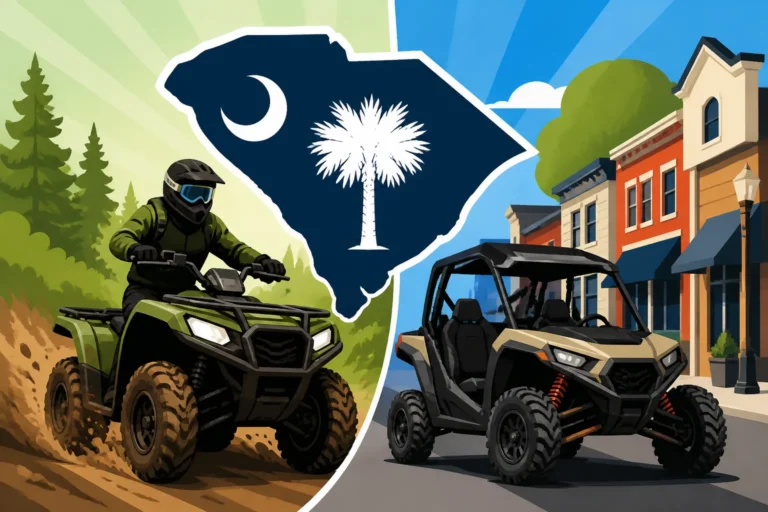
The landscape for UTVs in South Carolina has changed, with provisions now allowing many to be registered for street use. This comes with a different set of rules, particularly concerning operation after dark. Unlike their off-road counterparts, street-legal UTVs are sharing the road with cars, trucks, and motorcycles, meaning their lighting and visibility requirements are significantly more stringent and akin to any other road-going vehicle.
Lighting Mandates for Plated UTVs
If your UTV is street-legal in South Carolina, driving it after dark means it needs to be equipped with all the standard lighting features found on a passenger vehicle. This isn't just about a headlight and a taillight; it's a comprehensive list designed to ensure maximum visibility and communication with other drivers. You'll need properly functioning headlights that offer both high and low beam settings, allowing you to adapt to varying road conditions and avoid blinding oncoming traffic. Taillights and brake lights are essential for signaling your presence and intentions to vehicles behind you. Integrated turn signals, both front and rear, are also a must, enabling you to clearly indicate turns and lane changes. Finally, a white light illuminating your license plate at night ensures it's readable, a small but important detail for law enforcement.
These robust lighting requirements are part of the broader [South Carolina Street UTV Requirements Explained] that make UTVs safe for public roads. Imagine driving your fully-equipped SuperATV Defender on a secondary road after dark, headlights cutting a swath through the night, turn signals flashing clearly as you approach an intersection. This level of illumination isn't just for your benefit; it's a crucial component of road safety for everyone. The implementation of [South Carolina Street UTV Rules From November 2026] further solidifies these requirements, ensuring that all plated UTVs meet a consistent standard for roadworthiness.
Visibility and Safety for Street-Legal UTVs at Night
Beyond simply having the required lights, the effectiveness of those lights and your overall visibility as a street-legal UTV driver are paramount when operating after dark. It’s not enough for the lights to be there; they need to be clean, unobstructed, and properly aimed. Regularly checking your bulbs, cleaning lenses, and ensuring your headlights are correctly aligned will make a significant difference in how well you see and how well you are seen by others. Some UTV owners choose to add auxiliary LED light bars, but it’s critical to remember these are generally for off-road use only and must be covered or turned off when driving on public roads to avoid dazzling other drivers.
Safety extends to the driver and passengers as well. For example, if you have younger riders, [South Carolina Street UTV Helmet Rules Under 21] dictates specific helmet usage, which becomes even more critical during low-light conditions. Operating a street-legal UTV after dark also requires a valid driver's license, and there's an age restriction – [South Carolina Street UTV Age of 17] for drivers. This ensures that operators have the experience and maturity to navigate public roads safely, especially when visibility is compromised. Always remember that even with excellent lighting, reduced speed, increased following distance, and heightened awareness of your surroundings are essential for safe night driving on public roads.
Golf Carts and Low-Speed Vehicles (LSVs) After Dark
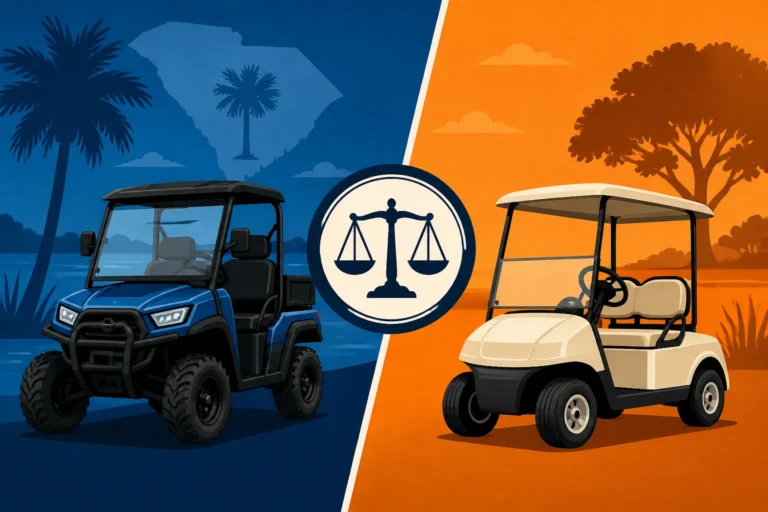
When it comes to smaller, utility-focused vehicles like golf carts and low-speed vehicles (LSVs), the rules for night riding in South Carolina diverge significantly from ATVs and street-legal UTVs. The key distinction lies in their intended use and the specific regulations governing their operation on public roads.
Golf Cart Limitations for Night Use
This is where many people get tripped up. Generally speaking, golf carts in South Carolina are not permitted to be driven on public roads during nighttime hours. The law clearly states that golf carts, even with a valid permit, are restricted to "daylight hours." What does this mean in practical terms? It means from a half-hour before sunrise to a half-hour after sunset. If you're planning to use your golf cart, even within the permissible [South Carolina Golf Cart Permit Rules] 4-mile radius of your home or business, you need to factor in the sun's position.
There might be very specific exceptions, such as on private property or within certain gated communities or municipalities that have their own very particular ordinances allowing night use if the golf cart is equipped with proper lighting (headlights, taillights, brake lights, and sometimes turn signals). However, these are rare and always superseded by state law if you're on a public street. For the most part, if the sun is down, your golf cart should be parked. Ignoring these rules can lead to citations and fines, not to mention the significant safety risk of operating a slow, often less visible vehicle in the dark alongside full-sized traffic. It's truly a matter of safety, as standard golf cart lighting, if present, is often minimal compared to a car's. You can read more about this in [South Carolina Golf Cart Daylight Rules].
Low-Speed Vehicles (LSVs) vs. Golf Carts After Dark
It's crucial to understand that a Low-Speed Vehicle (LSV) is fundamentally different from a golf cart, especially when it comes to night driving. While many LSVs might visually resemble golf carts, they are manufactured and equipped to meet specific federal and state safety standards that allow them to operate on public roads with speed limits of 35 mph or less. This distinction is vital for night use.
Unlike golf carts, an LSV, by definition, must be equipped with a comprehensive set of lighting and safety features that allow it to be driven legally after dark. These include:
- Headlights (with high and low beams)
- Taillights
- Brake lights
- Turn signals (front and rear)
- Reflex reflectors
- A rearview mirror (or mirrors)
- A parking brake
- A windshield
- Seat belts
Because LSVs meet these standards, they are permitted for night driving on public roads where their top speed is appropriate. So, while your neighbor's golf cart needs to be tucked away at sunset, your properly registered and equipped LSV can continue to be used on those secondary roads. This distinction is often a source of confusion, but understanding that [A Low-Speed Vehicle Is Not a South Carolina UTV] is key to complying with the law.
Practical Tips and Avoiding Penalties for Night Riding
Regardless of whether you're on an off-road ATV, a street-legal UTV, or an LSV, responsible night riding demands more than just knowing the letter of the law. It requires vigilance, preparation, and a commitment to safety. Cutting corners when it comes to visibility after dark can have serious consequences, from costly fines to dangerous accidents.
Pre-Ride Checks and Maintenance
Before you even think about firing up your machine for a night ride, a thorough pre-ride check is absolutely essential. Start with your lighting system: verify that all headlights, taillights, brake lights, and turn signals (if applicable) are functioning correctly. Check for burnt-out bulbs, cracked lenses, or loose wiring. Ensure your battery is fully charged, as extensive light use can drain it faster, especially on older machines. It's also a smart idea to carry spare fuses and a small toolkit, along with a reliable flashlight or headlamp for hands-free illumination if you need to make a quick repair in the dark.
Consider the example of a group heading out for a night loop on a private trail system. Before they leave the staging area, each rider should walk around their machine, checking every light. Are the auxiliary lights from SuperATV properly secured? Is the winch cable untangled in case someone needs a pull? Do your brakes feel solid? These quick checks can prevent you from getting stranded or creating a hazard for yourself and others. Don't forget to pack extra water and a first-aid kit, as help can be harder to find in the dark. [South Carolina Headlight Hours After Sunset] applies to all machines requiring lights after dark, making these checks critical.
Staying Safe and Avoiding Fines
Beyond equipment, safe riding practices are your best defense against accidents and penalties after dark. Reduce your speed, as your reaction time is naturally slower in limited visibility. Increase your following distance, especially when riding with others, to give yourself more time to react to their movements or unforeseen obstacles. Be extra vigilant for wildlife, which is often more active at night and harder to spot. Consider adding reflective tape to your helmet or clothing to boost your personal visibility.
Ignorance of the law is no excuse, and lighting violations can lead to tangible consequences. [South Carolina Fines of $50 to $200] are typical for such infractions, and repeat offenses can escalate. Always check local ordinances for any specific rules that might apply to the area you're riding in, especially on public lands or within city limits if you have a street-legal UTV. While your SuperATV light bar might make the trail as bright as day, remember to use it responsibly and in accordance with all regulations. Operating on [South Carolina Rules for Riding a Dirt Road] after dark also carries the same lighting requirements as other off-road scenarios.
Here's a quick comparison of night riding rules for different machines in South Carolina:
| Vehicle Type | Permitted After Dark (Public Roads)? | Required Lighting (Minimum) | Notes |
|---|---|---|---|
| Off-Road ATV | No (only on designated trails/private land) | Headlight, Taillight | Must be on from 1/2 hour after sunset to 1/2 hour before sunrise, or low visibility. |
| Street-Legal UTV | Yes | Headlights (hi/lo), Taillights, Brake Lights, Turn Signals, License Plate Light | Must meet full motor vehicle lighting standards; specific age/license rules apply. |
| Golf Cart | No | Generally no required lighting for night public road use | Restricted to daylight hours on public roads; private property/specific local ordinances may vary. |
| Low-Speed Vehicle | Yes | Headlights (hi/lo), Taillights, Brake Lights, Turn Signals, Reflectors, License Plate Light | Must meet specific federal safety standards; designed for speeds up to 35 mph. |
Disclaimer
This article is for general informational purposes only and does not constitute professional advice. Laws, prices and regulations vary by location and change over time. Consult a qualified professional for guidance on your specific situation.