Face Shields Required for UTV Riders Under 21
The Palmetto State has opened up new possibilities for UTV owners, allowing them to hit public roads, but with this freedom comes a new set of rules that can feel a little overwhelming, especially when it comes to specific safety gear for younger riders. This guide is here to cut through the confusion and explain exactly why face shields are now required for UTV riders under 21 in South Carolina, what that really means for you and your family, and how to stay safe and compliant on the road.
The New Reality: South Carolina's Street-Legal UTV Laws
For years, the idea of driving your UTV on public roads in South Carolina felt like a distant dream for many enthusiasts. Most states had strict rules, and ours was no different, largely confining these versatile machines to trails, private land, or very limited road use like golf carts. However, a significant change has swept through, opening up more avenues for UTV use, but it's crucial to understand the nuances, especially concerning rider safety.
When the New Rules Kicked In
The landscape for UTV owners in South Carolina shifted dramatically with the passing of [South Carolina Act 164 and Street UTVs]. This legislative change was a big win for many, finally recognizing UTVs as a legitimate class of vehicle for on-road use, provided they meet certain criteria. While the full implementation and registration details for street-legal UTVs began later, the groundwork for these new regulations was laid, bringing with it a whole new world of responsibility for riders. It meant that for the first time, your favorite side-by-side could potentially take you from your driveway to the local store, or connect you to different trail systems without needing to haul it on a trailer. This was a monumental change, but it also introduced a layer of complexity for owners who now needed to understand the various equipment, licensing, and safety requirements. You can read more about when the changes officially rolled out in [South Carolina Street UTV Rules From November 2026].
Who Needs a Face Shield and Why
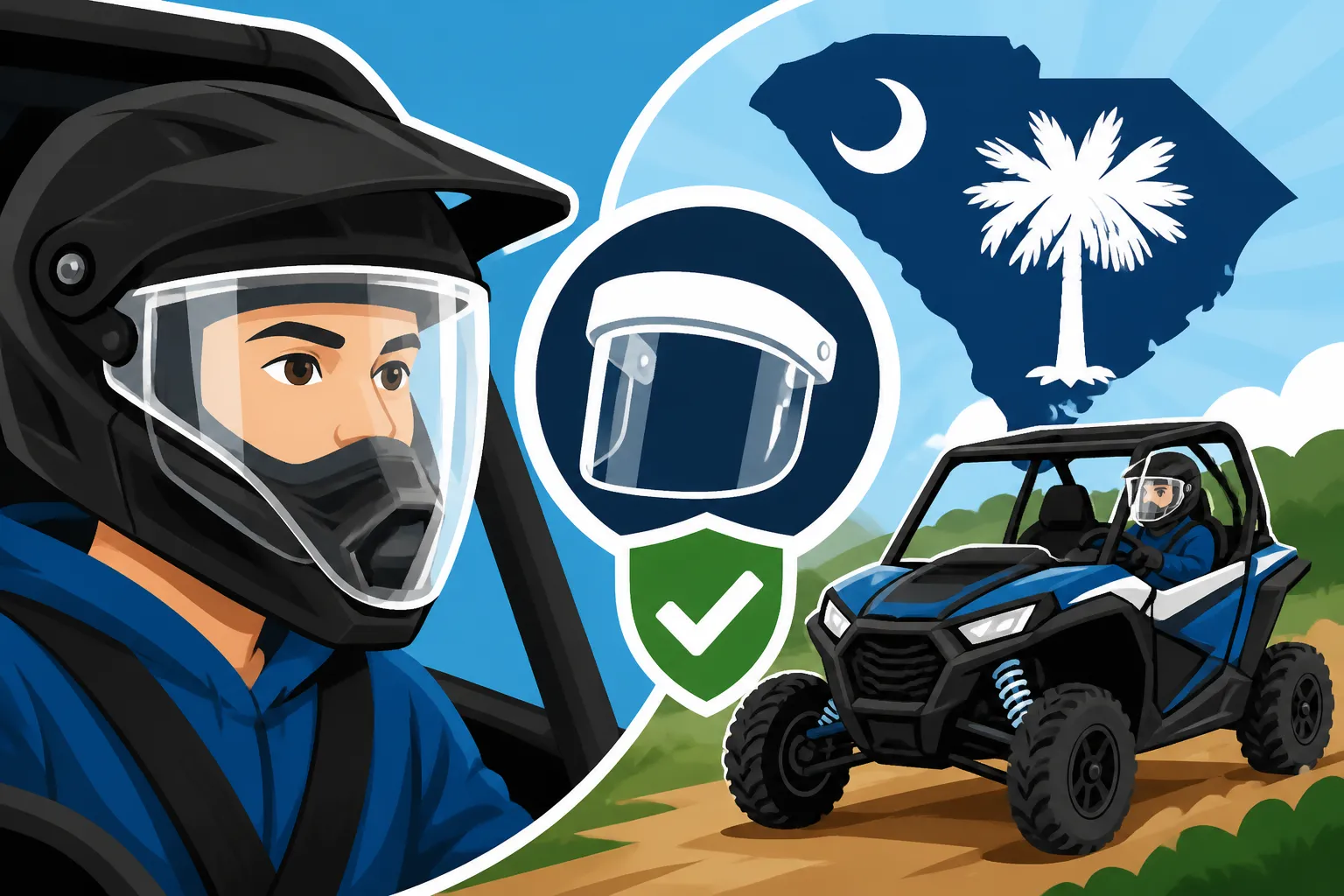
One of the most talked-about aspects of the new street-legal UTV laws centers on rider safety, particularly for those younger than 21. If you're under 21 and operating a street-legal UTV on public roads in South Carolina, you are now required to wear a face shield. This isn't just a suggestion; it's a hard and fast rule designed to protect younger drivers who might be less experienced with the hazards of road riding or simply more vulnerable in an open-air vehicle. The "why" behind this rule is straightforward: safety. On public roads, even secondary ones, speeds are higher than on most trails, and the risk of airborne debris like rocks, insects, or even gravel from other vehicles is significantly greater. A simple pair of sunglasses, while offering some protection, isn't enough to fully shield the face from impacts or high-speed wind buffeting that can impair vision and cause accidents. This requirement ensures that young riders have robust, full-face protection against these common road hazards.
What Qualifies as a Face Shield
So, what exactly counts as a face shield under this new law? It's not just any piece of clear plastic you might find. The law is looking for genuine, impact-resistant protection that covers the entire face. This typically means a shield attached to a helmet, or a dedicated standalone face shield designed for powersports use. For many street-legal UTVs, especially those that have been modified with aftermarket parts from reputable brands like SuperATV to enhance their road-worthiness, the vehicle itself might have a windshield. However, it’s important to understand that a vehicle's windshield, even a full one, does not negate the personal face shield requirement for the rider. If you're under 21, you still need that personal face protection. The idea is to have a barrier directly in front of the face, regardless of the vehicle's own windscreen. Think of it like this: even in a car with a windshield, you wouldn't stick your head out the window without eye protection at highway speeds. The same principle applies here. You need something that won't fly off, shatter easily, or obstruct your peripheral vision, meeting recognized safety standards where applicable.
Understanding the "Under 21" Mandate for Street UTVs
The focus on younger riders with specific safety requirements isn't unique to South Carolina's UTV laws. Across various motorized activities, minors often face stricter regulations due to their developing motor skills, judgment, and physical vulnerability. It’s a common-sense approach to safeguard the next generation of outdoor enthusiasts, and the state's street-legal UTV legislation reflects this protective stance.
The Rationale Behind Age-Specific Safety
Why single out riders under 21 for face shield requirements? The core reason boils down to minimizing risk for a demographic that statistically faces higher accident rates in many vehicle categories. Younger drivers, generally speaking, have less experience judging road conditions, reacting to unexpected hazards, and understanding the full implications of vehicle speed and control, especially on unfamiliar public roads. A UTV, even one made street-legal, still handles differently than a traditional car. It often has a higher center of gravity, different braking characteristics, and an open-air cabin exposing occupants to the elements. By mandating face shields, the state aims to reduce injuries from debris, wind, and impact, ensuring that a momentary lapse in judgment or an unforeseen road hazard doesn't lead to a preventable facial injury or vision impairment that could escalate into a more serious accident. The law aligns with other age-based regulations, such as [South Carolina Street UTV Age of 17] for driving.
Comparing Face Shields to Helmets for Young UTV Riders
It's easy to get confused between a face shield and a full helmet, especially since many helmets come with integrated face shields. For riders under 21 in South Carolina, the law specifically calls for a "face shield." This implies that a full helmet with a face shield would certainly meet the requirement, but a helmet without one (like a motocross helmet with goggles) would not, unless separate, approved face protection is also worn. The main difference lies in the level of protection. A full-face helmet offers comprehensive head protection, including the skull, jaw, and face. A standalone face shield, while excellent for protecting the face from projectiles and wind, does not offer head impact protection. For riders who might be uncomfortable with a full helmet on a UTV that already has a robust roll cage and seatbelts, a high-quality, securely mounted face shield might be the preferred route. However, many riders still choose to wear full-face helmets for the added peace of mind, especially when exploring modifications from companies like SuperATV that boost performance or capability, which might lead to higher speeds on designated roads. Ultimately, the law requires the face shield, but opting for a full-face helmet often satisfies this and provides additional protection. It's about ensuring adequate visual clarity and protection from external elements while operating on public thoroughfares.
Exceptions and Clarifications
The requirement for face shields for riders under 21 specifically applies to the operation of street-legal UTVs on public roads. This means that if the UTV is being operated strictly on private property, such as a farm, hunting lease, or private riding park, the face shield requirement for minors typically would not apply under this specific street-legal UTV law. However, it's always wise to check the rules of any private park or property, as they might have their own safety guidelines. Furthermore, this regulation is aimed at riders – meaning those actively operating the UTV. While passengers should always prioritize safety and consider similar protection, the explicit mandate here is for the operator. It's also worth noting that this rule is part of a broader framework of requirements for street-legal UTVs, which include things like proper lighting, mirrors, and seatbelts. It's not an isolated rule; it fits into the larger picture of making UTVs safe for shared public spaces. Understanding the precise wording and context of these laws, like those in [The Law Behind South Carolina's Street-Legal UTVs], helps ensure full compliance.
Practical Steps for Compliance and Safety
Navigating the new street-legal UTV landscape means doing your homework and making smart choices about your gear. It’s not just about avoiding a ticket; it’s about genuinely protecting yourself and your loved ones on the road. Taking a proactive approach to safety will make your street-legal UTV experience far more enjoyable and worry-free.
Equipping Yourself for the Road
Getting the right gear is the first step. For riders under 21, a high-quality face shield or a full-face helmet with an integrated shield is non-negotiable. When shopping, look for products that meet established safety standards, such as DOT (Department of Transportation) certification, which indicates a certain level of impact resistance and optical clarity. Avoid flimsy shields or ones that severely distort your vision. You'll want something that attaches securely, won't fog up easily, and allows for good peripheral vision. Many UTV accessory manufacturers offer excellent options, and places that sell performance parts for UTVs, like SuperATV, often carry a range of safety gear that meets these standards. Think about comfort, too; a face shield that is ill-fitting or uncomfortable will be a distraction on the road. If you're going with a helmet, ensure it fits snugly but isn't too tight, and consider ventilation for those hot South Carolina summers. Remember, this piece of equipment is as vital as your seatbelt when you hit public roads.
| Protection Type | Description | Pros | Cons |
|---|---|---|---|
| Full-Face Helmet | Covers the entire head, including face, with an integrated, movable face shield. | Maximum protection for head and face; generally DOT certified; face shield is integrated and secure. | Can be hot and heavy; may feel restrictive for some riders; potentially more expensive. |
| Modular/Flip-Up Helmet | Similar to full-face but allows the chin bar and face shield to be flipped up, combining full-face protection with open-face convenience. | Versatility for talking/drinking; good protection when closed; often DOT certified. | Heavier than full-face; mechanism can add complexity; may not offer full-face protection if riding with chin bar open. |
| Standalone Face Shield | A clear visor that attaches to an open-face helmet or is worn independently, covering the face. | Lightweight; less restrictive feeling; good wind and debris protection. | Does not protect the rest of the head from impact; less secure attachment than integrated shields; wearer still needs head protection (helmet). (Note: Law requires face shield, not necessarily a helmet in all instances). |
| Goggles (with open-face helmet) | Separate eye protection worn with an open-face helmet. | Excellent eye protection; good ventilation; compatible with various helmets. | Does not protect the rest of the face (nose, mouth, cheeks) from impacts or wind; not a "face shield" as required by law. |
What to Expect During a Stop
If you're stopped by law enforcement while operating a street-legal UTV, particularly if you have a rider under 21, officers will be looking for compliance with all applicable laws. This includes checking for proper registration, your driver's license (yes, a full driver's license is required for street-legal UTVs!), and the necessary safety gear. For riders under 21, the absence of an approved face shield will likely be a point of concern. Law enforcement officers are tasked with enforcing these new regulations to ensure public safety. Not having the required face shield could lead to a citation, and in South Carolina, the [South Carolina Fines of $50 to $200] for such violations can add up quickly. It's not just about the monetary cost, but also the hassle and potential impact on your driving record. Always be prepared to show [South Carolina Insurance Proof at Registration] and other necessary documents. The best approach is to always have your young riders properly equipped before you even think about leaving your driveway for a public road.
Beyond the Face Shield: Other Essential Street UTV Rules
While the face shield is a critical component for younger riders, it's just one piece of the puzzle for street-legal UTV operation in South Carolina. The state has outlined a comprehensive list of requirements to ensure these vehicles are safe for public roads. These include, but are not limited to, proper mirrors, headlights, taillights, turn signals, brake lights, a horn, and seatbelts for all occupants. Your UTV must also meet specific dimension and weight limits, as detailed in [South Carolina Street UTV Machine Specs]. Furthermore, the operator must possess a valid driver's license, and proof of insurance is mandatory. Understanding these broader rules, as explained in [South Carolina Street UTV Requirements Explained], is essential for a safe and legal ride. Don't forget about [South Carolina Street UTV License Requirements] and adhering to [South Carolina Street UTV Road Speed Limits]. Familiarizing yourself with all these requirements will prevent any unwelcome surprises and ensure that your street-legal UTV adventures are enjoyable and compliant with state law.
Disclaimer
This article is for general informational purposes only and does not constitute professional advice. Laws, prices and regulations vary by location and change over time. Consult a qualified professional for guidance on your specific situation.