South Carolina Cart Rules 4 Miles From Home
It can be incredibly frustrating to just want to enjoy a simple ride on your golf cart around your neighborhood in South Carolina, only to be bogged down by confusing rules. Many folks wonder exactly how far they can venture from their driveway without running into legal trouble. This guide is here to untangle the specifics of South Carolina's golf cart rules, focusing on that crucial 4-mile radius from your home, so you can ride with confidence and keep those peace-of-mind cruises exactly that – peaceful.
Understanding South Carolina's Golf Cart Permit and the 4-Mile Rule
South Carolina has specific laws in place for golf carts, recognizing their common use in neighborhoods and coastal communities. These aren't the same as ATV or UTV rules, and it's easy to get them mixed up, leading to unnecessary headaches. Getting a clear picture of the permit and the radius rule is your first step to legal, worry-free golf cart cruising.
The Basics of the South Carolina Golf Cart Permit
First things first: if you want to operate your golf cart on public roads in South Carolina, you absolutely need a permit. This isn't just a suggestion; it's a legal requirement. Think of it like a mini-registration for your cart. This permit allows your golf cart to be legally recognized for limited street use. Applying for one is a straightforward process, usually handled at the DMV. You'll need proof of ownership, like a bill of sale, and your valid driver's license. The permit itself isn't terribly expensive, which is a relief for many budget-conscious riders. [South Carolina Golf Cart Permit Fees] are generally quite low, often just a few dollars, and you'll typically need to renew the permit decal every five years to keep it current. [South Carolina Golf Cart Decals Every Five Years] It's important to remember that this permit is tied to the golf cart itself, not the driver. However, the person operating the golf cart still needs to meet certain qualifications, primarily holding a valid driver's license. No temporary permits or learner's permits will suffice here; it must be a full, unrestricted license. It's truly designed for casual, local use, not for high-speed travel or long distances. You're getting a lot of utility for a very small investment, as explained by [What a $5 Golf Cart Permit Allows].
When you go to get your permit, you'll fill out an application and likely pay a small fee. Once approved, you'll receive a decal that must be displayed prominently on your golf cart, usually on the rear. This decal is your visible proof that your cart is street-legal for its intended limited use. Without it, you could be pulled over and face fines. The process is really quite simple and designed to encourage compliance, rather than create obstacles. For a full breakdown of the process, check out [South Carolina Golf Cart Permit Steps].
The "4 Miles From Home" Radius: What It Really Means
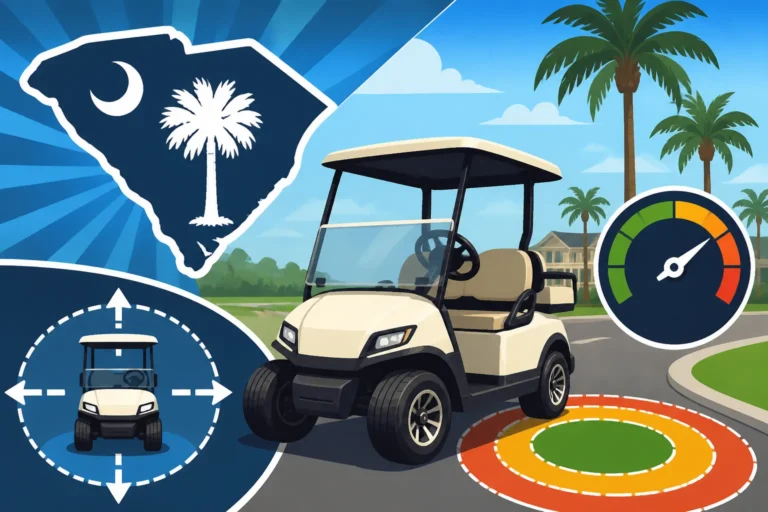
This is perhaps the most misunderstood aspect of South Carolina golf cart law. The law states that a permitted golf cart can be operated on secondary roads or streets within four miles of the driver's home or place of business, and only during daylight hours. But what does "within four miles" actually mean? Is it a straight line as the crow flies, or measured by actual road mileage? Generally, law enforcement interprets it as actual road mileage, meaning the distance you travel along public roads. This isn't a hard and fast rule set in stone for every single situation, as some municipalities might have slightly different interpretations or additional ordinances.
The key here is secondary roads and streets, not major highways or primary routes with higher speed limits. If you live in a larger community or a more rural area, this 4-mile radius might feel quite limiting. For folks living in smaller towns, retirement communities, or near beaches, it's usually ample for running errands, visiting neighbors, or getting to local attractions. It's crucial to understand that crossing into another town or county doesn't automatically extend your 4-mile radius; it's still measured from your specific home or business address that's listed on your permit application. This is why mapping out your typical routes and being aware of the actual road distances is so important. [South Carolina Golf Cart Radius and Speed Rules] are quite clear on these limits, emphasizing the local nature of golf cart operation. Some towns have specific ordinances that might create designated golf cart zones or pathways, which can sometimes extend or clarify the radius in those specific areas. Always check with your local municipality if you're unsure about specific local rules that might interact with the state's 4-mile guideline.
Navigating the Roads: Where You Can and Cannot Go
Once you have your permit and understand the 4-mile rule, the next big question is exactly where you can actually drive your golf cart. South Carolina law is pretty specific about the types of roads you're allowed on, as well as the conditions under which you can operate. Ignoring these can lead to tickets and take the fun out of your ride.
Approved Road Types and Speed Limits
In South Carolina, a permitted golf cart can only be driven on secondary roads or streets where the posted speed limit is 35 miles per hour or less. This is a critical distinction. You absolutely cannot take your golf cart on primary highways, interstates, or any road with a speed limit exceeding 35 mph, even if you're just trying to cross it or drive a short distance. This rule is in place for everyone's safety, as golf carts are not designed for high-speed traffic and can be extremely dangerous in such environments. The maximum speed your golf cart is allowed to travel is also capped at 20 mph, regardless of the posted speed limit of the road. So, even if you're on a 35 mph road, you should not be pushing your cart beyond 20 mph. [35 mph for a Cart] specifically highlights this limitation.
It's common to see golf carts in residential areas, near beaches, or in planned communities where the roads are typically narrower and have lower speed limits. If you encounter a situation where a road temporarily increases its speed limit above 35 mph, you must exit that road. This means you need to be constantly aware of the signage around you. Imagine you're driving down a charming back road, and suddenly the speed limit jumps to 45 mph for a short stretch. Continuing on that road, even for a few yards, would put you in violation of the law. Planning your routes to stick strictly to lower-speed secondary roads is essential.
Time of Day and Other Operational Restrictions
Beyond the type of road and speed limits, when you can drive your golf cart is also strictly regulated. Golf carts are permitted for operation only during "daylight hours." What exactly constitutes "daylight hours" can sometimes feel a bit ambiguous, but generally, it means from a half-hour after sunrise until a half-hour before sunset. You absolutely cannot operate your golf cart on public roads after dark. This means no late-night runs to a friend's house or evening cruises. This rule is in place because golf carts often lack the sophisticated lighting systems, reflective materials, and visibility features of regular vehicles, making them difficult to see in low light, especially for other motorists. [South Carolina Golf Cart Daylight Rules] explicitly enforces this.
While the state law doesn't always mandate full turn signals, brake lights, or extensive reflective tape for a basic golf cart permit, having them is a smart choice for safety. Many golf cart owners add these features, and for good reason—they make you much more visible to others. In fact, if you're considering enhancing your golf cart's safety features, browsing accessories designed for UTVs, like improved mirrors or LED lighting kits from brands like SuperATV, can provide ideas. While SuperATV primarily caters to UTVs, the principles of enhancing visibility and safety through better equipment are universally beneficial for any off-road or low-speed vehicle that shares the road. It's about being seen and having the ability to signal your intentions clearly. Remember, these are not substitute for legal compliance but rather enhancements for your personal safety. You must also have a valid driver's license to operate a golf cart on public roads, and this applies to every driver, regardless of age. Any deviation from these rules, such as riding at night or allowing an unlicensed driver, can result in penalties. Always prioritize safety and legal compliance. For a general overview of the rules, see [South Carolina Golf Cart Road Rules].
Staying Compliant and Avoiding Fines
Nobody wants to get a ticket when they're just trying to enjoy a leisurely ride. The fines, the court time, and the frustration simply aren't worth it. Knowing exactly what to do and what to avoid can save you a lot of hassle and money. It's about being prepared and understanding the common pitfalls.
Essential Paperwork to Carry
When you're out and about on your golf cart, think of it like driving your car in miniature. You need to have specific documents with you that law enforcement officers might ask to see. The absolute must-haves are your valid South Carolina driver's license and the golf cart permit decal prominently displayed on your cart. While golf carts don't typically require a separate registration or title in South Carolina like a car or a street-legal UTV, and liability insurance isn't mandated for a basic golf cart permit, carrying proof of ownership (like your bill of sale) and any insurance documentation you do have (many homeowners' policies will cover golf carts, but it's good to have proof) is a smart move.
Imagine a scenario: you're cruising along, enjoying a beautiful afternoon, and a local deputy pulls you over. They'll ask for your driver's license, and they'll confirm your golf cart has a current permit decal. If you can't produce a valid driver's license, or if your golf cart doesn't have its current decal, you're setting yourself up for a ticket. Carrying these documents isn't just a formality; it's how you quickly prove you're operating within the law and make any interaction with law enforcement smooth and swift. For general guidance on what to have on you, [What Papers to Carry on a Back Road] offers a helpful perspective, even if it's more geared towards trail quads.
Common Mistakes and How to Avoid Them
It's easy to fall into traps, especially if you're new to golf cart ownership or assume the rules are more relaxed than they actually are. One of the biggest mistakes people make is simply exceeding that 4-mile radius from their home or business. It's easy to get lost in conversation or simply misjudge the distance, but ignorance of the law isn't a valid defense. Another frequent violation is operating the golf cart after daylight hours. That sunset cruise might sound appealing, but it's illegal. Additionally, many people mistakenly believe they can take their cart on any road, regardless of the speed limit. Sticking to roads posted 35 mph or less is non-negotiable.
To avoid these common errors, proactive measures are key. For the 4-mile rule, consider using a mapping app on your phone to create a boundary around your home or business. This visual aid can be incredibly helpful for staying within your legal zone. As for the "daylight hours" rule, simply set an alarm on your phone for a half-hour before sunset to ensure you're off public roads in time. When it comes to road types, always pay attention to speed limit signs. If you see a limit higher than 35 mph, turn around! While SuperATV specializes in performance parts for UTVs, the spirit of responsible riding, including respecting speed limits and understanding vehicle capabilities, is paramount. Think about how a UTV owner might use their machine's accessories to stay compliant on trails—golf cart owners can apply similar diligence to their street-legal operations. The consequences of these violations aren't minor; [South Carolina Fines of $50 to $200] are common for golf cart infractions, and they can add up quickly, not to mention potential court costs and inconvenience.
What About Modified Carts or Other Low-Speed Vehicles?
Sometimes, that golf cart sitting in your garage might undergo some serious upgrades. A lift kit here, some bigger tires there, maybe even an engine swap for more speed. While these modifications can make your cart look and feel cooler, they can also change its legal classification entirely, pushing it out of the simple golf cart category and into something with much stricter rules, like a Low-Speed Vehicle (LSV).
When a Golf Cart Becomes Something More
The line between a golf cart and a Low-Speed Vehicle (LSV) can get blurry, especially with today's aftermarket parts. If you significantly modify your golf cart to go faster than its original design, typically above 20 mph but below 25 mph, or add extensive features like a VIN plate, full lighting system (headlights, brake lights, turn signals), seatbelts, and a windshield, you might inadvertently transform it into an LSV in the eyes of South Carolina law. The moment it meets the criteria for an LSV, it's no longer just a golf cart with a simple permit. It now falls under a different set of regulations that are much closer to those for conventional automobiles.
This reclassification is important because LSVs have to meet federal safety standards and state titling, registration, and insurance requirements. They're built for slightly more extensive road use than golf carts, but still not for high-speed roads. If you're a fan of aftermarket customization, you might be familiar with brands like SuperATV, which offers a vast array of parts for UTVs. While SuperATV doesn't specifically make golf cart conversion kits into LSVs, the sheer range of their products for enhancing UTV performance and safety serves as a good example of how extensive modifications can change a vehicle's nature. If you find yourself adding components that push your golf cart beyond its original design intent, you should seriously consider if you've crossed the threshold into LSV territory. [A Low-Speed Vehicle Is Not a South Carolina UTV] is an important distinction to understand as it clarifies these vehicle classes.
Low-Speed Vehicles vs. Golf Carts: Key Differences
The differences between a legally defined golf cart and a Low-Speed Vehicle (LSV) in South Carolina are significant and directly impact where, when, and how you can operate them. Understanding these distinctions is crucial, especially if you're thinking about modifying your golf cart or purchasing a vehicle that might fall into either category.
Here’s a quick comparison to help clarify:
| Feature | South Carolina Golf Cart | South Carolina Low-Speed Vehicle (LSV) |
|---|---|---|
| Permit/Title | SC-issued permit decal required; no title or traditional registration. | Titled, registered, and licensed with a standard license plate. [South Carolina Low-Speed Vehicle Plates] |
| Speed Limit | Max operational speed 20 mph; operated on roads 35 mph or less. | Max design speed 20-25 mph; operated on roads 35 mph or less. |
| Radius | Within 4 miles of home/place of business. | No geographic radius restriction (can be driven statewide on permissible roads). |
| Time of Day | Daylight hours only. | Day or night operation allowed (with proper lighting). |
| Equipment | Basic brakes, lights (often added by owner, not always required by law for permit). | Headlights, tail lights, stop lights, turn signals, mirrors, windshield, seatbelts, parking brake, VIN. |
| Driver's License | Valid driver's license required. | Valid driver's license required. |
| Insurance | Not legally required for cart permit (though highly advised for liability). | Mandatory liability insurance, just like a car. |
| Modifications | Extensive modifications (especially speed) can reclassify it as an LSV. | Designed from the factory to meet federal LSV standards. |
As you can see, the LSV category carries far more requirements but also offers greater freedom in terms of range and time of day operation. If your "golf cart" starts to look and perform more like the right column in this table, you'll need to go through the proper steps to title, register, and insure it as an LSV. Otherwise, you could be facing serious fines for operating an unregistered and uninsured motor vehicle. The legal framework for LSVs, including [South Carolina Low-Speed Vehicle Rules], outlines all these stricter requirements to ensure they are safe for more extensive road use.
Disclaimer
This article is for general informational purposes only and does not constitute professional advice. Laws, prices and regulations vary by location and change over time. Consult a qualified professional for guidance on your specific situation.