Chandler’s Law and South Carolina ATV Rules
Riding ATVs and UTVs across South Carolina offers some incredible experiences, from the sandhills to the mountains, but it's easy to get tangled up in the rules, especially when you hear about something like "Chandler's Law." Many folks get frustrated trying to figure out what's legal, what's safe, and what might get them a ticket. This comprehensive guide will walk you through the ins and outs of Chandler's Law, breaking down the specific South Carolina ATV rules you need to know to ride responsibly and enjoy the trails without worry.
Understanding Chandler's Law: Why It Matters to Every Rider
When we talk about ATV rules in South Carolina, Chandler's Law is at the heart of most discussions, especially regarding youth riders. This isn't just some obscure legal jargon; it's a set of regulations born from tragedy, designed to enhance the safety of everyone enjoying off-road machines in the Palmetto State. Many riders, new and seasoned alike, can feel overwhelmed trying to decipher the legal speak, but understanding its core principles is essential for avoiding penalties and, more importantly, preventing accidents.
The Origin and Purpose of the Law
Chandler's Law, formally known as the Chandler Johnson ATV Safety Act of 2011, came into effect to address a growing concern over ATV-related injuries and fatalities, particularly among children. It's truly a heartbreaking origin, named after a young boy who tragically lost his life in an ATV accident. Before this law, South Carolina had far fewer specific regulations governing ATV use, leading to a patchwork of understanding and often, unsafe practices. The state recognized a critical need for clearer guidelines on rider age, supervision, and safety equipment to protect its citizens. This legislation aims to minimize risk by setting clear boundaries, giving parents and guardians specific responsibilities, and mandating certain safety standards for all riders. It's about proactive prevention, ensuring that the thrill of the ride doesn't come at the cost of safety. You can find the specific legal text in [South Carolina Code Title 50 Chapter 26].
Who Chandler's Law Applies To
It's a common misconception that Chandler's Law only applies to children, but that's not entirely accurate. While many of its provisions focus heavily on youth riders and their supervision, the law also sets standards for all ATV operation within the state. For instance, basic equipment requirements like functional brakes apply universally. However, the most stringent components, such as age limits, safety certificate requirements, and helmet mandates, are indeed geared towards those under a certain age. This means whether you're a parent considering buying a youth quad for your child, a teenager eager to hit the trails, or an adult just wanting to understand your responsibilities, Chandler's Law affects you. It's the foundational framework for nearly all [South Carolina ATV rules] and covers everyone from the youngest beginner to the most experienced adult.
Age Restrictions and Supervision: Keeping Young Riders Safe
One of the most critical aspects of Chandler's Law is its focus on protecting young riders. It sets clear, age-based boundaries for who can ride, what they can ride, and who needs to be watching them. This can be a real headache for families, especially when you have children of different ages, each with their own machine or riding preferences. But these rules are truly in place to prevent serious injuries and ensure that kids develop safe riding habits.
Minimum Age to Operate an ATV
South Carolina has specific rules about how old a rider must be to operate an ATV, and they are quite strict, especially for the very young. The law [South Carolina Bans Riders Under 6] from operating an ATV on public or private land. This means no matter how small or seemingly safe a youth quad might be, if a child is under six, they cannot be in control of it. For riders between the ages of six and fifteen, there are additional layers of protection. They are allowed to operate an ATV, but only under direct supervision on private land, and they must adhere to specific safety requirements, which we'll get into shortly. It’s important for parents to know that these aren't just suggestions; they are enforceable laws designed to keep young ones safe. Trying to bend these rules, even with the best intentions, could lead to serious consequences if an accident occurs or an officer observes a violation.
Safety Certificate Requirements for Minors
For riders aged 6 to 15, simply being old enough isn't enough; they also need to demonstrate basic safety knowledge. This is where the [South Carolina Safety Certificates at 15 and Under] come into play. Any child in this age group operating an ATV must possess a valid ATV safety certificate. This certificate is earned by completing a hands-on ATV safety course approved by the ATV Safety Institute (ASI). It’s not just a quick online quiz; it involves practical training to teach them how to handle a machine safely in various conditions. Many parents appreciate this requirement because it provides formal instruction beyond what they might teach at home. Think of it as a driver's education for ATVs – it’s about giving them the foundational skills and awareness needed to react safely on the trail. [Only an ATV Safety Institute Course Counts], so be sure to enroll your child in an approved program.
Adult Supervision Rules
Even with a safety certificate, minors cannot ride unsupervised. Chandler's Law is very specific about [South Carolina Adult Accompaniment at 16 and Under]. For children aged 6 to 15, direct adult supervision is required when they are riding an ATV, even on private property. "Direct supervision" means the adult must be close enough to immediately intervene if necessary and be able to see the child at all times. This isn't just about being on the same property; it's about active oversight. Furthermore, the law also outlines [South Carolina Passenger Rules Under 16], generally prohibiting an unlicensed minor from carrying a passenger. This means no doubling up with a younger sibling or friend if the operator hasn't met the full licensing requirements. For those between 16 and 17, while they don't need the direct, line-of-sight supervision of younger riders, if they haven't completed a safety course, an adult must still be riding with them on the trail. It's all about a layered approach to safety, ensuring that less experienced riders have guidance until they develop the judgment and skills to ride independently.
Safety Equipment Mandates: What You Need to Wear and Why
Beyond who can ride, Chandler's Law also dictates what riders, especially young ones, need to wear to protect themselves. It’s easy to dismiss safety gear as inconvenient or uncomfortable, but these requirements are non-negotiable for a good reason. Off-road riding inherently carries risks, and proper gear is your first line of defense against serious injury.
Helmet and Eye Protection Requirements
The most visible and often discussed safety equipment requirement is the helmet. For any rider under the age of 16, a helmet is absolutely mandatory when operating or riding as a passenger on an ATV. This isn't just any helmet; it must meet the federal safety standards established by the U.S. Department of Transportation (DOT). So, your child's bicycle helmet, while good for cycling, won't cut it for ATV riding. This rule is explicitly covered in [South Carolina Helmet Rules for Young Riders] and reinforces the critical need for head protection. Along with a helmet, [South Carolina Eye Protection for Young Riders] is also required. Goggles or a face shield on the helmet are essential to protect eyes from dust, debris, branches, and insects that can obscure vision or cause injury. Even an adult rider, while not legally mandated to wear a helmet on private land, is wise to do so. A good full-face helmet designed for off-road use, like those you might find from a brand like SuperATV, offers superior protection and peace of mind for all riders.
Appropriate Clothing and Footwear
While not explicitly detailed in the same way as helmets and eye protection within Chandler's Law, common sense and best safety practices dictate wearing appropriate clothing and footwear. This generally means long pants, long sleeves, gloves, and sturdy over-the-ankle boots. Shorts and flip-flops might seem comfortable on a hot day, but they offer zero protection against scrapes, burns from exhaust, or impacts. Imagine kicking up a sharp rock or having a low-hanging branch brush against your bare arm – not a fun thought. Good riding boots protect your feet and ankles, preventing sprains or breaks in case of an accidental tip-over or if your foot slips off the pegs. Investing in proper riding gear, while an upfront cost, is truly an investment in your safety and comfort on the trails. It means you can focus on the ride, not on potential injuries.
Where You Can and Cannot Ride: Navigating South Carolina's Terrain
Knowing where you can legally and safely ride your ATV in South Carolina is just as important as knowing the age and safety gear rules. Many riders get confused about road access, public lands, and private property, leading to inadvertent trespass or dangerous situations. Chandler's Law primarily governs off-road use, but it also indirectly clarifies where ATVs are generally not permitted.
Public Roads and Highways
This is perhaps one of the biggest points of confusion and frustration for ATV owners: [Can You Ride an ATV on the Road in South Carolina]? The simple answer, generally speaking, is no. Chandler's Law, as well as other state statutes, explicitly prohibits the operation of ATVs on public roads, streets, or highways. These machines are designed for off-road use, and their features (or lack thereof, such as turn signals, brake lights, and mirrors) make them unsafe for regular road traffic. The risks associated with riding a slow-moving, unprotected ATV alongside cars and trucks are immense. There are a few very limited exceptions, such as crossing a road at a 90-degree angle to get from one private property to another, but even then, specific rules apply, like yielding to all traffic. Trying to take a shortcut down a paved road, even a short distance, can quickly result in a citation and potentially an accident.
Private Property and Exceptions
Riding on private property is generally allowed, provided you have the landowner's express permission. This is a crucial distinction: "private land" doesn't automatically mean "any land that isn't a public road." You must have specific, often written, permission to ride on someone else's land. If you're riding on your own property, you're usually in the clear regarding permission, though all the safety rules from Chandler's Law (age, helmets, etc.) still apply to minors. There are also specific [South Carolina Farm and Ranch Exemptions] written into Chandler's Law. If you're using your ATV for agricultural purposes on legitimate farm or ranch land, some of the age and safety certificate requirements might be relaxed, reflecting the practical necessities of farm work. Similarly, there are [South Carolina Hunting and Trapping Exemptions] for those using ATVs as part of their hunting or trapping activities on private land, again with common-sense provisions for how the machine is being used for its intended purpose. However, these exemptions don't give a free pass to ignore safety; they simply acknowledge the practicalities of working or hunting with these machines.
Public Trails and Designated Riding Areas
While ATVs are largely banned from public roads, South Carolina does offer designated public riding areas, primarily within the national forests. These trails are specifically designed and maintained for off-road vehicle use and provide a legal and safe environment to ride. Examples include the Enoree OHV Trail and Parsons Mountain OHV Trail. These areas usually require a pass for use and have their own set of specific rules, such as width restrictions for machines and designated riding hours. When you're out on these trails, you're expected to follow not only the general rules of Chandler's Law but also the specific regulations of the park or forest. It's always a good idea to check trail conditions and rules before you haul your machine out there. These are excellent places to enjoy your machine responsibly and legally, ensuring you're not trespassing or endangering yourself on forbidden roadways.
Operating Your ATV Legally: Key Rules Beyond Age and Gear
Chandler's Law reaches beyond just who can ride and what they must wear. It also lays down some fundamental operational rules that apply to the machines themselves and how they are used. Overlooking these details can lead to fines, safety hazards, and even environmental damage. It’s about ensuring your machine is fit for the trail and operated with respect for others and the environment.
Lighting and Visibility Requirements
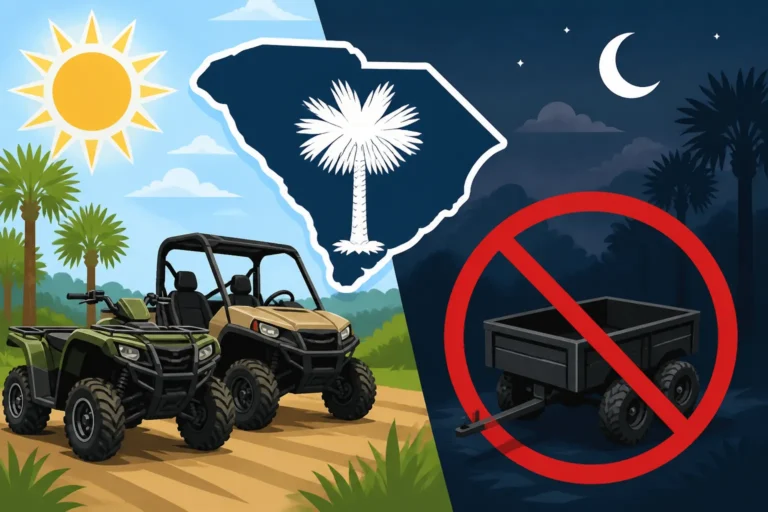
Visibility is critical, especially when the sun starts to dip below the horizon. Chandler's Law specifies [South Carolina Headlight Hours After Sunset] for ATVs. You must have your headlights on from one-half hour after sunset until one-half hour before sunrise, and at any other time when visibility is limited due to weather conditions. This isn't just about you seeing where you're going; it's also about making sure others can see you. Many ATVs come with basic lighting, but if you're riding in truly dark or dusty conditions, or your machine is older, consider upgrading your lights. Accessories from companies like SuperATV can provide powerful LED light bars or auxiliary lights that dramatically improve visibility, both for seeing and being seen. This greatly enhances safety for everyone on the trail.
Spark Arresters and Brake Functionality
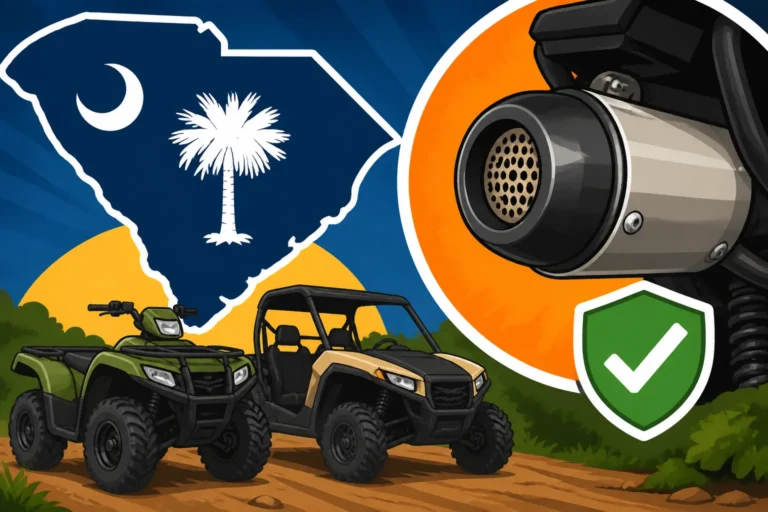
Environmental and safety concerns also factor into the law. A functional spark arrester is a mandatory piece of equipment for any ATV operated on public lands, such as national forests. This rule, highlighted by [The Spark Arrester the Forest Service Requires], is crucial for preventing wildfires. A spark arrester is a screen or device in the muffler that prevents hot carbon particles from escaping the exhaust and potentially igniting dry grass or leaves. Regularly check your spark arrester to ensure it’s intact and clear of blockages.
Equally important are your brakes. Chandler's Law, along with general vehicle safety, requires that your ATV be equipped with brakes that are in good working order and capable of holding the machine on a hill. [Brakes That Hold on a Hill] are not just a convenience; they are a fundamental safety feature. Before every ride, give your brakes a quick check to ensure they’re responsive and effective. Worn brake pads or fluid leaks can quickly turn a fun ride into a dangerous situation. Regular maintenance is key here.
Water Crossings and Environmental Impact
South Carolina is known for its beautiful waterways, but riding your ATV through every creek and river isn't just bad for the environment; it’s often illegal and can be dangerous. Chandler's Law includes specific [South Carolina Watercourse Crossing Rules], emphasizing responsible riding. When crossing a stream or body of water, you must do so only at a ford, bridge, or culvert, and only where the crossing is otherwise permitted. This means no simply forging new paths through streambeds or tearing up sensitive aquatic habitats. [Creek Crossings Allowed Only at a Ford] are designed to minimize erosion and protect water quality. Respecting these rules is vital for preserving South Carolina's natural beauty for all to enjoy. It also protects you from potential fines and the damage that water can do to your machine if you’re not careful.
Penalties and Enforcement: What Happens When Rules Are Broken
Nobody wants to get a ticket or, worse, face serious legal trouble, but it's important to understand the consequences of violating Chandler's Law. These rules aren't just suggestions; they are enforceable statutes designed for safety, and law enforcement takes them seriously. Knowing the potential penalties can be a strong motivator to ensure you and your family are always riding legally.
Fines and Citations
If you or a minor under your supervision are caught violating Chandler's Law, you can expect to receive a citation. The penalties can vary depending on the specific infraction, but generally, [South Carolina Fines of $50 to $200] are common for many violations. This might include anything from an unsupervised minor riding, a child under 16 without a helmet, or riding an ATV on a prohibited public road. These fines can add up quickly, especially if there are multiple violations. It's not just the monetary cost; a citation can be a hassle, requiring court appearances and potentially affecting your record. Law enforcement officers, including game wardens and local deputies, are empowered to conduct [South Carolina Equipment Checks by Officers] and ensure compliance with these regulations, whether you're on a public trail or even on what appears to be private property if a complaint has been made.
Impoundment and Other Consequences
In more severe cases, or for repeated offenses, there could be consequences beyond just a monetary fine. While less common for first-time, minor infractions, the state has the authority to impound an ATV if it is being operated illegally, especially in dangerous situations or if the operator is persistently breaking the law. Imagine having your machine towed away after a day of riding; it’s a costly and inconvenient ordeal. Furthermore, if an accident occurs due to a violation of Chandler's Law, the legal ramifications can be much more significant. For example, if a child is injured while riding without a helmet or supervision, the responsible adult could face civil liability or even criminal charges, depending on the circumstances. [South Carolina Accident Reporting for an ATV Crash] is crucial, and if violations of Chandler's Law contributed to the incident, they will certainly be noted. These are not just traffic tickets; they are safety regulations with teeth, designed to discourage reckless behavior and protect lives.
Special Considerations: Golf Carts, UTVs, and Farm Use
While Chandler's Law focuses specifically on ATVs, the world of off-road and utility vehicles in South Carolina can be confusing with so many different types of machines. It's common for riders to lump all "four-wheelers" together, but the law often makes critical distinctions. Understanding these differences can save you a lot of grief and ensure you're applying the correct rules to your specific machine.
Distinction Between ATVs, UTVs, and Golf Carts
South Carolina law differentiates significantly between ATVs, UTVs (Side-by-Sides), and golf carts, especially when it comes to road use and specific operating rules. An ATV, by definition, is typically a single-rider machine, designed for off-road use, with handlebars for steering and a saddle-style seat. [A Low-Speed Vehicle Is Not a South Carolina UTV] and they both have different rules than ATVs.
UTVs, or Side-by-Sides, are generally wider, have a steering wheel, foot pedals, and bucket or bench seats, often accommodating multiple passengers. Historically, UTVs faced the same road restrictions as ATVs, but this changed with the introduction of [South Carolina Street-Legal UTV Registration Arrives] in November 2026. This new legislation allows UTVs meeting specific equipment requirements to be registered for limited street use, making them a distinct class. This is a game-changer for many UTV owners who previously felt completely landlocked with their machines.
Golf carts, on the other hand, have their own very specific set of rules, including [South Carolina Golf Cart Radius and Speed Rules], typically limiting their use to within a few miles of your home and during daylight hours only. It's critical not to confuse these categories, as applying ATV rules to a UTV or golf cart, or vice versa, could lead to unexpected fines.
UTVs and the Road Ahead for Street-Legality
The recent changes regarding UTVs in South Carolina are a big deal for enthusiasts. As of November 2026, UTVs can be registered for street-legal use, offering a new avenue for enjoyment beyond private land and designated trails. This new law outlines specific [South Carolina Street UTV Requirements Explained], including equipment like headlights, tail lights, brake lights, turn signals, seat belts, and mirrors. They also have age and license requirements for operators. This is a clear move by the state to provide a legal framework for a popular vehicle type that many owners wanted to use for short trips on public roads, such as going to the store or accessing nearby trailheads. While this opens up new possibilities, it’s important to remember these are not full-fledged automobiles, and limitations on speed and road types will still apply, generally restricting them to roads with posted speeds of 55 mph or less. So, while you might soon see more SuperATV equipped Side-by-Sides legally on secondary roads, they still won't be cruising down the interstate.
Farm and Hunting Exemptions Revisited
It’s worth circling back to the [South Carolina Farm and Ranch Exemptions] and [South Carolina Hunting and Trapping Exemptions]. These provisions in Chandler's Law are important for those who use ATVs as tools rather than purely recreational vehicles. For example, if you're actively engaged in farming operations, you might be exempt from certain age or helmet requirements when operating an ATV directly for farm work on private agricultural land. Similarly, an ATV used exclusively for hunting or trapping activities on private land could also fall under these exemptions. However, these are not blanket exemptions that allow you to ignore all safety rules or ride recklessly. They are specific to the purpose and location of the ATV's use. If you're using a farm ATV for a joyride on a Sunday afternoon, standard Chandler's Law rules would apply to minors. Always confirm the exact scope of these exemptions with official state resources to ensure you're compliant, as misinterpreting them could still lead to issues.
| Rule Category | Applies to Riders Under 6 | Applies to Riders 6-15 | Applies to Riders 16+ |
|---|---|---|---|
| ATV Operation | Prohibited | Permitted with cert. & supervision | Permitted |
| Safety Certificate | N/A | Required | Not required |
| Helmet Requirement | N/A (cannot ride) | Required (DOT approved) | Recommended (not legally mandated on private land) |
| Eye Protection | N/A (cannot ride) | Required | Recommended (not legally mandated on private land) |
| Adult Supervision | N/A (cannot ride) | Required (direct) | Required if no safety cert. |
| Road Operation | Prohibited for all ATVs | Prohibited for all ATVs | Prohibited for all ATVs |
| Spark Arrester | Required (if applicable) | Required (if applicable) | Required (if applicable) |
| Functional Brakes | Required (if applicable) | Required (if applicable) | Required (if applicable) |
| Age Warning Label | Leave in place | Leave in place | Leave in place |
| Passenger Rule | N/A | No passenger for unlicensed minor | Yes, if machine designed for it |
Disclaimer
This article is for general informational purposes only and does not constitute professional advice. Laws, prices and regulations vary by location and change over time. Consult a qualified professional for guidance on your specific situation.