Do South Carolina Kids Need a Pass?
South Carolina families often find that “kids need a pass” depends on whether a child is riding, which pass the family plans to use, and where they are going. For National Forest OHV trails, age alone is not a safe reason to assume a child is exempt. Here’s how to check the pass requirement and keep it separate from the rules about who may ride.
Do South Carolina kids need a pass to ride?
If a child is riding an off-highway vehicle on a South Carolina National Forest OHV trail, plan on needing the correct trail pass for that ride. The pass requirement is separate from age-based safety rules: a pass does not make a child legally eligible to operate a machine, and an age exemption from a particular rule would not automatically exempt a rider from the trail fee.
The details depend on the pass type. South Carolina’s National Forest OHV pass program includes day and season options, and their terms are not identical. Season passes are associated with an individual and are not transferable. Day-pass arrangements are tied to vehicle or plate information, so don’t assume they are purchased in the same way as season passes or that one pass automatically covers every person and machine in a family group. Review the current purchase instructions before the trip.
For background on which trails fall under the program, see South Carolina National Forest OHV Passes and South Carolina Passes Cover All Four Trails. The pass is for access to designated National Forest OHV trail areas, not a general permit to ride anywhere in the state.
| Situation | What to plan for | What to check |
|---|---|---|
| A child rides their own ATV on a designated National Forest OHV trail | Obtain the appropriate pass for the trail and pass type | Whether the current day or season option applies to the child’s machine or rider |
| A child rides as a passenger | Check both trail-pass terms and the vehicle’s passenger rules | Whether the pass covers the vehicle or rider, and whether the machine may carry a passenger |
| A family uses a day pass | Follow the current plate and vehicle instructions | Which vehicle or vehicles the pass covers |
| A family uses season passes | Treat each pass as individual and non-transferable | Which family member the pass is issued to |
| A child rides at a private park | Follow that park’s separate fee and age policies | Pass, minimum-age, passenger, helmet, and supervision requirements |
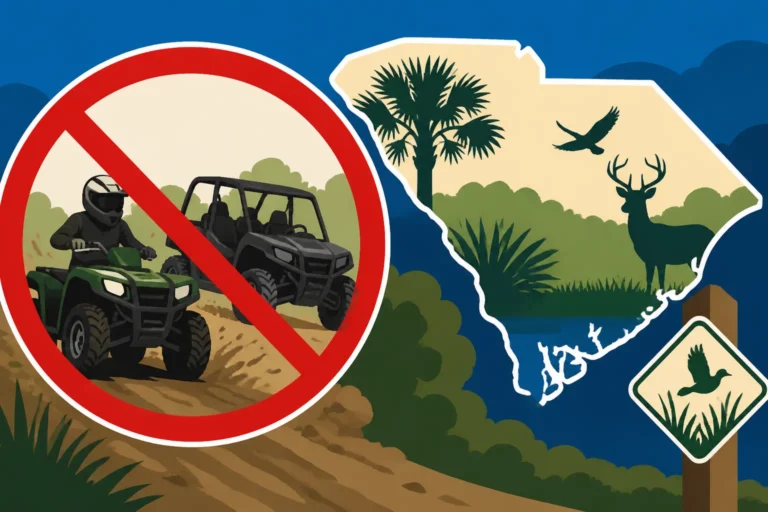
| A family visits a Wildlife Management Area | Do not assume a forest OHV pass grants access | The area’s vehicle rules; South Carolina WMAs generally prohibit ATV riding |
For families choosing a season option, South Carolina Season Passes Are Per Person explains the individual-pass distinction, while South Carolina Passes Are Non-Transferable covers why one person’s pass should not be treated as a family pass. If you’re considering a day option, check South Carolina Day Passes Tied to a Plate for the vehicle-information issue. Because pass instructions and availability can change, use the official purchase page and trail notices for the current requirements.
A child who is only accompanying an adult also deserves a careful check. A passenger does not necessarily need a separate rider pass under every pass arrangement, but the vehicle’s rules still matter. Some machines are designed for one rider, while others have passenger seats and restraints. South Carolina’s age and passenger restrictions can also limit who may ride with a young operator. Confirm the pass terms and the legal passenger setup rather than treating “not driving” as an automatic exemption from every requirement.
Pass rules are not the same as permission to ride
A trail pass handles access or fee compliance. It does not replace South Carolina’s ATV safety rules, trail restrictions, or a landowner’s permission. Before planning a trip around a child, check four separate questions:
- Is the location open to the kind of machine you have? National Forest OHV trails have designated routes and may impose machine-width or other equipment restrictions. A pass does not authorize riding outside those routes.
- Is the child allowed to operate that machine? South Carolina has age-related requirements for ATV riders, including safety-certificate and adult-supervision rules for young riders. The child’s age and experience matter.
- Can the machine carry a passenger? A passenger should not be added to a single-rider ATV. For a UTV or other two-person machine, check the age and restraint rules that apply to the driver and passenger.
- Does the pass cover the trip as planned? Check whether the selected pass is individual or vehicle-based, what identifying information is required, and where it must be displayed or available.
For age and training details, use South Carolina Safety Courses for Riders 15 and Under and South Carolina Supervision Rules for Minors. These rules are separate from the pass purchase. A child may need both a pass for trail access and to meet the legal requirements for riding.
The same separation applies to other kinds of land. A National Forest OHV pass does not grant access to a private trail system, and a private park pass does not authorize riding on public forest routes. Wildlife Management Areas are not a fallback riding area: check South Carolina WMA Riding Is Prohibited before bringing an ATV there. Hunting access, a hunting license, or permission to enter a property does not necessarily mean vehicle use is allowed.
If the destination is a privately operated park, check that park’s rules directly. Private parks set their own admission, age, passenger, helmet, and supervision requirements. A child might need a separate admission or vehicle pass there even if the family’s Forest Service pass arrangements work differently. Likewise, a Forest Service pass should not be assumed to cover a private park’s fee.
Choosing between day and season passes for a family
A day pass can suit an occasional outing, while a season pass may be more convenient for repeated visits. The key for a family is not just how often you ride; it is how the pass is issued and which person, vehicle, or plate information it applies to.
Season options are individual and non-transferable. If a child has their own season pass, don’t plan on lending it to a sibling or another adult. If a child rides regularly, compare the current season-pass terms with the day-pass option and confirm whether the child needs a separate pass. Do not assume that buying one season pass for the household covers everyone who takes a turn riding.
Day-pass instructions are different. The program’s day-pass process is tied to vehicle or plate information, so read the instructions for the vehicle that will transport the machines and follow the purchase process precisely. If two tow vehicles or a group of machines are involved, confirm the applicable terms for each rather than relying on a pass bought for a different vehicle.
A simple way to decide is to list who will ride and what will be transported:
- Write down each child and adult who will operate a machine.
- Note which machines are single-rider and which have approved passenger seating.
- Identify the tow vehicle or vehicles and record the plate information requested by the pass system.
- Compare the current day and season pass instructions for each planned rider or vehicle.
- Keep proof of purchase accessible, and follow posted directions about displaying a pass.
- Check trail notices before leaving, since closures or restrictions can affect the trip even when the pass is valid.
The pass system can be easy to misunderstand when a family has several riders. A parent may buy an individual season pass and expect it to travel with whichever child is riding that day. That is not how a non-transferable pass works. Similarly, a vehicle-based day pass should not be treated as proof that every machine in a large group is covered unless the current instructions say so.
For display and documentation questions, see South Carolina Pass Display Rules. Trail staff may check fee compliance, so keep the confirmation or other required proof available rather than relying on a screenshot buried in someone else’s phone. If you have a specific uncertainty about a child’s pass, ask the official pass provider or the relevant Forest Service office before traveling.
A family checklist before heading to a trail
A little preparation can prevent a pass problem from becoming a wasted drive. Confirm the trail, pass, machine, and child’s eligibility as separate items.
Confirm the destination. Make sure the trail is a designated OHV route and is currently open. A pass does not override a temporary closure, route restriction, or posted machine-width limit. Check current trail information before loading the trailer.
Buy the correct pass. Use the current official instructions for the day or season pass. For season passes, make sure each pass is issued to the person who will use it. For day passes, enter the required vehicle or plate details accurately. Keep the purchase confirmation available.
Check the child’s role. An operator and a passenger are not interchangeable for purposes of riding rules. Verify that the child may operate the particular machine and that the machine can safely carry any passenger. Follow the state’s rules on safety courses, supervision, and protective equipment.
Bring ownership and identification documents when appropriate. A trail pass is not proof that the machine belongs to you or that you have permission to use it. See [South Carolina Proof of Ownership on the Trail] for the separate paperwork issue. For rented machines, check both the rental provider’s authorization and the trail-pass requirements.
Do not treat one type of pass as statewide permission. The National Forest pass is not a license to ride on roads, private land, a Wildlife Management Area, or a private park. Each place has its own access rules. If the route includes land beyond the designated trail system, get permission and check the applicable rules before riding there.
The practical answer is: if a South Carolina child is going to ride a machine on a designated National Forest OHV trail, plan to secure the proper pass rather than assuming children ride free. Then verify whether the pass is individual or tied to vehicle details, because day and season options work differently. Finally, confirm the child’s age, supervision, training, and passenger situation; a pass is only one part of a lawful and safe ride.
Disclaimer
This article is for general informational purposes only and does not constitute professional advice. Laws, prices and regulations vary by location and change over time. Consult a qualified professional for guidance on your specific situation.