South Carolina Day vs Season Pass Value
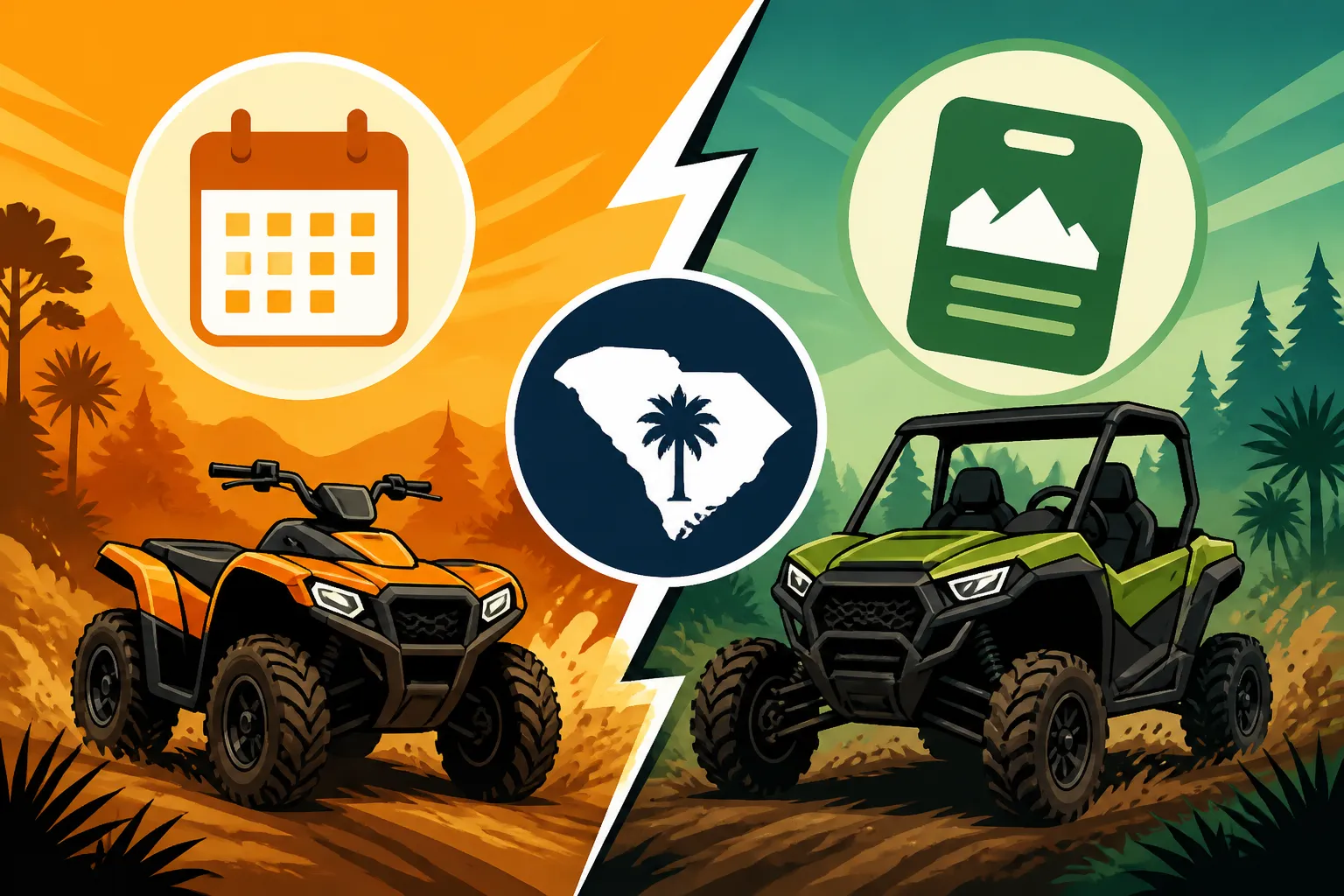
South Carolina’s forest OHV pass choices can be confusing because a day pass and a season pass are organized differently. One is tied to a tow vehicle; the other is tied to an individual rider. Comparing how often you ride, who rides, and where you plan to go can help you choose without paying for coverage you may not use.
What the Two Passes Cover
The day and season passes discussed here apply to designated OHV trails on South Carolina’s national forest land. They are not general permits for every trail, private riding park, wildlife management area, or public road in the state. A forest pass also does not override trail restrictions, closures, vehicle limits, or other access rules.
South Carolina’s forest OHV system includes trails in the Sumter and Francis Marion national forests. Before buying a pass for a particular ride, check whether the trail you intend to use is covered and currently open. The coverage question matters especially if your plans include a mix of forest trails and private parks: a forest pass should not be assumed to cover admission at a private riding area. For the trail list and coverage details, see South Carolina Passes Cover All Four Trails.
The main difference is how the passes are associated with riders and vehicles:
| Feature | Day pass | Season pass |
|---|---|---|
| Best fit | A single planned riding day or occasional outings | Repeated rides during the pass’s validity period |
| Associated with | The tow vehicle’s plate | The individual rider |
| Sharing | Vehicle-based, subject to the pass terms | Not transferable to another person |
| What to check | Date, plate details, and display instructions | Validity period, rider details, and display instructions |
| Purchase channel | Online; confirm the current official process | Online; confirm the current official process |
These are different from registration for a street-legal vehicle and from a permit that may be required by a private park. A forest pass is about access to designated forest OHV trails under the applicable fee program. It does not make an off-road machine legal for street use, nor does it serve as a substitute for any other required documentation.
The pass rules and purchase options can change. Check the current official purchase page and trail information before paying, especially if you are traveling from out of state or planning a ride around a holiday or hunting season. For a closer look at buying and displaying the pass, see How to Buy a South Carolina Forest Pass and South Carolina Pass Display Rules.
When a Day Pass Is Better Value
A day pass is usually the straightforward choice when you are making an occasional outing and know which vehicle will be used to haul the machine. Because it is tied to the tow vehicle’s plate, it can suit a household or group that brings multiple riders in one vehicle, provided the pass terms allow the planned use. Do not assume that the vehicle association means unlimited riders, machines, or visits; check the current terms for what the pass covers.
The day option can also reduce uncertainty for a first trip. If you are not sure how often you will ride forest trails, paying for a single outing can be more sensible than buying a longer-duration pass before you know your plans. It lets you test the logistics—travel time, staging, trail difficulty, and how often your group wants to return—before committing to a season pass.
A day pass tends to make sense when:
- You expect to ride forest trails only once or a few times.
- Your dates are fixed and the trail is confirmed open.
- The same tow vehicle will be used for the outing.
- You are visiting from outside the area and may not return soon.
- You want to try a forest ride before planning a full season around it.
For instance, if two riders travel together in the same tow vehicle for one planned day, the vehicle-based format may be easier to manage than each person buying a longer-duration pass. But read the pass conditions carefully: do not treat this example as confirmation that one day pass covers every rider or machine in every situation.
Day passes require careful attention to the vehicle information entered during purchase. A typo or a plate number that belongs to a different tow vehicle can create a problem at a compliance check. Use the plate for the vehicle specified by the pass instructions, not the ATV or UTV’s identifier, unless the official purchase process says otherwise. Details on this distinction are covered in South Carolina Day Passes Tied to a Plate.
Also check the date and validity window before checkout. A pass intended for a particular day may not work on a different date just because you did not get to ride. Weather, trail closures, illness, and transport trouble can disrupt plans, so read the current terms for changes, cancellations, or refunds instead of assuming that a missed day can be carried over.
A day pass is not automatically the cheapest choice just because it costs less at checkout. If you ride several times, separate day purchases can add up. The right comparison is the total amount you expect to pay across your actual outings, weighed against the season pass’s validity and individual-use rules. Current figures and terms should be checked with the official provider rather than relied on from old screenshots or forum posts.
When a Season Pass Is Better Value
A season pass is designed for a rider who expects to return to covered forest trails during the pass’s validity period. Its key distinction is that it belongs to an individual, not to a tow vehicle. Season passes are not transferable, so one person’s pass should not be treated as a shared pass for a spouse, friend, or another member of a riding group. See South Carolina Season Passes Are Per Person and South Carolina Passes Are Non-Transferable for the practical consequences.
The season option is worth comparing if you plan several outings, ride with a club, or often take advantage of short-notice opportunities. The more often you ride, the less useful it is to compare only the initial purchase prices. Instead, estimate how many visits you are likely to make and compare that pattern with the season pass’s current cost and dates of validity.
A season pass may be a better fit when:
- You expect multiple forest-trail visits within its validity period.
- You are the rider who will use it each time.
- You want to avoid arranging a separate purchase for each planned outing.
- You can follow the pass’s identification and display requirements.
- The covered trails are a regular part of your riding plans.
The individual basis of a season pass can change the math for groups. Suppose a family has several riders but usually makes only one trip together. A season pass for every person may not be as useful as the vehicle-based day option, depending on the current rules. If those riders make repeated trips separately, individual season passes may be more convenient. Work out the likely pattern for each rider, rather than comparing one season pass with one day pass as if they covered the same people and trips.
A season pass is not necessarily tied to the calendar year in the way a rider might expect. Check the product description for its start and end dates, and note whether it is valid for a defined season or another period. Buying near the end of the validity window can affect its value, so confirm the dates before purchase. The details are discussed in When a Forest Season Pass Year Ends.
Because a season pass is tied to a person, a name or account detail that does not match the rider may complicate verification. Buy it for the individual who will actually ride, and follow the instructions for proof of identity and display. Do not lend it to someone who is riding in your place unless the official terms expressly permit that arrangement. A pass can be a poor value if it is purchased for the wrong person or if the intended rider cannot use it during the validity period.
How to Choose and Avoid Common Mistakes
Start by making a realistic list of the rides you expect to take. Count only outings where you intend to use covered national forest OHV trails, not every ride you might take somewhere in South Carolina. Then identify who will ride and which tow vehicle will be used. Those details make the day-versus-season comparison much clearer.
Use this process before buying:
- Confirm the destination. Check that the trail is part of the forest OHV pass program and that your vehicle is allowed. Some trail systems have width or vehicle-type restrictions.
- Check access conditions. Look for closures, maintenance notices, weather impacts, and seasonal restrictions. A pass does not guarantee that a trail will be open on your chosen day.
- Count likely visits. Estimate how many times each rider expects to use covered trails during the season pass’s validity period.
- Match the pass to the user. For a day pass, verify the tow-vehicle plate and any use limits. For a season pass, select the rider who will use it.
- Compare the full cost. Check current official prices, fees, dates, and purchase terms. Do not rely on outdated amounts or assume that fees at private parks are included.
- Save the confirmation and follow display instructions. Keep the receipt or pass information available, and display or carry the pass exactly as directed.
One frequent mistake is buying a forest pass before checking trail availability. Rain or maintenance can close a route, and a fee purchase does not guarantee access on a particular date. Review South Carolina Trail Conditions Before You Haul and South Carolina Trail Closures After Rain before leaving. If the trail is closed, do not assume that a pass allows you to use a nearby route that is not part of the program.
Another is confusing the machine being ridden with the vehicle named in the pass. For a day pass, take care with the tow-vehicle plate details. For a season pass, make sure the correct person is named and understand that it cannot simply be handed to another rider. If several people share a trailer or vehicle, write down who needs an individual pass and who is covered under the day-pass terms before checkout.
Keep proof accessible in the way the pass instructions require. If you print a pass, a clear document sleeve from an office-supply store or Amazon can help protect the paper from damp conditions, but use it only if it does not interfere with the required placement or visibility. A phone screenshot or email may be useful as a backup, but do not assume it replaces a required printed pass or display method.
Finally, keep the scope of the pass in mind. It does not replace private-park fees, machine ownership documents, or any rules that apply to a different type of land. It also does not authorize road riding. When you are unsure whether a pass applies to a specific trail or rider, confirm the details with the official pass provider before setting out.
Disclaimer
This article is for general informational purposes only and does not constitute professional advice. Laws, prices and regulations vary by location and change over time. Consult a qualified professional for guidance on your specific situation.