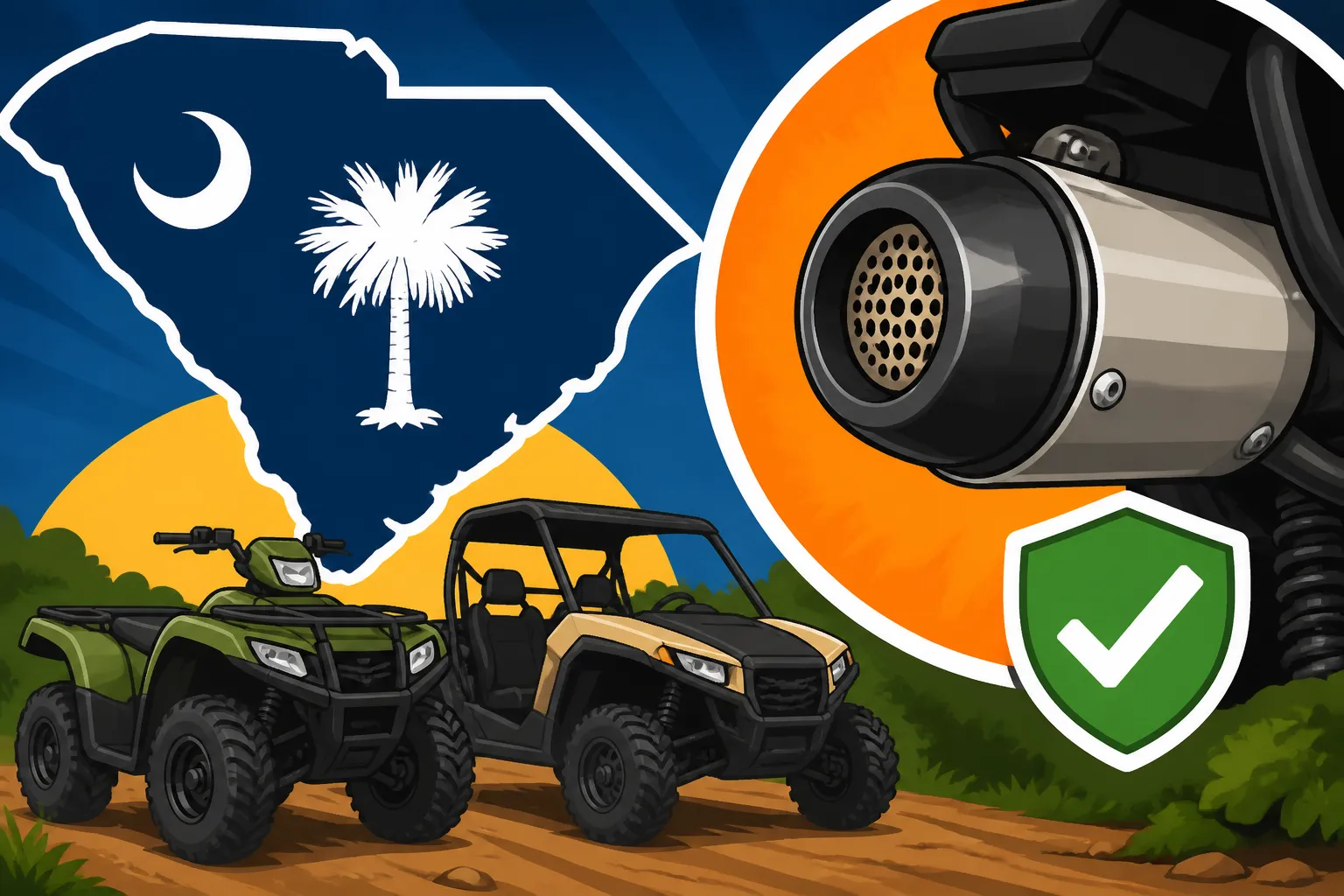
South Carolina Spark Arrester Requirements
There's nothing quite like hitting the trails on your ATV or UTV here in South Carolina. The Lowcountry's sandy pines, the Upstate's rolling hills, or the serene beauty of our National Forests – it's all part of the charm. But along with that freedom comes a big responsibility: keeping our natural spaces safe, especially from fire. One often-overlooked but absolutely crucial piece of equipment that helps us do just that is the spark arrester. Many riders don't fully understand what they are, why they're required, or how to maintain them, and that can lead to unexpected fines, environmental damage, or worse. This guide is going to clear up all the confusion around South Carolina's spark arrester requirements, helping you stay compliant, safe, and ready for your next adventure.
Understanding South Carolina's Spark Arrester Laws
It's easy to think of a spark arrester as just another piece of hardware, something you don't really notice until it's an issue. But here in South Carolina, especially with our dry pine forests and hot summers, it's a critical component for responsible off-road riding. The laws around them are in place to protect our beautiful state, and understanding them is the first step to being a good steward of the land we love to ride.
Why Spark Arresters Are Non-Negotiable
Picture this: you're out on a dusty trail, maybe kicking up some pine needles, and your engine is working hard. Inside that engine, there are combustion gases and tiny, superheated carbon particles flying out of your exhaust. Without a spark arrester, these incandescent bits can escape, land on dry grass or leaves, and ignite a wildfire in a matter of seconds. In a state like South Carolina, where we have long periods of dry weather and abundant forest land, that's a recipe for disaster.
The consequences of a wildfire, even a small one, are devastating. Beyond the immediate destruction of natural habitat and potential threats to homes, there are long-term ecological impacts and significant financial costs for firefighting efforts. For us riders, it's about preserving access to the very trails we cherish. If wildfires become a recurring problem linked to off-road vehicles, the knee-jerk reaction often leads to trail closures or stricter regulations, limiting where and when we can ride. So, while it might seem like a small thing on your exhaust, a functioning spark arrester is really about protecting our environment, ensuring public safety, and safeguarding our riding privileges for years to come.
The Specifics: What the Law Says
South Carolina doesn't mess around when it comes to fire prevention, especially on public lands. The state's regulations are largely aligned with federal guidelines, particularly those enforced by the U.S. Forest Service. Generally, any off-highway vehicle (OHV) operated on public lands, including our cherished National Forests like Sumter or Francis Marion, must be equipped with a spark arrester that is approved by the U.S. Forest Service. This isn't just a suggestion; it's a legal requirement.
You can find the foundation for these rules within [South Carolina Code Title 50 Chapter 26], which outlines regulations for off-road vehicles. While the code might not list every single federal standard, it reinforces the state's commitment to fire safety. Essentially, if you're riding your quad or side-by-side on a designated trail in a national forest, or even in some state parks that allow OHV access, that spark arrester better be there and be in good working order. The law specifically mandates these devices to prevent the discharge of burning carbon or other flammable material, aiming to keep our forests and wild areas from turning into tinderboxes. For a detailed look at what's specifically required, check out the information on South Carolina Spark Arrester Requirements. It really boils down to preventing stray sparks from igniting our beautiful, dry landscapes, and it's a rule that deputies and rangers take very seriously.
Identifying an Approved Spark Arrester
Knowing that you need a spark arrester is one thing, but knowing what kind of spark arrester is compliant is another. You can't just slap any old screen on your exhaust and call it a day. There are specific standards and approvals you need to look for to ensure you're truly compliant with the law and actually protecting the environment.
USDA Forest Service Approval
When we talk about an "approved" spark arrester, what we're really talking about is a device that meets the stringent standards set by the U.S. Forest Service (USFS). This isn't just a random agency; they are experts in forestry and wildfire prevention. Their approval means the device has been tested and certified to effectively trap and cool hot carbon particles exiting your exhaust system, without significantly impeding engine performance or creating excessive back pressure.
How do you spot one of these approved devices? It's usually pretty straightforward. Look for a permanent stamping or label directly on the spark arrester itself, or sometimes on the muffler. This marking will typically include the words "USDA Forest Service Approved" or a specific code that indicates its certification. Don't be fooled by generic "spark arrester" claims from unverified sources; if it doesn't have that official USFS stamp, it's likely not compliant for use on public lands. Most reputable aftermarket exhaust manufacturers, like those offering products through retailers such as SuperATV, will clearly state if their products are USFS-approved. Common designs include screen-type arresters, which use a fine mesh screen to trap particles, or centrifugal designs, which spin the exhaust gases to separate and extinguish sparks. Both are effective when properly maintained and certified.
Checking Your Machine's Existing Setup
So, you've got your ATV or UTV, and you're wondering if you're good to go. The first step is to locate the spark arrester on your machine. For most ATVs and UTVs, it's typically found at the very end of the exhaust system, often integrated into the muffler. You might need to consult your owner's manual to pinpoint its exact location and understand how to access it. Sometimes it's a simple end cap, other times it's an internal baffle.
Once you've found it, you need to inspect it. Is it there at all? You'd be surprised how many riders remove them for perceived performance gains or simply because they got damaged and were never replaced. If it's present, check its condition. Is the screen torn, bent, or heavily clogged with carbon buildup? A damaged or heavily clogged spark arrester is just as bad, if not worse, than having no spark arrester at all, as it won't function effectively. Look for that USDA Forest Service stamp we just talked about. If it's missing, unreadable, or the device appears to be a homemade modification, then you're likely not compliant. Regular inspection is key, especially after hard riding or if you suspect you've had an impact to your exhaust. A quick check before you load up for a day on the trails can save you a lot of headache later.
Consequences of Non-Compliance
Nobody wants to get stopped by a ranger, especially when you're just trying to enjoy a beautiful day on the trails. But ignoring South Carolina's spark arrester requirements can lead to some pretty significant headaches, ranging from legal penalties to far more serious environmental and safety risks. It's truly not worth cutting corners on this one.
Fines and Legal Penalties
Let's talk about the immediate sting: the wallet hit. If you're caught operating an OHV on public lands without a properly functioning, approved spark arrester, you're looking at a citation. In South Carolina, these can range anywhere from [South Carolina Fines of $50 to $200], depending on the specific statute violated and the discretion of the enforcing officer. That's a minimum of $50 you could have spent on fuel or a new piece of gear!
But it doesn't always stop at a simple fine. In some cases, especially if you're riding in a high-fire-danger area or there's a history of repeat offenses, your machine could even be impounded. Imagine having your prized ATV or UTV towed away, leaving you stranded on the trail and facing impound fees on top of your fine. The hassle alone of dealing with court dates, retrieving your machine, and potentially needing to install a compliant spark arrester before it's released, far outweighs the minor inconvenience of proper maintenance. Plus, a violation can go on your record, potentially affecting future access to public riding areas or even insurance rates. It’s a simple piece of equipment, but the penalties for ignoring it are very real and can quickly ruin your day.
Environmental and Safety Risks
Beyond the legal ramifications, the environmental and safety risks associated with a missing or faulty spark arrester are far more dire. South Carolina's landscape, particularly its pine forests, coastal plains, and rural areas, can become incredibly dry, especially during certain seasons. We all remember the horror stories of massive wildfires consuming acres of land, destroying homes, and displacing wildlife. A single spark from your exhaust, ignited by a non-compliant machine, is all it takes to start such a tragedy.
If your machine is found to be the cause of a wildfire, even accidentally, you could face severe personal liability. This isn't just about a small fine; you could be on the hook for the massive costs of fire suppression, property damage, and environmental restoration. We're talking hundreds of thousands, if not millions, of dollars. Furthermore, these rules exist to protect all of us. A fire started by an ATV could threaten other riders, hikers, campers, or even nearby communities. It's a risk that no responsible rider should ever take. During dry periods, fire restrictions might even be put in place, making the proper function of your spark arrester even more critical. Keep an eye out for updates on [South Carolina Fire Restrictions in Dry Months] to always be aware of local conditions. Being proactive about your spark arrester isn't just about avoiding a ticket; it's about being a good neighbor and protecting the outdoor spaces we all love.
Maintaining and Replacing Your Spark Arrester
Even if you have an approved spark arrester, it's not a set-it-and-forget-it component. Like any part of your machine that deals with extreme heat and exhaust gases, it requires regular attention. Neglecting maintenance can turn a perfectly compliant device into a fire hazard, and nobody wants that.
Regular Cleaning and Inspection
The primary culprit for spark arrester failure is carbon buildup. Over time, soot and carbon particles from your engine's combustion process can accumulate on the spark arrester screen, essentially clogging it. This not only makes the device ineffective at trapping sparks but can also restrict exhaust flow, leading to reduced engine performance and potentially causing your machine to run hotter.
Regular cleaning is vital. How often depends on how much you ride and the condition of your engine (a well-maintained engine will produce less soot). However, a good rule of thumb is to inspect and clean it every 20-30 hours of riding, or at least once a season if you ride infrequently. The process usually involves removing the arrester screen or baffle, which might require a few simple tools. Once removed, you can use a wire brush, scraper, or a sturdy pick to gently remove the carbon deposits. Be careful not to damage the screen itself. You can also soak it in a carb cleaner or similar solvent to loosen stubborn buildup. After cleaning, inspect the screen for any tears, holes, or significant corrosion. Any damage means it's time for a replacement. This is especially important if you've been riding in tough conditions, like after [South Carolina Trail Riding After Heavy Rain], where mud and debris might have been forced into the exhaust.
When to Replace and Upgrade
Even with diligent cleaning, spark arresters don't last forever. The extreme heat, vibrations, and corrosive nature of exhaust gases will eventually take their toll. Signs that your spark arrester needs replacement include:
- Visible Damage: Tears, holes, or significant deformation of the screen or internal baffles.
- Excessive Rust: While some surface rust is normal, deep, flaking rust can compromise the structural integrity.
- Persistent Clogging: If, even after cleaning, your arrester clogs up very quickly, it might be a sign that the internal structure is compromised or the material is degrading.
- Difficulty Removing Carbon: If carbon seems permanently fused to the screen and can't be cleaned effectively, it's probably time.
When it's time for a replacement, you have options. Many riders opt for aftermarket spark arresters or exhaust systems that come with integrated, USFS-approved spark arresters. Brands like SuperATV offer a range of exhaust components and accessories that are designed to be compliant while potentially offering durability or other performance benefits over stock parts. Just make sure that any aftermarket part you purchase explicitly states it is "USDA Forest Service Approved." Don't hesitate to invest in a quality replacement; it's a small price to pay for peace of mind, continued trail access, and avoiding the much higher costs of a fine or, worse, a wildfire.
Common Misconceptions and FAQs
Despite the clear rules and obvious benefits, there are still a few persistent myths and questions that pop up about spark arresters. Let's tackle some of the most common ones to ensure you're fully informed and ready to ride responsibly.
"It's Only for Public Land, Right?"
This is one of the biggest misconceptions out there. While enforcement, like getting a ticket, primarily occurs on public lands such as National Forests where specific regulations are strictly monitored, the danger of an unarrested spark isn't exclusive to public property. An ATV or UTV spitting hot carbon can start a fire just as easily on private land as it can on a public trail.
The difference lies in who is enforcing the rules. On your own private land, you technically have more leeway with equipment, but you also bear full responsibility for any fire you start. If that fire spreads to a neighbor's property or, worse, to public land, you're looking at severe liability regardless of whether a ranger issued a ticket. Many private land owners, especially those with large tracts of timber or agricultural fields, will still require spark arresters on their property as a condition of access for hunting or recreation. While [South Carolina Private Property Exemptions] might provide some flexibility on other ATV rules, fire safety is a universal concern. So, while the immediate legal threat might be lower on your own property, the environmental and financial risks remain just as high. It's always best practice to have a working spark arrester, no matter where you ride in South Carolina.
Spark Arresters and Performance
Another common myth is that a spark arrester chokes your engine, significantly reducing horsepower or overall performance. This belief often stems from older designs or heavily clogged units. In reality, modern, well-designed, and clean spark arresters have a negligible impact on engine performance.
Today's USFS-approved spark arresters are engineered to allow for efficient exhaust gas flow while still effectively trapping sparks. Any perceived "power loss" is often a result of a clogged arrester, which restricts exhaust, or a poorly designed aftermarket system that wasn't properly tested. If you've been riding with a clogged arrester and then clean or replace it, you might actually feel an improvement in throttle response and power, simply because the engine can breathe better. Reputable manufacturers understand that riders care about performance, and they design their compliant exhaust components with this in mind. So, you don't have to choose between trail safety and thrilling performance. You can absolutely have both, especially if you're using quality components and keeping them clean.
Here's a quick look at spark arrester situations:
| Spark Arrester Status | Compliance | Action Required | Potential Outcome |
|---|---|---|---|
| Missing or Removed | Non-Compliant | Install a USFS-approved spark arrester | Fines, impoundment, wildfire risk, liability |
| Damaged (torn screen, holes) | Non-Compliant | Replace with a new USFS-approved spark arrester | Fines, wildfire risk, liability |
| Clogged (heavy carbon buildup) | Non-Compliant | Clean thoroughly; if persistent, replace with new arrester | Reduced performance, fines, wildfire risk, liability |
| OEM (stock) and Intact | Compliant | Regular inspection and cleaning | Safe, legal riding |
| Aftermarket USFS-Approved | Compliant | Regular inspection and cleaning (ensure USFS stamp is present) | Safe, legal riding |
Ensuring Your Whole Machine is Trail-Ready
A spark arrester is incredibly important, but it's just one piece of the puzzle when it comes to responsible and safe off-road riding in South Carolina. To truly enjoy our diverse trails and stay out of trouble, you need to think about your entire machine and your overall approach to riding.
Beyond the Spark Arrester: Other Equipment Checks
Before you ever load your ATV or UTV onto a trailer, or even if you're just riding out of your backyard, make it a habit to do a thorough pre-ride check. This goes way beyond just the spark arrester. Are your tires properly inflated and in good condition for the terrain you'll be tackling? How are your brakes feeling? [South Carolina Brake Requirements] are there for a reason, and functioning brakes are literally life-savers. Are your lights working, especially if there's any chance you'll be out after dusk? [South Carolina Lighting Requirements on a Machine] are not just for street-legal vehicles; even off-road, visibility is key.
You'll also want to consider other safety gear, your oil levels, chain tension (if applicable), and make sure all your nuts and bolts are tight. Don't forget about sound limits! Many public lands, especially federal ones, have regulations on how loud your exhaust can be. Excessive noise can lead to complaints, further restrictions, and even fines. You can learn more about this by looking up [South Carolina Sound Limits on Forest Land]. Being fully prepared means less chance of breakdowns, safer riding for you and others, and a more enjoyable experience overall. Think of it as showing respect for the trails and your fellow riders, which is a core part of [South Carolina Trail Etiquette Locals Expect].
Riding Legally and Responsibly
Ultimately, owning an ATV or UTV in South Carolina comes with the responsibility to ride legally and ethically. This means not only having the right equipment but also knowing and following the rules of the road (or trail, as it were). If you're planning to ride on public lands, like a National Forest trail, you'll likely need a pass. Be sure to understand [South Carolina National Forest OHV Passes] requirements and purchase any necessary permits before you arrive. Nothing is worse than showing up ready to ride, only to find you can't access the trails because you forgot a permit.
Beyond permits, always be aware of where you can and cannot ride. Stick to marked trails, respect private property boundaries, and understand any age restrictions or helmet laws, especially for younger riders. [South Carolina Equipment Requirements for ATVs] cover a range of items, all designed to keep you safe and our trails open. Breaking these rules doesn't just put you at risk of [South Carolina Fines of $50 to $200]; it jeopardizes the future of off-road riding for everyone. Every time a rider causes trouble, ignores rules, or damages the environment, it fuels arguments for closing trails or tightening regulations. By being a responsible rider, you help ensure that our amazing South Carolina trails remain open and enjoyable for generations to come.
Disclaimer
This article is for general informational purposes only and does not constitute professional advice. Laws, prices and regulations vary by location and change over time. Consult a qualified professional for guidance on your specific situation.