Daylight Only for a Cart
There's a common misconception, especially among those new to the Palmetto State or just getting their first golf cart, that these handy little vehicles can be driven on public roads whenever it's convenient. However, South Carolina has very specific rules about when and where you can operate a golf cart, and one of the most critical is the "daylight only" restriction. This guide will walk you through exactly what that means for your golf cart adventures, helping you avoid unnecessary fines and ensure your safety and compliance on our beautiful Lowcountry roads and beyond.
Understanding South Carolina's Golf Cart Permit System
Before we even get to the "daylight only" rule, it's crucial to understand how golf carts are allowed on public roads in South Carolina in the first place. Unlike your car, truck, or even some street-legal UTVs, a golf cart isn't just "street-legal" by default; it needs a special permit from the Department of Motor Vehicles (DMV) to be operated on public roads. This isn't just a suggestion; it's a legal requirement that carries specific responsibilities.
Why You Need a Permit for Your Golf Cart
Many folks use golf carts extensively within their neighborhoods, on private property, or for quick trips around a resort, and they might wonder why a state permit is suddenly necessary for a short jaunt on a public street. The answer lies in safety and regulation. When a golf cart leaves the confines of private land or a dedicated golf course, it enters the public sphere, sharing space with larger, faster vehicles. The permit system is designed to acknowledge this transition, ensuring that the cart's operator understands the limitations and that the state has a record of the vehicle being used on its roads. Without this permit, even a quick trip to the mailbox on a public road could land you in hot water. It's a fundamental step that allows the state to apply its specific rules, including the "daylight only" provision, to these machines. You can find more details about the process in [South Carolina Golf Cart Permit Steps].
The Permit Application Process and Fees
Getting your golf cart permit in South Carolina is a fairly straightforward process, but it requires specific documentation and a small fee. You'll typically need your proof of ownership, like a bill of sale, and proof of insurance for the golf cart. The state requires liability insurance, similar to what you'd carry on a car, to protect other drivers and pedestrians in case of an accident. Once you have your paperwork in order, you can visit a local DMV office or sometimes even apply online. The permit itself usually involves a decal that must be affixed to the cart, serving as visible proof that it's authorized for road use. This decal needs to be renewed every five years, so it's not a one-and-done kind of deal. Understanding [South Carolina Golf Cart Permit Fees] is an important part of budgeting for your cart's legal operation, and you'll also want to keep in mind [South Carolina Golf Cart Decals Every Five Years] to stay compliant. Missing these renewals can lead to fines and legal headaches, so setting a reminder is always a good idea.
The "Daylight Only" Rule Explained for Golf Carts
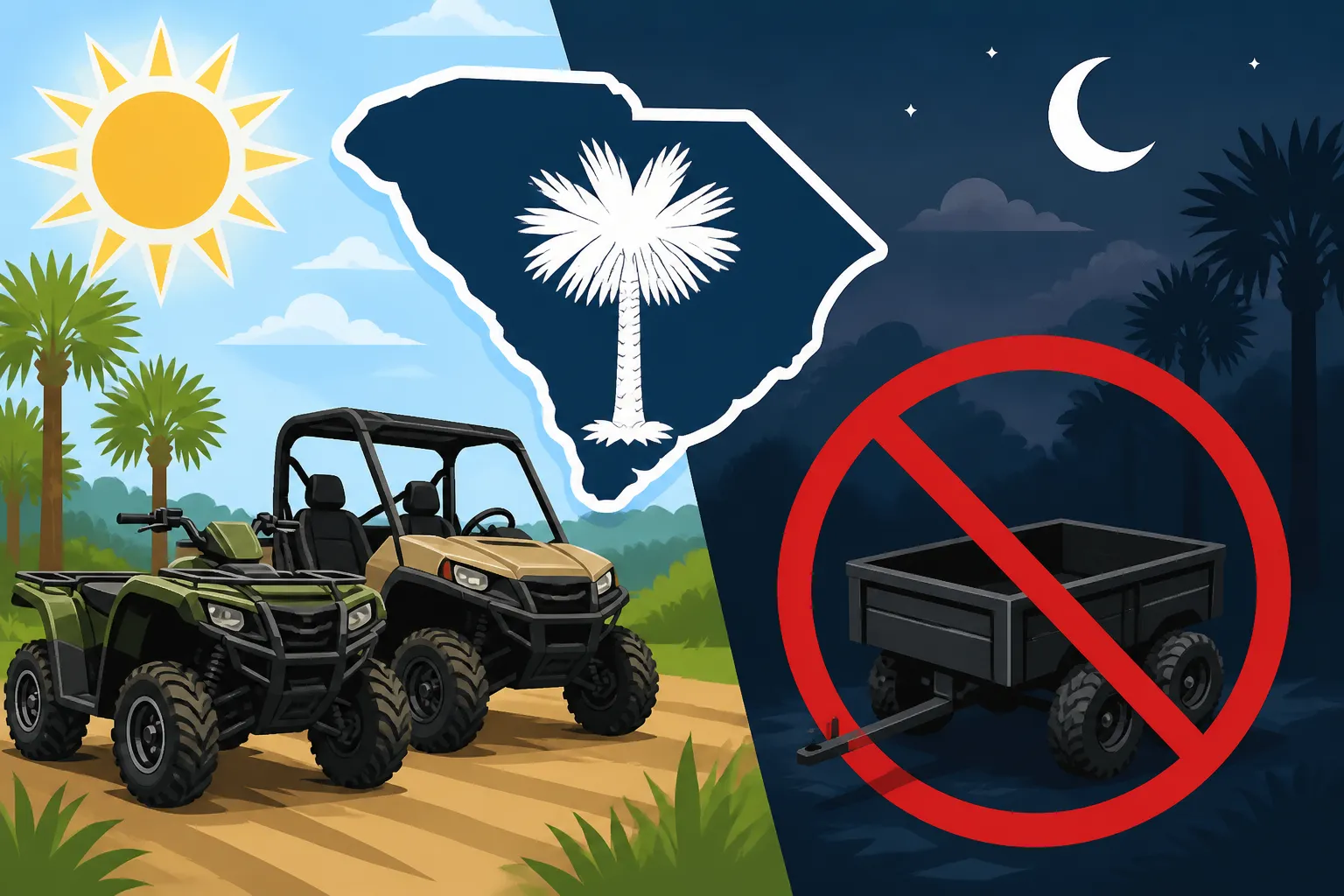
This is where many golf cart owners run into confusion and potential trouble. South Carolina law is very clear: once your golf cart is permitted for public road use, its operation is strictly limited to daylight hours. There's no gray area here, no "if you have extra lights" clause.
Defining "Daylight Hours" in South Carolina Law
When the law says "daylight hours," it's not talking about just when you can see well enough to drive. It refers to the period between one-half hour after sunrise and one-half hour before sunset. This definition is common in many traffic laws and is intended to align with natural light conditions when visibility is generally at its best. So, if you're planning an early morning trip to the fishing pier or a late evening cruise back from a friend's house, and those times fall outside this window, you cannot legally operate your golf cart on a public road. It means no dawn patrols and no dusk rides when using public streets. This rule is in place regardless of whether your golf cart has headlights, taillights, or any other lighting accessories. Even if you've added an impressive light bar or upgraded your standard lights with components from a brand like SuperATV for off-road adventures, those modifications do not extend your legal operating hours on public roads. The intent is clear: golf carts are to be used only when natural light provides the primary illumination.
The Rationale Behind the Restriction
You might be thinking, "But my golf cart has lights! Why can't I drive it at night?" It's a fair question, and the answer boils down to safety and the fundamental design differences between golf carts and other road-going vehicles. Golf carts are generally smaller, slower, and often lack the same robust safety features, reflective materials, and sophisticated lighting systems found in cars and trucks. At night, especially on unlit roads or in areas with poor visibility, a golf cart can be incredibly difficult for other drivers to see. This dramatically increases the risk of accidents.
The "daylight only" rule serves several critical purposes:
- Visibility: It minimizes the risk of collisions by ensuring golf carts are on public roads only when they are most easily seen by other motorists, pedestrians, and cyclists.
- Speed Differential: Golf carts typically travel at much lower speeds than other vehicles, and this speed differential becomes even more hazardous in low-light conditions when depth perception and reaction times are compromised.
- Lighting Standards: While a golf cart might have basic lights, they often don't meet the specific illumination and visibility standards required for nighttime operation of motor vehicles on public roads.
- Operator Focus: Driving a golf cart at night, especially after a long day or social gathering, can lead to decreased awareness, making the roads more dangerous for everyone.
This rule is a preventative measure, designed to protect both golf cart operators and other road users. It's not about making things inconvenient; it's about prioritizing safety when these recreational vehicles venture onto shared roadways.
Exceptions and Important Considerations for Golf Cart Use
While the "daylight only" rule is firm, it's essential to understand the specific parameters of golf cart operation in South Carolina, including radius limits and how they differ from other types of vehicles like Low-Speed Vehicles (LSVs). Knowing these nuances can prevent misunderstandings and ensure you're always on the right side of the law.
The 4-Mile Radius Rule and Local Ordinances
In addition to the "daylight only" rule, South Carolina law restricts where permitted golf carts can operate. Generally, a golf cart is limited to streets and highways that are within a four-mile radius of your registered address, or within four miles of the entrance to a gated community or a public access point to a golf course. This [South Carolina Cart Rules 4 Miles From Home] is another key aspect of legal golf cart use. Furthermore, these roads must have a posted speed limit of 35 miles per hour or less. This means you can't take your golf cart on faster arterial roads or state highways, even if they're within the four-mile radius.
However, local municipalities and counties have some discretion to adopt their own ordinances regarding golf cart use. Some coastal towns, for example, might have specific zones or extended hours for golf carts during certain seasons, or designated paths where the rules differ slightly. It's absolutely crucial to check with your specific local government, especially if you live in a popular tourist area, to see if any local ordinances apply that might impact your golf cart use. Always assume the statewide rules apply unless you have clear, written evidence from your local municipality to the contrary. Ignoring these local variations can lead to tickets and frustration, even if you're following the state's broader rules.
Golf Carts vs. Low-Speed Vehicles (LSVs)
This is a point of significant confusion for many. A golf cart, even one tricked out with all the bells and whistles, is not the same as a Low-Speed Vehicle (LSV) under South Carolina law. An LSV is a distinct class of vehicle that is specifically manufactured to meet federal safety standards for low-speed operation on public roads. This means LSVs come equipped with features like headlights, taillights, turn signals, seatbelts, windshields, and often a Vehicle Identification Number (VIN) that allows them to be titled and registered like a traditional motor vehicle.
Because LSVs meet these higher safety standards, they are allowed to be operated on public roads during both day and night, provided the road's speed limit is 35 mph or less, and the LSV itself is not driven above 25 mph. This is a crucial distinction. Many people upgrade their golf carts with turn signals, mirrors, or even custom parts from companies that cater to off-road vehicles. While these additions might improve safety for private land use, they do not transform a golf cart into a legal LSV for nighttime public road operation. If you want a vehicle that can genuinely be driven on public roads after sunset, you need to purchase a factory-made LSV that is designed and certified as such. Trying to pass off an accessorized golf cart as an LSV will almost certainly lead to legal trouble. For more clarity, see [A Low-Speed Vehicle Is Not a South Carolina UTV].
Here’s a quick comparison to help clear up the differences:
| Feature | Golf Cart (Permitted) | Low-Speed Vehicle (LSV) |
|---|---|---|
| Permit/Registration | State Permit (decal) | Titled & Registered (license plate) |
| Operation Hours | Daylight Only (1/2 hr after sunrise – 1/2 hr before sunset) | Day and Night |
| Max Road Speed Limit | 35 mph | 35 mph |
| Vehicle Max Speed | Typically 20-25 mph | Governed to 25 mph |
| Required Safety Features | Headlights/Taillights (basic), Mirror, Horn, Safety Decal | Headlights, Taillights, Turn Signals, Brake Lights, Reflectors, VIN, Seatbelts, Windshield, Parking Brake, State Inspection |
| Insurance | Liability Required | Liability Required |
| Operator License | Valid Driver's License | Valid Driver's License |
| Manufacturing Standards | Recreational Vehicle | Federal Motor Vehicle Safety Standards (FMVSS) compliant |
This table clearly highlights why the "daylight only" rule applies to golf carts but not to LSVs; the difference in safety equipment and manufacturing standards is significant.
Consequences of Violating South Carolina's Golf Cart Rules
Breaking the rules for golf cart operation in South Carolina isn't just a minor oversight; it can lead to serious consequences, ranging from financial penalties to legal issues. Ignorance of the law is never an excuse, and officers are quite accustomed to seeing golf carts in areas where they shouldn't be, or at times when they shouldn't be.
Fines and Penalties for Illegal Operation
If you're caught operating a golf cart on a public road outside of the permitted daylight hours, or if you exceed the four-mile radius or the 35 mph speed limit, you could face fines. These aren't usually astronomical, but they are certainly enough to ruin your day and lighten your wallet. [South Carolina Fines of $50 to $200] is a typical range for many such violations, but court costs and fees can quickly add up, making the total outlay significantly higher. Repeated offenses could lead to even stricter penalties, potentially including the suspension of your golf cart permit or even more serious charges depending on the specific circumstances and if an accident occurs.
Beyond direct fines, an officer might impound your golf cart, leaving you stranded and incurring additional towing and storage fees. Imagine your frustration if your relaxing evening ride turns into an expensive ordeal because you misjudged the sunset time. It's a hassle nobody wants, and it's entirely avoidable by simply adhering to the rules.
Safety Risks of Nighttime Golf Cart Operation
While the legal penalties are a deterrent, the most significant consequence of violating the "daylight only" rule is the increased safety risk. As discussed earlier, golf carts are simply not designed for safe nighttime operation on public roads.
Consider these scenarios:
- Poor Visibility for Others: A driver in a car might not see your golf cart until it's too late, especially if they're distracted or if there are bright lights from oncoming traffic. The small profile and lower ride height of a golf cart make it easily missed.
- Limited Vision for You: Even if your golf cart has headlights, they are often not as powerful or as widely dispersed as those on a car. This can severely limit your own ability to see potholes, debris, pedestrians, or animals on the road, especially at night.
- Accident Liability: In the event of an accident while operating illegally (e.g., at night), you could be found at fault and face significant civil liability. Your insurance company might even deny coverage if you were operating the vehicle in violation of state law, leaving you personally responsible for damages and medical bills. This is a far more severe consequence than any fine.
It's tempting to think that "just this once" won't hurt, but the risks are real and the consequences can be profound. The "daylight only" rule is in place to protect you and everyone else on the road, so it's always best to err on the side of caution. For more information on general cart rules, check out [South Carolina Golf Cart Road Rules].
Disclaimer
This article is for general informational purposes only and does not constitute professional advice. Laws, prices and regulations vary by location and change over time. Consult a qualified professional for guidance on your specific situation.