Blaze Orange During Deer Season
When deer season overlaps your South Carolina ride, a trail can feel very different: hunters may be nearby, visibility can be poor, and a machine’s bright plastics are not the same as visible clothing. This guide explains when blaze orange is a smart choice, how to stay visible, and what to check before riding a public trail during hunting season.
Why blaze orange matters on a South Carolina ride
Hunters may be close to marked trails
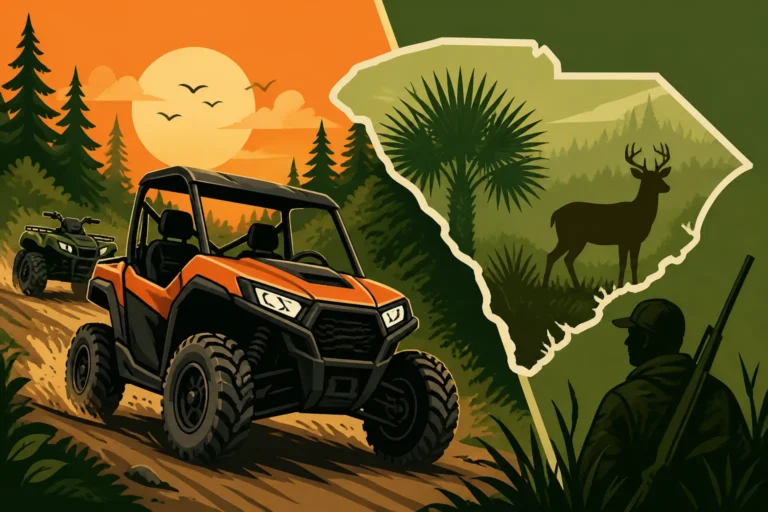
South Carolina’s riding areas and public lands can see hunting activity during the same seasons that riders want to get out on the trail. Even if you are riding a designated route rather than hunting, a person in the woods may not expect a moving ATV or UTV to appear around a bend. Trees, brush, rolling ground, and changing light can make it hard to spot another person quickly.
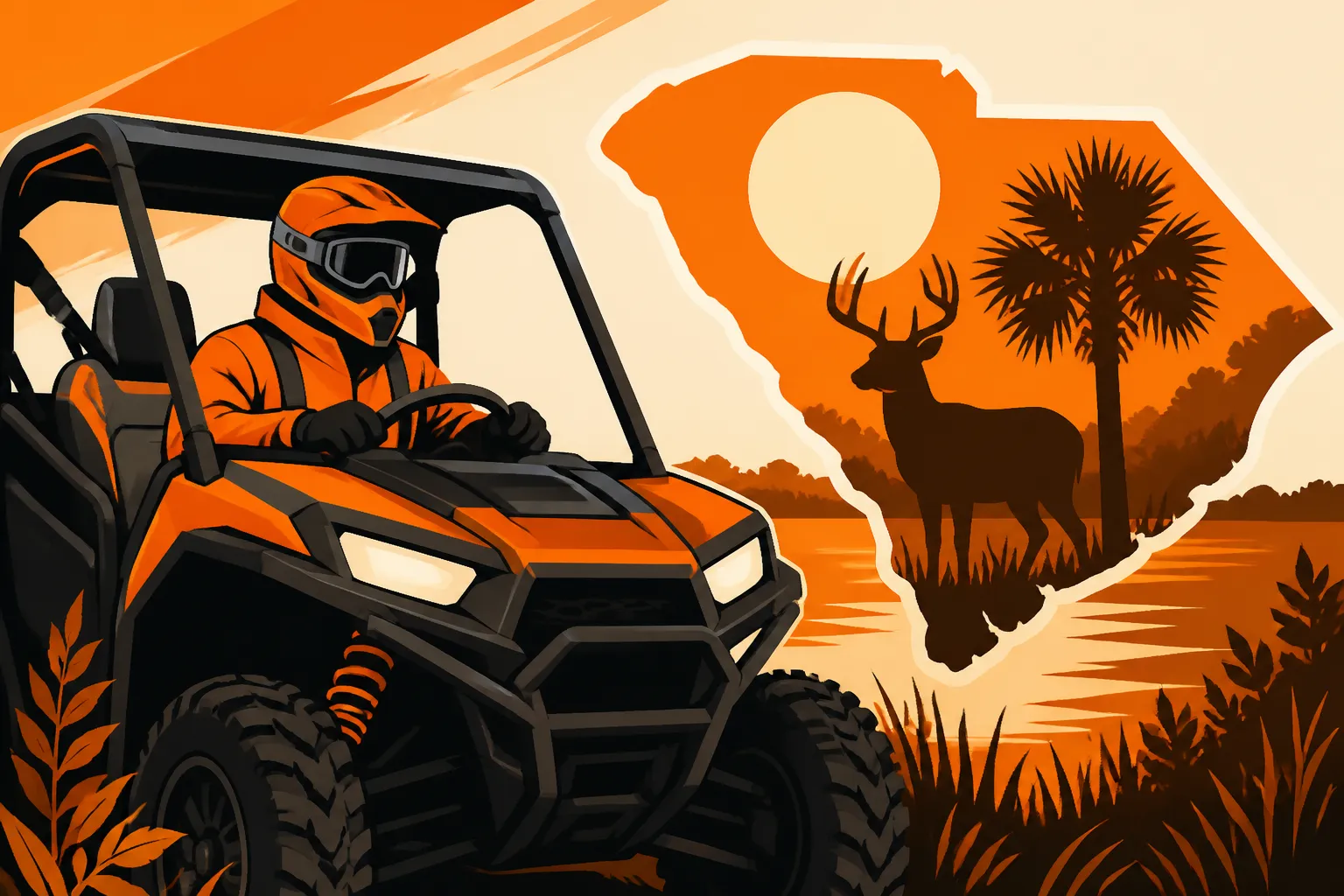
Blaze orange helps make you easier to distinguish from leaves, shadows, and camouflage. It is especially useful when you stop to check a map, help another rider, or move around a parked machine. A bright ATV body panel is helpful, but it does not replace visible clothing: the machine can block your body from view, and it may be partly hidden behind brush or a rise.
The practical takeaway is simple: treat hunting season as a reason to make yourself conspicuous, even when a particular rule does not require trail riders to wear orange. For more on the seasonal overlap, read [South Carolina Blaze Orange in Hunting Season] and [South Carolina Hunting Season and Trail Access].
A safety recommendation is not automatically a legal requirement
Blaze-orange rules can depend on the land, season, activity, and applicable hunting regulations. A rule that applies to a hunter in a particular area does not automatically mean every ATV rider has the same legal obligation. Conversely, riding a permitted trail does not make it safe to ignore nearby hunting activity.
Before leaving, check the rules for the specific trail or property and the current hunting-season guidance that applies there. Public land is not one uniform category: a national forest trail, a wildlife management area, and a private riding park can have different access rules. The landowner or managing agency may also close a trail or restrict certain uses temporarily.
This distinction matters because a rider can do everything right with visibility and still be somewhere they are not allowed to ride. South Carolina wildlife management areas have their own vehicle rules; see [South Carolina WMA Riding Is Prohibited] and [South Carolina Hunting and Trapping Exemptions] before assuming that a hunting or recreational exception applies to your situation.
Orange helps, but it does not make a rider protected from every risk
High-visibility clothing gives other people another chance to notice you. It cannot guarantee that a hunter, another rider, or a vehicle operator will see you, especially in thick woods or at a noisy trail crossing. Think of orange as one part of a broader visibility plan, not a substitute for slowing down, staying on authorized routes, and communicating clearly.
A useful mental test is to imagine someone looking toward the trail through trees. Would they see your torso and helmet, or only a dark jacket behind the machine? A blaze-orange vest or outer layer can make a meaningful difference in that moment. If you ride with a passenger, make sure the passenger is visible too.
How to wear blaze orange so it can actually be seen
Choose clothing that stands out from the machine and the woods
A blaze-orange vest, jacket, or outer layer is usually more useful than a small patch tucked beneath a dark coat. Choose a garment that remains visible while you are seated and riding. If you wear a backpack, make sure it does not cover most of the orange. Likewise, a dark helmet or jacket can disappear visually against shaded trees even when the ATV itself is bright.
Do not rely on orange plastics, a flag, or a small decal as your only visibility measure. Those items may help identify the machine, but they do not make your body easy to see when you step away from it. For a group ride, ask everyone to bring a visible outer layer rather than assuming one rider’s bright gear is enough.
A simple pre-ride check can catch common oversights:
- Put on your riding gear and sit on the machine.
- Ask a companion to look at you from several angles and from a short distance away.
- Check whether your vest, jacket, or helmet is hidden by a pack, windshield, or seat back.
- Add a visible layer if your upper body blends into the surroundings.
Keep visibility in mind after sunset and in low light
A blaze-orange garment is not a lighting system. In deep shade, rain, fog, or the last light of the day, orange can be harder to see than riders expect. Use the machine’s required and functioning lights where the trail rules allow riding, and avoid stretching a ride into darkness just because everyone is wearing bright clothing.
Visibility is also about contrast and movement. Slow down before blind corners, cresting hills, and trail intersections. Keep enough space between machines for the rider behind you to react if the person in front stops. If you need to pull over, choose a place where approaching riders can see you, rather than stopping immediately after a curve or behind thick vegetation.
For a group, agree on simple signals before leaving the staging area. A hand signal, a radio call, or a planned regrouping point helps prevent a rider from wandering off when the trail forks. Orange can help others spot you, but good spacing and communication reduce the chance of a close call in the first place.
Make passengers and children visible too
Adults sometimes dress brightly while children or passengers wear dark sweatshirts that match the surroundings. Check every person in the group, including anyone riding in a side-by-side. A passenger can be harder to see than the driver because the machine’s frame, roof, or seat may block their clothing from view.
Bring spare visible layers if the weather may change. A rider who starts the day in a bright vest may remove it when temperatures rise or put on a dark rain shell when a shower arrives. Keep a lightweight orange layer accessible so it can go back on without unpacking the entire machine.
If you are riding with young people, make the visibility check part of the regular gear routine. Confirm that helmets fit properly, clothing is secure, and each rider understands where to wait if the group becomes separated. Blaze orange is a practical addition, not a replacement for age, supervision, or passenger rules.
Plan the route before riding during deer season
Confirm the trail is open and your machine is allowed
A map can show a road or trail without proving that it is open to your vehicle or permitted for recreational riding. Check the land manager’s current notices before hauling. Trail access may be affected by seasonal restrictions, maintenance, weather, or hunting activity, and a route that was open on a previous visit may not be open now.
South Carolina’s national forest riding options include more than one trail system, and each has its own access details. Start with [South Carolina's Four National Forest Trails] and [South Carolina Trail Conditions Before You Haul]. Confirm the machine-width rules, operating hours, pass requirements, and any temporary closure notices that apply to the specific trailhead you plan to use.
Mapping tools can help with orientation and route planning, but do not treat a phone map as permission to ride. Riders sometimes use onX Offroad to review a route and nearby land boundaries before a trip; still, verify access and closures with the responsible land manager. Download or save the information you need before entering areas where cell service may be unreliable.
Check land boundaries and avoid wandering onto restricted property
One of the easiest ways to turn a routine ride into a problem is to follow a track past a gate, boundary, or unsigned junction without knowing who manages the land. A trail may appear to continue, but that does not mean motorized use is authorized beyond the marked route. Pay attention to signs, gates, barriers, and posted notices, and turn around when access is unclear.
This is particularly important during hunting season, when hunters may have permission to use a particular property or area. Their presence does not grant riders permission to cross private land, and a riding pass for one trail does not necessarily cover nearby roads or parcels. If you use onX Offroad to help understand the surrounding area, compare what you see with posted signs and official land-management information rather than assuming a boundary line settles every access question.
For a refresher on what public access does and does not mean, see [What Posted Land Means for South Carolina Riders]. If a gate is locked or a road is marked closed, do not bypass it because a digital route appears to continue. A detour that looks convenient can put you on private, restricted, or unsafe ground.
Let other people know where you are going
Before you leave, tell someone your intended riding area, expected return time, and who is in your group. This matters even for a familiar trail. A wrong turn, mechanical problem, injury, or unexpected closure can keep riders out longer than planned, and a dead phone battery can make it harder to explain where you are.
Save a map for offline use when possible and carry a backup way to orient yourself. onX Offroad may be useful for reviewing a planned route before you lose service, but a printed map or a clear written plan can still help if a phone is damaged or drained. Mark the staging area and agree on a meeting point in case the group gets separated.
Also check the forecast and trail notices shortly before departure. A route that is manageable in dry conditions may become slippery or difficult after rain. If you are not sure whether the trail is open, whether your machine is permitted, or whether hunting activity affects access, call or check with the land manager rather than guessing at the trailhead.
A practical deer-season riding checklist
Before leaving home
Use a short checklist so that visibility and access do not become last-minute surprises. Confirm the trail is open, review the rules for the land you plan to ride, and make sure everyone has the required pass or documentation. Check your machine’s lights, brakes, tires, and fuel, then pack a visible outer layer for each rider.
| Check | What to do | Why it matters |
|---|---|---|
| Trail access | Confirm current openings and vehicle restrictions | A route shown on a map may be closed or restricted |
| Blaze orange | Pack a visible vest or outer layer for every rider | Bright clothing makes people easier to notice |
| Lights and gear | Check lights, brakes, helmets, and basic equipment | Visibility clothing does not replace safe equipment |
| Route plan | Save the route and identify the staging area | Cell service may be limited in wooded areas |
| Group plan | Share the route and return time with someone | Others can respond if your plans change |
If you are riding a South Carolina national forest trail, make sure you understand the pass rules before you arrive. [South Carolina Passes Cover All Four Trails] explains the broader pass topic, while [South Carolina National Forest OHV Passes] is a useful place to review the pass system. Keep any required pass or proof where it can be presented if asked.
At the trailhead and on the trail
At the staging area, look for posted notices and check whether conditions have changed since you planned the trip. Put on your orange layer before entering the woods, not after you hear a shot or see a hunter. Keep the group together, reduce speed in areas with limited sightlines, and stop only where approaching riders have a clear chance to see you.
Respect other trail users. Hunters, hikers, forest workers, and riders may share the wider landscape even if they are not using the same route. Give people room, avoid unnecessary noise near camps or occupied areas, and do not assume that a person can hear your machine approaching. If a trail is blocked, signed closed, or otherwise unsafe, turn around rather than creating a new route around it.
Most of all, treat orange as a sensible seasonal habit—not a reason to relax. Bright clothing, a legal route, a current access check, and a cautious riding pace work together. If you are uncertain about a specific rule or closure, ask the relevant land manager before riding. That small bit of preparation is far less frustrating than reaching a gate after a long drive or discovering that your route crosses land you cannot use.
Disclaimer
This article is for general informational purposes only and does not constitute professional advice. Laws, prices and regulations vary by location and change over time. Consult a qualified professional for guidance on your specific situation.