Boots for Carolina Creek Water
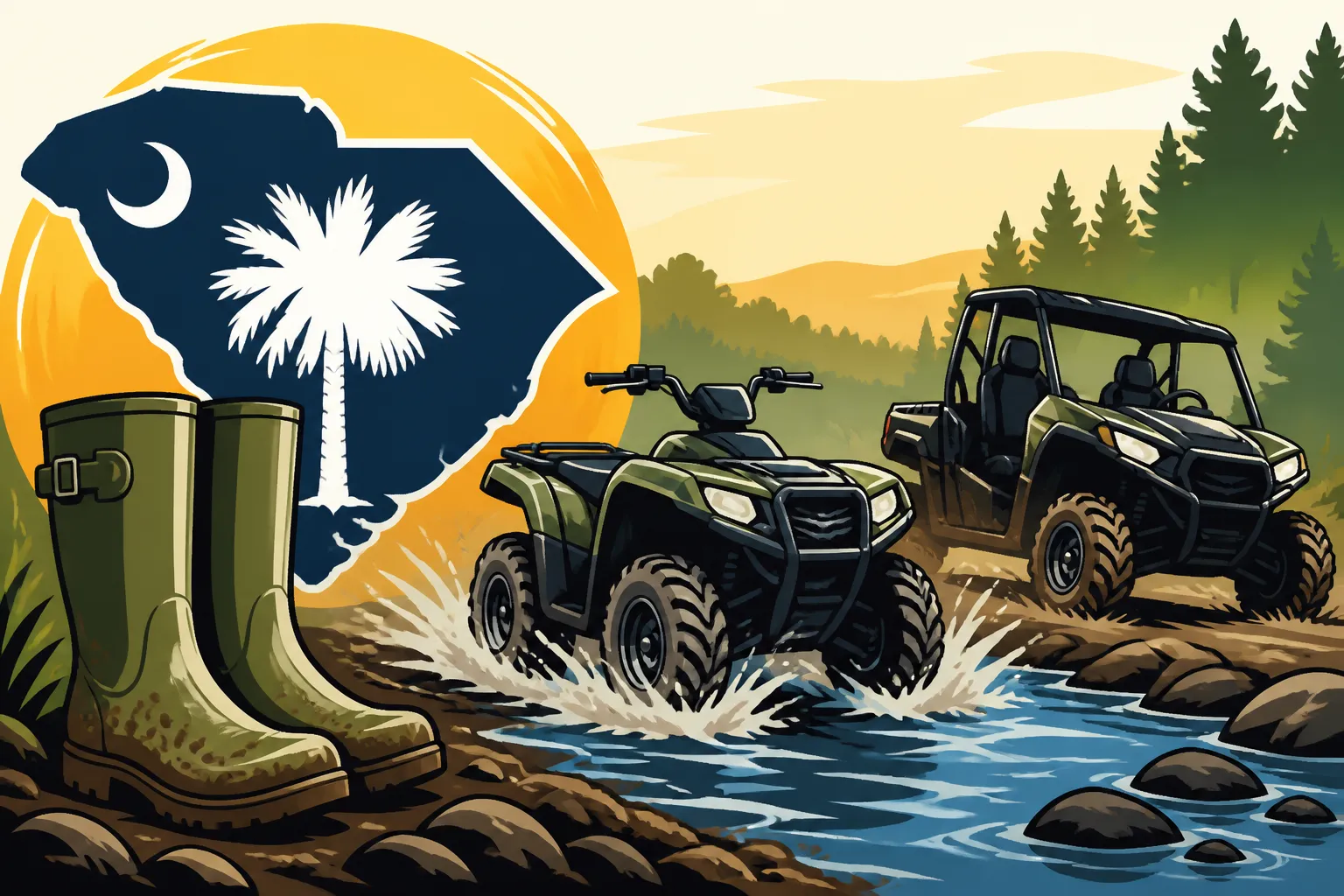
A boot that feels fine in the driveway can become heavy, slippery and miserable after a Carolina creek crossing. South Carolina riders also have to think about clay, humidity, hidden rocks and whether a crossing is allowed at all. This guide explains how to choose, fit and care for ATV and UTV boots that can handle wet trails without trading away protection or control.
Choose boots for the kind of water you encounter
Waterproof boots or quick-draining boots
Waterproof boots make sense when you expect splashes, shallow puddles or brief contact with water. They can help keep feet dry during a cool morning ride, and a waterproof membrane may also block mud and grit. But no boot stays dry if water pours over the top. Once water gets inside a tall waterproof boot, it can be slow to escape, leaving you with damp socks and a heavy, uncomfortable ride.
Quick-draining boots are a different compromise. They let water out after a crossing and may feel less swampy in warm weather, but your feet will get wet. That can be a reasonable trade on a hot, humid day when you expect repeated splashes and want to avoid carrying trapped water around. The downside is that wet feet can rub, and a boot that drains quickly may offer less warmth during a cool ride.
Think about the whole day, not just the crossing. A short splash on a warm trail is not the same as a long ride with repeated water exposure, cold weather or a soaked pair of socks. If you’re unsure, bring dry socks and a backup pair of footwear for camp or the drive home. Wet gear feels especially unpleasant when you’re standing around after a ride, even if it was manageable while moving.
| Boot type | Works well for | Main trade-off | What to check |
|---|---|---|---|
| Waterproof riding boot | Splashes, mud and damp conditions | Water can become trapped if it gets over the top | Secure closure, supportive fit and riding-specific protection |
| Quick-draining riding boot | Warm rides with repeated wet conditions | Feet and socks will get wet | Drainage, grip and how well the boot holds your ankle |
| Waterproof hiking boot | Light-duty use away from demanding riding | May lack protection and support designed for riding | Sole grip, ankle coverage and secure lacing |
| Rubber work boot | Short chores or very mild riding | Often bulky, slippery or poorly suited to machine controls | Fit around the foot controls and stability when walking |
A boot’s label is only a starting point. Check how it fits around your ankle and lower leg, whether its sole grips when wet, and whether it lets you move the brake and shift controls comfortably. If the boot makes it difficult to feel or operate a control, it is the wrong boot for that machine, even if it keeps your socks dry.
Riding protection matters as much as water resistance
Creek water is not the only thing your boots need to handle. A foot can get caught against a rut, rock or footrest, and the machine can jolt unexpectedly on uneven ground. A riding boot should feel secure at the ankle and foot, with a closure that stays fastened and a sole that doesn’t slide easily on the footrests. Check the boot for wear, loose seams and damaged closures before you ride.
A hiking boot may seem like a sensible substitute, especially for a casual ride, but the fit and sole can be very different from a boot made for riding. Loose laces can snag, a soft sole may not feel stable on a footrest, and some styles offer little protection around the ankle. That doesn’t mean every rider needs the same kind of boot; it does mean you should judge the whole boot rather than choosing by waterproofing alone.
Try boots on with the socks you expect to wear. Your toes should have room to move, but your heel shouldn’t lift and rub with each step. If a boot feels tight in the store, it may feel worse after several hours in heat. If it feels loose, wet socks and shifting feet can increase rubbing. A short walk and a few careful movements that imitate using the controls can reveal fit problems before you take the boots to a trail.
Match the boot to Carolina conditions
South Carolina’s warm, humid weather can make waterproof gear feel hot, while wet clay and leaf-covered ground can make walking around a machine slippery. A boot that works for a cool, muddy day near the Upstate may not feel comfortable during a humid summer ride near the coast. Consider the season, the expected water and how much walking you’ll do if you need to park or get off the machine.
On forest routes, conditions can vary across the same ride: a dry section may lead to a muddy low spot or a shallow crossing. Before heading out, review the route and current trail information. Tools such as onX Offroad can help you understand the route and nearby trail options, but check the managing agency’s rules and closure notices separately. For trip planning, South Carolina’s Four National Forest Trails and South Carolina Trail Conditions Before You Haul can help you think through where you’re going before you load up.
Prepare for a creek crossing before you reach it
Confirm the crossing is allowed
A boot choice cannot make an unlawful or unsafe crossing okay. Before entering a watercourse, confirm the route is permitted and follow posted signs and land-manager rules. South Carolina’s rules can distinguish between crossing at an authorized ford and riding through a streambed, so don’t assume that a visible path or tire marks mean a crossing is allowed. Review South Carolina Watercourse Crossing Rules and Creek Crossings Allowed Only at a Ford before planning a ride that may involve water.
Also check for local restrictions, temporary closures and changing conditions. Heavy rain can raise water, cover obstacles or make a previously manageable route difficult. Don’t enter water if you cannot judge its depth, current or bottom, or if you’re unsure what lies beneath the surface. When in doubt, turn around and choose another route rather than trying to prove the machine or your boots can manage it.
A route-planning app such as onX Offroad may help you see where a trail goes and what other route options appear nearby. Treat that as planning assistance, not permission to cross. Confirm access with the land manager, and check for posted restrictions at the trailhead. South Carolina Wet Weather Trail Closures is useful reading when rain has changed the conditions you expected.
Set up your footwear and clothing
Before you ride, pull socks up smoothly and check for wrinkles around the heel and toes. Wrinkles can become painful friction points when a sock gets wet. A moisture-managing riding sock can help with sweat and rubbing, but no sock prevents every blister. Avoid cotton if you know your feet get damp easily; it can stay wet against the skin and feel clammy for the rest of the day.
Make sure the boot closure is secure without cutting off circulation. If the top of the boot is loose, water, grit and small debris can get inside. If it’s too tight, your leg may feel uncomfortable when you bend your ankle to use the controls. Tuck away loose laces and straps so they cannot catch on a footrest or other part of the machine.
Pack a dry pair of socks in a sealed bag, along with a small towel if you have room. A simple change can make the ride back or drive home much more comfortable. If you use a waterproof boot, consider what you’ll do if water gets in over the top. If you use a drainable boot, plan for wet socks rather than expecting them to stay dry.
Reassess water and footing at the trail
Slow down before a crossing and look for posted signs, the marked route and a safe place to stop. If the crossing is permitted, don’t assume its depth or bottom is the same as the last time you rode it. Water can hide holes, loose rocks and soft edges. Keep a safe distance from other riders, and don’t crowd someone who is assessing the crossing.
Getting off to inspect a route may itself create a slipping risk. If you do step down, look for stable footing and avoid standing in a place where moving water or soft banks could undermine you. Don’t let a desire to keep your boots dry rush the decision. A wet boot is uncomfortable; a fall, damaged machine or unsafe crossing can turn a ride into a much more serious problem.
Consider route options before leaving the staging area. onX Offroad can be useful for reviewing mapped trails and possible alternatives, but it should not replace signs or official trail information. If a crossing looks unsafe or the route is closed, use a permitted alternative or head back. South Carolina Trails With Water Crossings can help you plan with water exposure in mind, while South Carolina Trail Etiquette Locals Expect offers broader reminders for sharing trail space responsibly.
Keep feet comfortable through a full ride
Prevent rubbing and blisters
A boot that feels comfortable for five minutes may not feel comfortable after several hours. During your first ride in a new pair, pay attention to hot spots around the heel, ankle bones, toes and the top edge of the boot. Stop at a safe place if you notice rubbing. Continuing until a blister forms can make the return trip miserable, especially if your socks are wet.
If you know a particular area tends to rub, adjust your sock and boot fit before the ride. A smooth, properly fitted sock can reduce friction, and a small blister dressing may help protect a developing hot spot. Don’t add so much padding that your boot becomes tight; pressure can create a different problem. If the same rubbing keeps happening, the boot’s shape may not suit your foot.
Humidity can make a warm boot feel even warmer. Choose socks and footwear for the conditions, and take breaks when needed. For more preparation ideas, Packing for Carolina Humidity covers the kinds of small choices that can make a long ride feel more manageable. If your feet are already uncomfortable at the trailhead, it’s worth correcting the fit before you head out.
Dry and inspect boots after riding
When you get home, remove insoles if they come out easily and let the boots dry in a well-ventilated place. Loosen straps and closures so air can circulate. Avoid placing boots directly beside high heat, which can damage materials or adhesives. If they’re muddy, rinse away grit and let them dry before checking for cuts, loose stitching or a worn sole.
For waterproof boots, follow the care guidance provided with the footwear. Some cleaning products or treatments can affect the materials, so don’t assume that every spray is appropriate. For drainable boots, clear mud and debris from the drainage areas. A small amount of packed clay can stop water from draining properly and leave the boots damp on the next ride.
Let socks dry fully before putting them away, and replace pairs that have worn thin or developed rough spots. Keep a spare dry pair in your ride kit so a wet crossing doesn’t leave you with no option. These small habits are easy to overlook when you’re tired and unloading a muddy machine, but they can make the next ride more comfortable.
Build a simple creek-water footwear plan
Choose based on the whole ride
For an occasional splash, a supportive waterproof riding boot may be the comfortable choice, provided you understand that water entering from the top can stay inside. For a warm ride where repeated water exposure is expected and allowed, a secure quick-draining boot may be more comfortable. For either style, prioritize a stable fit, reliable closure, ankle support and a sole that grips rather than choosing by a waterproof label alone.
Think through what happens after the crossing, too. Will you be riding for several more hours? Will you need to walk on slick ground? Is the day cool enough that wet socks will become uncomfortable? Are you bringing dry socks and a place to store muddy gear? A boot is part of a system that includes socks, route planning and the choice to turn around when conditions are wrong.
Before you leave, use this quick check:
- Confirm that your route and any planned water crossing are permitted.
- Check trail and weather information, including closure notices.
- Wear socks that fit smoothly and won’t bunch inside the boot.
- Fasten the boots securely and tuck away loose laces or straps.
- Pack dry socks and a bag for wet or muddy footwear.
- Turn back if the water or footing is unsafe or unclear.
A little preparation makes it easier to focus on the ride instead of dealing with cold, soggy feet halfway through the day. The right boots won’t make every crossing safe or comfortable, but a well-fitted pair and a sensible route plan can prevent many avoidable problems.
Disclaimer
This article is for general informational purposes only and does not constitute professional advice. Laws, prices and regulations vary by location and change over time. Consult a qualified professional for guidance on your specific situation.