Must an Adult Ride With a 16-Year-Old?
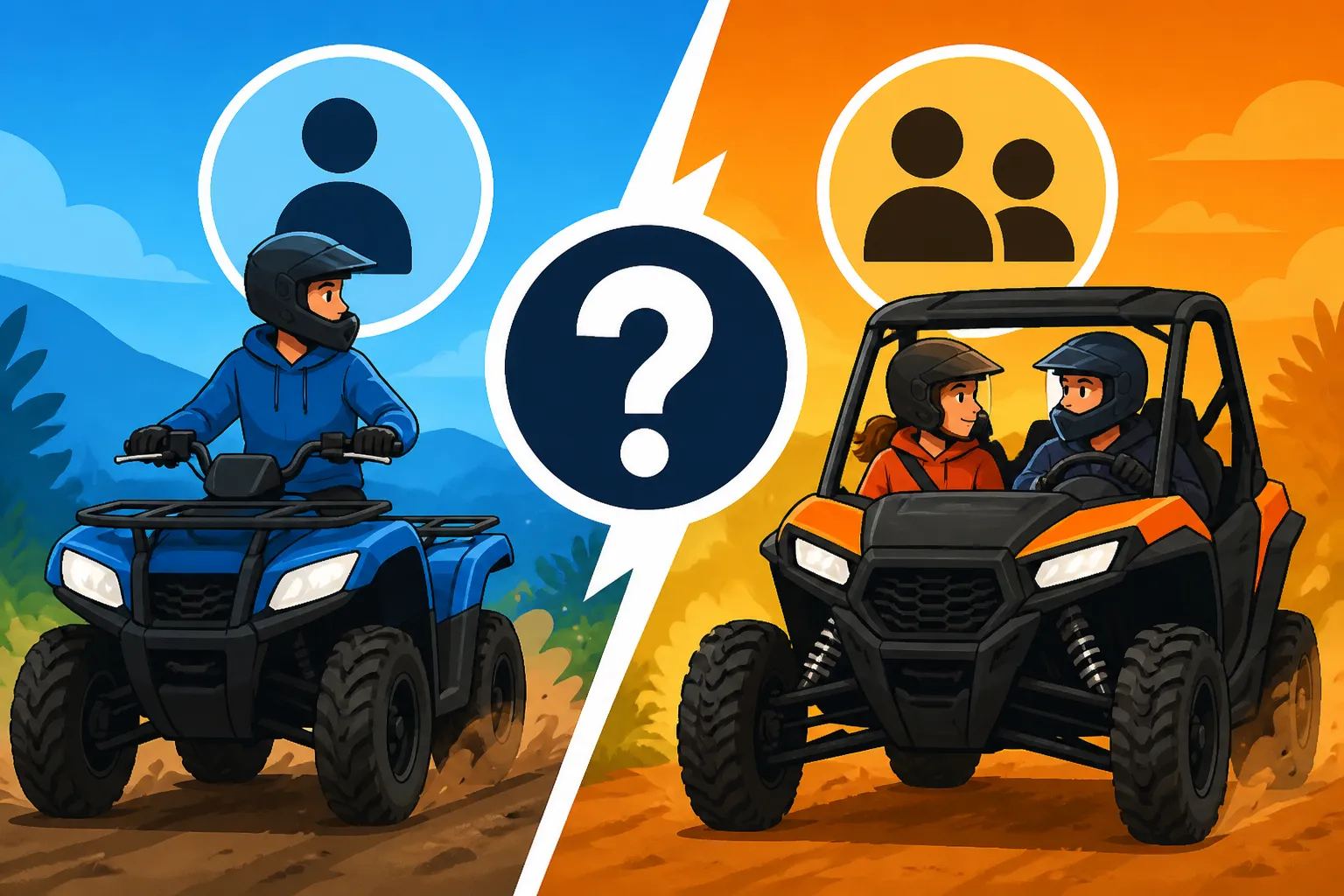
A 16-year-old may be old enough to handle an ATV but still need an adult along, depending on where the ride takes place. South Carolina’s rules distinguish public land from private property, and a road-legal UTV follows a different set of requirements. Here’s how to tell when adult accompaniment is required and what else a young rider needs.
When a 16-year-old needs an adult on an ATV
Yes. On public land, a 16-year-old must be accompanied by an adult while riding an ATV, according to the South Carolina Department of Public Health and the South Carolina Legislative Services Agency. The rule covers riding on public land; it is not simply a recommendation for inexperienced riders.
South Carolina’s ATV law is known as Chandler’s Law. According to the South Carolina Legislative Services Agency, on public lands, ATV operators age 16 and younger must be accompanied by an adult. That includes a rider who has already turned 16. Having riding experience or completing a safety course does not replace the adult-accompaniment requirement.
The requirement is about the adult accompanying the young rider. The official facts do not specify a particular distance, whether the adult must ride on a separate ATV, or a formal definition of “adult.” Don’t assume that an adult watching from home, a parking lot, or somewhere else on the property meets the requirement. If the riding area has its own rules, check those as well.
The adult rule is only one part of the requirements for young ATV riders. According to the South Carolina Department of Public Health, children under 16 must complete a hands-on ATV rider safety training course approved by the ATV Safety Institute before operating an ATV, and they must wear a safety helmet and eye protection. The South Carolina Legislative Services Agency also says operators age 15 and younger must possess an approved hands-on course safety certificate and wear a helmet meeting FMVSS #218 and eye protection.
A 16-year-old is not included in the under-16 training and helmet provisions as they are stated in those facts. However, that does not cancel the adult-accompaniment rule on public land. For a fuller explanation of the age provisions, see South Carolina ATV Age Requirements and South Carolina Safety Certificate Requirements.
| Riding situation | Does a 16-year-old need an adult? | Other point to keep in mind |
|---|---|---|
| ATV on public land | Yes. The South Carolina Department of Public Health and the South Carolina Legislative Services Agency say riders age 16 and under must be accompanied by an adult. | Check the land manager’s access and trail rules before riding. |
| ATV on private property | The public-land accompaniment rule is not the rule described for private property. | For ages 6 through 16, the South Carolina Legislative Services Agency says operation on private property is permitted under the direct visual supervision of a parent or legal guardian. |
| UTV on a public road | The ATV public-land rule is not the applicable road rule. | The South Carolina Department of Public Safety says the UTV driver must be at least 17 and hold a valid Class D license; a passenger must be at least 8. |
For other rules that affect young riders, including the distinction between the safety-course and helmet requirements at different ages, see South Carolina Helmet Rules for Young Riders and South Carolina Safety Certificate Requirements. When a rider may carry someone else, check South Carolina Rules for a Child Passenger too; ATV passenger rules are not the same as rules for a UTV passenger.
How the rule changes on private property
The public-land rule should not be applied automatically to every ride on private property. According to the South Carolina Legislative Services Agency, minors between 6 and 16 years old may operate ATVs on private property under the direct visual supervision of a parent or legal guardian. That wording is more specific than simply saying an adult must be somewhere nearby: the responsible parent or legal guardian needs to be able to see the young rider directly.
A private yard or other privately owned riding area can therefore be different from a public trail. But private ownership alone does not tell you whether every legal requirement has been met. The supervision provision applies to the stated age range and type of land use; the operator still needs to follow applicable equipment, safety, and property rules. A landowner can also set conditions for riding on their land.
The law includes exemptions for particular uses. The South Carolina Department of Public Health says Chandler’s Law requirements do not apply to ATVs in use for farming, ranching, hunting, or trapping. The South Carolina Legislative Services Agency likewise identifies farming, ranching, wildlife management, and lawful hunting or trapping as exemptions from the chapter’s requirements.
Do not treat an exemption as a general permission to ride anywhere without an adult. The exemption applies to the specified activity, not simply because a machine is used on rural or privately owned land. If the ride is recreational rather than part of an exempt activity, use the ordinary rules that apply to the land and rider.
If you are unsure whether a property or route counts as public land, ask the land manager or property owner before the ride. The distinction matters: according to the South Carolina Legislative Services Agency, children age 16 and younger must be accompanied by an adult on public lands, while the private-property provision for minors in that age range specifies direct visual supervision by a parent or legal guardian. For more detail, see South Carolina Private Property Exemptions.
Also confirm whether the riding area allows the kind of vehicle you plan to bring. A trail can have vehicle-width limits, permit conditions, seasonal closures, or other site-specific rules that apply in addition to the state’s rider-age requirements. For example, the Forest Service says side-by-sides over 50 inches, Jeeps, and other 4×4 vehicles are prohibited on the Enoree OHV Trail. That is a site access restriction, not an exception to the state’s rules for minors on public land.
What to check before taking a 16-year-old to a trail
Before setting out, identify who manages the riding area and whether it is public land, private property, or a private riding facility. Then confirm the applicable age, supervision, equipment, and access rules. A young rider can meet the state’s requirements and still be turned away if the vehicle is not permitted on that particular trail or the required pass is missing.
For public OHV trails in the Francis Marion and Sumter National Forests, the Forest Service says operators must have a permit in their possession while riding and may use only designated trails. Its general OHV rules also require a state-approved muffler and/or spark arrester, and prohibit damaging land, wildlife, or vegetation. Check the trail’s current status before hauling a machine: the Forest Service says closures can occur on short notice and directs riders to the Call Before You Haul hotline at 803-561-4025.
A short pre-ride check can prevent a wasted trip:
- Confirm the land type. Find out whether the route is public land or private property, and ask the manager or owner about any additional restrictions.
- Arrange the required supervision. On public land, an adult must accompany a 16-year-old ATV rider, according to the South Carolina Department of Public Health and the South Carolina Legislative Services Agency. On private property, check the direct-visual-supervision requirement for minors in the applicable age range.
- Check training and protective gear. The South Carolina Department of Public Health requires an approved hands-on safety course and helmet and eye protection for children under 16. Check South Carolina ATV Helmet Law for more on the helmet rules.
- Check the ATV and route. The South Carolina Department of Motor Vehicles says ATVs are designed primarily for off-road travel and are no more than 50 inches wide. It also says ATVs must have an effective muffler system, a USDA Forest Service-approved spark arrester, and a brake system. The trail manager may impose further equipment or vehicle restrictions.
- Confirm permits and current access. Forest Service OHV trails may require permits, and the operator must have the permit while riding. Check the official trail status and permit process before leaving.
The ATV’s manufacturer age-warning label matters too. According to the South Carolina Department of Motor Vehicles and the South Carolina Legislative Services Agency, removing the manufacturer’s Age Restriction Warning Label is unlawful. A rider should not use a machine in a way that conflicts with the label or assume that adult supervision makes an age-restricted ATV suitable.
For more on where ATV routes are allowed, see South Carolina WMA Riding Is Prohibited. A wildlife management area is not automatically an ATV riding area, and a hunting purpose does not mean every public trail is open to riding. The land manager’s rules still determine where vehicles may travel.
Don’t confuse ATV rules with UTV road rules
A 16-year-old’s ATV riding requirements do not answer whether that teen can drive a UTV on a public road. South Carolina has a separate set of rules for qualifying street-legal UTVs. According to the South Carolina Department of Public Safety, a UTV driver on a public road must be at least 17 and have a valid Class D driver’s license in their possession. A 16-year-old therefore cannot drive a UTV on a public road under that rule, even if accompanied by an adult.
The state’s new public-road option for registered UTVs takes effect on November 18, 2026, according to the South Carolina Department of Motor Vehicles. Until then, the South Carolina Department of Public Safety says UTV road operation is illegal and subject to citation. Once the change is effective, it applies only under the stated limits and requirements; it does not turn an ATV into a road vehicle or make every UTV eligible.
For example, according to the South Carolina Department of Motor Vehicles, a street-legal UTV must be four-wheel drive, have an engine displacement of at least 450cc, reach a top speed greater than 55 mph, measure 80 inches or less in width, and have a gross weight rating of 4,000 pounds or less. The South Carolina Department of Public Safety also specifies a steering wheel, non-straddle seats, liability insurance, title and registration, required lights, and Type 2 seat belts at every seating position.
Passengers have their own requirements. The South Carolina Department of Public Safety says UTV passengers on public roads must be at least 8 years old. The South Carolina Department of Motor Vehicles says drivers and passengers under 21 must wear a helmet with a chin strap and a face shield or goggles when operating a UTV on public roads. These road rules are separate from the ATV requirement for an adult to accompany a 16-year-old on public land.
A road-legal UTV must also remain within the permitted roads and travel radius. According to the South Carolina Department of Public Safety, it may be operated only on a secondary highway or street with a posted speed limit of 55 mph or less, not on an interstate, and must remain within 10 miles of the address on its registration certificate or an entrance to a gated community. For the full distinction between off-road and public-road requirements, see South Carolina Street UTV Rules From November 2026.
In short, a 16-year-old may ride an ATV, but on public land the rider must be accompanied by an adult. Private property has a separate supervision rule, and a UTV on a public road has its own minimum driver age and equipment requirements. Confirm the land and vehicle rules before the trip rather than relying on the age rule alone.
Sources
- South Carolina Department of Motor Vehicles — Terrain Vehicles | SCDMV (checked November 3, 2026)
- Forest Service — Francis Marion and Sumter National Forests | Enoree OHV Trail | Forest Service (checked November 3, 2026)
- Forest Service — Francis Marion and Sumter National Forests | Parsons Mountain OHV Trail | Forest Service (checked November 3, 2026)
- South Carolina Department of Motor Vehicles — Terrain Vehicles | SCDMV (checked November 3, 2026)
- South Carolina Department of Public Health — ATV Safety | South Carolina Department of Public Health (checked November 3, 2026)
- South Carolina Legislative Services Agency — Code of Laws – Title 50 – Chapter 26- – FISH, GAME AND WATERCRAFT (checked November 3, 2026)
- South Carolina Department of Public Safety — UTV Law | SCDPS (checked November 3, 2026)
- Forest Service — Francis Marion and Sumter National Forests | Off-Highway Vehicles (OHV) | Forest Service (checked November 3, 2026)
- Forest Service — Francis Marion and Sumter National Forests | Check the Call Before You Haul hotline before riding our OHV trails | Forest Service (checked November 3, 2026)
- Francis Marion Sumter National Forest — Enoree%20OHV%20Trail%20rules_0.pdf (checked November 3, 2026)
- USDA Forest Service — Francis Marion and Sumter National Forests | Cedar Springs OHV Trail | Forest Service (checked November 3, 2026)
- Forest Service — Francis Marion and Sumter National Forests | Wambaw Cycle Trail (North Loop) | Forest Service (checked November 3, 2026)
- Forest Service — Francis Marion and Sumter National Forests | Wambaw Cycle Trail (South Loop) | Forest Service (checked November 3, 2026)
Disclaimer
This article is for general informational purposes only and does not constitute professional advice. Laws, prices and regulations vary by location and change over time. Consult a qualified professional for guidance on your specific situation.