South Carolina Helmet Rules for Young Riders
There’s nothing quite like the thrill of exploring South Carolina's beautiful landscapes on an ATV or UTV. For many families, these machines are a gateway to adventure, a way to connect with nature, and a source of incredible memories. But let's be real: with that excitement comes a significant responsibility, especially when young riders are involved. Navigating the rules, particularly around safety gear like helmets, can feel like trying to find your way through a thicket of pine trees after dark – confusing, right? This guide is here to clear the fog, walking you through South Carolina's specific helmet rules for young riders, why they exist, and how to ensure your kids are as safe as possible on every ride.
Why Helmets Matter: Protecting Our Young Riders
It’s easy to get caught up in the fun, the mud, the open air – but we need to remember that off-road riding carries inherent risks. When you put a helmet on your child, you're not just complying with a rule; you're providing a crucial layer of defense against the unpredictable nature of the trail. This isn't about being a helicopter parent; it's about being a responsible, informed one.
The Harsh Realities of Off-Road Riding
Imagine a beautiful trail ride: sun shining, wind in your face, the roar of the engine. Then, suddenly, a hidden root, a patch of loose gravel, or an unexpected dip in the terrain can send a rider, especially a smaller, less experienced one, tumbling. These machines, while exhilarating, can also be unforgiving. Rollovers, collisions with trees or other vehicles, and being thrown from the machine are all very real possibilities. Children, with their developing motor skills, less developed reflexes, and often overzealous enthusiasm, are particularly susceptible to these kinds of accidents.
Even on what seems like a familiar or "safe" trail, conditions can change in an instant. A sudden downpour can turn a dry path into a slippery mud trap. A fallen branch can become an unexpected obstacle. The raw power of an ATV or UTV means that even a minor lapse in judgment or an unforeseen environmental factor can lead to a significant incident. It’s not just about how well your child rides, but also about the world around them, which is constantly shifting.
Moreover, the sheer weight and momentum of these machines mean that any impact has the potential to be severe. Unlike a bicycle fall, where you might only be dealing with gravity and your own body weight, an ATV or UTV can add thousands of pounds of force to an impact. This drastically increases the stakes, making protective gear not just a good idea, but an absolute necessity to mitigate potential trauma from these high-energy scenarios.
Beyond the Scrapes: Preventing Serious Injuries
When we talk about accidents, most of us picture scrapes, bruises, maybe a broken bone. But with head injuries, the stakes are much higher. A helmet isn't just there to prevent a bump on the head; it's designed to absorb and dissipate the massive forces involved in an impact, protecting the brain itself. This means significantly reducing the risk of concussions, which can range from mild to severe, skull fractures, and even traumatic brain injuries (TBIs). The brain is incredibly delicate, encased in a hard skull, and violent shaking or direct impact can cause it to collide with the inside of the skull, leading to devastating internal damage.
Concussions, in particular, are tricky because their symptoms aren't always immediately obvious. A child might seem fine after a minor fall, but headaches, dizziness, memory problems, or changes in mood could emerge days or even weeks later. Repeated concussions, especially if a child returns to activity before fully recovering from a previous one, can lead to much more severe and long-lasting neurological problems. This is why a properly fitted, certified helmet is non-negotiable – it’s your child’s best defense against these invisible, insidious threats.
The goal isn't just to prevent a visible injury, but to safeguard what we can't see. The delicate network of nerves and tissues that make up the brain are incredibly vulnerable. Even a seemingly minor impact could cause microscopic damage that accumulates over time, potentially leading to more significant issues down the road. Helmets act as the first line of defense, distributing forces and cushioning the blow, thus reducing the likelihood of the brain suffering a damaging impact within the skull.
The Long-Term Impact of Head Trauma
The repercussions of a serious head injury can extend far beyond the immediate recovery period. For children, whose brains are still developing, a TBI can disrupt critical processes, leading to long-term challenges in areas like learning, memory, concentration, and even personality. We’re talking about potential difficulties in school, struggles with social interactions, and a diminished quality of life that can follow them into adulthood. The cognitive and behavioral changes can be subtle or profound, affecting everything from their ability to process information to their emotional regulation.
Think about the ripple effect: a child struggling with memory after a TBI might fall behind in school, impacting their future educational and career opportunities. Behavioral issues could strain family relationships and friendships. Chronic headaches or dizziness could limit their participation in sports and other activities they once loved. These aren't just hypotheticals; they are tragic realities for families dealing with the aftermath of preventable head injuries.
Investing in a good helmet and strictly enforcing its use is, therefore, an investment in your child's entire future – their cognitive health, their emotional well-being, and their ability to thrive. It's a small precaution that can prevent a lifetime of struggle. When you consider the vast potential for long-term complications, the decision to always wear a helmet becomes not just a legal requirement, but a profound commitment to your child's healthy development.
South Carolina's Law: Chandler's Law and Helmets
South Carolina has taken serious steps to protect young ATV riders, and these efforts are largely embodied in what's known as Chandler's Law. This isn't just some arbitrary rule; it's a specific piece of legislation born out of a desire to prevent tragic accidents and ensure a safer riding environment for our kids. Understanding this law is crucial for anyone with young riders in their family.
Who Chandler's Law Protects
Chandler's Law (South Carolina Code Section 50-26-10 et seq.) was enacted specifically to improve the safety of youth ATV operation. It's a comprehensive piece of legislation that addresses multiple facets of ATV use by minors, including age restrictions, safety training, and, critically, the use of helmets. This law doesn't just focus on the driver; it aims to create a safer environment for any child interacting with these machines, whether they are operating it or riding as a passenger. You can learn more about the specifics of its origin and scope in [Why South Carolina's ATV Law Is Called Chandler's Law].
The primary goal of Chandler's Law is to reduce injuries and fatalities among young riders, acknowledging that children are inherently more vulnerable due to their physical and mental development. It recognizes that operating an ATV requires a certain level of maturity, judgment, and physical capability that younger children simply haven't fully acquired. Therefore, the law establishes safeguards to compensate for these developmental differences, making safety equipment a foundational element of its protective measures.
Ultimately, Chandler's Law serves as a clear directive to parents, guardians, and any adult supervising children on ATVs: safety is paramount. It provides a legal framework that underscores the responsibility of adults to ensure that minors adhere to basic safety protocols, with helmet use being one of the most visible and impactful of these requirements. It's about setting clear expectations to foster a culture of safety from a young age, preventing accidents before they even have a chance to occur.
The Age Threshold for Mandatory Helmets
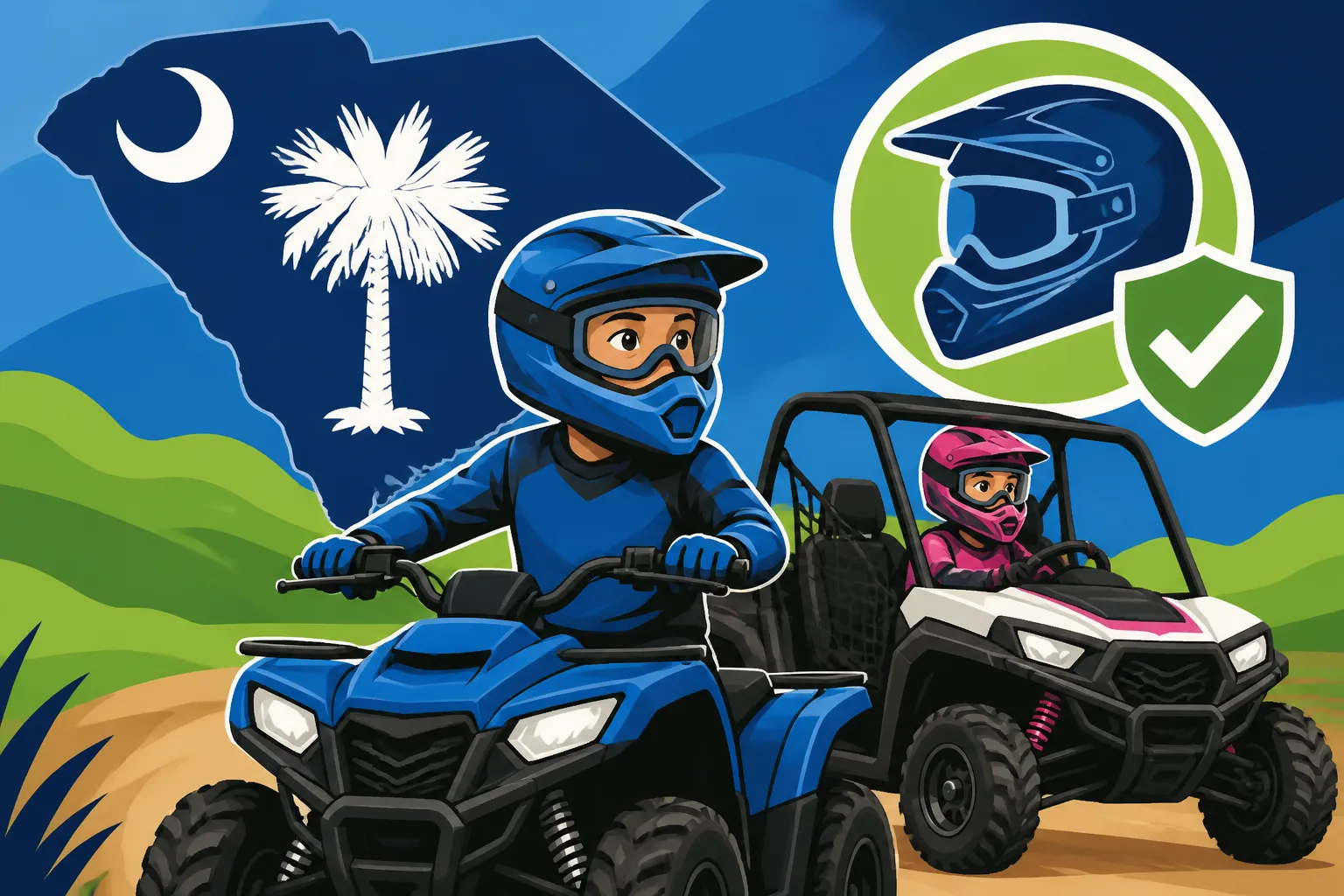
Under Chandler's Law, any person under the age of 16 operating or riding as a passenger on an ATV in South Carolina must wear a helmet. This is a clear, unambiguous rule. It doesn't matter if they are on private land, a designated trail, or just puttering around the backyard. If they are under 16 and on an ATV, a helmet is required by law. This specific age threshold is not arbitrary; it aligns with research on child development, considering factors like head size, neck strength, and the still-developing nature of a child's brain, which makes them more susceptible to severe injury in a crash.
The law casts a wide net, encompassing all forms of ATV riding for this age group. This means that whether your child is just learning to ride or they’ve been on a machine for years, the helmet rule applies equally. It's a constant, non-negotiable safety measure designed to protect the most vulnerable group of riders. As a parent, you are ultimately responsible for ensuring this rule is followed, and failure to do so can result in penalties. Remember, this law is there to protect your child, not to hinder their fun.
It’s also important to clarify that this rule applies to all ATVs, regardless of engine size or type. Whether it's a small youth quad or a larger machine that a 15-year-old might be riding, the helmet requirement remains the same. There are no exemptions based on machine specifications for riders under 16. The focus is squarely on the age of the operator or passenger, highlighting the legislative intent to provide universal head protection for minors engaging in ATV activities across the state.
What "Federal Standard" Means for Helmet Compliance
The law doesn't just say "wear a helmet"; it specifies that the helmet must "meet United States Department of Transportation (DOT) standards." This is a critical distinction because not all helmets are created equal. A helmet that looks protective but doesn't have the DOT certification sticker isn't sufficient under South Carolina law. [Helmets Under 16 Must Meet the Federal Standard] goes into detail about this. The DOT standard ensures that the helmet has undergone rigorous testing for impact absorption, penetration resistance, and retention system effectiveness, meaning it’s built to actually protect a rider’s head in an accident.
When you're shopping for a helmet for your young rider, always look for the DOT sticker on the back. This sticker is your assurance that the helmet complies with Federal Motor Vehicle Safety Standard 218 (FMVSS 218). Without it, even if the helmet seems sturdy, it doesn't meet the legal requirement in South Carolina for riders under 16. This federal standard is the baseline of safety that the law mandates, providing a minimum level of protection that has been scientifically evaluated.
It’s crucial to understand that simply owning a helmet isn't enough; it must be the right kind of helmet. A bicycle helmet, for instance, is designed for different types of impacts and speeds and will not meet the DOT standard required for ATVs. Therefore, always verify the DOT certification to ensure compliance with Chandler's Law and, more importantly, to provide your child with the appropriate level of protection against the specific forces involved in an ATV incident. This commitment to a federal standard ensures a baseline of quality and effectiveness.
Understanding the "Federal Standard": What to Look For
The term "federal standard" might sound a bit vague, but when it comes to helmets, it's very specific and incredibly important. It's not just about a label; it's about a commitment to safety through rigorous testing. Knowing what to look for can literally be a lifesaver.
DOT Certification: Your First Check
For helmets in the United States, the "federal standard" primarily refers to the Department of Transportation (DOT) certification. This certification means the helmet meets the requirements of FMVSS 218, which is the minimum performance standard for motorcycle helmets – and by extension, what's legally required for youth ATV riders in South Carolina. When you're looking at a helmet, the absolute first thing you should do is check for the DOT certification sticker, usually found on the back of the helmet. This isn't just a suggestion; it's the law in South Carolina for kids on ATVs.
The DOT standard specifies things like the helmet's ability to absorb impacts from various heights, resist penetration from sharp objects, and stay securely on the wearer's head in a crash. Helmets that pass these tests are designed to reduce the risk of head injury. While it's considered a minimum standard, it's a robust one that provides significant protection. It’s also illegal for manufacturers to sell helmets as "DOT approved" if they haven't met the standard, giving you a level of trust in the sticker.
Purchasing a DOT-certified helmet isn't just about avoiding a ticket; it's about providing scientifically validated protection. Think of it as a quality seal that assures you the helmet has been engineered and tested to perform when it matters most. Any helmet for a young rider under 16 in South Carolina must have this certification. If it doesn't, it's not only non-compliant with the law but also provides an inadequate level of protection for ATV riding.
Beyond DOT: Snell and ECE Ratings
While DOT certification is the legal minimum, you might also see helmets with Snell or ECE ratings. These are independent, often more stringent, safety standards that go beyond what DOT requires. Snell (Snell Memorial Foundation) is a non-profit organization that develops standards and tests helmets for competitive racing and extreme conditions. Their tests often involve higher impact energies and more impact points than DOT, focusing on repeated impacts and structural integrity.
ECE (Economic Commission for Europe) is another highly respected international standard. Helmets with ECE 22.05 or ECE 22.06 certification have passed extensive tests mandated by European regulations, which are often comparable to or even exceed DOT standards in certain areas. While not legally required for off-road youth riding in South Carolina, choosing a helmet with Snell or ECE certification offers an enhanced level of protection and peace of mind. Many serious riders and racers opt for these higher-rated helmets because they represent the pinnacle of helmet safety technology.
These higher certifications are an excellent choice if you're looking for extra protection for your child, especially if they are involved in more aggressive riding or competitive sports. They indicate that the helmet has met an even more demanding set of safety criteria, offering superior performance in a wider range of accident scenarios. While DOT is sufficient for legal compliance, Snell and ECE represent an investment in the highest possible level of head protection available on the market.
Fitting the Helmet: A Critical Step
Even the most expensive, highly-rated helmet is useless if it doesn't fit correctly. A properly fitted helmet should be snug all around your child's head, without being uncomfortably tight or causing pressure points. It shouldn't move side-to-side or front-to-back when you try to shift it. If you can shake your child's head and the helmet slides around, it's too big. You should feel an even pressure all around their head, and the padding should compress slightly.
Here's a quick fitting guide: First, measure your child's head circumference and refer to the helmet manufacturer's size chart. When they try it on, ensure the helmet sits low on the forehead, just above the eyebrows, offering maximum facial protection. Next, fasten the chin strap. It should be snug, allowing only one or two fingers to fit between the strap and the chin. Have your child open their mouth wide; the helmet should pull down slightly on their scalp. If it doesn't, the strap is too loose.
A helmet that's too loose can come off in an accident, rendering it useless. One that's too tight can be distracting, uncomfortable, and cause headaches, leading to your child wanting to remove it. Remember, helmets are not one-size-fits-all, and different brands might fit slightly differently. It’s always best to try on several helmets to find the perfect, snug fit. This ensures that the helmet will stay in place and do its job effectively when it matters most, providing consistent protection against impacts.
Special Considerations for UTV and Dirt Bike Riders
While the focus here is largely on ATVs, it's vital to remember that other off-road machines, like UTVs and dirt bikes, also have specific rules, especially when young riders are involved. The nuances can be confusing, but understanding them is key to staying safe and legal.
Street-Legal UTV Helmet Rules in South Carolina
This is where things can get a bit more complex. If your UTV is street-legal in South Carolina – meaning it has met all the requirements to be driven on public roads – the helmet rules for young riders shift to mirror those for motorcycles. This means that any operator or passenger of a street-legal UTV under the age of 21 must wear a helmet. This is a significant distinction from off-road ATV rules, where the age cut-off for mandatory helmets is 16. [South Carolina Street UTV Helmet Rules Under 21] dives deeper into these specific regulations.
The reason for this higher age threshold is due to the inherent differences in risk when operating on public roads compared to private, off-road trails. Public roads often involve higher speeds, interactions with other vehicles (cars, trucks, motorcycles), and a different set of hazards. Therefore, the state applies a more stringent helmet requirement to ensure maximum protection for younger individuals who might be operating these vehicles in traffic. You can also refer to [South Carolina Street UTV Age of 17] for more details on age and driving.
Always verify whether your UTV is street-legal and if your young rider falls under this 21-year-old helmet mandate. If you've gone through the process of getting a license plate and registration for your UTV to take it on designated public roads, then these specific rules apply. Ignoring this distinction could not only lead to a citation but, more importantly, put your young rider at significantly increased risk on roads where they are exposed to different and often higher-speed traffic.
Dirt Bikes: The Same Rules Apply
For dirt bikes, the rules for young riders generally align with those for off-road ATVs when they are being ridden off-road. This means that riders under the age of 16 operating a dirt bike off-road in South Carolina must wear a helmet that meets federal (DOT) standards. The type of off-road machine changes, but the vulnerability of the young rider's head remains the same, making head protection equally critical.
Dirt biking, much like ATV riding, involves high speeds, unpredictable terrain, jumps, and the very real possibility of falls. The impacts can be just as severe, if not more so, given the often more aggressive riding styles associated with dirt bikes. Therefore, it's logical and necessary that the same stringent helmet requirements apply to ensure the safety of minors participating in this exciting but risky sport.
Just as with ATVs, ensure the dirt bike helmet is DOT certified and fits correctly. A helmet designed specifically for dirt biking often includes features like a prominent visor to block roost (dirt and debris kicked up by other bikes) and ample ventilation for aggressive riding. While styling may differ, the underlying safety standards for youth remain consistent across off-road motorized two- and four-wheeled vehicles. Always prioritize protection over aesthetics for your child's dirt bike adventures.
Passengers and Helmet Requirements
It's not just the operator who needs head protection; passengers, especially young ones, are equally vulnerable. South Carolina's Chandler's Law explicitly states that any person under the age of 16 riding as a passenger on an ATV must also wear a helmet that meets federal (DOT) standards. This extends the protective umbrella to every minor on the machine, regardless of whether they are at the controls or simply enjoying the ride.
This rule is vital because passengers often have less control over the machine's movements and can be caught off guard by sudden turns, bumps, or braking. In a rollover or impact, a passenger can be ejected or crushed, making head protection just as critical for them as for the driver. It's a clear reminder that safety is a shared responsibility, and every young person on an ATV deserves the highest level of protection. You can find more information about minor passenger rules in [South Carolina Rules for a Child Passenger].
For street-legal UTVs, the same passenger rules apply as for the driver: if the passenger is under 21, they must wear a DOT-certified helmet. Again, the context of public road use elevates the age requirement for mandatory helmet use. Always check the specific laws related to the type of machine and the riding environment to ensure all young passengers are adequately protected and in full compliance with South Carolina law.
The Role of Adult Supervision and Responsibility
While laws provide a framework, it's ultimately the adults in a child's life who hold the key to consistent safety. Setting a good example, enforcing rules firmly but fairly, and instilling a deep respect for safety are paramount.
Leading by Example: Adults Wearing Helmets Too
One of the most powerful teaching tools you have as a parent or guardian is leading by example. If your child sees you, the adult they look up to, consistently wearing a helmet when you ride, it normalizes the behavior. It sends a clear message that helmets are not just "kid stuff" or a punishment, but an essential piece of gear for everyone, regardless of age or experience. When adults skip the helmet, it subtly undermines the message that it's important, making it harder to enforce the rule for children.
Think about it from a child's perspective: if Mom or Dad can ride without a helmet, why can't I? This creates a double standard that can breed resentment and make children feel singled out. By consistently strapping on your own helmet before every ride, you're reinforcing the idea that safety is non-negotiable for all riders in the family. It demonstrates that you take your own safety seriously, and by extension, their safety.
This isn't just about helmets, either. It extends to all aspects of safe riding: staying on designated trails, not riding under the influence, and respecting the limits of your machine. When you model these behaviors, you're not just telling your child what to do; you're showing them how to be a responsible, safe rider for life. It's an unspoken lesson that often resonates more deeply than any verbal instruction alone.
Enforcing the Rules: Consistency is Key
Children thrive on consistency, and safety rules are no exception. Allowing your child to ride without a helmet "just this once," or in certain situations (like "just in the yard"), can be incredibly confusing and dangerous. It creates loopholes that undermine the seriousness of the rule. If you expect them to wear a helmet, then it must be every single time they get on an ATV or UTV. No exceptions, no excuses.
This consistency needs to extend beyond just helmet use. It includes adherence to age restrictions, ensuring they have the proper safety certificate ([South Carolina Safety Certificates at 15 and Under]), and following all other provisions of Chandler's Law. Children are expert at testing boundaries, and if they sense an inconsistency in your enforcement of safety rules, they will push those boundaries. This is where the potential for accidents increases significantly.
It's also important to explain why the rules are there, not just that they exist. A child who understands that a helmet protects their brain is more likely to accept and internalize the rule than one who just sees it as an arbitrary restriction. Be firm, but also be patient and educational. The legal consequences for non-compliance are real ([South Carolina Penalties Under Chandler's Law]), but the most important consequence we want to avoid is injury to our children.
Teaching Safe Riding Habits Early
Helmet use is a foundational piece of ATV safety, but it's part of a much larger puzzle. From a young age, children need to be taught a comprehensive set of safe riding habits. This includes understanding the controls of their machine, learning proper riding techniques for various terrains, respecting speed limits, and always being aware of their surroundings. Teaching them about responsible riding from the start creates a lifelong habit of safety.
This also means teaching them about the capabilities and limitations of their specific machine. A youth-sized ATV is designed for smaller riders, but it still requires respect and proper handling. Encourage them to take approved safety courses, which provide hands-on training and reinforce theoretical knowledge. A well-trained rider is a safer rider, even before they apply the brakes.
Ultimately, your role as an adult is to cultivate a culture of safety. It's not just about what the law says, but about instilling a deep respect for the power of these machines and the importance of personal protection. A child who learns safe habits early is more likely to carry those habits throughout their riding career, whether they're on a small youth quad or eventually move up to larger, more powerful machines. It’s about empowering them to make safe choices independently.
Beyond Helmets: Other Essential Safety Gear for Kids
While helmets are undoubtedly the most critical piece of safety equipment, they are just one part of a complete protective ensemble. For young riders, whose bodies are still developing and who are more susceptible to injury, comprehensive gear is crucial for minimizing risks from head to toe.
Eye Protection: Goggles and Face Shields
Even with a full-face helmet, dedicated eye protection is a must for young riders. Goggles or a helmet with a integrated face shield protect against a myriad of hazards that can impair vision or cause direct injury. Think about it: dust and dirt kicked up by other riders, low-hanging branches on a trail, flying insects, or even small rocks can all hit your child's eyes. An unexpected impact to the eye can cause immediate pain, blur vision, and lead to an accident. [Eye Protection Beside a Helmet] emphasizes this point.
Good quality goggles will fit snugly around the eyes and helmet, offering a wide field of vision while sealing out debris. Many helmets designed for off-road use accommodate goggles easily. If your child's helmet has a face shield, ensure it's made from shatter-resistant material and is kept clean for optimal visibility. It's not just about protecting their eyes from physical injury, but also about ensuring clear, unobstructed vision, which is fundamental to safe riding and reacting to unexpected situations on the trail.
Remember that clear vision is paramount to safety. Even a momentary squint or a blink to clear dust can be enough time for a young rider to miss an obstacle. Investing in good goggles or a clear face shield for your child's helmet is just as important as the helmet itself, providing that critical layer of defense for their precious eyesight and helping them maintain full situational awareness at all times.
Body Armor, Gloves, and Boots
Beyond the head and eyes, the rest of a child's body also needs protection. Proper riding gear includes body armor, gloves, and sturdy boots, each serving a vital role in preventing or mitigating injuries.
- Body Armor: Chest protectors and roost deflecting vests are designed to shield the torso from impacts with handlebars, trees, or the ground during a fall. They also protect against "roost" – dirt, rocks, and debris flung from the tires of other machines. For youth riders, a lightweight, flexible chest protector can make a huge difference in protecting vital organs and the spine in a crash. Some even offer shoulder and elbow protection built-in.
- Gloves: Riding gloves aren't just for grip, though that's certainly important. They protect hands from blisters, abrasions, cuts from branches, and minor impacts during falls. Look for gloves that offer good ventilation for comfort in South Carolina's climate, but also provide adequate padding and reinforced knuckles.
- Boots: Sturdy, over-the-ankle riding boots are essential. They protect feet and ankles from crushing injuries, twists, and sprains that can occur when a foot gets caught under the machine or impacts the ground. Regular sneakers or hiking boots simply don't offer the necessary support or protection against the forces involved in an ATV or UTV incident. Look for boots with good ankle support, reinforced toe boxes, and aggressive soles for traction.
Wearing a full suite of protective gear might seem like a lot, but each piece plays a role in creating a safe riding experience. Children’s bones are still developing and more prone to fracture, making comprehensive protection even more critical for them. Don't cut corners when it comes to outfitting your young rider – their safety is worth the investment in quality gear.
Riding Gear for Different Seasons
South Carolina's weather can vary wildly throughout the year, from scorching summer humidity to surprisingly chilly winter days. Dressing your child in appropriate riding gear for the season isn't just about comfort; it's about safety.
In the heat of summer, breathable, moisture-wicking fabrics are key to preventing overheating and dehydration. While long sleeves and pants are always recommended for protection against scrapes and sun exposure, choosing materials that allow air circulation can help regulate body temperature. Light-colored gear can also reflect sunlight, keeping riders cooler. Dehydration can lead to fatigue and impaired judgment, increasing accident risk. Conversely, as the temperatures drop, layering becomes essential. Thermal base layers, insulated jackets, and waterproof outer shells can protect against cold and wet conditions, which can lead to hypothermia and reduced dexterity, making machine control more difficult.
Beyond the actual clothing, think about accessories. Hydration packs are a must-have in warmer months, encouraging consistent fluid intake. In colder weather, heated grips or hand warmers inside gloves can maintain finger dexterity. Adjusting gear to the environment ensures that your child remains comfortable and focused, minimizing distractions that could lead to errors. Safety isn't just about protection from impacts; it's also about maintaining optimal physical and mental conditions for riding.
Common Misconceptions and FAQs About Youth Helmets
Despite clear laws and abundant safety information, some common myths and questions persist regarding youth helmet use. Let's tackle these head-on to ensure every parent has the clearest understanding.
"My Kid is a Good Rider, They Don't Need One"
This is perhaps one of the most dangerous misconceptions out there. While it's wonderful to have a skilled young rider, proficiency does not eliminate risk. Accidents are, by definition, unexpected events. Even the most experienced adult riders can encounter unforeseen obstacles, mechanical failures, or sudden changes in terrain that lead to a crash. Children, even those who seem like seasoned pros, still have developing judgment and reaction times that are simply not on par with adults.
Furthermore, a "good rider" might be able to handle their machine well, but they can't control what other riders do, or the unpredictable elements of nature. A moment of distraction from another rider, an animal darting across the trail, or a hidden washout can all lead to an accident that no amount of skill can entirely prevent. The helmet isn't a reflection of their riding ability; it's a critical safety net for when things go wrong, as they inevitably can in off-road environments.
Thinking that skill negates the need for a helmet is akin to saying an experienced driver doesn't need a seatbelt. It flies in the face of logic and real-world accident statistics. The helmet is there for the worst-case scenario, the one you hope never happens but must be prepared for. Always reinforce that skill is important, but a helmet is mandatory for protection, regardless of how well they ride.
Hand-Me-Down Helmets and Their Risks
It might seem economical to use an older sibling's helmet, or one gifted from a friend, but hand-me-down helmets pose significant safety risks and are generally not recommended. Helmets are designed for one major impact. Even if a helmet looks perfectly fine on the outside, a previous fall can compress or damage the internal foam liner, rendering it ineffective in a subsequent crash. This damage is often invisible to the naked eye.
Beyond single-impact damage, helmets degrade over time. The materials, particularly the foam and glues, can break down due to exposure to UV light, sweat, oils from skin and hair, and general wear and tear. A helmet that's five to seven years old, even if it hasn't been crashed, should generally be replaced. The protective qualities simply won't be what they once were. Additionally, the fit might not be right for the next child, and as we've discussed, an ill-fitting helmet is a dangerous helmet.
When you invest in a new helmet, you're not just buying a piece of plastic and foam; you're buying a guarantee of untouched, uncompromised protection. For the crucial task of protecting your child's brain, it’s always best to purchase a new helmet that fits them perfectly and has no history of impacts or material degradation. The slight savings from a hand-me-down are simply not worth the immense risk.
When Can Kids Stop Wearing a Helmet in SC?
For off-road ATV riding in South Carolina, the mandatory helmet requirement for minors ends when a rider turns 16. That means once they are 16 years old, they are legally no longer required to wear a helmet when riding an ATV off-road. However, for street-legal UTVs, the age requirement for mandatory helmet use extends until the rider turns 21. It's crucial to understand this distinction based on the type of machine and where it's being ridden.
While the law dictates when mandatory helmet use stops, it's incredibly important to stress that continuing to wear a helmet, regardless of age, is always the safest choice. The risks of head injury don't magically disappear on a child's 16th or 21st birthday. Adults are just as susceptible to severe head trauma in an accident as minors, and often the impacts are even more forceful due to higher speeds and heavier machines.
Many experienced adult riders choose to wear helmets for every ride, recognizing the inherent dangers of off-road sports. Encouraging your child to maintain the helmet habit even after they've outgrown the legal requirement instills a lifelong commitment to safety. It reinforces the idea that helmets are for protection, not just compliance, and that personal safety should always be prioritized over convenience or perceived invincibility.
Where to Find Quality Helmets and Gear
Finding the right safety gear for your child can feel overwhelming with all the options out there. But remember, this isn't just shopping; it's an investment in your child's well-being. Knowing where to look and what to prioritize makes the process much smoother.
Local Dealers vs. Online Retailers
When it comes to purchasing helmets and other riding gear for your child, both local dealers and online retailers offer distinct advantages. Choosing the right avenue often depends on what you prioritize most.
Local dealerships, like those found around Columbia, Greenville, or Charleston, offer the invaluable benefit of in-person fitting. As we've discussed, proper fit is paramount for a helmet to be effective. A knowledgeable sales associate can guide you through the sizing process, ensure the helmet is snug, and help your child try on different brands and styles to find the most comfortable and secure fit. This hands-on experience also applies to other gear like boots and body armor, allowing you to assess comfort and mobility firsthand. You can also ask questions about specific features and get immediate advice. The downside might be a more limited selection compared to online stores and potentially higher prices, but the expertise and ability to try before you buy are often worth it, especially for critical safety items.
Online retailers, on the other hand, typically boast a much wider selection of brands, styles, and price points. You can often find competitive deals and a greater variety of youth-specific gear. However, the major drawback is the inability to try on items before purchase. This means you'll rely heavily on size charts and customer reviews, and you might face the hassle of returns if something doesn't fit correctly. If you're confident in your child's measurements and know exactly what you're looking for, online shopping can be a great option for convenience and selection. For first-time buyers or those unsure about sizing, combining methods – trying on locally, then perhaps purchasing online – might be a good strategy, though it's always good to support your local businesses if they provide excellent service.
Considering Brands and Features
When selecting a helmet and other gear, consider reputable brands known for their commitment to safety and quality in the ATV and UTV industry. Brands like Fox Racing, Bell Helmets, Fly Racing, and O'Neal are often good starting points, offering a range of youth-specific gear that meets safety standards. Don't be swayed by price alone; remember that quality materials and construction directly correlate with protection.
Beyond the brand, pay attention to specific features. For helmets, look for good ventilation, which is crucial for comfort in South Carolina's heat and helps prevent fogging of goggles or face shields. Removable, washable liners are a huge plus for hygiene, as youth helmets can get quite sweaty and dirty. Shell materials often range from polycarbonate to fiberglass composites, with more advanced composites generally offering lighter weight and potentially better impact absorption. For other gear, consider articulation in body armor for freedom of movement, and durable construction in gloves and boots that can withstand aggressive riding and repeated washes.
It’s also helpful to look for retailers that cater specifically to the off-road market, as they will stock gear designed for the unique demands of ATV and UTV riding. For instance, companies like SuperATV offer a wide range of accessories and gear for various machines and rider types. While they are renowned for their UTV parts and accessories, many also provide quality safety gear for riders. Places like SuperATV understand the needs of off-road enthusiasts and often carry robust, well-designed protection, including helmets, goggles, and body armor, making them a comprehensive source for outfitting your young rider with reliable equipment.
Investing in Protection: It's Not Just a Cost
Finally, view the purchase of helmets and other safety gear not as an expense, but as an indispensable investment. The cost of a quality helmet, chest protector, or pair of boots pales in comparison to the potential medical bills, long-term rehabilitation, and emotional toll that a serious injury could inflict. It’s an investment in your child's immediate safety and their future well-being.
Think of it this way: you invest in a good quality ATV or UTV, you maintain it, you fuel it. The most important cargo that machine will ever carry is your child. Protecting them should be the highest priority, and that means outfitting them with the best possible gear you can reasonably afford. Sometimes, it might mean saving up a little longer or making compromises elsewhere, but never compromise on safety.
When you equip your child with proper, well-fitting, and certified safety gear, you're giving them the best chance to enjoy the thrills of off-road riding while minimizing the inherent risks. It allows them to push their limits safely, learn new skills with confidence, and create those cherished memories without the shadow of preventable injury. This investment in protection is, without a doubt, one of the most important decisions you'll make for your young rider.
Summary of South Carolina Helmet Rules for Young Riders
To help clarify the various rules and recommendations, here's a concise overview of helmet requirements for young riders in South Carolina:
| Rider Age Group | Off-Road ATV (SC Law) | Street-Legal UTV (SC Law) | General Recommendation (Beyond Law) |
|---|---|---|---|
| Under 16 | Mandatory federal standard (DOT) helmet | Mandatory federal standard (DOT) helmet | Always wear a helmet, regardless of skill or property. |
| 16 – 20 | Not legally mandatory (off-road) | Mandatory federal standard (DOT) helmet | Highly recommended to wear a helmet for all riding. |
| 21 and Over | Not legally mandatory (off-road) | Not legally mandatory (street-legal, driver/passenger) | Strongly recommended for all off-road and high-risk riding. |
Disclaimer
This article is for general informational purposes only and does not constitute professional advice. Laws, prices and regulations vary by location and change over time. Consult a qualified professional for guidance on your specific situation.