The Safety Certificate Riders 15 and Under Need
Riding ATVs and UTVs in South Carolina is a fantastic way to explore our beautiful landscapes, from the coastal plains to the Upstate mountains. But for parents with younger riders, navigating all the rules, especially those concerning safety, can feel like trying to find your way through a dense Lowcountry marsh without a map. It's a common frustration to want your kids to enjoy the sport safely and legally, only to be met with confusing guidelines. This comprehensive guide will clear up the mystery around the South Carolina ATV safety certificate, detailing exactly who needs it, how to get it, and why it's such an important piece of the puzzle for responsible riding.
The Critical Role of a Safety Certificate for Young Riders
It’s easy to think of a safety certificate as just another piece of paper or a hoop to jump through, but for younger riders in South Carolina, it’s truly foundational. Our state, like many others, recognizes that operating an ATV or UTV isn't like riding a bicycle; these machines are powerful, heavy, and require specific skills and knowledge to handle safely. The certificate isn't just about complying with the law; it's about equipping our kids with the understanding and practical abilities to avoid accidents and make smart decisions on the trail.
Why South Carolina Emphasizes Rider Education
South Carolina's commitment to rider education, particularly for those under 16, stems from a desire to reduce injuries and fatalities. Off-road riding, while exhilarating, comes with inherent risks, and those risks are amplified when operators lack proper training. The state code reflects a deep understanding that a proactive approach through education is far more effective than simply reacting to incidents. It's a testament to the idea that an ounce of prevention is worth a pound of cure, especially when it comes to the safety of our children.
Think about it from a parent's perspective: you wouldn't hand the keys to a car to a teenager without them first getting a driver's education and passing a test, right? The principle is the same here. An ATV, while different from a car, demands similar respect and a trained hand. The certificate program aims to instill that respect and skill set from an early age, helping to build a generation of riders who understand the power they command.
Building Confidence and Responsible Habits
Beyond the legal requirement, completing a safety course and earning a certificate significantly boosts a young rider's confidence. When they know how to react to different terrains, control their machine, and anticipate potential hazards, they ride with greater assurance and less panic. This isn't just about feeling good; it translates directly into safer riding practices. An educated rider is a prepared rider, less likely to make impulsive, risky decisions.
Furthermore, these courses teach invaluable habits like pre-ride inspections, wearing appropriate gear, and understanding the impact of environmental factors. These aren't just one-time lessons; they become ingrained practices that serve riders throughout their lives. It's about fostering a culture of responsibility, where safety isn't an afterthought but an integral part of every ride. For instance, understanding how specific accessories, maybe even quality parts from a brand like SuperATV, can improve safety and control, becomes part of their knowledge base.
Who Needs a South Carolina ATV Safety Certificate
The rules for who needs an ATV safety certificate in South Carolina are pretty straightforward, but it's crucial to understand the specifics to ensure compliance. This isn't a suggestion; it's a legal requirement designed to protect our most vulnerable riders. If your child falls into the specified age range, getting this certificate is not just advisable, it's mandatory for them to legally operate an ATV on public lands, and often for private parks too.
Age Requirements for Certification
In South Carolina, any person 15 years of age or younger who operates an all-terrain vehicle (ATV) must possess a safety certificate issued by the ATV Safety Institute (ASI) or another approved organization. This means that if your child is 6, 10, or 15, and they want to ride a quad or side-by-side (which might also fall under ATV rules depending on specifics and location) in a public riding area or even on certain private properties open to the public, they need this certificate in hand. [South Carolina Safety Certificate Requirements] are very clear on this.
It's a common misconception that if a child is riding on private land, these rules don't apply. While the enforcement might differ, the spirit of the law, and indeed many private riding park rules, still encourages or requires this certification for safety. The law aims for a consistent standard of safety education for all young riders, regardless of where they might primarily ride.
Exemptions and Important Clarifications
While the general rule is quite broad, there are a few key points to clarify regarding exemptions:
- Age 16 and Older: Once a rider turns 16, they are no longer legally required by the state to possess an ATV safety certificate. While not mandatory, continued education and refreshers are always a good idea. [South Carolina Has No Adult Course Requirement] for a certificate, but advanced courses are available for those who want to refine their skills.
- Specific Machine Types: The primary focus of Chandler's Law (South Carolina Code Section 50-26-50) is on ATVs, which generally refers to machines designed for off-road use with handlebars and a straddle seat. While some UTVs may be considered ATVs in certain contexts, the specific certificate requirement is typically for the traditional ATV rider. However, many of the safety principles apply across all off-road vehicles.
- Private Land Exemption Nuances: While the law is clear for public lands, when it comes to purely private land (not open to the public), supervision rules often take precedence over the certificate itself for minors. However, many private parks and organized events will still require proof of a safety course for all riders under 16, regardless of the state's public land specifics. Always check with the specific venue before you haul your machines out!
Here’s a quick overview of who needs what:
| Rider Age Group | ATV Safety Certificate Required? | Adult Supervision Required? | Helmet Required? (Under 16) |
|---|---|---|---|
| Under 6 Years Old | Yes (if allowed to ride) | Always | Yes |
| 6 to 15 Years Old | Yes | Yes | Yes |
| 16 Years Old | No (but highly recommended) | No (unless new rider) | No (but highly recommended) |
| 17 Years Old + | No (but highly recommended) | No | No (but highly recommended) |
Note: This table summarizes state law requirements for ATVs. Rules for street-legal UTVs, low-speed vehicles, and golf carts have different age and license requirements.
How to Get the Required Safety Certificate
Getting your child the necessary ATV safety certificate in South Carolina isn't overly complicated, but it does involve a structured process. It’s not just a quick online quiz; it typically combines online learning with practical, hands-on training to ensure riders gain both theoretical knowledge and practical skills. This dual approach is critical for true safety and competency on the trail.
The Two-Part Certification Process
The most common and widely accepted path to certification in South Carolina is through the ATV Safety Institute (ASI) RiderCourse. This course is typically broken down into two main components:
- Online Prerequisite: The journey usually begins with an online e-course. This segment covers the fundamental theories of ATV safety, including topics like proper riding gear, environmental awareness, basic machine mechanics, hazard recognition, and the "golden rules" of ATV operation. It’s self-paced and designed to be completed at home, allowing riders to absorb the information without pressure. [South Carolina Online Course Prerequisite] will prepare them for the hands-on portion. This foundational knowledge is crucial before they even touch a machine under an instructor's eye.
- Hands-On Practical Training: After successfully completing the online portion, riders attend a hands-on, practical training session with a certified ASI instructor. This is where the rubber meets the road – or, more accurately, the tire meets the dirt. During this session, riders apply the knowledge gained online in a controlled environment. They learn how to start, stop, turn, shift gears (if applicable), traverse obstacles, and handle various terrains safely. [South Carolina Hands-On Course Length] is typically a half-day or full-day session, depending on the number of participants and the specific program. It’s an invaluable experience, allowing for immediate feedback and correction from an expert.
What to Expect at an ATV RiderCourse Session
When you attend a hands-on ATV RiderCourse session in South Carolina, here’s generally what you can anticipate:
- Arrival and Check-in: You'll typically check in, show proof of the online course completion, and complete any necessary waivers. Instructors will verify rider ages and ensure everyone has appropriate personal protective equipment (PPE), including a DOT-compliant helmet, eye protection, gloves, long sleeves, long pants, and over-the-ankle boots.
- Classroom Briefing: Even after the online portion, there's usually a brief classroom or shaded area discussion to review key safety concepts, discuss the day's agenda, and set expectations. This is also a good opportunity for riders to ask any lingering questions.
- Machine Introduction and Controls: Instructors will walk riders through the various parts of their ATVs, covering controls like throttle, brakes, and shifting mechanisms. They'll emphasize the importance of understanding your specific machine.
- Practical Drills: The bulk of the course involves practical riding drills. These start simple, with basic starting and stopping, and gradually progress to more complex maneuvers like turning, swerving, climbing and descending hills, and emergency braking. The instructor provides constant observation and coaching. [What Happens at an ATV RiderCourse Session] often feels like a fun, active day of learning, not just a dry lecture.
- Certification: Upon successful completion of both the online and hands-on portions, the rider will be issued their ATV Safety Certificate. Keep this certificate in a safe place, as you might need to present it if asked by law enforcement or park officials.
Finding a course provider in South Carolina is usually done through the ATV Safety Institute's website, which has a locator tool. Planning ahead is key, as courses can fill up, especially during peak seasons.
What the Safety Certificate Covers
The South Carolina ATV safety certificate isn't just a piece of paper; it represents a comprehensive training program designed to equip young riders with essential skills and knowledge. It's about much more than just knowing how to start and stop an ATV; it dives into critical aspects of safe and responsible riding that can literally be life-saving.
Core Riding Skills and Techniques
At the heart of the safety course are the practical riding skills that every operator needs to master. Instructors don't just tell riders what to do; they guide them through hands-on exercises that build muscle memory and confidence. These skills include:
- Pre-Ride Inspection: Learning to check tires, brakes, oil, chain tension, and other critical components before every ride. This simple habit can prevent many mechanical failures and potential accidents.
- Starting, Stopping, and Shifting: Mastering the basic controls, including smooth acceleration, controlled braking, and understanding how to shift gears safely and efficiently (if applicable to the machine).
- Turning and Cornering: Developing proper body positioning and steering techniques for executing safe turns at various speeds and on different surfaces. This is often where young riders struggle without proper instruction.
- Traversing Obstacles: Learning how to safely cross small obstacles, ditches, and navigate uneven terrain without losing control or causing damage to the machine.
- Hill Climbing and Descending: Understanding the specific techniques for safely ascending and descending hills, including weight distribution and throttle control, which are crucial for preventing rollovers.
- Emergency Braking and Swerving: Practicing rapid stopping and evasive maneuvers to avoid unexpected hazards, teaching quick reflexes and control under pressure.
These aren't just advanced techniques; they are fundamental to safe operation, regardless of where or how often a child rides.
Crucial Safety Knowledge and Practices
Beyond the hands-on skills, the safety certificate curriculum instills vital theoretical knowledge and promotes responsible riding practices. This knowledge base helps riders make informed decisions and understand the broader implications of their actions.
- Riding Gear and Protection: Emphasizing the absolute necessity of wearing appropriate personal protective equipment (PPE), including a DOT-compliant helmet, eye protection, gloves, long sleeves, long pants, and over-the-ankle boots. This section often covers [South Carolina Helmet Rules for Young Riders] and why they are so important.
- Riding Environment Awareness: Teaching riders to assess trail conditions, understand weather impacts, and recognize potential hazards like hidden obstacles, water crossings, or other trail users. [South Carolina Code Section 50-26-50] also details environmental rules.
- Responsible Passenger Rules: Educating riders on when and how to carry passengers safely, with a strong emphasis on never carrying a passenger on an ATV designed for a single rider. This includes [South Carolina Passenger Rules Under 16].
- Age and Machine Matching: Understanding that not all ATVs are suitable for all riders, especially children. The course stresses matching the machine size and power to the rider's age and skill level. [South Carolina Age Restriction Warning Labels] on machines are discussed for their importance.
- Avoiding Risky Behaviors: Promoting responsible choices, such as avoiding alcohol or drugs before riding, never showing off, and respecting private property. It's about instilling a sense of personal accountability.
- Environmental Responsibility: Teaching riders to "tread lightly," stay on marked trails, avoid disturbing wildlife, and pack out everything they pack in, promoting ethical outdoor recreation.
By covering both the physical skills and the intellectual understanding, the safety certificate program provides a holistic approach to ensuring young riders in South Carolina are as safe as possible while enjoying their machines.
Consequences of Not Having a Safety Certificate
It’s tempting to sometimes overlook regulations, especially when it feels like "just a piece of paper." However, for young riders in South Carolina, skipping the ATV safety certificate can lead to significant repercussions, ranging from legal penalties to more serious safety and liability issues. This isn't just about adhering to bureaucratic rules; it's about avoiding potential headaches and ensuring a secure riding future.
Legal Penalties and Fines
South Carolina law is clear: riders 15 years of age or younger must possess a valid ATV safety certificate when operating an ATV. Failure to do so can result in tangible legal consequences. If a law enforcement officer, such as a local sheriff's deputy or a Department of Natural Resources (DNR) warden, encounters a young rider without the required certificate, they have the authority to issue a citation.
The penalties can include fines, which typically range from $50 to $200 for a violation. [South Carolina Fines of $50 to $200] are designed to be a deterrent, emphasizing the seriousness of the requirement. Beyond the immediate financial penalty, multiple infractions could lead to more severe consequences, though the primary aim is education and compliance rather than harsh punishment for first offenses. It's an expense and a hassle that can easily be avoided by simply taking the course.
Safety Risks and Liability Issues
The legal ramifications are just one side of the coin; the safety risks associated with uncertified young riders are far more concerning. A child who hasn't undergone proper training is statistically more likely to be involved in an accident. They might lack the fundamental skills to react to sudden obstacles, navigate challenging terrain, or even understand the capabilities and limitations of their machine. This isn't speculation; it's borne out by accident statistics nationwide.
In the unfortunate event of an accident involving an uncertified young rider, the liability issues can become incredibly complex and burdensome for parents or guardians. Insurance companies may look unfavorably upon claims if the operator was not in compliance with state law. Furthermore, if an accident results in injury to another person or damage to property, the lack of a safety certificate could be used in civil litigation to demonstrate negligence, potentially leading to significant financial judgments against the responsible adult. It’s a risk that far outweighs the time and effort it takes to obtain the certificate.
Beyond the Certificate: Other Rules for Young Riders in SC
While the ATV safety certificate is a cornerstone of youth rider safety in South Carolina, it's just one piece of a larger regulatory framework. Our state has several other important rules designed to protect young riders, ensuring their safety and the safety of others on and off the trails. Understanding these additional requirements is crucial for any parent or guardian overseeing a young ATV enthusiast.
Helmet Requirements and Age Restrictions
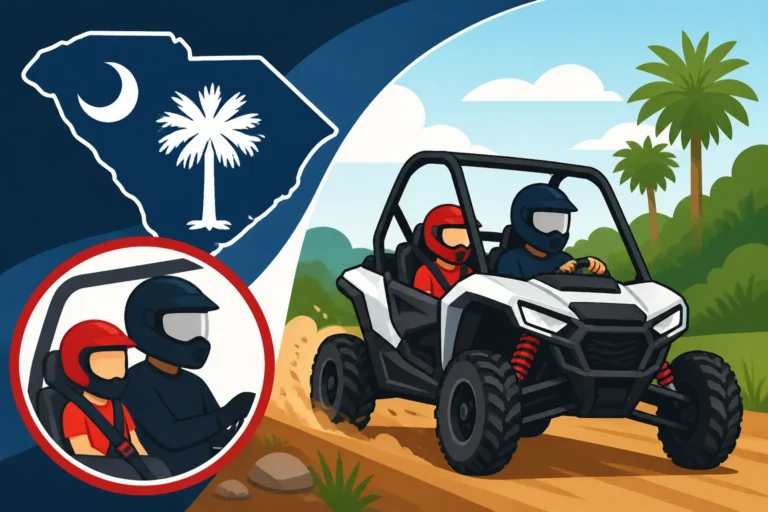
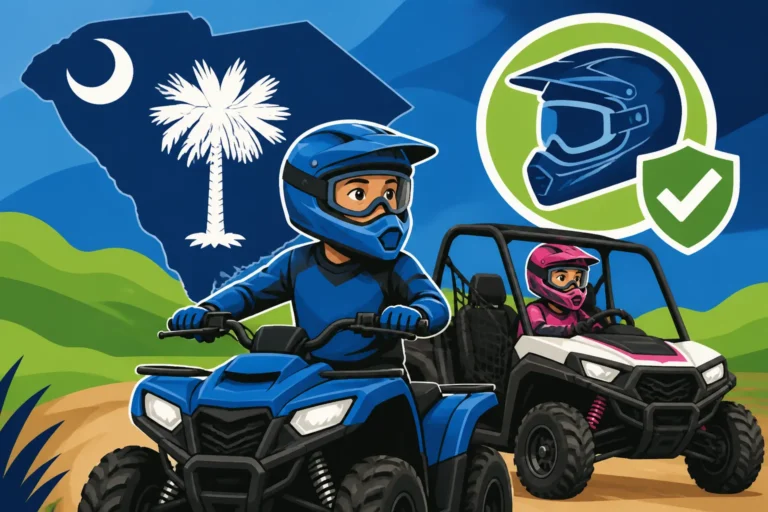
One of the most critical rules for young riders in South Carolina concerns helmet use. Any person 15 years of age or younger operating or riding as a passenger on an ATV must wear a helmet that meets federal safety standards. This isn't negotiable, and it's enforced for good reason: helmets dramatically reduce the risk of severe head injury in an accident. [South Carolina Helmet Rules for Young Riders] are very specific about this, and it’s a rule that officers take very seriously.
Beyond helmets, there are also general age restrictions tied to the type of riding and supervision:
- Riders Under 6: South Carolina generally bans riders under the age of 6 from operating ATVs. This acknowledges the physical and cognitive development required to safely handle these machines. [South Carolina Bans Riders Under 6] from operating ATVs.
- Passenger Rules: ATVs are primarily designed for a single operator. Carrying a passenger, especially a child, on a single-rider ATV is incredibly dangerous and often illegal, particularly for younger operators. [South Carolina Passenger Rules Under 16] reinforce the need for safe passenger protocols, often requiring an adult to be the operator if a passenger is present on a two-up machine.
- Adult Accompaniment: For riders 16 years of age and younger, there are often requirements for adult supervision or accompaniment, especially on public lands. [South Carolina Adult Accompaniment at 16 and Under] typically means a responsible adult (at least 18 years old) must be within sight or sound of the young rider.
Machine Matching and Equipment Standards
It’s not just about the rider; the machine itself plays a huge role in safety. South Carolina law, and common sense, dictates that the ATV must be appropriate for the rider’s age, size, and skill level. You wouldn't put a small child on a powerful utility quad, for instance.
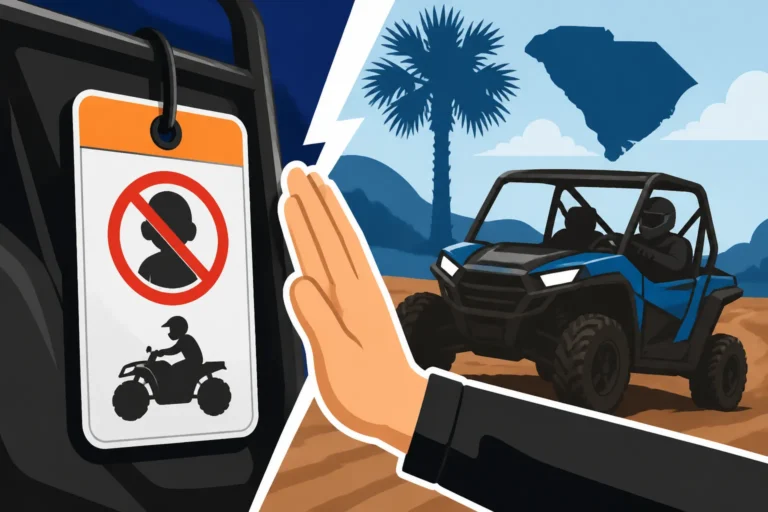
- Age Warning Labels: All new ATVs come with [South Carolina Age Restriction Warning Labels] from the manufacturer, indicating the minimum age for safe operation. These are not mere suggestions; they are based on extensive safety testing and development. It is unlawful to remove these labels.
- Engine Size Considerations: While not always a specific legal dictate, the safety courses emphasize matching engine size. Youth-model ATVs typically have smaller engines (e.g., 50cc to 90cc for younger children, up to 125cc for pre-teens) and lower top speeds.
- Spark Arresters and Brakes: All ATVs operating in South Carolina, especially on national forest lands, must be equipped with a U.S. Forest Service-approved spark arrester to prevent wildfires. Additionally, machines must have functional brakes capable of holding the vehicle on a hill. [South Carolina Spark Arrester Requirements] and [South Carolina Brake Requirements] are crucial for both safety and environmental protection.
- Lighting: If riding during hours of darkness or in conditions of reduced visibility, ATVs must have proper lighting. [South Carolina Headlight Hours After Sunset] dictate when lights must be on, usually a half-hour after sunset and a half-hour before sunrise, or anytime visibility is limited.
By adhering to these comprehensive rules—from the safety certificate to helmet use and appropriate machine choice—we can ensure that South Carolina remains a fantastic and safe place for our young people to enjoy the thrill of ATV and UTV riding. Brands like SuperATV offer a range of accessories, from lighting to protective gear, that can help meet or exceed these safety and equipment standards, providing additional peace of mind for parents.
Disclaimer
This article is for general informational purposes only and does not constitute professional advice. Laws, prices and regulations vary by location and change over time. Consult a qualified professional for guidance on your specific situation.