How Hunting and Trapping Escape Chandler’s Law
It can feel like you need a legal degree just to figure out where you're allowed to ride your ATV or UTV in South Carolina. One minute you're hearing about all these strict rules, and the next you see someone driving their quad through the woods with a deer strapped to it, seemingly without a care in the world. This guide is here to clear up a common area of confusion for folks who use their machines for hunting and trapping: how these specific activities can actually allow you to escape some of the general restrictions laid out in South Carolina's Chandler's Law.
Understanding Chandler's Law and Its Intent
Let's be honest, nobody likes feeling restricted, especially when it comes to enjoying their land or pursuing their outdoor passions. Chandler's Law, officially South Carolina Code Title 50 Chapter 26, can feel like a big rulebook that limits how and where you can use your ATV. But understanding why it exists can help clarify some of its nuances, especially when we talk about exemptions.
The Purpose Behind the Legislation
Chandler's Law came into being largely as a response to safety concerns, particularly involving young riders. There were unfortunately too many accidents, and the state saw a need to put some guidelines in place to protect riders, especially those under 16. The core intent was to promote safer ATV operation, reduce injuries, and ensure that people understood the responsibilities that come with these powerful machines. It sets age requirements, supervision rules, and dictates where ATVs can generally be ridden – which, for the most part, is not on public roads. It's about trying to strike a balance between allowing people to enjoy their machines and preventing preventable tragedies. You'll see things like [South Carolina Helmet Rules for Young Riders] and [South Carolina Safety Certificate Requirements] emphasized in the law, all stemming from this safety-first approach.
Key Restrictions for General ATV Use
For most recreational riders, Chandler's Law means a few things are pretty much off-limits without special circumstances. You generally can't just hop on your ATV and cruise down a public highway or secondary road. There are strict age limits for operating ATVs, and riders under certain ages need specific safety training and adult supervision. For instance, children under six are banned from operating an ATV, and those between 6 and 15 require direct adult supervision when riding on private land. Helmets are mandatory for anyone under 16. These rules apply pretty broadly to recreational riding, whether you're just tearing up a field or enjoying a designated trail. It's the kind of stuff that makes you second-guess every turn you make if you're not sure about the legality, and for good reason—fines for violations can range from [South Carolina Fines of $50 to $200].
The Specific Exemption for Hunting and Trapping
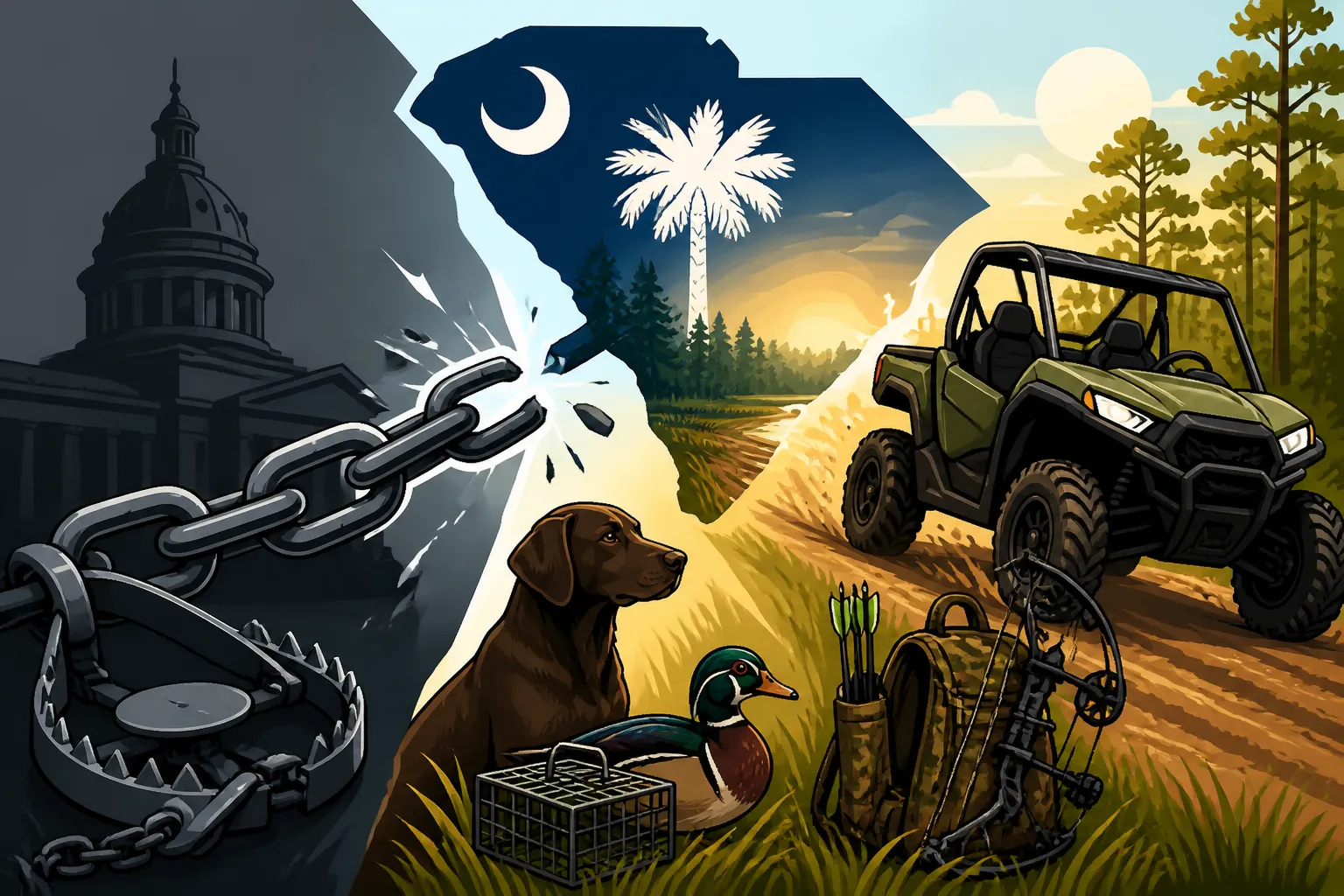
Now, here's where things get interesting for the outdoors enthusiasts among us. While Chandler's Law casts a wide net over ATV use, it explicitly carves out an exception for certain activities, specifically those related to hunting and trapping. This isn't a loophole; it's a deliberate part of the legislation that recognizes the practical utility of ATVs and UTVs in outdoor pursuits.
What the Law Says About Hunting and Trapping
South Carolina Code Section 50-26-50, which is part of Chandler's Law, states that its provisions generally do not apply to the use of all-terrain vehicles or utility vehicles "in the course of hunting or trapping activity." This is huge! It means that if you are actively engaged in hunting or trapping, or directly involved in activities that support these pursuits, some of the age, helmet, and supervision rules that normally apply to recreational ATV use might not apply to you.
It's important to stress the phrase "in the course of." This isn't a blanket pass to just go joyriding through the woods while carrying a hunting rifle, hoping nobody questions you. It means you're using the machine for specific, purposeful tasks related to hunting or trapping. This could include transporting gear, accessing a remote stand, scouting land, or, very commonly, retrieving harvested game. This exemption is a lifesaver for many hunters and trappers who rely on their ATVs and UTVs to navigate rugged terrain and haul heavy loads, which can be nearly impossible on foot or with a traditional vehicle.
Real-World Scenarios and Practical Applications
Let's paint a picture to make this concrete. Imagine you've just taken down a sizable deer deep in a dense patch of Sumter National Forest (assuming you have permission to be there and use a machine, which is a big "if" as we'll discuss). Dragging that animal out by hand for miles would be a monumental task. Under the hunting exemption, you could use your ATV to drive to the downed animal, load it up, and bring it back to your truck or processing area. This is a clear use "in the course of hunting activity."
Another example: you're a trapper setting up lines for beaver or coyote. You need to carry traps, bait, and other equipment to various remote locations, checking them regularly. Using your ATV or UTV, perhaps equipped with a cargo box from SuperATV, to move efficiently between these spots would fall under the "in the course of trapping activity" exemption. Similarly, if you're scouting for deer sign a week before opening day, placing trail cameras, or hauling corn to a feeder on your private land, these are all generally considered part of the hunting activity. The key is that your machine is serving a direct, functional purpose related to the pursuit of game or furbearers. This exemption is why you might see an older hunter driving their quad to a deer stand, seemingly ignoring the general age restrictions that might apply to a teenager on a recreational ride.
Important Caveats and Limitations of the Exemption
While the hunting and trapping exemption offers significant flexibility, it's not a free pass to ignore all rules. There are crucial limitations and distinctions you must understand to avoid potential legal trouble. Think of it less as a get-out-of-jail-free card and more as a carefully defined set of permissions.
Private vs. Public Land Distinctions
This is perhaps the most critical distinction. The hunting and trapping exemption primarily applies to private land where you have explicit permission to hunt, trap, and operate an ATV. It does not automatically grant you access to ride ATVs on public lands, such as Wildlife Management Areas (WMAs) or National Forests, even if you are hunting there. These public lands often have their own, more restrictive rules regarding vehicle use. For instance, [South Carolina WMAs Ban ATVs] outright for hunting purposes in many areas, meaning your ATV must be parked and you proceed on foot. Similarly, National Forests, like the Francis Marion or Sumter National Forests, have designated OHV trails and specific passes required, and these trails might not be open during hunting season or might have restrictions that override the hunting exemption. Always, always check the specific regulations for the public land you intend to use. A [South Carolina Forest Pass Cost] might be a small price to pay for legal access, but it doesn't mean you can stray from designated trails to retrieve a deer.
Still Need Landowner Permission
Just because you're hunting or trapping doesn't mean you can ride your ATV anywhere you please. Even with the exemption, you absolutely need permission from the landowner to operate your ATV on private property. Trespassing with an ATV, even if for hunting, is still trespassing. It's always best practice to get [Carrying Written Landowner Permission in South Carolina] before you head out, clearly stating your access and use of an ATV. This helps prevent misunderstandings and ensures you're on solid legal ground. A verbal "yeah, sure" might feel sufficient, but written proof can save you a lot of headache if a neighbor or law enforcement officer questions your presence.
No Blanket Public Road Access
Another vital point: the hunting and trapping exemption does not mean you can ride your ATV on public roads to get to your hunting spot. Chandler's Law, even with its exemptions, still generally prohibits ATVs from operating on public highways and secondary roads. So, while you might use your ATV on a private timber road to access your stand, you cannot legally drive it down a paved county road to get there. You'll still need to trailer your machine to the property line or designated access point. This is a common point of confusion, and ignoring it can lead to tickets for riding where you shouldn't. If you're looking for [Can You Ride an ATV on the Road in South Carolina?], the answer is almost always "no" for traditional ATVs, hunting exemption or not.
Beyond the Exemption: Other Relevant Rules for Hunters and Trappers
Even when operating under the hunting and trapping exemption, it's wise to consider other regulations and best practices. The exemption addresses some of Chandler's Law, but it doesn't dissolve all common-sense safety or other relevant legal requirements.
Age and Supervision for Young Riders
While the specific age and supervision requirements of Chandler's Law may be relaxed for those actively engaged in hunting or trapping, common sense and parental responsibility are still paramount. If you have a young rider, say a 12-year-old, helping you retrieve a small game animal on private land, they might technically be exempt from the strict supervision rules. However, ensuring they are competent, wearing appropriate safety gear (like a helmet and eye protection), and not operating a machine too large for them is always the smartest approach. The spirit of [South Carolina Age Restriction Warning Labels] still applies: safety first, especially for developing riders.
Equipment and Safety Considerations
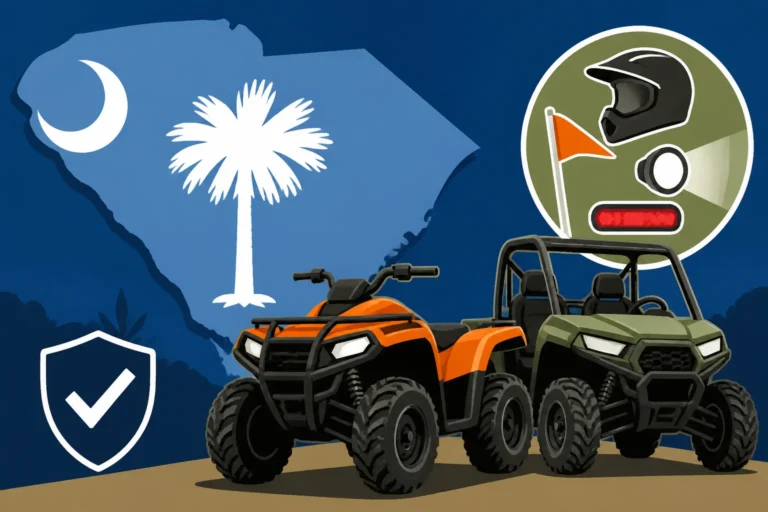
The hunting exemption doesn't mean you can let your machine fall into disrepair or ignore basic safety. Your ATV or UTV should still be in good working order, with functional brakes and lights, especially if you're out during low-light conditions. Many hunters and trappers find additions like a heavy-duty winch, enhanced skid plates, or specialized tires from brands like SuperATV to be invaluable for navigating challenging terrain safely. These modifications aren't just for recreation; they're about ensuring your machine can reliably perform its duties in the backcountry. Also, even if not legally required by the exemption, wearing a helmet, gloves, and sturdy boots is always a good idea when operating an ATV, particularly when hauling heavy loads or traversing rough ground.
Blaze Orange and Hunting Season
This isn't directly related to ATV law, but it's crucial for anyone using an ATV in a hunting context. During deer season, especially on public lands or areas with shared access, it is absolutely vital to wear blaze orange. If you're using your ATV to access a hunting spot or retrieve game, you're a visible target. Protecting yourself and making sure other hunters see you is paramount. Always check the current regulations for [South Carolina Blaze Orange in Hunting Season] in the specific area you'll be. It's a small precaution that can prevent a serious accident.
Here's a quick comparison of general ATV rules versus the hunting/trapping exemption:
| Feature | General Recreational ATV Use | Hunting and Trapping Exempt Use (Private Land with Permission) |
|---|---|---|
| Public Roads | Generally prohibited, with very limited exceptions. | Generally prohibited; still need to trailer to access points. |
| Private Land Access | Requires landowner permission for any use. | Requires landowner permission for any use; exemption applies once on site. |
| Age Restrictions | Strict minimum ages (e.g., no riders under 6, 6-15 supervised). | May be relaxed if rider is actively participating "in the course of" activity. |
| Helmet Requirements | Mandatory for riders under 16. | May be relaxed for those under 16 if "in the course of" activity, but still recommended. |
| Safety Certificate | Required for riders 15 and under. | May be relaxed for those 15 and under if "in the course of" activity, but still recommended. |
| Primary Purpose | Recreation, sport riding, trail use. | Direct support of hunting or trapping activities (e.g., hauling game, accessing stands). |
| Applies to Public Land? | May apply to designated OHV trails with proper permits. | Generally does not apply; public lands have their own strict vehicle rules. |
Understanding how hunting and trapping activities can provide specific exemptions from Chandler's Law in South Carolina is a game-changer for many outdoors enthusiasts. It recognizes the utility of ATVs and UTVs as essential tools, not just recreational vehicles, for managing land and pursuing game. However, this flexibility comes with a critical responsibility: to thoroughly understand the nuances of the exemption, especially regarding private versus public land, and to always prioritize safety and respect for property rights. Stay informed, ride responsibly, and enjoy your time in the South Carolina wilds!
Disclaimer
This article is for general informational purposes only and does not constitute professional advice. Laws, prices and regulations vary by location and change over time. Consult a qualified professional for guidance on your specific situation.