South Carolina Beach Riding With Permission
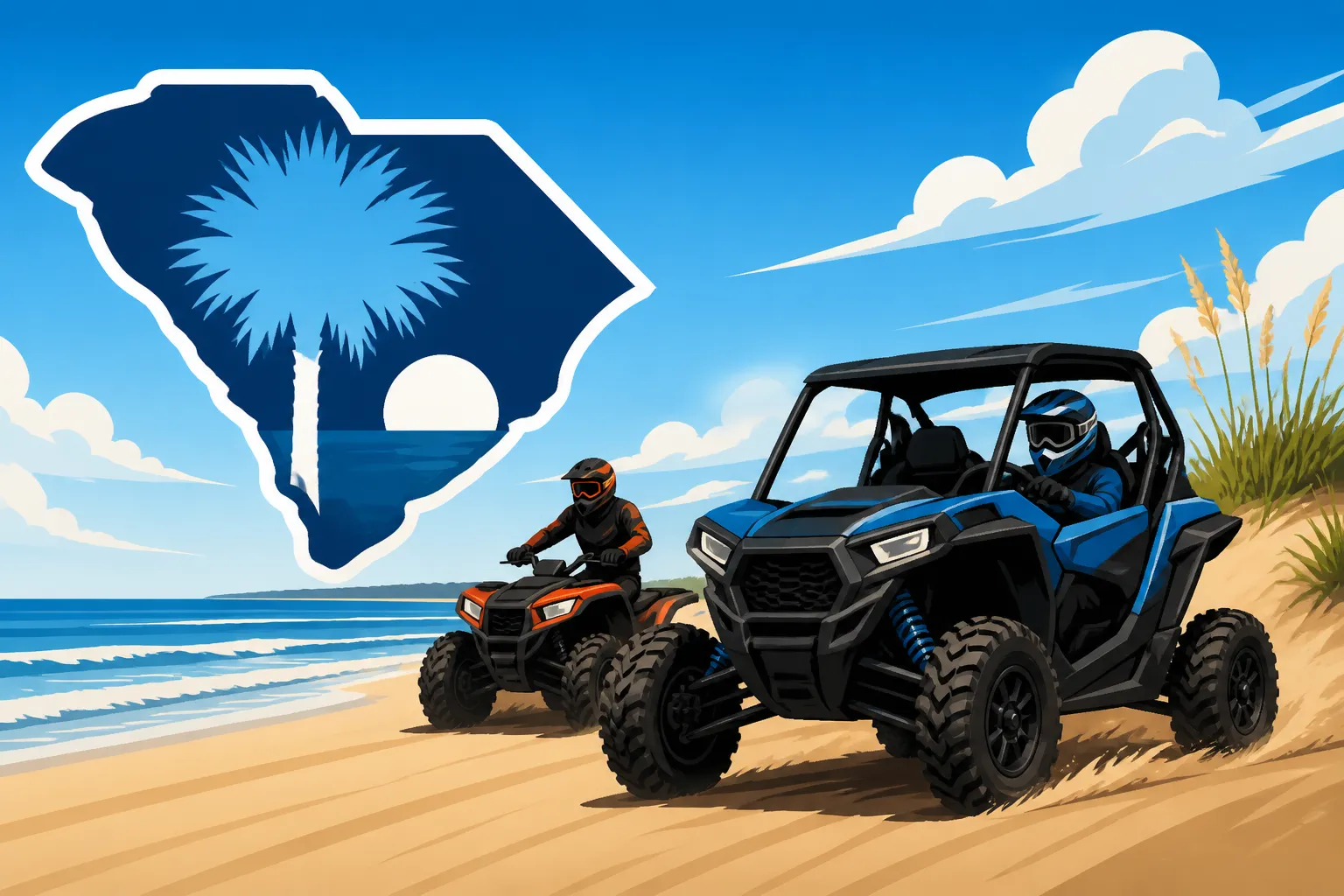
There's nothing quite like the dream of riding your ATV or UTV along a pristine South Carolina beach, feeling the salt spray and the sand beneath your tires. It sounds like pure freedom, doesn't it? Unfortunately, for most of us, that dream bumps right up against a wall of regulations and environmental concerns. If you've ever wondered why you don't see more off-road vehicles cruising the coastline, this guide will break down the complex reality of beach riding in the Palmetto State and what "permission" truly entails.
The Harsh Reality of Beach Riding in South Carolina
Let's just get this out of the way upfront: casual, recreational riding of ATVs and UTVs on public beaches in South Carolina is generally prohibited. I know, it's a bummer for anyone who envisions carving turns in the sand, but there are very serious reasons for these restrictions. Picture this: you’ve loaded up your rig, driven to a beautiful stretch of coastline, only to find "No Vehicles on Beach" signs everywhere. It's frustrating, especially if you've seen images or old videos of people doing it, or perhaps heard tales from "back in the day."
Why Public Beach Riding is Generally Off-Limits
The primary reasons behind these widespread bans are a mix of environmental protection, public safety, and managing public access. South Carolina's beaches are incredibly delicate ecosystems, home to nesting sea turtles, shorebirds, and vital dune systems. Vehicle traffic, even seemingly light use, can disrupt nesting sites, compact sand critical for small organisms, and erode dunes that protect inland areas from storms. Beyond the environmental impact, think about the safety aspect. Beaches are for swimming, sunbathing, and families enjoying the ocean. Introducing fast-moving vehicles into that mix creates a significant hazard for pedestrians, especially children, and frankly, it just wouldn't be very relaxing for anyone trying to unwind. Moreover, the sheer volume of visitors to our beautiful coast means that unrestricted vehicle access would lead to chaos and overcrowding very quickly.
It's a common misconception that if you own the land near the beach, you can just drive right onto the sand. While private land ownership plays a role, the dry sand beach is typically considered public access, and the wet sand area up to the mean high-water mark is often under state jurisdiction. This means even if your private property backs right up to the ocean, getting your ATV or UTV onto that sand without specific permission can lead to trouble.
The Frustration of Mixed Messages and Local Rules
One of the biggest headaches for riders trying to understand beach access is the patchwork of rules. It's not a one-size-fits-all statewide ban for every situation. Instead, individual cities, counties, and even specific beachfront properties can have their own ordinances on top of state regulations. This means what might be theoretically permissible for a very specific use in one tiny stretch of beach might be strictly forbidden just a few miles down the coast. You might hear anecdotes about someone who knows someone who rode a UTV on the beach last year, but these often involve very specific, authorized circumstances that don't apply to general recreational riding. This can be incredibly confusing and lead to frustrating misunderstandings. [South Carolina Rules for Riding a Beach] are often tied to these local ordinances, making it hard to find a simple answer.
For instance, some municipalities allow golf carts or low-speed vehicles on specific public roads leading to the beach, or even on very limited stretches of beach for specific purposes like launching a boat or retrieving equipment, but this is a far cry from open recreational riding. Always remember that the rules for street-legal vehicles like golf carts often differ significantly from those for off-road ATVs and UTVs.
Understanding Who Controls South Carolina's Coastline
To truly grasp why beach riding is so restricted, you need to understand the layers of authority that govern South Carolina's coastal areas. It's not a single entity making all the rules; rather, it's a complex interplay between state, local, and sometimes federal agencies, along with private landowners.
State Jurisdiction and the Critical Area
In South Carolina, much of the beach and adjacent areas fall under the jurisdiction of state agencies, primarily the Department of Health and Environmental Control (DHEC) through its Office of Ocean and Coastal Resource Management (OCRM). They define what's known as the "critical area," which includes the land and water in the coastal zone subject to tides, such as coastal waters, tidelands, and beaches. This critical area is protected by the South Carolina Coastal Zone Management Act.
The dry sand area that we all love to sit on, between the mean high-water mark and the dune line or vegetation line, is generally considered public access, but that doesn't automatically mean public vehicle access. The wet sand beach, from the mean high-water mark seaward, is state-owned tidelands. This is where the environmental protections are especially stringent, focusing on preserving the natural habitat and preventing erosion. Any activity in these critical areas, especially involving motorized vehicles, requires careful consideration and often explicit permitting from DHEC-OCRM. This permitting process is rarely designed for individual recreational users and focuses more on essential services, scientific research, or environmental management.
Local Ordinances: Cities, Counties, and Towns
While the state sets overarching guidelines, the day-to-day management and enforcement of beach rules often fall to local governments—cities, counties, and towns with beachfront property. Each municipality can enact its own ordinances regarding beach access, vehicle use, noise, litter, and public behavior. This is why the rules can vary so much from Myrtle Beach to Folly Beach, or from Kiawah Island to Hunting Island State Park.
For example, a town might completely prohibit all motorized vehicles on its beaches, while a neighboring county might have a very specific, time-limited allowance for commercial fishing vehicles or emergency services. These local ordinances are usually developed to manage tourism, protect local ecosystems, and ensure public safety. If you're even considering trying to find a place to ride, your first call should always be to the local municipal or county government office responsible for that specific stretch of beach. They will have the most up-to-date and specific information on their local vehicle ordinances. Without this local permission, you could be in violation of [South Carolina Trespass Law for Riders] or local codes.
Private Property and Access Points
It’s true that some stretches of South Carolina coastline are privately owned, either by individuals, resorts, or conservation groups. On truly private beachfront land, the owner has more leeway to permit specific activities, including vehicle use. However, even on private property, owners must still adhere to state and federal regulations regarding coastal protection and environmental impact, especially concerning the critical area and public trust tidelands. A private landowner can't simply pave over a dune or allow unlimited vehicle traffic on the wet sand without facing consequences.
For the average ATV or UTV owner, gaining permission to ride on private beachfront property is incredibly rare. Such arrangements are typically reserved for property maintenance, specific construction projects, or very limited, controlled events. Just because you have a friend with a beach house doesn't mean you can bring your quad down to cruise the sand. Any vehicle access would need to be explicitly granted by the landowner, and even then, there might be state-level restrictions that override private permissions. It’s also crucial to remember that gaining access to a private beachfront property does not grant you access to adjacent public beach areas. [South Carolina Private Property Exemptions] for riding typically refer to off-road land, not necessarily beachfront.
Navigating the Rare Exceptions: When and Where Permission Might Be Granted
While general recreational beach riding is a no-go, there are extremely specific, often limited, situations where vehicles, including ATVs or UTVs, might be seen on South Carolina beaches. These are exceptions, not opportunities for casual enjoyment.
Authorized Operations and Emergency Services
The most common instances of vehicles on the beach involve authorized personnel carrying out essential duties. This includes:
- Law Enforcement and Emergency Services: Police, fire departments, EMS, and DNR often use ATVs, UTVs, and other specialized vehicles for patrols, search and rescue operations, or responding to incidents along the coastline. These are official vehicles operating under official authority, not recreational riders.
- Beach Renourishment and Maintenance: During projects to replenish sand, repair dunes, or clean up storm debris, heavy equipment and work vehicles will naturally be on the beach. These operations are heavily regulated and permitted by state and federal agencies.
- Environmental Research and Conservation: Scientists, wildlife biologists, and conservation groups may use vehicles for monitoring sea turtle nests, tracking bird populations, or conducting other research that requires access to remote beach areas. These activities are usually part of specific, approved projects.
- Commercial Fishing or Specialized Commercial Use: In very limited areas, and often with specific permits, some commercial fishing operations might be allowed to launch small boats or access nets from the beach using specialized vehicles. This is usually tied to historical use or very specific local ordinances.
In all these scenarios, the vehicles are used for a defined, authorized purpose, often by trained professionals, and not for recreational leisure. They're typically operating under permits that specify the type of vehicle, time of day, and exact location, minimizing environmental impact and ensuring public safety.
Permitted Events and Special Circumstances
On exceedingly rare occasions, a special event might receive explicit permission for vehicles on a beach. Think about:
- Charity Rides or Races: Sometimes, for a specific, heavily organized charity event or sanctioned race, a limited section of beach might be temporarily permitted for vehicle use. These events are almost always highly publicized, require extensive permitting from multiple agencies (local, state, environmental), and come with strict rules regarding safety, environmental protection, and public access. The chances of an individual rider stumbling upon such an opportunity and participating without prior registration and approval are slim to none.
- Film Shoots or Photography Projects: Very specific commercial or artistic projects requiring vehicles on the beach might obtain permits. Again, these are highly controlled environments with strict guidelines.
- Private Land with Explicit Permission: As discussed earlier, a private beachfront landowner might grant permission, but even then, it's subject to state regulations and typically for non-recreational purposes like property maintenance. This is where you might see a utility UTV, perhaps equipped with accessories from a brand like SuperATV for hauling gear or navigating soft sand, being used for a specific task. However, this is not an open invitation for recreational joyrides.
If you ever come across what appears to be an exception, always assume it's part of an authorized, permitted operation. Don't interpret it as a loophole for your own recreational use. Attempting to join in without explicit, documented permission will likely result in a citation.
The Myth of Seasonal or Time-Restricted Access
Some states or localities have seasonal restrictions or specific times of day when vehicles are permitted on certain beaches. While it's wise to check specific local ordinances, don't assume this is common practice for recreational ATVs and UTVs in South Carolina. Most of our popular beaches maintain strict year-round bans on motorized vehicles for general public access.
There might be limited exceptions for specific types of vehicles, like golf carts, on certain coastal roads or access points, but these rules usually do not extend to ATVs and UTVs on the sand itself. Always verify with local authorities, and if you hear a rumor about "riding season" on the beach, treat it with extreme skepticism until you've confirmed it with an official source. Even golf cart permits have specific rules, and [South Carolina Golf Cart Permit Rules] are very clear about where and when they can be used.
Vehicles on the Sand: What's Allowed (and Not) Even With Permission
Even in those rare instances where some form of vehicle access to the beach might be granted, there are usually very specific rules about what kind of vehicle, how it's equipped, and who can operate it. It's not a free-for-all, even with a permit.
ATVs vs. UTVs vs. Golf Carts vs. Low-Speed Vehicles
It's crucial to distinguish between these vehicle types, as their legal standing and potential for beach access differ significantly:
- ATVs (All-Terrain Vehicles) & Off-Road UTVs (Utility Terrain Vehicles): These machines are designed for off-road use. In South Carolina, off-road ATVs and UTVs are generally not street-legal and do not have titles or registrations that would permit them on public roads, let alone beaches. [South Carolina Has No Off-Road ATV Registration], which underscores their limited legal status on public thoroughfares. If permission is granted for these, it's typically for official work or very specific permitted events.
- Street-Legal UTVs: South Carolina recently introduced laws allowing UTVs to be made street-legal and registered for road use under specific conditions. However, even a street-legal UTV, with its license plate and insurance, is not automatically permitted on the beach. Its road-legal status applies to roads, not necessarily to environmentally sensitive areas like beaches. A street-legal UTV would still need explicit, additional permission to operate on the sand, and such permission is exceptionally rare for recreational purposes.
- Golf Carts: Golf carts are common in coastal communities and have specific rules for road use (e.g., [South Carolina Golf Cart Road Rules], [South Carolina Cart Rules 4 Miles From Home]). Some municipalities might have extremely limited provisions for golf carts to access specific beach areas, usually for dropping off gear or accessing a private beach club, but again, this is not for recreational joyriding on the sand. Their use is almost always restricted to specific points and hours, and they cannot simply cruise the entire beach.
- Low-Speed Vehicles (LSVs): LSVs are distinct from golf carts; they are federally regulated vehicles designed to travel at 20-25 mph and are equipped with full safety features like seatbelts, headlights, and turn signals. They are street-legal on roads with speed limits up to 35 mph. Like street-legal UTVs, their road-legal status does not grant them automatic beach access.
The bottom line: just because a vehicle is allowed on some public property (like a street-legal UTV on certain roads) does not mean it's allowed on all public property, especially sensitive beach environments.
Equipment Requirements for Beach Operation
If, by some extraordinary chance, you obtain permission to operate a vehicle on a beach, there would likely be strict equipment requirements, both for safety and environmental protection. While these aren't codified statewide for recreational beach riding (because it's generally not allowed), based on permitted operations elsewhere, they might include:
- Tires: Low-pressure, wide flotation tires are often preferred to minimize impact on soft sand and prevent rutting. Standard aggressive off-road tires can dig in excessively.
- Safety Flags/Lights: For visibility, especially in busy areas or during specific times, safety flags (like a whips) or amber warning lights might be required.
- Spark Arresters: To prevent fires, particularly in dry conditions or near vegetation, all internal combustion engines would likely need a properly functioning spark arrester, similar to requirements for forest trails. [South Carolina Spark Arrester Requirements] are generally good to know.
- Environmental Kits: Spill kits, trash bags, and other items to ensure no litter or fluids contaminate the beach environment.
- Recovery Gear: For any authorized vehicle, especially if it's not a heavy-duty work machine, recovery gear like a winch (perhaps from a brand like SuperATV), tow straps, and shovels would be essential for getting unstuck without damaging the beach or requiring external assistance.
These aren't just suggestions; they would be mandatory conditions for any permitted beach access, emphasizing the strict nature of such operations.
The Consequences of Unauthorized Beach Riding
Ignoring the rules and attempting to ride your ATV or UTV on a South Carolina beach without explicit permission can lead to serious consequences, far beyond a simple "slap on the wrist." It's not just a matter of getting a polite request to leave; you're likely facing legal penalties and other headaches.
Fines and Citations
The most immediate consequence is a fine. Local ordinances typically carry penalties for unauthorized vehicle operation on beaches. These fines can vary widely by municipality but can easily range from a couple of hundred dollars to much more, especially if there's any environmental damage involved. A quick look at [South Carolina Penalties Under Chandler's Law] (which primarily deals with off-road vehicle safety on public lands) shows that authorities are serious about enforcing regulations concerning these machines. You could be cited for trespassing, violating local ordinances, or even environmental infractions.
Picture this scenario: You decide to take your UTV out for a quick spin on an empty stretch of beach early in the morning, thinking nobody's around. Suddenly, a beach patrol officer, possibly on an ATV themselves, pulls up. You're now facing a citation, your vehicle is impounded, and your day is ruined. It’s a costly gamble that almost never pays off.
Vehicle Impoundment
In addition to fines, law enforcement has the authority to impound your ATV or UTV if you're found operating it illegally on the beach. This means your machine will be towed away, and you'll incur significant towing and storage fees to get it back. These costs can quickly add up, easily exceeding the initial fine. Imagine having to explain to your family why your brand-new side-by-side is sitting in an impound lot because you tried to sneak in a beach ride.
Retrieving an impounded vehicle is also a hassle. You'll likely need to show proof of ownership, pay all outstanding fines and fees, and arrange for transport, all while dealing with the frustration and embarrassment of the situation. It’s a major headache that can linger for days or weeks.
Environmental Damage and Liability
Beyond the personal costs, there's the very real potential for environmental damage. Driving on sensitive dune systems can destroy protective vegetation, leading to erosion. Running over sea turtle nests or disturbing shorebird feeding grounds can result in severe ecological harm. If your vehicle leaks fluids, it can contaminate the sand and water. In cases where significant environmental damage occurs, you could face additional, much heftier fines and even civil liability for the cleanup and restoration efforts.
Coastal protection is taken very seriously in South Carolina. Authorities are not just looking to issue tickets; they are actively working to preserve these vital natural resources. Being deemed responsible for damaging a critical coastal habitat can have long-lasting and expensive repercussions. This risk alone should be a powerful deterrent for anyone considering unauthorized beach riding.
Respecting the Coast: Environmental Considerations and Responsible Riding
The strict regulations against beach riding aren't meant to spoil anyone's fun; they are a necessary measure to protect South Carolina's invaluable coastal resources. Understanding the "why" behind the rules can help foster a greater appreciation for responsible outdoor recreation.
Fragile Ecosystems and Wildlife
South Carolina's coastline is a vibrant, yet incredibly fragile, ecosystem. It's home to a diverse array of wildlife that relies on undisturbed beaches and dunes for survival.
- Sea Turtles: Our beaches are critical nesting grounds for several species of sea turtles, including the loggerhead, which is federally protected. Nesting season (typically May through October) is a particularly vulnerable time. Vehicle traffic can compact sand, making it difficult for hatchlings to emerge, destroy nests, or deter nesting females.
- Shorebirds: Many species of shorebirds, some endangered or threatened, feed and nest along the tideline and in the dunes. Vehicles can disturb their foraging, crush nests, or scatter young birds, exposing them to predators.
- Dune Vegetation: The grasses and plants that grow on dunes are crucial for stabilizing the sand and protecting inland areas from storm surges and erosion. Driving on dunes destroys this vegetation, leaving the coastline vulnerable.
- Invertebrates: The sand itself is teeming with tiny organisms, from ghost crabs to sand fleas, that form the base of the coastal food web. Vehicle tires compact the sand, disrupting their habitat and food sources.
When you think about the potential impact of even one vehicle, let alone many, on these delicate systems, the rationale behind the bans becomes clear. It's about protecting nature for future generations.
Minimizing Your Footprint, Maximizing Your Enjoyment
Even though recreational beach riding is largely off-limits, there are still countless ways to enjoy South Carolina's coast responsibly and immerse yourself in its beauty:
- Explore Designated Trails: If you're looking for off-road adventure, focus on South Carolina's fantastic network of designated ATV and UTV trails in national forests or private parks. Places like [Carolina Adventure World in South Carolina] or [Gulches ORV Park in South Carolina] offer miles of legal riding and purpose-built terrain.
- Support Conservation: Consider volunteering for beach cleanups or supporting local conservation groups that work to protect coastal habitats. By contributing positively, you're helping ensure the beauty of our beaches endures.
- Use Authorized Beach Access: If you need to access the beach for fishing, launching a kayak, or setting up for a permitted event, use only designated access points and adhere to all local rules. Don't create new paths over dunes or through vegetation.
- Learn the Rules: Take the time to understand the [South Carolina Code Section 50-26-50] and local ordinances for any area you visit. Ignorance of the law is never an excuse. Always assume no motorized vehicles are allowed on the beach unless you have explicit, documented permission from the relevant authorities.
The dream of riding on the beach is powerful, but the reality is that our coastal environment is simply too precious for widespread recreational vehicle use. By understanding and respecting the rules, we can all contribute to keeping South Carolina's stunning beaches beautiful and healthy for everyone – and every creature – to enjoy.
Disclaimer
This article is for general informational purposes only and does not constitute professional advice. Laws, prices and regulations vary by location and change over time. Consult a qualified professional for guidance on your specific situation.