South Carolina Low-Speed Vehicle Rules
It can be incredibly frustrating to try and figure out the rules for smaller vehicles on South Carolina roads, especially when you hear terms like "golf cart," "UTV," and "low-speed vehicle" thrown around interchangeably. Many folks just want to enjoy their machine on public roads without getting a ticket, but the differences in regulations can be a real headache. This guide is here to clear up the confusion surrounding South Carolina's Low-Speed Vehicle (LSV) rules, so you can confidently know what your machine is, where you can drive it, and what you need to do to stay legal.
What Exactly is a Low-Speed Vehicle in South Carolina?
Before we dive into the nitty-gritty, let's establish a clear understanding of what South Carolina considers a "Low-Speed Vehicle" (LSV). This isn't just a casual term; it's a specific classification that comes with its own set of rules, much like how a car is different from a truck, even though both have wheels and an engine. The key here is the legal definition, which often gets muddled with other types of recreational vehicles.
Defining the "Low-Speed Vehicle"
In South Carolina, a low-speed vehicle is officially defined as a four-wheeled vehicle whose top speed is greater than 20 miles per hour but not greater than 25 miles per hour. This isn't a golf cart that's been souped up; it's designed and manufactured to meet specific safety standards for limited public road use. These machines typically look a bit more substantial than a standard golf cart, often resembling a smaller, open-air car, and they come equipped with features you wouldn't find on a basic recreational golf cart.
These vehicles are built with safety in mind, designed to traverse local streets and neighborhoods where traffic speeds are moderate. They offer a comfortable and often eco-friendly way to get around shorter distances, whether it's running errands in a small town or commuting within a planned community. Understanding this fundamental definition is your first step to making sure you're operating within the bounds of the law, setting the stage for all the other requirements we'll discuss.
The Clear Divide: LSV vs. Golf Cart
This is where a lot of the confusion stems from, and it's a critical distinction to grasp. While both low-speed vehicles and golf carts are typically driven at slower speeds and often look similar to the untrained eye, their legal classifications and operational rules in South Carolina are worlds apart. A golf cart, by definition, is a motor vehicle that is designed and manufactured for operation on a golf course for sporting or recreational purposes, and whose maximum speed is no more than 20 miles per hour.
Because of this fundamental difference in design and intended use, golf carts have very strict limitations on where they can be operated on public roads. They generally require a specific permit, which costs [South Carolina Golf Cart Permit Fees], and are often restricted to daylight hours, within a certain radius of your home, and on roads with posted speeds of 35 mph or less. An LSV, on the other hand, is built to a higher standard and, therefore, has more flexibility, often allowing for operation on a wider array of public roads without the same geographic or time-of-day restrictions. You can learn more about specific rules in [South Carolina Golf Cart Road Rules].
Low-Speed Vehicles and the Rise of Street-Legal UTVs
To add another layer of complexity, South Carolina has also recently enacted legislation for street-legal UTVs, which can cause even more head-scratching. While both LSVs and street-legal UTVs are permitted on certain public roads, they are distinct categories with different requirements. An LSV is restricted to a top speed of 25 mph and is typically electric, designed for neighborhood commuting. A street-legal UTV, on the other hand, is an off-road utility vehicle that has been modified to meet specific safety and equipment standards, allowing it to be registered and operated on public roads with speed limits up to 55 mph. You can find detailed information in [South Carolina Street UTV Rules From November 2026].
The distinctions are important, especially if you're looking to purchase a machine or modify one. For instance, a UTV might be a Polaris RZR or a Can-Am Defender, machines often associated with off-road adventures, which companies like SuperATV specialize in outfitting with heavy-duty parts. To make a UTV street legal, it needs quite a few modifications, like turn signals, mirrors, and DOT-approved tires, but it maintains its higher speed capabilities. An LSV is inherently designed and manufactured for that 25 mph speed limit from the factory, and its structure and components are built around that performance envelope. Attempting to convert a golf cart into an LSV or confusing an LSV with a full-blown street-legal UTV can lead to significant legal troubles, as each category has its own unique set of safety and registration requirements. The new law for street-legal UTVs, for example, allows for [South Carolina Low-Speed Vehicle Plates] that are different from those for street-legal UTVs.
Making Your LSV Road-Ready: Equipment and Features
Operating a low-speed vehicle on public roads in South Carolina isn't just about having an engine and wheels; it's about ensuring your machine is equipped with the right safety features to protect you, your passengers, and others on the road. The state takes these requirements seriously because, unlike a golf cart confined to a course, your LSV will be sharing the asphalt with everything from bicycles to commercial trucks.
Non-Negotiable Safety Equipment
For a low-speed vehicle to be street-legal in South Carolina, it must come equipped with a specific list of features that are standard on most passenger vehicles but often absent on recreational golf carts. These are not optional add-ons; they are fundamental requirements for road safety. This includes headlamps, tail lamps, stop lamps (brake lights), turn signal lamps, a rearview mirror (or mirrors, if required for adequate rear visibility), and red reflex reflectors on the rear of the vehicle. Essentially, your LSV needs to be able to see, be seen, and communicate its intentions to other drivers, just like any other vehicle on the road.
Beyond lighting and signaling, LSVs must also have a windshield that meets certain standards, wipers for that windshield, a horn, and seat belts at every designated seating position. Imagine trying to drive in a sudden afternoon shower without wipers or trying to signal a turn on a busy street without working turn signals—it's simply not safe. These features are designed to prevent accidents and protect occupants in the event of a collision. For instance, the seat belts are crucial because, even at 25 mph, an impact can cause serious injury if occupants are unrestrained. Ensuring all these components are present and in good working order is not just about avoiding a ticket; it's about genuine safety.
The Importance of DOT Compliance and Verification
When we talk about the safety equipment for an LSV, it’s not enough for the parts to just "be there." They often need to meet specific Department of Transportation (DOT) standards. This means the tires aren't just any tires; they are DOT-approved. The windshield isn't just a piece of plastic; it's safety glass. The seatbelts aren't just straps; they're automotive-grade restraints. This level of compliance ensures that the components on your LSV are durable and effective in real-world driving conditions, just like those on a passenger car.
When you purchase a new LSV, it should come from the manufacturer with a Certificate of Origin (MCO) that confirms it meets these federal and state standards. For used vehicles, verifying this compliance might involve checking labels on components or ensuring the vehicle itself was originally manufactured as an LSV, not a modified golf cart. Without this verification, you might encounter issues when trying to title or register your vehicle. A South Carolina deputy can ask to see proof that your vehicle is compliant, and failing to provide it could lead to penalties. If you're buying a used LSV, it's wise to carefully inspect these features and, if possible, get a mechanic who understands LSV regulations to look it over.
Navigating the DMV: Titles, Registration, and Licenses for Your LSV
Once you understand what an LSV is and what equipment it needs, the next big step is making it legal to drive on South Carolina's public roads. This involves dealing with the Department of Motor Vehicles (DMV) for licensing, titling, and registration, which can feel like navigating a maze. But don't worry, we'll break down each step so you know exactly what to expect.
Licensing Requirements for LSV Operators
One of the key differences between an LSV and a golf cart is the driver's license requirement. To operate a low-speed vehicle on public roads in South Carolina, you must possess a valid driver's license. This isn't like the golf cart permit where certain individuals might not need a full driver's license if they meet other criteria; with an LSV, a standard driver's license is absolutely essential. This means that if you're under 16 and don't have a valid driver's license or permit that allows you to drive unsupervised, you cannot legally operate an LSV on public roads.
This requirement ensures that anyone behind the wheel of an LSV has demonstrated a basic understanding of traffic laws and has passed the necessary tests to be considered a competent driver. It also underscores the state's view of an LSV as a legitimate motor vehicle that shares the road with other traffic, not just a recreational toy. If you're a new resident to the Palmetto State, remember that your out-of-state driver's license is typically accepted for a period, but you'll eventually need to obtain a South Carolina license.
Titling and Registering Your Low-Speed Vehicle
Just like a car, truck, or even a street-legal UTV, your low-speed vehicle needs to be properly titled and registered with the South Carolina DMV. This is a crucial step that proves ownership and allows the state to track the vehicle for safety and enforcement purposes. The process usually involves filling out specific forms, providing proof of ownership (like a manufacturer's certificate of origin for a new LSV or a properly assigned title for a used one), and paying the necessary fees. All these steps are typically handled at your local DMV office. For new machines, you'll need the MCO, while for used machines, you'll need an assigned title from the previous owner.
The DMV often uses a single form, which means you can handle both the title and registration at the same time. You can typically find guidance on this process, including which forms to use, by visiting the DMV's website or going in person. Be prepared with all your documentation, including proof of identity, residency, and the vehicle's details (make, model, VIN). Neglecting to title and register your LSV properly can lead to fines and legal complications, especially if you're involved in an accident or pulled over by law enforcement. You can find more information on these procedures in [South Carolina Title Applications at the DMV] and [One DMV Form Handles Title, Registration or Both]. The fees associated with titling an LSV are generally very reasonable, but it's important to factor them into your overall budget.
Mandatory Insurance for South Carolina LSVs
Operating any motor vehicle on public roads in South Carolina, including low-speed vehicles, comes with a mandatory insurance requirement. This isn't optional; it's a legal necessity designed to protect you and others in the event of an accident. You'll need to carry liability insurance that meets the state's minimum coverage requirements, which typically cover bodily injury and property damage to others if you are at fault in a collision. You will need to provide [South Carolina Insurance Proof at Registration] when you go to register your LSV.
Your insurance policy serves as proof of financial responsibility, ensuring that there's coverage for potential damages or injuries that might occur while you're driving your LSV. Without this mandatory liability coverage, you could face significant penalties, including fines, suspension of your driving privileges, and even impoundment of your vehicle. It's a smart idea to shop around for insurance quotes from different providers, as rates can vary. Don't assume your homeowner's policy will cover your LSV; dedicated auto insurance for your low-speed vehicle is almost always required for legal road use. Make sure your policy explicitly states coverage for a low-speed vehicle on public roads.
Where the Rubber Meets the Road: Permitted Driving Areas and Rules
Understanding the vehicle itself is one thing, but knowing where you can actually drive your low-speed vehicle in South Carolina is just as crucial. It's not a free-for-all, and specific restrictions are in place to ensure LSVs operate safely alongside other traffic. Navigating these rules will help you enjoy your LSV without running into trouble.
Understanding Permissible Roadways and Speed Limits
In South Carolina, low-speed vehicles are generally permitted to operate on public roads where the posted speed limit is 35 miles per hour or less. This is a very important distinction. You cannot legally take your LSV onto roads with higher speed limits, such as major arterial roads, state highways, or certainly interstates. These faster roads are simply too dangerous for a vehicle with a maximum speed of 25 mph, as the speed differential with other traffic would create an unacceptable hazard.
This rule effectively limits LSV use to residential streets, neighborhood roads, and smaller local thoroughfares. Think about cruising through your neighborhood to a friend's house, heading to a nearby park, or making a quick trip to a local corner store. These are the kinds of routes an LSV is designed for. Always pay attention to speed limit signs; if you find yourself on a road where the speed limit jumps above 35 mph, you need to find an alternate route or discontinue operation until you're back on a permissible road. This restriction contrasts sharply with street-legal UTVs, which generally have higher speed allowances on public roads.
The Influence of Local Ordinances
While state law sets the baseline for LSV operation, it's incredibly important to remember that local municipalities in South Carolina can, and often do, enact their own ordinances that further restrict or regulate low-speed vehicles. These local rules can vary significantly from one town or county to another. For example, a town might prohibit LSVs on certain main streets even if the speed limit is 35 mph or less, due to traffic volume or other local considerations. Or, a planned community might have its own internal rules regarding LSVs within its private roads, even if those rules are more lenient than state law.
This means that simply knowing the state law isn't always enough. Before you start cruising around in your LSV, especially if you're in a new area or a different municipality, it's always a good idea to check with the local city or county government offices, or their police department, to see if there are any specific local ordinances you need to be aware of. This is a common frustration for owners of smaller vehicles, as the patchwork of rules can be confusing. What flies in one coastal town might be strictly prohibited in an upstate community. Always err on the side of caution and verify local rules to avoid an unexpected [South Carolina Ticket Costs for Riders].
Safe Operation and Road Etiquette
Operating a low-speed vehicle safely isn't just about following the letter of the law; it's also about practicing good road etiquette and being a responsible driver. Because LSVs are slower and often smaller than typical cars, they can sometimes be overlooked by other motorists. It's essential to drive defensively, be aware of your surroundings, and anticipate the actions of other drivers. Always use your turn signals, maintain a safe following distance, and obey all traffic laws, including stop signs and traffic lights.
Remember that while your LSV has many features of a car, it's not a car. Avoid driving during heavy traffic periods if possible, and be particularly cautious at intersections and when making turns. When parking, treat your LSV like any other vehicle, parking in designated spaces and avoiding blocking sidewalks or access points. The goal is to integrate your LSV smoothly and safely into the flow of local traffic, ensuring that everyone can share the road without unnecessary risks. Think about the visibility of your vehicle – adding reflective tape, for example, even if not strictly required, can make a difference, especially in low light conditions.
Common Pitfalls and Staying Legal with Your LSV
Even with the best intentions, it's easy to make mistakes or fall into common traps when operating an LSV in South Carolina. The lines between golf carts, LSVs, and even the newer street-legal UTVs can blur, leading to confusion and, unfortunately, penalties. Understanding these pitfalls is crucial for staying legal and enjoying your low-speed vehicle without unnecessary stress.
Avoiding the Golf Cart Trap
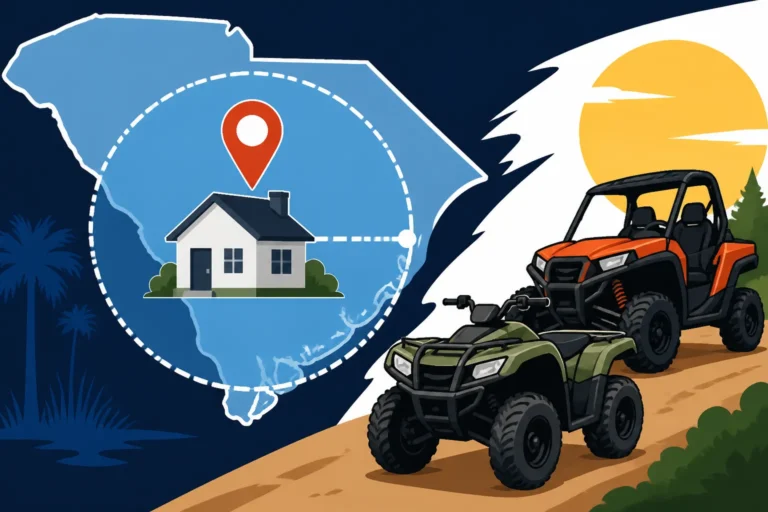
Perhaps the most common pitfall for LSV owners is treating their vehicle like an ordinary golf cart. This is a huge mistake. While both may be slow-moving, an LSV has distinct legal status and requirements that a golf cart simply doesn't share. Golf carts in South Carolina are subject to stringent operational limits, such as the 4-mile radius from your home or business, daylight-only operation, and the need for a specific permit, not a full driver's license. If you operate your LSV under golf cart rules, you're likely violating the law because an LSV requires a valid driver's license, proper registration, and insurance for public road use, none of which are typically associated with a basic golf cart permit.
The consequences of this confusion can range from hefty fines to having your vehicle impounded. Law enforcement officers are trained to recognize the differences, and simply stating "it's just a golf cart" won't suffice if your vehicle is legally classified as an LSV but being operated improperly. Ensure you understand the specific rules for your vehicle's classification and avoid assuming that because it's slow, it falls under golf cart regulations. An LSV is a street-legal vehicle with specific requirements, not a glorified golf cart.
The Consequences of Non-Compliance
Operating an LSV in South Carolina without meeting all the legal requirements can lead to a range of unpleasant and costly consequences. If you're pulled over and found to be in violation—whether it's for lacking a valid driver's license, not having current registration or a [South Carolina Low-Speed Vehicle Plates], missing mandatory safety equipment, or not carrying the required insurance—you could face significant penalties. These can include monetary fines, points on your driving record, and in some cases, the impoundment of your vehicle. Imagine the frustration of having your vehicle towed and incurring impound fees, all for a misunderstanding of the rules!
Beyond the immediate penalties, operating an uninsured LSV can have devastating financial implications if you're involved in an accident. Without liability insurance, you would be personally responsible for any damages or injuries you cause to other parties, which could amount to tens or even hundreds of thousands of dollars. It’s far better to invest a small amount in proper insurance than to risk financial ruin. Understanding [South Carolina Fines of $50 to $200] for various violations related to vehicle operation can help you appreciate the importance of full compliance.
Keeping Your LSV Up to Snuff
Maintaining your low-speed vehicle isn't just about keeping it running smoothly; it's about ensuring it remains legally compliant with all safety regulations. Over time, components can wear out or become damaged. A burned-out headlight, a cracked windshield, non-functioning turn signals, or worn tires that no longer meet DOT standards can all render your LSV non-compliant. Regular checks of all mandatory safety equipment—lights, brakes, tires, horn, seatbelts, and mirrors—are essential.
Just like you'd maintain your car, schedule routine maintenance for your LSV. This includes checking fluid levels, battery health (especially if electric), and tire pressure. If you need to replace parts, ensure they meet or exceed the original equipment manufacturer's specifications and DOT requirements. For specialized parts or accessories, companies like SuperATV offer a wide range of components that might be suitable for repairs or upgrades, but always verify compatibility and compliance for LSVs specifically. Staying on top of maintenance not only keeps you safe but also ensures your LSV remains a legal and enjoyable mode of transportation for years to come.
Here's a quick comparison of these different vehicle types to help solidify your understanding:
| Feature | Golf Cart | Low-Speed Vehicle (LSV) | Street-Legal UTV (Post-Nov 2026) |
|---|---|---|---|
| Max Speed | 20 mph | 20-25 mph | Up to 55 mph (on eligible roads) |
| Primary Use | Golf courses, private property, limited road | Local street commuting, neighborhood use | Recreation, work, street-legal trail access |
| Driver's License | Permit (age 16+), or valid driver's license | Valid driver's license required | Valid driver's license required |
| Registration | Permit only | Yes, with DMV ([South Carolina Low-Speed Vehicle Plates]) | Yes, with DMV |
| Title Required | Optional ([South Carolina Titles Are Optional]) | Yes | Yes ([Titling a Side-by-Side in South Carolina]) |
| Insurance Req. | Not mandatory for permit use | Mandatory liability insurance | Mandatory liability insurance |
| Key Equipment | Basic lights, reflectors | Head/tail/brake/turn lights, windshield, seatbelts, horn, mirrors, DOT tires | Head/tail/brake/turn lights, mirrors, seatbelts, windshield, horn, DOT tires |
| Road Restrictions | 35 mph or less roads, daylight, within 4 miles of home/business | 35 mph or less roads | 55 mph or less roads |
Disclaimer
This article is for general informational purposes only and does not constitute professional advice. Laws, prices and regulations vary by location and change over time. Consult a qualified professional for guidance on your specific situation.