South Carolina Rules for Riding a Beach
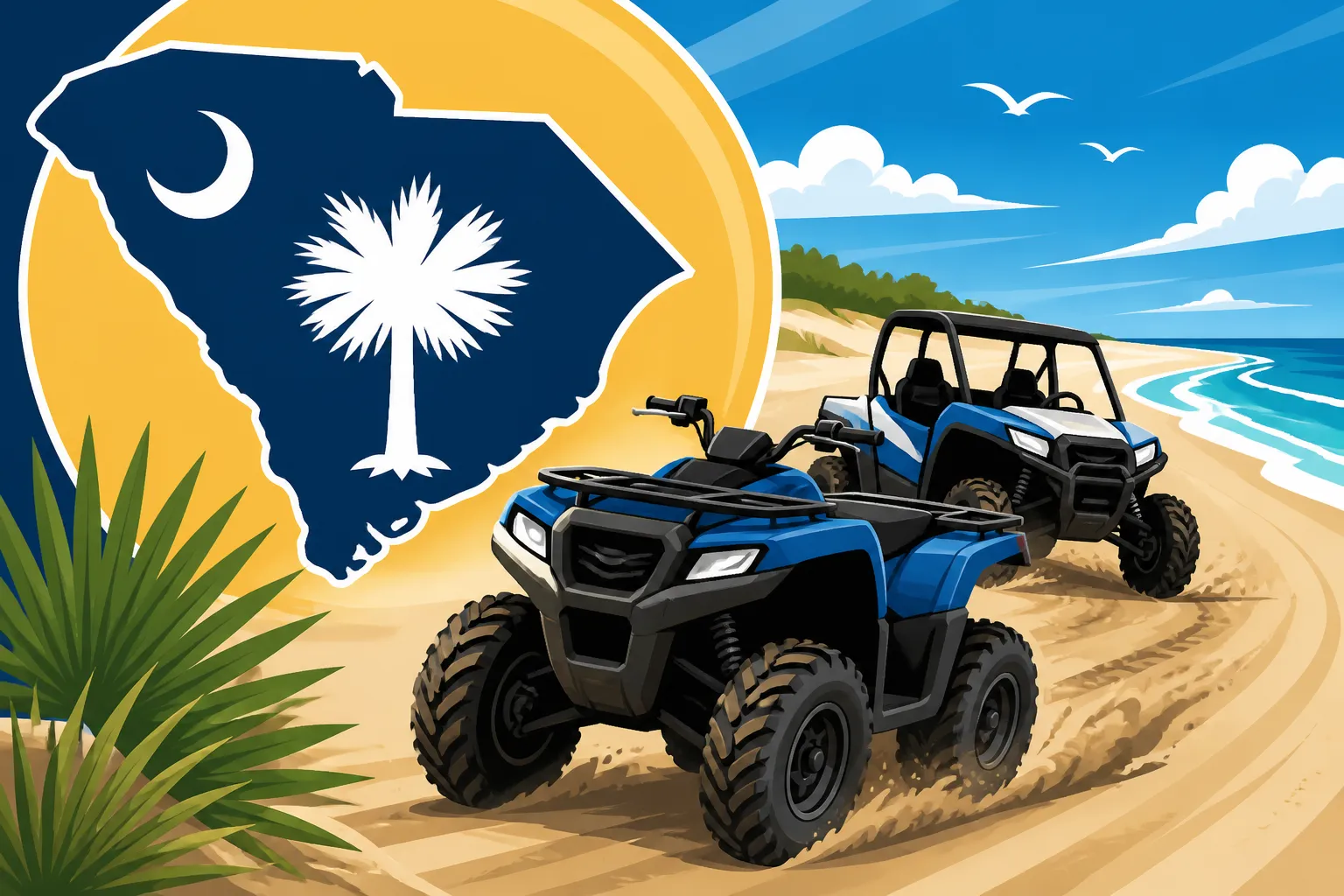
Many ATV and UTV enthusiasts dream of the feeling of sand beneath their tires and the ocean breeze on their face, only to be met with confusing local rules and restrictions about riding on South Carolina's beautiful beaches. It's a real bummer when you plan a trip hoping for some seaside adventure, only to discover it's either illegal or requires a permit you didn't even know existed. This comprehensive guide will clear up the complexities of beach riding regulations for ATVs and UTVs in the Palmetto State, helping you understand where, if anywhere, you can legally kick up some sand without running afoul of the law.
The Harsh Reality of Beach Riding for ATVs and UTVs in South Carolina
Most public beaches in South Carolina operate under strict rules, and one of the most common prohibitions you’ll encounter is against motorized vehicles like ATVs and UTVs. This can be a source of significant frustration for riders who envision wide-open stretches of sand as a perfect playground for their machines. Unfortunately, it's a far cry from the free-for-all some might imagine. Local ordinances, put in place by beach towns and counties, almost universally restrict ATVs and UTVs from public beach access. These rules exist for compelling reasons, including safeguarding public well-being, protecting delicate environmental zones such as nesting grounds for sea turtles and fragile dune systems, and preserving the serene aesthetic of the beach for vacationers and residents alike.
The disappointment is certainly understandable, especially for those visiting from other states where beach access might be more lenient. You’ve likely invested considerably in your machine, perhaps outfitting it with specialized gear from brands like SuperATV, designed to conquer various terrains. The thought of coastal cruising seems like a natural extension of your riding passion. However, the immense popularity of South Carolina’s beaches, drawing thousands of visitors daily, means that allowing unrestricted motorized vehicle access would inevitably lead to chaos, pose significant safety hazards, and cause irreparable environmental damage. Imagine trying to enjoy a peaceful walk or build sandcastles with ATVs roaring past; it simply doesn’t align with the expected experience on a typical South Carolina beach. These aren't mere suggestions; they are legally binding codes, and violations can lead to hefty fines and even the impoundment of your machine. It truly pays to do your homework before you ever load up your quad or side-by-side.
General Prohibitions and the Rarity of Public Access
In virtually all cases, public beaches in South Carolina explicitly forbid the recreational use of ATVs and UTVs. When you arrive at a public beach access point, expecting to enjoy the surf and sand with your machine, you'll almost certainly be greeted by prominent signage clearly stating that motorized vehicles are prohibited. This isn't just a recommendation; it's a legal mandate enforced by local authorities. While there might be limited exceptions for authorized municipal vehicles (like lifeguard trucks or beach cleanup crews), these do not extend to the general public for recreational purposes.
This strict stance is a reflection of the state’s commitment to preserving its natural beauty and ensuring the safety of its residents and visitors. Unlike a designated off-highway vehicle (OHV) trail like [Enoree OHV Trail in South Carolina], which is specifically designed and managed for motorized recreation, a beach is a multi-use public space. The goal is to create a safe and enjoyable environment for everyone, and the presence of recreational ATVs and UTVs is seen as incompatible with this vision. Therefore, the dream of freely riding your quad along the South Carolina shoreline on public land is, for all practical purposes, non-existent.
The Limited World of Private Beach Access
While public beaches are generally off-limits, the situation shifts slightly when it comes to private property. In extremely rare instances, a private landowner with beachfront property might grant explicit permission for an ATV or UTV to be operated on their specific stretch of sand. This is typically reserved for family members, close friends, or guests with direct, written authorization from the property owner. It is absolutely critical that you do not assume that a beach is private, or that you have implied permission, just because it appears secluded or you don't see any "No Trespassing" signs. Doing so can quickly lead to legal trouble, as [South Carolina Trespass Law for Riders] makes it clear that property owners have the right to press charges for unauthorized entry.
If you are fortunate enough to secure such private access, ensuring that the permission is clearly documented in writing is paramount. A simple verbal agreement, while seemingly friendly, might not hold up if there's a misunderstanding or an incident occurs. Having a signed document outlining the terms of your access provides a layer of protection for both you and the landowner.
Even with private permission, the responsibility for safe and environmentally conscious operation still falls squarely on the rider. The delicate ecosystems of the beach, including dune systems and wildlife habitats, remain fragile, regardless of property lines. This means understanding local tides, completely avoiding dune systems, and being acutely aware of nesting seasons for shorebirds and sea turtles. This private access is an extremely specific and limited exception, not a broad loophole that allows widespread beach riding.
Why Beach Rules Are So Strict and Varied in South Carolina
The stringent regulations governing ATV and UTV use on South Carolina beaches are not arbitrary. They are deeply rooted in critical concerns for environmental preservation and the safety of the countless individuals who enjoy the state's picturesque coastline. These regulations are meticulously crafted to protect both the natural resources and the public experience. Understanding these underlying reasons can help shed light on why it's so difficult to find places to ride your machines on the sand.
The rules around beach access are a stark contrast to some other aspects of vehicle use, such as the allowances for golf carts in certain coastal communities. While golf carts might have specific rules for limited street access within a certain radius of a home or business, these typically do not extend to recreational use of the actual beach strand for ATVs or UTVs. [South Carolina Golf Cart Road Rules] outlines these distinctions.
Environmental Protection and Public Safety Concerns
The primary drivers behind South Carolina's strict beach access rules for motorized vehicles are the twin pillars of environmental protection and public safety. Our coastlines are incredibly vital and sensitive ecosystems, serving as critical habitats for numerous species, including nesting sea turtles, various shorebirds, and specialized plant life that stabilizes the essential dune systems. ATVs and UTVs, with their weight, speed, and tire patterns, can cause significant damage to these fragile environments. Deep ruts in the sand can trap sea turtle hatchlings as they attempt to make their way to the ocean, and disturbing nesting areas can have devastating, long-term impacts on protected populations. The state, along with various environmental organizations, takes these concerns with the utmost seriousness, and local municipalities consistently reinforce these protections in their own ordinances.
Beyond the environmental impact, public safety is an enormous consideration. South Carolina's beaches are incredibly popular destinations, drawing thousands upon thousands of visitors, especially during the warmer months and holiday periods. Introducing fast-moving motorized vehicles into an environment teeming with pedestrians, sunbathers, and children playing near the water is an inherently dangerous proposition. The potential for accidents, injuries, and even fatalities is simply too high. Local law enforcement agencies are tasked with ensuring a safe and harmonious environment for everyone, and one of the most effective ways to achieve this is by strictly prohibiting recreational ATVs and UTVs from accessing public sands. Even the most cautious and experienced rider cannot completely mitigate the unpredictable nature of a crowded beach, making it an unsuitable and unsafe environment for these machines.
Local Ordinances and the Lack of Statewide Uniformity
One of the most confusing and often frustrating aspects for riders is the lack of a single, universal, statewide rule for beach riding that applies consistently across every mile of South Carolina's coastline. Instead, the authority to regulate beach access is largely delegated to individual counties and municipalities. This means that what might be technically permissible (though exceptionally rare) in one small, isolated stretch of beach under a county's jurisdiction could be strictly forbidden just a few miles down the coast within the boundaries of an incorporated town. This complex patchwork of regulations requires riders to investigate the specific ordinances of the exact city or county that governs the beach they wish to visit, rather than relying on a general state law. This lack of uniformity can be particularly vexing for visitors, who might arrive expecting clear guidelines, only to find a maze of local rules. [South Carolina Rules for an Out-of-State Machine] can be surprisingly intricate, and beach access adds another layer of complexity.
These local ordinances are not static; they are frequently reviewed, amended, or even reinterpreted by local councils and boards, making it a continuously evolving target for riders trying to stay compliant. It's not uncommon for a town to tighten restrictions in response to new environmental studies, public complaints about noise or safety, or even simply a shift in local priorities. For instance, a municipality might allow utility vehicles for specific, approved commercial or public service tasks but explicitly ban all recreational ATVs and UTVs. This granular level of control means that broad, sweeping statements about beach riding in South Carolina are unreliable, and thorough due diligence for your specific destination is always essential. This is why you might see varying signage as you drive along the coast – some specific to vehicle types, some to golf carts, and some prohibiting all motorized activity. It’s definitely not a simple system like applying for [South Carolina National Forest OHV Passes], which cover multiple trails under a single umbrella.
How to Determine Beach Access and Avoid Penalties
Given the complexities and strictness of South Carolina's beach riding rules, your best approach is always proactive research and strict adherence to local regulations. Attempting to ride on a beach without being absolutely certain of its legality can lead to severe consequences, turning a planned fun day into a costly and regrettable experience. It's far better to invest time in understanding the rules than to face the repercussions of an uninformed decision.
Many riders, especially those new to the area, might initially struggle to find suitable places to ride. They might look at a map of South Carolina's vast coastline and assume there must be some spot. However, the reality for ATVs and UTVs is usually quite different. This frustration is a common one, and it underscores the importance of proper research.
Researching Specific Beach Ordinances
Since a universal "yes" or "no" for beach access simply doesn't exist across the entire state, your absolute best course of action is to meticulously research the specific beach or municipality you intend to visit. First, identify the exact local government body responsible for that stretch of beach. Is it a well-known city like Myrtle Beach, Folly Beach, or Hilton Head Island, or is it part of a larger county, such as Georgetown County or Beaufort County? Once you have this critical piece of information, navigate to their official government website. These sites typically feature dedicated sections for local ordinances, frequently asked questions about beach conduct, or specific "beach rules." Within these sections, look for any information pertaining to "motorized vehicles," "ATVs," "UTVs," "off-road vehicles," or "driving on the beach." Read these details very carefully, as there can sometimes be nuanced exceptions, such as specific times of day or designated areas where certain activities are allowed, though these rarely apply to recreational ATV/UTV use.
If you find that the information online is unclear, ambiguous, or simply non-existent for your specific query, do not hesitate to make a direct call to the local police department's non-emergency line or the city/county administration office. These are the definitive sources for current and accurate local regulations. While helpful advice might be offered by hotel staff or local shop owners, always verify such information with an official government source. Well-intentioned misinformation will not protect you from penalties if you are found in violation of an ordinance. Taking the time to be thorough with your research is a sign of responsible riding and significantly increases the likelihood that your trip will be enjoyable and free from legal complications. This level of granular research is far more involved than simply looking up general options for [South Carolina ATV Trails: Where to Ride].
Understanding Potential Fines and Enforcement
Operating an ATV or UTV on a South Carolina beach without explicit, proper authorization is a direct violation of local ordinances, and the consequences can be significant. Penalties typically range from substantial monetary fines to the potential impoundment of your machine. Local law enforcement agencies, including dedicated beach patrol units, county sheriff's deputies, and city police, are well aware of these regulations and actively enforce them, particularly during peak tourist seasons when beach activity is at its highest. You might be tempted to try and sneak in a quick ride, but officers are often highly vigilant in their efforts to protect both beachgoers and the delicate coastal environment. Fines can vary considerably by municipality, but it's not uncommon for them to run into the hundreds of dollars, which is often just the initial cost. While [South Carolina Fines of $50 to $200] provides a general range for some violations, beach-specific infractions can often incur higher penalties.
Beyond the immediate financial burden, having your machine impounded can create a whole new set of headaches and expenses. You will likely be responsible for impoundment fees, daily storage fees, and the considerable hassle and cost of arranging transport to retrieve your ATV or UTV from the impound lot. This entire process can quickly transform what you hoped would be a fun beach day into an incredibly expensive and profoundly frustrating ordeal. It's also crucial to remember that claiming ignorance of the law is generally not considered a valid defense in a court of law. Even if you are a visitor from out of state and genuinely unaware of the specific local rules, you will still be held accountable for any violations. This fact alone underscores why thorough research and operating with an abundance of caution are always the smartest strategies. Having a high-performance UTV fully equipped with top-tier accessories from SuperATV won't grant you an exemption from local ordinances.
Considering Alternatives for Coastal Riding Experiences
If the dream of riding your ATV or UTV directly on a South Carolina beach proves to be largely unattainable, don't let it dampen your adventurous spirit! There are still excellent ways to enjoy the unique characteristics of coastal regions with your machine, even if it means steering clear of the actual open sand. Many areas, particularly those slightly inland from the immediate coastline, feature designated off-road parks or extensive trail systems that offer a similar "sandy" riding feel. These locations might include expansive sand pits, wooded trails with significant sandy sections, or private recreational areas specifically designed and managed for ATV and UTV use, providing a challenging and enjoyable experience without the strict environmental and safety concerns associated with public beaches. For example, you might discover dirt roads or intricate trail networks that run parallel to the coast, offering scenic glimpses of the ocean, marshlands, or tidal creeks, even if direct beach access is prohibited.
Consider exploring private parks like [Carolina Adventure World in South Carolina], which offers hundreds of miles of diverse trails, including plenty of sandy sections that mimic a coastal feel without being on the beach itself. There are also opportunities to find public or private lands further inland that, while not beachfront, feature the sandy soil characteristics common to the South Carolina lowcountry. Another viable option, depending on your machine and preferences, is to explore the growing category of street-legal UTVs. While these machines won't grant you access to the actual beach, they can legally transport you to beach access points, allowing you to explore charming coastal towns, scenic byways, and waterfront areas on paved roads. [South Carolina Street-Legal UTV Registration Arrives] details the process for getting your UTV ready for these types of adventures. You might find that a SuperATV lift kit and aggressive tires are perfectly suited for tackling the diverse terrain found just inland from the beach, even if those tires can't directly touch the waves of the Atlantic.
| Feature | Public Beach (Recreational ATV/UTV) | Private Beach (With Permission) | Designated OHV Park (Coastal Region) | Street-Legal UTV (Coastal Town Access) |
|---|---|---|---|---|
| Legal Status | Generally Prohibited | Rare, requires explicit permission | Permitted in designated areas | Permitted on paved public roads |
| Access Difficulty | Extremely High | High (requires landowner contact) | Moderate (fees, regulations) | Moderate (registration, insurance) |
| Typical Terrain | Wet/Dry Sand | Wet/Dry Sand | Sand, dirt, mud, trails | Paved roads, some unpaved shoulders |
| Environmental Impact Risk | High risk, strictly regulated | High risk, owner responsibility | Managed to minimize impact | Low (on proper surfaces) |
| Public Safety Concerns | High (pedestrians, swimmers) | Moderate (limited crowds) | Managed (separated from pedestrians) | Moderate (traffic, other vehicles) |
| Permit/License Needed | N/A (because generally illegal) | Written permission from owner | Park pass/entry fee | Driver's license, UTV registration |
| Examples in SC | Practically None | Extremely rare, specific to property | Gulches ORV Park (inland), some private land | Exploring Myrtle Beach via street-legal UTV |
Disclaimer
This article is for general informational purposes only and does not constitute professional advice. Laws, prices and regulations vary by location and change over time. Consult a qualified professional for guidance on your specific situation.