How Far a Golf Cart Permit Reaches
Navigating the rules for golf carts in South Carolina can feel like trying to hit a moving target, especially when you're just trying to figure out how far you can legally take your trusty cart. It's a common frustration for so many residents and visitors alike, wanting to enjoy the convenience and fun of a golf cart without inadvertently breaking the law. This guide is here to untangle the complexities of South Carolina's golf cart permit rules, focusing specifically on the distances and areas where you can legally operate your cart, ensuring you can ride with confidence and peace of mind.
The Ins and Outs of South Carolina's Golf Cart Permit Radius
When you first get a golf cart in South Carolina, one of the biggest questions that pops up is, "How far can I actually drive this thing?" It's not as simple as just driving until you run out of battery. There are very specific rules that dictate your range, primarily centered around your registered address.
Understanding the 4-Mile Radius Rule
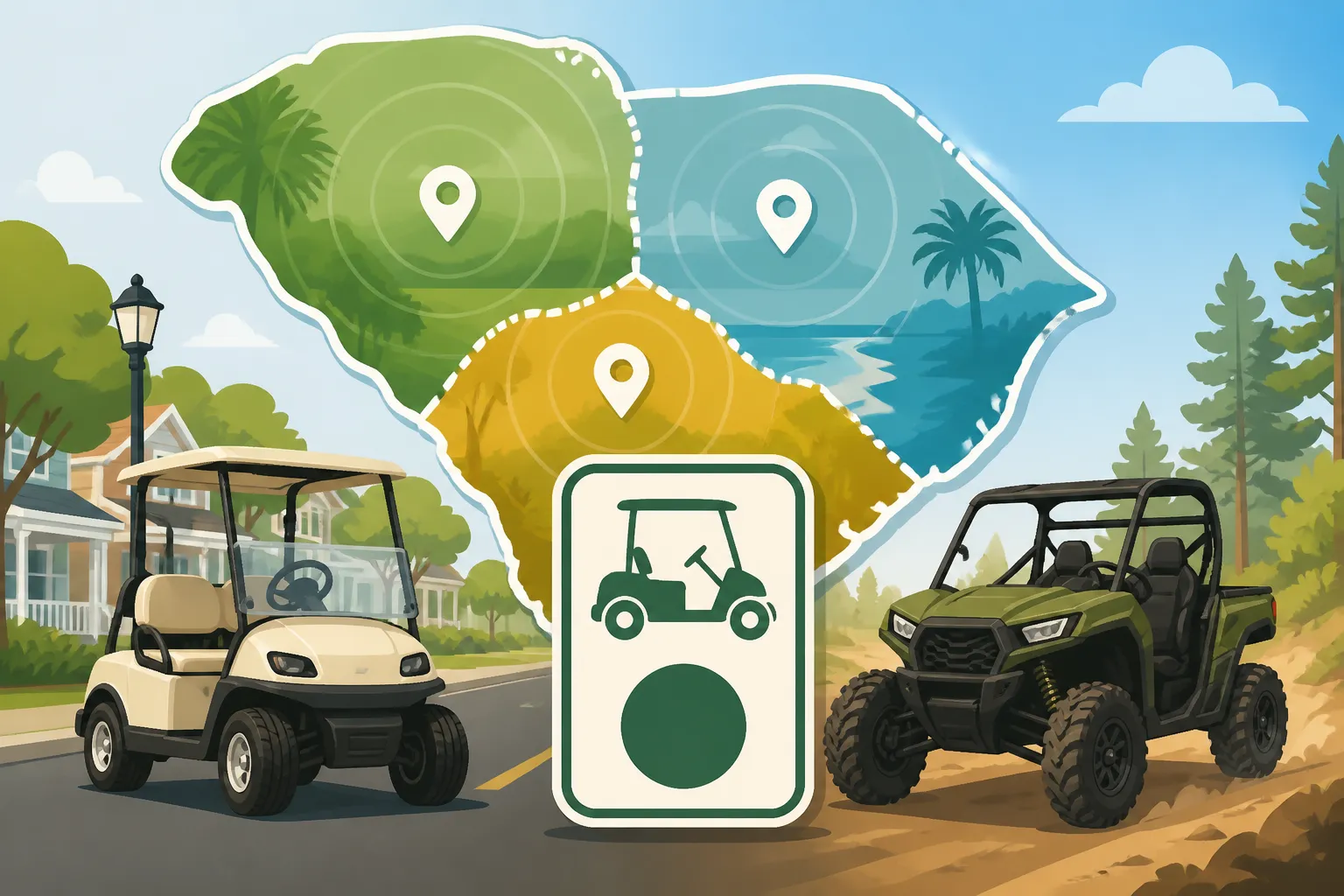
The cornerstone of South Carolina's golf cart regulations for public roads is the 4-mile radius rule. This means that a permitted golf cart is generally allowed to operate only within four miles of the address where the golf cart is registered. Imagine your home or vacation rental as the center point of a circle; your golf cart is usually restricted to operating within that 4-mile perimeter.
This isn't just a suggestion; it's a legal requirement designed to keep golf cart usage localized and to differentiate them from other vehicles that can travel greater distances. For instance, if you live in a coastal town and your house is four blocks from the beach, you can typically drive your cart to the beach access, local shops, or even a friend's house, as long as it's all within that 4-mile bubble from your home. The challenge often comes when people want to explore a bit further, perhaps to a different part of town or a neighboring community, only to realize they're pushing the legal limits of their permit. It’s crucial to remember that this measurement is from your registered address, not just any point you might be at.
When the 4-Mile Rule Doesn't Apply: Exceptions and Expansions
While the 4-mile radius is the standard, South Carolina law also recognizes that local circumstances vary. This is where things can get a little nuanced, and it’s why checking local ordinances is so vital.
Many towns and cities across the state have adopted their own local ordinances that can either expand or restrict where golf carts are allowed. For example, a municipality might decide to extend the permissible operating range beyond four miles for specific areas or for the entire town. Some planned communities or large resorts might have private roads where different rules apply, or they might have agreements with the local government that modify the standard state rule. In these cases, the local ordinance will typically supersede the state's 4-mile rule, provided it's more permissive. This means that in certain areas, you might find yourself legally able to drive your golf cart further than the standard four miles. Places like Myrtle Beach or Hilton Head, with their vast networks of residential streets and tourist areas, often have specific local rules in place that cater to the high volume of golf cart use. Always check with the local police department or town hall for the most accurate information on [South Carolina Golf Cart Permit Rules] in your specific area.
What Roads Are Permitted for Golf Carts?
Beyond the distance, it's equally important to know where you can actually drive your golf cart. The state law is quite clear on the types of roads allowed for golf cart operation. Generally, you can only operate a permitted golf cart on secondary roads or streets, which are roads with a posted speed limit of 35 miles per hour or less.
This means that high-speed thoroughfares, major state highways, or roads with speed limits above 35 mph are strictly off-limits for golf carts. The intent here is safety: golf carts are simply not designed to keep up with faster traffic, and allowing them on such roads would pose a significant hazard. You'll often see golf carts zipping around residential neighborhoods, quiet side streets, and designated golf cart paths. However, even within the 4-mile radius, if you encounter a section of road with a speed limit exceeding 35 mph, you must find an alternate route or avoid it altogether. It’s not just about the distance, but also about the safety of the road itself. For those looking to customize their carts for specific terrains, companies like SuperATV offer heavy-duty parts that can enhance a golf cart's durability, though such modifications don't change the fundamental road rules.
Obtaining and Maintaining Your South Carolina Golf Cart Permit
Getting your golf cart on the road legally in South Carolina involves a few key steps. It's more than just having the cart; you need the proper paperwork and an understanding of how to keep your permit current.
Steps to Get Your Permit
The process to obtain a golf cart permit in South Carolina is managed through the Department of Motor Vehicles (DMV) or the Department of Public Safety (DPS), depending on the specific requirements at the time. You’ll need to complete an application, provide proof of ownership, and demonstrate that you have the necessary liability insurance. The insurance requirement is critical, as it ensures that you're covered in the event of an accident.
Typically, you'll need your bill of sale or other proof of ownership, along with your valid driver's license. It’s important to note that only licensed drivers can operate a golf cart on public roads in South Carolina. Once your application is approved and fees are paid, you'll receive a permit and a decal that must be displayed on your golf cart. This decal signifies that your cart is legally permitted for road use within the defined parameters. [South Carolina Golf Cart Permit Steps] often involve a quick visit to a local DMV office, so having all your documents in order beforehand can save you a lot of time and hassle.
Permit Renewal and Decal Replacement
A South Carolina golf cart permit isn't a one-and-done deal; it requires regular renewal. These permits are typically issued for a period of five years, after which they need to be renewed. This helps ensure that the state has up-to-date records of all permitted golf carts and that owners continue to meet the insurance requirements.
When it's time to renew, you'll generally follow a similar process to the initial application, confirming your insurance and paying a nominal renewal fee. You'll also receive a new decal to replace your old one, as the decal itself signifies the validity of your permit. It’s easy to forget about renewal when your permit lasts for five years, so it's a good idea to mark your calendar or set a reminder. Failing to renew can result in your cart being considered unregistered, leading to potential fines or other penalties if you're caught operating it on public roads. Staying on top of [South Carolina Golf Cart Permit Renewal] ensures uninterrupted enjoyment of your cart.
Costs Associated with Golf Cart Permits
The financial aspect of getting and keeping a golf cart permit in South Carolina is generally quite manageable. The state aims to keep these fees low to encourage compliance. When you initially apply for your permit, there's a modest application fee. This fee covers the administrative costs of processing your application and issuing your permit and decal.
Similarly, when it comes time for renewal, there's another minimal fee. While I can't give you exact figures, these costs are typically designed to be affordable for most golf cart owners, far less than what you might pay for car registration. It’s always a good idea to check the official DMV website for the most current fee schedules, as these can be subject to change. Beyond the permit fees, your primary ongoing cost will be your liability insurance, which is a mandatory expense to legally operate your golf cart on public roads. [South Carolina Golf Cart Permit Fees] are designed to be a minor hurdle, not a major expense, for enthusiasts.
Golf Cart Rules Beyond the Radius: Safety and Operation
Understanding the permissible range of your golf cart is just one piece of the puzzle. Safe and legal operation also hinges on adhering to crucial rules about speed, daylight hours, and passenger limits.
Speed Limits and Daylight Operation
Safety is paramount, and South Carolina law has clear guidelines to ensure golf carts operate safely alongside other traffic, even on low-speed roads. Firstly, golf carts are restricted to roads with a maximum posted speed limit of 35 mph. This is a non-negotiable rule, and attempting to operate on faster roads is illegal and dangerous.
Secondly, and this is a big one for many riders, golf carts are generally only allowed to operate during daylight hours. This means from a half-hour after sunrise to a half-hour before sunset. Operating a golf cart after dark, even with aftermarket lights installed, is typically prohibited on public roads unless specific local ordinances allow for it and your cart meets certain lighting and safety equipment standards that effectively upgrade it to a [South Carolina Low-Speed Vehicle Rules] status. Many golf cart owners add lighting kits from companies like SuperATV for visibility, but these enhancements don't automatically grant after-dark driving privileges on public streets. Always verify the exact [South Carolina Golf Cart Daylight Rules] in your municipality to avoid a citation.
Carrying Passengers and Equipment
Golf carts are wonderful for hauling friends, family, and even some gear, but there are limits. The number of passengers you can legally carry on your golf cart is typically restricted to the number of seats permanently installed by the manufacturer. Overloading a golf cart not only makes it unstable and difficult to control but also violates safety regulations. Imagine hitting a bump with too many people on board; it's a recipe for disaster.
When it comes to equipment or cargo, common sense and safety should always prevail. Secure any items you're transporting so they don't fall off or obstruct your view. While you might see people carrying fishing gear or beach chairs, make sure everything is properly tied down and doesn't create an overhang that could be hazardous to pedestrians or other vehicles. Remember, a golf cart isn't built to haul heavy loads like a pickup truck, so respect its design limitations.
Understanding Local Ordinances and Exceptions
As mentioned earlier, local ordinances play a significant role in golf cart operation. While state law provides a general framework, individual cities, towns, and even some counties have the authority to create their own specific rules that can affect everything from where you can drive to what equipment your golf cart needs.
These local rules might permit golf carts on roads with higher speed limits than the state maximum (though this is rare and always comes with specific caveats), extend the operating radius, or even allow night-time operation if the cart meets certain criteria. It’s also common for towns with popular beach access to have special rules for golf carts crossing certain streets or accessing specific areas. The best way to ensure you're in compliance is to contact the local police department or municipal office in the area where you plan to operate your golf cart. Don't rely on hearsay or what "everyone else does." A quick phone call or visit to their website can save you a potential headache. Ignoring these localized rules can lead to fines, even if you're following state law, because local law often takes precedence within its jurisdiction. It’s all part of the larger picture of [South Carolina Golf Cart Road Rules].
Comparing Golf Carts to Low-Speed Vehicles (LSVs)
While they might look similar to the untrained eye, golf carts and low-speed vehicles (LSVs) are distinct categories under South Carolina law, each with its own set of rules, capabilities, and permitted uses. Confusing the two can lead to significant legal issues.
Key Differences Between Golf Carts and LSVs
The most fundamental difference between a golf cart and an LSV lies in their design, features, and how they are legally classified for road use. A traditional golf cart, as defined by South Carolina law, is primarily designed for use on golf courses and for short-distance travel on low-speed roads. It typically has a maximum speed of 20 mph, and as we've discussed, is restricted to a 4-mile radius from its registered address and to roads with a speed limit of 35 mph or less. Golf carts are generally not required to have vehicle titles in South Carolina, though optional titling is available for proof of ownership.
An LSV, on the other hand, is a vehicle that is legally recognized for street use, much like a regular car, but with speed limitations. By definition, an LSV can achieve a speed of 20 to 25 mph. Crucially, LSVs are manufactured to meet specific federal safety standards for motor vehicles. This means they come equipped with features that golf carts often lack or only have as aftermarket additions, such as headlights, taillights, brake lights, turn signals, seat belts, a windshield, and rearview mirrors. Because they meet these higher safety standards and have a title, [A Low-Speed Vehicle Is Not a South Carolina UTV] and they are granted broader access to public roads.
When an LSV Might Be a Better Fit
Given the distinctions, an LSV might be a more suitable option for you if your driving needs extend beyond the strict limitations of a golf cart. If you regularly need to travel distances greater than four miles from your home, or if you frequently encounter roads with speed limits between 35 and 45 mph (which LSVs may be permitted on, depending on local ordinances), then an LSV offers far more flexibility.
LSVs also provide the convenience of being street legal, meaning they can typically be operated on most public roads with speed limits of 35 mph or less, and sometimes up to 45 mph, depending on specific local regulations. They don't have the 4-mile radius restriction that golf carts do. This makes them ideal for running errands around town, commuting short distances, or simply having a more versatile vehicle for neighborhood travel. While the initial cost of an LSV is generally higher than a golf cart, and they require a title and traditional vehicle registration, the expanded range and usability often make them a worthwhile investment for those who need more than what a basic golf cart can offer. You can even find accessories and upgrades for LSVs from brands like SuperATV, further enhancing their utility and appearance for various adventures around South Carolina.
Here’s a quick overview of the key differences:
| Feature | Permitted Golf Cart (SC) | Low-Speed Vehicle (LSV) (SC) |
|---|---|---|
| Max Speed | Typically up to 20 mph | 20-25 mph |
| Road Access | Secondary roads 35 mph or less | Most public roads 35 mph or less (sometimes 45 mph locally) |
| Operating Radius | Within 4 miles of registered address (state law) | No state-imposed radius restriction |
| Operating Hours | Daylight hours only (state law) | Day or night, like a car |
| Safety Features | Minimal, often aftermarket additions | Full DOT safety equipment (lights, signals, seat belts, windshield, mirrors) |
| Registration | Special permit and decal | Titled, registered, and plated like a car |
| Insurance | Liability insurance required for permit | Standard auto liability insurance required |
Understanding these differences is key to choosing the right vehicle for your South Carolina lifestyle and ensuring you stay on the right side of the law. While a golf cart is perfect for short hops and leisurely cruises in specific zones, an LSV offers a broader scope of travel and utility.
Disclaimer
This article is for general informational purposes only and does not constitute professional advice. Laws, prices and regulations vary by location and change over time. Consult a qualified professional for guidance on your specific situation.