The Spark Arrester the Forest Service Requires
There's nothing quite like hitting the trails on your ATV or UTV, feeling that rush of freedom as you explore the incredible landscapes South Carolina has to offer. But before you crank up your engine and head out, especially if you're planning on venturing onto public lands like our beautiful National Forests, there's a crucial piece of equipment you need to understand: the spark arrester. Many riders don't realize its importance until they're turned away from a trailhead or, worse, face a hefty fine. This guide is here to demystify what a spark arrester is, why it's non-negotiable for forest use, and how to ensure your machine is compliant, keeping you safe and legal on the trails.
What Exactly Is a Spark Arrester, Anyway?
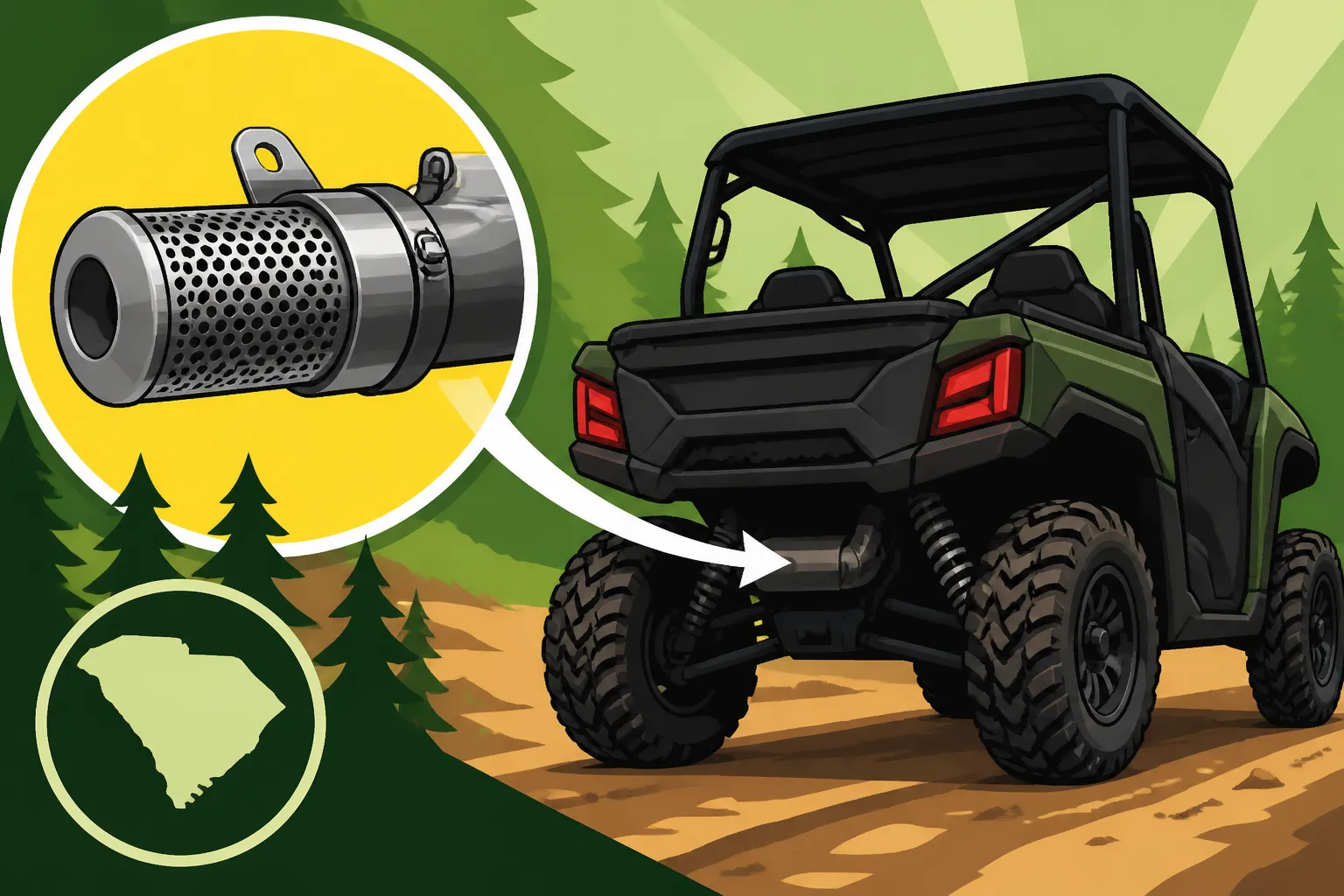
Let's be honest, for many of us, the exhaust system on our ATV or UTV is just a noisy pipe at the back of the machine. But tucked inside that muffler, often out of sight, is a critically important component called a spark arrester. Its job is simple yet vital: to prevent hot carbon particles, or "sparks," from escaping your exhaust system.
Think about it this way: when your engine runs, especially at high RPMs or under heavy load, it produces tiny, incandescent bits of carbon as part of the combustion process. These fiery flecks can be ejected out of your exhaust pipe at high speed and temperature. In a dry forest environment, where pine needles, leaves, and dry grass are abundant, even a single one of these sparks can quickly ignite a devastating wildfire. The spark arrester acts like a tiny, specialized filter, using a screen, baffles, or a centrifugal design to cool and contain these particles, ensuring that only exhaust gases, not dangerous sparks, exit your machine. It’s an ingenious, often overlooked, piece of safety equipment.
The Mechanics Behind the Magic
While they might seem complex, the underlying principle of a spark arrester is fairly straightforward. Most certified spark arresters rely on one of two main designs: the screen type or the centrifugal type. A screen-type arrester uses a fine mesh screen (usually made of stainless steel to withstand high temperatures) placed strategically within the muffler. Exhaust gases can pass through, but any carbon particles larger than the mesh openings are trapped and cooled before they can escape. Regular cleaning is essential for these, as carbon buildup can restrict exhaust flow and hurt performance.
The centrifugal type, often found in original equipment manufacturer (OEM) mufflers, works by forcing the exhaust gases into a swirling motion. This action uses centrifugal force to throw heavier carbon particles against the walls of the arrester chamber, where they lose energy and cool down before the gases are allowed to exit. Both types are incredibly effective when properly maintained and certified. It's not just about having something in there; it's about having a certified, functional device that meets the standards for fire prevention.
Why It's More Than Just a "Suggestion"
When you're out riding on private land, the rules might be a bit more relaxed, though it's always wise to practice fire safety. However, the moment you set a tire on federally managed lands, such as those overseen by the U.S. Forest Service, the spark arrester becomes a legal requirement. These lands are managed for multiple uses, including recreation, but conservation and wildfire prevention are paramount. A spark arrester isn't an accessory; it's a mandatory piece of safety equipment designed to protect precious natural resources and human lives.
Ignoring this requirement isn't just about risking a ticket; it's about potentially being responsible for an environmental disaster. Imagine the guilt of knowing your machine started a fire that destroyed acres of forest, wildlife habitats, or even threatened homes. The Forest Service isn't just trying to be a stickler for rules; they're trying to prevent catastrophic events that impact us all. When you comply, you're not just being a good rider; you're being a responsible steward of the land, helping to keep our trails open and beautiful for everyone. [South Carolina Spark Arrester Requirements] are a key part of responsible riding.
Why the Forest Service Cares So Much
The U.S. Forest Service has a solemn responsibility to protect and manage our national forests. In South Carolina, that includes stunning areas like the Sumter National Forest and the Francis Marion National Forest, which offer incredible opportunities for ATV and UTV enthusiasts. These forests are vibrant ecosystems, critical for wildlife, water quality, and timber, and they are also a huge draw for recreation. A single spark from an unequipped machine can jeopardize all of that, especially during dry conditions.
The concern isn't theoretical; wildfires are a constant threat, and human activity is a leading cause. The Forest Service's regulations, including the mandatory spark arrester requirement, are a direct response to this very real danger. They're trying to mitigate the risk and keep our public lands safe for everyone to enjoy, for generations to come.
Preventing Catastrophic Wildfires
Picture a dry, hot South Carolina summer day. The ground is parched, the pine needles are like kindling, and a breeze is rustling through the trees. Now, imagine a tiny spark, no bigger than a pinhead, landing in that tinderbox. Within minutes, that spark can become a flame, then a small fire, and then, if not quickly contained, a raging inferno that devours everything in its path. Wildfires don't just burn trees; they destroy homes, threaten communities, wipe out wildlife populations, and release massive amounts of carbon into the atmosphere. The economic impact alone, from firefighting costs to lost timber revenue and tourism, can be staggering.
This is why the Forest Service takes spark arresters so seriously. They are a simple, yet highly effective, tool in the larger strategy of wildfire prevention. Every time you ride on forest land, you're entering an environment with inherent risks, and every piece of equipment designed to mitigate those risks is mandatory. It's part of the unspoken contract: you get to enjoy these incredible public lands, and in return, you do everything you can to protect them. [South Carolina National Forest OHV Passes] are about access, but compliance is about protection.
Federal Regulations and Local Enforcement
While the spark arrester requirement originates from federal regulations for Forest Service lands, these rules are actively enforced on the ground by forest rangers, local law enforcement, and other authorized personnel. When you're riding in a National Forest, officers can and will conduct random checks for compliance, especially at trailheads or during patrols. They'll look for the tell-tale stamp or label on your muffler that indicates it's a certified spark arrester. Without it, you could be facing more than just a stern warning.
The regulations are clear: any internal combustion engine operated on forest land must be equipped with a U.S. Forest Service-approved spark arrester. These devices are tested and certified to specific standards to ensure their effectiveness. This isn't a state-by-state patchwork of rules; it's a consistent federal mandate for all National Forests across the country, including those here in South Carolina. So, whether you're riding [Enoree OHV Trail in South Carolina] or [Parsons Mountain OHV Trail in South Carolina], the rule applies.
Checking Your Machine and What to Do If You Don't Have One
So, you're convinced! You want to make sure your machine is compliant. But how do you actually check for a spark arrester, and what do you do if your ATV or UTV doesn't have one, or if it's damaged? It's a common question, especially for those who've bought used machines or have modified their exhaust. Don't worry, figuring this out is usually quite straightforward.
The first step is to locate your muffler. It's the big metal canister at the end of your exhaust pipe. Once you've found it, look for a small, stamped metal tag or an engraved marking on the body of the muffler itself. This stamp will typically say "USFS Approved," "Spark Arrestor – USFS," or something similar, often accompanied by a series of numbers or a manufacturer's code. This is your definitive proof of compliance. If you don't see this marking, or if the screen inside the muffler is damaged or missing, you've got a problem.
Identifying a Certified Spark Arrester
Sometimes, especially with older machines or aftermarket exhaust systems, that little stamp can be hard to find or might be obscured by mud or corrosion. Take your time, wipe down the muffler, and look carefully. It's usually near the exhaust outlet or on a prominent part of the muffler body. If you have an aftermarket exhaust, check the manufacturer's documentation or their website; reputable manufacturers will clearly state if their systems are USFS-approved and often provide a diagram showing where the stamp is located.
It's also worth noting that some older machines might have a non-removable, built-in spark arrester that isn't as obviously marked. In such cases, you might need to consult your owner's manual or even contact a dealership for your specific make and model to confirm compliance. The key is to have verifiable proof, either through a clear marking or manufacturer documentation, that your machine meets the standard. When officers perform [South Carolina Equipment Checks by Officers], they'll be looking for that official stamp.
Options for Adding or Replacing a Spark Arrester
If your machine lacks a certified spark arrester or if the one you have is damaged, don't despair! You have several options:
- Replace the Muffler: This is often the simplest and most foolproof solution. You can purchase an entirely new muffler assembly that is explicitly USFS-approved. Many aftermarket companies offer these. For example, if you're looking for durable and high-performing options, SuperATV offers a range of exhaust systems and components that cater to various UTV and ATV models, many of which are designed with spark arrester compliance in mind for trail use. They understand the demands of serious off-roading and the need to meet regulations.
- Add an Aftermarket Spark Arrester: For some muffler designs, you might be able to purchase and install a standalone spark arrester insert. These are essentially screens or baffles that slide into your existing exhaust outlet. Again, ensure that any add-on you purchase is explicitly labeled as USFS-approved. Installing one of these can be a more cost-effective solution than a full muffler replacement, but make sure it's compatible with your specific exhaust.
- Repair/Clean: If your current spark arrester is just clogged with carbon buildup or has a minor tear in the screen, it might be repairable or simply need a good cleaning. Many spark arresters are designed to be removable for maintenance. Consult your owner's manual for specific instructions on how to access and clean or repair yours. Regular maintenance is crucial to ensure it functions effectively and doesn't restrict engine performance.
No matter which route you choose, the goal is to ensure that your machine meets the legal requirements before you head to a public trail. It's a small investment in time and possibly money that can save you from big headaches, fines, and potentially, a devastating fire.
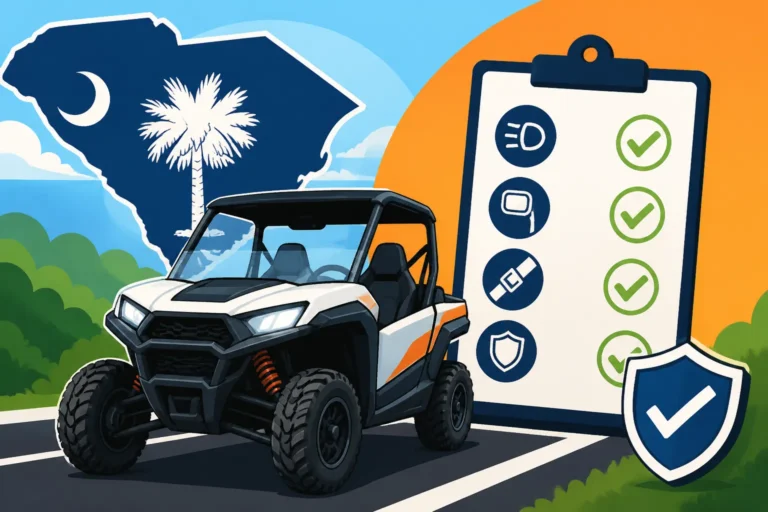
Here's a quick reference table for checking your spark arrester:
| Component to Check | What to Look For | Action If Not Found/Damaged |
|---|---|---|
| Muffler Body | USFS Approved Stamp/Engraving, often with a code | Purchase new USFS-approved muffler (e.g., from SuperATV) or add certified insert. |
| Exhaust Outlet Screen | Intact, fine mesh screen; no holes, tears, or heavy clog | Clean thoroughly; replace screen insert if damaged (must be USFS-approved replacement). |
| Owner's Manual/Specs | Confirmation of built-in USFS compliance for OEM system | If confirmed, ensure no modifications have compromised it. If uncertain, check with dealer. |
| Aftermarket Exhaust | Explicit USFS certification on product or manufacturer site | Ensure the specific model you have is certified. If not, replace or add an approved insert. |
The Consequences of Skipping This Requirement
Thinking about skipping the spark arrester? It might seem like a minor detail, but the consequences of operating an unequipped or non-compliant ATV or UTV on Forest Service lands in South Carolina can range from inconvenient to severe. It’s not just about a potential fine; it’s about the broader impact on your riding privileges, the environment, and the community.
Forest Service personnel, as well as state and local law enforcement who have jurisdiction on or near public lands, are well aware of this requirement. During routine patrols or at designated [South Carolina Trailheads With Trailer Parking], they can conduct inspections. If your machine is found to be non-compliant, you will be stopped, and your riding day will come to an abrupt end.
Fines and Getting Kicked Off the Trail
The most immediate consequence of not having a USFS-approved spark arrester is typically a citation and being ordered to leave the trail system. These fines can vary, but generally fall within the range of [South Carolina Fines of $50 to $200]. That's money you could have spent on fuel for more rides or upgrades for your machine, now gone because of a preventable issue. Being told to pack up your gear and leave is a frustrating end to what was supposed to be a fun day, especially if you've traveled a distance to get to the trails.
Beyond the immediate financial penalty, repeated violations or more serious offenses (like causing a fire) can lead to more significant legal ramifications. Federal land violations can stay on your record, and in extreme cases, you could face bans from certain public lands. It's simply not worth the risk. Imagine getting to the gate of Carolina Adventure World or a National Forest trail only to be turned away because your machine isn't compliant. It's a frustrating scenario that can easily be avoided.
Environmental Damage and Trail Closures
The more severe, long-term consequences of spark arrester non-compliance often go unseen by individual riders, but their impact is enormous. A single, uncontrolled spark could ignite a wildfire that devastates hundreds or thousands of acres of forest. This isn't just about trees; it's about the entire ecosystem – the wildlife that loses its habitat, the soil that's sterilized, the water sources that are contaminated by ash and runoff, and the air quality that suffers for miles around.
When wildfires occur, trails are often closed, sometimes for extended periods, to allow for firefighting, recovery, and rehabilitation. These closures impact all riders, even those who were compliant. It reduces the precious recreational opportunities we have and creates a negative perception of off-road vehicle use. One irresponsible act can sour the experience for thousands of responsible riders.
Ultimately, having a certified spark arrester is a small, easy step to take that demonstrates your commitment to safe and responsible riding. It ensures you can enjoy South Carolina's incredible trails without worry, contributing to the preservation of these lands for everyone, now and in the future. Don't let a missing or uncertified spark arrester ruin your day or, worse, contribute to a tragic wildfire. Do your part, check your machine, and ride safely.
Disclaimer
This article is for general informational purposes only and does not constitute professional advice. Laws, prices and regulations vary by location and change over time. Consult a qualified professional for guidance on your specific situation.