Seat Belts and a Steering Wheel
Navigating the world of off-road vehicles in South Carolina can feel like trying to solve a puzzle with missing pieces, especially when you start thinking about taking your machine from the trail to public roads. Many riders wonder if their UTV can truly become "street-legal," and the answer often hinges on a few fundamental features that distinguish a casual trail machine from a road-worthy vehicle. This guide will walk you through the essential requirements, particularly focusing on the role of seat belts and a steering wheel, to help you understand what it takes to hit South Carolina's secondary roads legally.
The Core Requirements for Street-Legal UTVs in South Carolina
For years, the idea of a street-legal UTV in South Carolina felt like a pipe dream for many enthusiasts. We loved our side-by-sides for their utility and trail prowess, but the pavement was strictly off-limits. Thankfully, [South Carolina Street-Legal UTV Registration Arrives] has changed that, but it didn't come without a strict set of guidelines that transform an off-road beast into a road-going vehicle. It's not just about slapping a license plate on it; it's about meeting specific safety and operational standards, with the steering wheel and seat belts being front and center.
Beyond Just a Steering Wheel: Essential Control Features
When you think about driving on a public road, the primary means of control is, without a doubt, the steering wheel. This might seem obvious, but for many UTVs that are more accustomed to rough terrain, the precision and responsiveness required for road use are different. Unlike an ATV with handlebars, a UTV's steering wheel provides a more familiar and stable interface for operating on paved surfaces, much like a car. This feature is fundamental because it allows for predictable and accurate steering inputs, which are crucial for maintaining a lane, navigating turns, and reacting to traffic situations.
Beyond just the steering wheel itself, a street-legal UTV needs a full suite of control features that mimic standard road vehicles. This includes functional headlights and taillights that meet specific visibility standards, turn signals to communicate your intentions to other drivers, and brake lights that clearly signal when you're slowing down. You'll also need a horn, because you never know when you'll need to alert another driver, and at least one rearview mirror – though many riders find two side mirrors, like those offered by SuperATV, make for much safer road navigation. These components ensure that your UTV isn't just controllable, but also visible and communicative within the flow of traffic.
Seat Belts: A Non-Negotiable Safety Feature
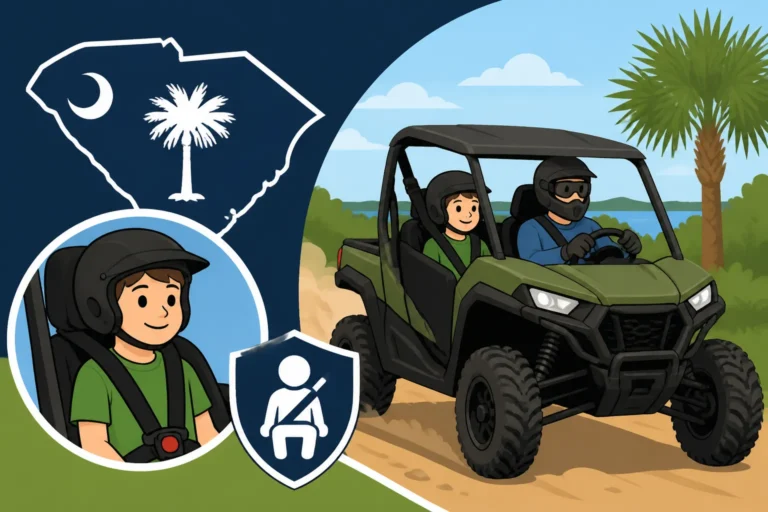
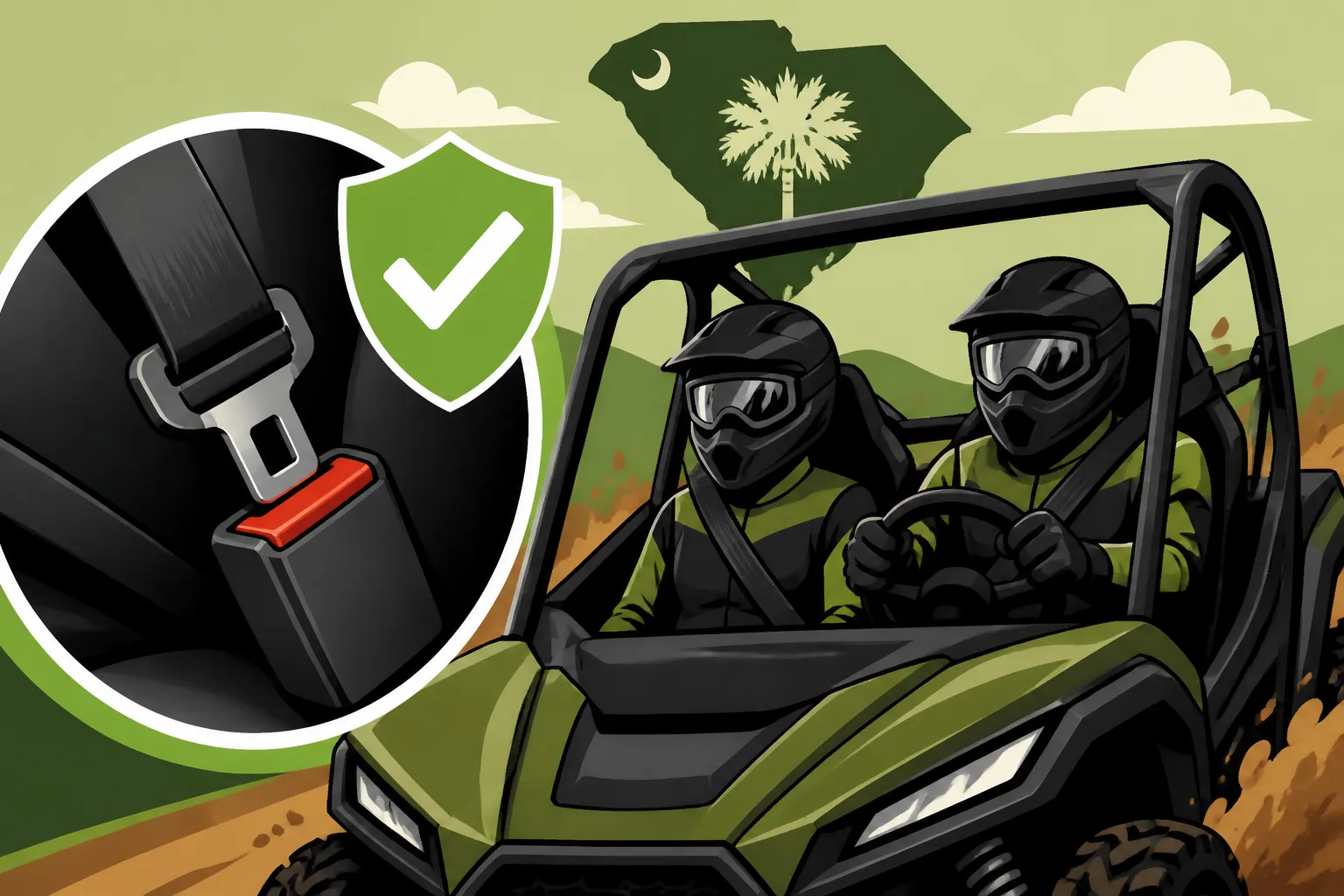
If there's one safety feature that screams "road vehicle," it's the seat belt. In South Carolina, for your UTV to qualify for street-legal status, it absolutely must have seat belts for every occupant. This isn't just a suggestion; it's a critical safety mandate designed to protect you and your passengers in the event of a collision or sudden stop. Think about it: on the trail, speeds are often lower, and impacts might be absorbed by terrain. On the road, you're interacting with vehicles moving at much higher speeds, and the consequences of an accident can be far more severe.
The type of seat belt matters too. Most street-legal UTV conversions will require at least a three-point lap and shoulder belt system, similar to what you'd find in a standard car. While aftermarket four-point or five-point harnesses are popular for hardcore off-roading, for street legality, the focus is on a system that is properly anchored and designed for road impact protection. Always ensure your UTV's seat belts are in excellent working order, free from frays or damage, and securely fastened to the machine's frame. This isn't just about avoiding a ticket; it's about potentially saving lives. Understanding [South Carolina Street UTV Insurance Rules] can also shed light on how these safety features play into your coverage.
The Full Spectrum of Street-Legal Specifications
While seat belts and a steering wheel are foundational, they are just two pieces of a larger puzzle. South Carolina's regulations for street-legal UTVs are comprehensive, covering everything from the machine's physical dimensions to its operational capabilities. For instance, your UTV will need to meet specific size requirements; typically, this means it must be 80 inches wide at most and weigh no more than 4,000 pounds. These limits ensure that UTVs don't become oversized hazards on narrower roads.
Beyond size, other essential equipment includes DOT-approved tires (meaning they're rated for road use), a windshield (which often needs to be safety glass), and a working speedometer to ensure you're adhering to [South Carolina Street UTV Road Speed Limits]. And let's not forget the exhaust system: it needs to be quiet enough to comply with local noise ordinances and often requires a spark arrester, especially if you plan to transition back to forest trails. Many riders turn to aftermarket suppliers like SuperATV for these conversion parts, which offer comprehensive kits that bundle many of these necessary items, simplifying the process of transforming an off-road machine into a road-ready one. The goal is to bring your UTV up to a standard where it can safely and predictably share the road with other traffic.
Why These Features Matter for Road Safety and Legality
It’s easy to feel like some of these rules are just bureaucratic hurdles, especially when you’re used to the freedom of the trails. But when you move your UTV onto public roads, the dynamic completely changes. You’re no longer just responsible for your own safety and the safety of your passengers; you’re now part of a larger ecosystem of cars, trucks, and even pedestrians. The requirements for seat belts, a steering wheel, and other road-specific equipment are there for a very good reason: to ensure everyone’s safety and to prevent serious accidents.
Protecting Yourself and Others on Public Roads
The open road presents a different kind of challenge compared to the controlled environment of an OHV park. Speeds are higher, traffic is denser, and other drivers may not be accustomed to sharing the road with a UTV. A steering wheel, as opposed to handlebars, offers a more precise and stable control input, which is vital for maintaining lane discipline and making smooth, predictable maneuvers at road speeds. Imagine trying to make an emergency swerve with handlebars versus a steering wheel – the difference in control and stability is significant.
Similarly, seat belts are not just a nice-to-have; they are your primary line of defense in a collision. On the trail, a low-speed impact might result in a jostle. On the road, even a minor fender-bender can have severe consequences if occupants aren't properly restrained. These features minimize the risk of ejection, reduce the severity of impacts, and generally increase occupant safety. It’s about building a buffer between you and the potential hazards of sharing the asphalt. Plus, having proper documentation like [South Carolina Paperwork for a Street UTV] helps ensure you're covered if anything unforeseen happens.
Avoiding Fines and Legal Headaches
Beyond the critical aspect of safety, there's the very practical concern of legality. South Carolina has put these laws in place, and law enforcement officers are trained to ensure compliance. Operating a UTV on public roads without the mandated safety features—like proper seat belts or a functional steering wheel—can lead to significant fines, penalties, and even impoundment of your vehicle. It’s not a situation anyone wants to find themselves in, especially when you've invested time and money in your machine.
Ignorance of the law is rarely an excuse. Before you ever pull out onto a public road, make absolutely certain your UTV meets every single requirement. This means checking your lighting, mirrors, tires, and of course, those vital seat belts and steering system. A quick check of [What a South Carolina Deputy Can Ask to See] can save you a lot of grief. The peace of mind that comes from knowing you’re fully compliant and your vehicle is as safe as it can be is truly priceless. Always remember that while some rules like [South Carolina Does Not Register Off-Road ATVs] provide flexibility, road use has its own strict obligations.
Navigating the Conversion Process and Choosing the Right Gear
So, you’ve decided to take the plunge and make your UTV street-legal. Congratulations! It's an exciting prospect that opens up a whole new world of riding possibilities. However, the conversion process can feel a bit daunting if you're not sure where to start. It involves more than just a trip to the DMV; it often requires carefully selected aftermarket parts and a thorough understanding of what the state expects.
Essential Upgrades for South Carolina Street Legality
To meet South Carolina's street-legal requirements, you'll likely need to make several upgrades to your UTV. If your machine didn't come with them from the factory, a turn signal kit is usually at the top of the list. These kits typically include front and rear LED lights, a signal switch, and sometimes a horn, integrating seamlessly into your UTV's electrical system. Next, DOT-approved tires are a must. These aren't your typical aggressive off-road tires; they have a specific tread pattern and construction rated for higher speeds and asphalt use.
A windshield is another common addition, often requiring a durable, clear material that provides protection without obstructing vision. Mirrors, particularly side mirrors, are crucial for situational awareness on the road. You'll also want to confirm your headlights and taillights meet the brightness and visibility standards for road use, and that you have a functioning horn. Companies like SuperATV specialize in providing these types of street-legal conversion kits and individual components, making it easier to find high-quality, compliant parts that fit your specific UTV model. They often have complete bundles that ensure you cover all the bases, from lighting to mirrors and even windshields.
Here's a quick look at common street-legal UTV requirements in South Carolina:
| Feature | Requirement | Notes |
|---|---|---|
| Steering Wheel | Required for UTVs | Standard for most side-by-sides, crucial for road control. |
| Seat Belts | Required for all occupants | Minimum 3-point lap/shoulder belts. Must be functional. |
| Headlights | White, visible from 500 ft | Required day and night on public roads. |
| Taillights/Brake Lights | Red, visible from 500 ft / 300 ft respectively | Brake lights must activate upon pedal depression. |
| Turn Signals | Front (amber/white), Rear (amber/red) | Required for signaling turns and lane changes. |
| Rearview Mirror | At least one, providing clear view 200 ft to rear | Many opt for two side mirrors for better visibility. |
| Windshield | Required (often safety glass) | Protects occupants from road debris. |
| Horn | Audible from 200 ft | Essential for warning other drivers or pedestrians. |
| DOT-Approved Tires | Required | Specific tread and construction for highway speeds. |
| Speedometer | Functional and visible | Ensures adherence to posted speed limits. |
| Muffler/Spark Arrester | Required to limit noise and prevent fires | Must meet legal sound limits, especially for forest access. |
| License Plate Light | Required to illuminate rear plate | Ensures plate visibility after dark. |
| Vehicle Width | 80 inches maximum | Prevents oversized vehicles on standard roads. |
| Vehicle Weight | 4,000 pounds maximum | Ensures road integrity and handling characteristics. |
The Role of Inspection and Certification
Once you've installed all the necessary upgrades, your UTV isn't automatically street-legal. There's a formal process you'll need to follow with the South Carolina Department of Motor Vehicles (DMV) to get it titled and registered. This typically involves completing specific forms, providing proof of ownership (like your [South Carolina Requires an MCO for a New Machine] or an assigned title for used machines), and showing that you've met all the equipment requirements. You'll also need proof of liability insurance, which is mandatory for any street-legal vehicle.
While the DMV doesn't usually perform a detailed mechanical inspection like some states, you are attesting that your UTV meets all legal requirements when you apply for registration. It's on you to ensure every component, from the seat belts to the turn signals, is in perfect working order. Don't overlook the importance of your [South Carolina Title Applications at the DMV] to ensure everything is processed correctly. Double-checking every detail before your visit can save you a lot of time and frustration.
Understanding South Carolina's Unique UTV Laws
South Carolina has specific legislation that paved the way for street-legal UTVs. While the details can change, the core intent is to allow UTVs on secondary roads with speed limits of 55 mph or less. This means you won't be cruising down I-26 in your side-by-side, but you can certainly use it for trips to the local store, to a friend's house, or to access certain trailheads. It's important to be aware of [South Carolina Street UTV Road Speed Limits] and to understand that some local municipalities might have their own specific ordinances or restrictions.
For example, there may be rules about how far you can travel from your home or what types of roads are explicitly prohibited, beyond just interstates. The biennial registration fee is also something to factor into your budget. [South Carolina's Biennial Street UTV Fee] is a recurring cost that keeps your plate active. Staying informed about these nuances is key to enjoying your street-legal UTV without running into any unexpected issues. Being a responsible rider means knowing the rules, abiding by them, and ensuring your machine is always properly equipped and maintained for the road.
Disclaimer
This article is for general informational purposes only and does not constitute professional advice. Laws, prices and regulations vary by location and change over time. Consult a qualified professional for guidance on your specific situation.