Turn Signals and Brake Lights
Trying to navigate the rules for taking your UTV on South Carolina's public roads can feel like trying to solve a puzzle with half the pieces missing, especially when it comes to crucial safety features like turn signals and brake lights. Many riders are eager to use their side-by-sides for quick trips to the store, connecting trails, or even as daily drivers, but they hit a wall when they realize their machine isn't equipped for street legality. This guide is here to demystify those requirements, specifically focusing on the ins and outs of turn signals and brake lights, and help you understand exactly what you need to do to legally and safely drive your UTV on South Carolina's paved surfaces.
Why Turn Signals and Brake Lights Matter in South Carolina
For years, the idea of driving your UTV on South Carolina's public roads seemed like a pipe dream, confined mostly to private land or very specific, limited scenarios. But the landscape has shifted, creating new opportunities for UTV owners. With this shift comes the critical responsibility of ensuring your machine is not just capable, but also legally equipped to share the road with other vehicles. At the heart of this legal equipment are highly visible turn signals and functional brake lights, which aren't just minor accessories but fundamental safety components. They are the language your vehicle speaks to others, signaling your intentions and preventing potential accidents.
The Shift Towards Street Legality
South Carolina has seen a significant change in its laws regarding UTVs. What was once a strict "off-road only" stance has evolved to allow for street-legal UTV registration under certain conditions. This is a huge win for enthusiasts who want more flexibility and utility from their machines, whether it's for farm work that requires crossing a county road or simply enjoying scenic drives. This evolution, however, isn't a free-for-all; it comes with a stringent set of requirements designed to integrate these machines safely into existing traffic patterns. It's about making sure your UTV can communicate its movements and presence just like any other car or truck on the road.
Before this change, if you found yourself needing to cross a road, it was often a quick, nervous dash, hoping no law enforcement was around and that other drivers saw you. Now, with the proper modifications and registration, that stress can be significantly reduced. This means more freedom to explore, connect trails, and use your UTV for practical purposes beyond just off-road recreation. But this freedom is contingent on meeting the safety standards, and turn signals and brake lights are paramount among them. [South Carolina Street-Legal UTV Registration Arrives] is a great resource if you're looking into the broader scope of registration.
Safety First: Beyond the Law
Beyond the legal mandate, turn signals and brake lights are absolutely vital for your safety and the safety of everyone else on the road. Imagine driving down a busy rural road and the vehicle in front of you suddenly turns without any warning. That split second of confusion can lead to a dangerous situation. Your UTV, often smaller and less conspicuous than a full-size vehicle, needs every advantage it can get to be seen and understood by other drivers. These lights provide clear, unmistakable signals about your intentions, whether you're slowing down, stopping, or changing lanes.
Think about it from another driver's perspective. They're used to seeing cars and trucks that indicate turns and stops automatically. A UTV that suddenly brakes or veers without these signals can be a major surprise, and not in a good way. The distinct flashing of a turn signal lets them know you're preparing to turn right or left, giving them time to react and adjust their speed or position. Similarly, the immediate illumination of brake lights warns them you're reducing speed or coming to a halt, preventing rear-end collisions. Especially when you consider that UTVs often have different acceleration and braking characteristics than typical cars, clear signaling becomes even more critical for anticipating movements.
South Carolina's Specific Requirements for Street-Legal UTVs
When it comes to making your UTV street-legal in South Carolina, the state has laid out clear guidelines that echo those for other motor vehicles. You can't just slap any old light on there and call it a day. The requirements are detailed, ensuring that every street-legal UTV is equipped to communicate effectively with other drivers and law enforcement. This means understanding not just that you need turn signals and brake lights, but also the specific standards they must meet. These aren't just suggestions; they are non-negotiable elements for safe and legal operation on public roads.
Navigating these rules can be a bit daunting, but breaking them down makes it much more manageable. The goal is to ensure your UTV is just as visible and communicative as any car, truck, or motorcycle on the road. If you're planning to register your UTV for street use, getting these components right from the start will save you headaches down the line at the DMV and prevent potential citations on the road. Remember, the [South Carolina Street UTV Requirements Explained] covers a broader range of specifications, but lighting is a cornerstone.
Turn Signal Standards
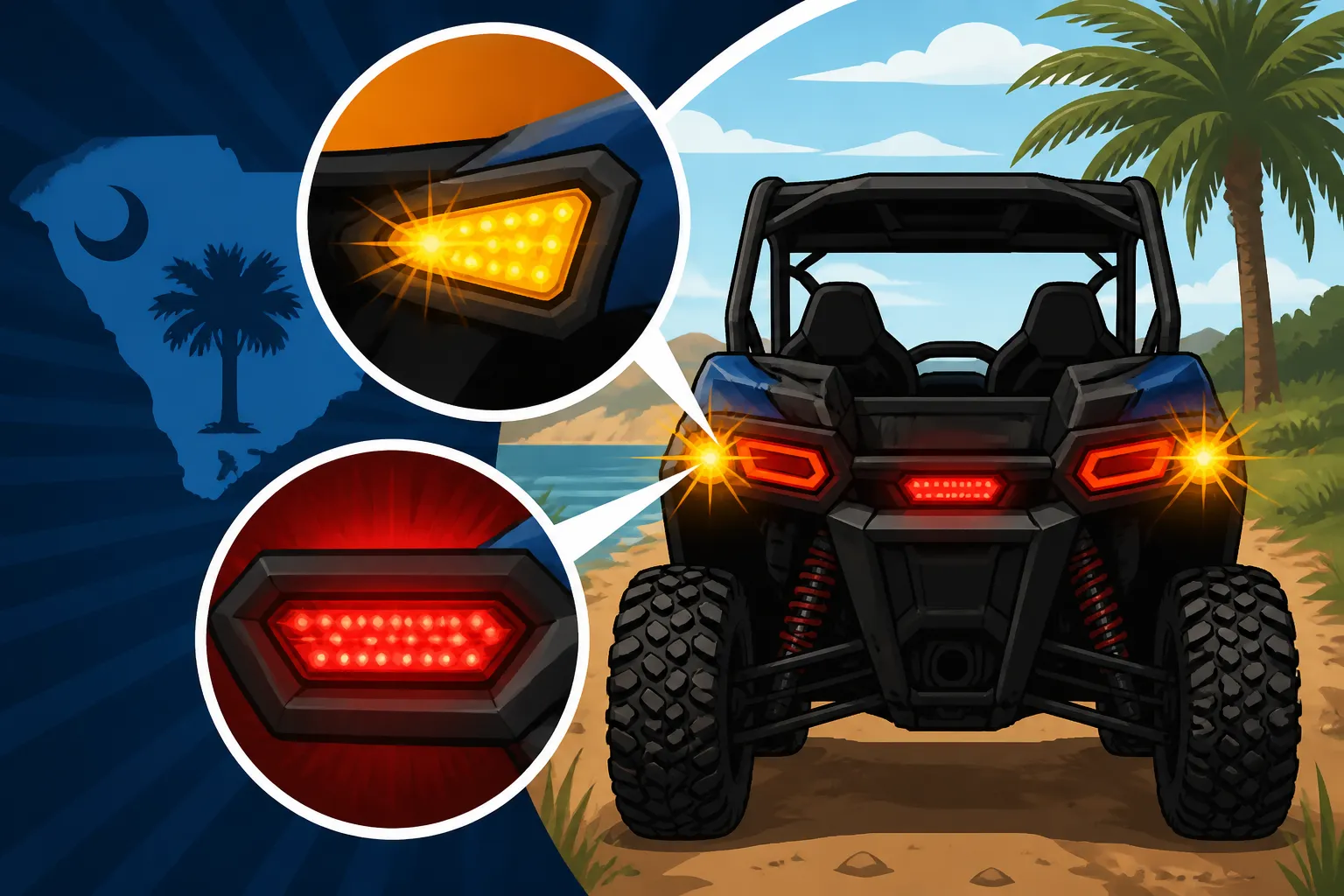
For your UTV to be considered street-legal in South Carolina, it must be equipped with fully functional turn signals on both the front and rear of the vehicle. These aren't optional extras; they're a must. The signals need to be capable of flashing independently to indicate a left or right turn. This means you need a dedicated system, typically with an amber light, that illuminates distinctly when activated. It's not enough to simply wave your arm out the window, especially in situations where visibility might be poor or your arms are occupied with steering.
Beyond just having them, there are typically unspoken standards for brightness and visibility. While specific lumen counts aren't usually legislated, the turn signals must be bright enough to be clearly seen by other drivers in various conditions—daylight, night, rain, or fog. They should also be positioned in such a way that they are not obstructed by cargo, passengers, or any part of the vehicle itself. Many aftermarket kits, like those offered by SuperATV, provide integrated solutions designed to meet these visibility standards, ensuring your UTV is seen coming and going. Having a robust and reliable turn signal system is key to safely merging into traffic or changing lanes on a busy road.
Brake Light Requirements
Just like turn signals, fully operational brake lights are absolutely essential for street legality. South Carolina law requires that your UTV has at least two red brake lights mounted on the rear of the vehicle. These lights must illuminate automatically and immediately when the brake pedal is depressed, providing a clear warning to following drivers that you are slowing down or stopping. This instantaneous response is crucial for preventing rear-end collisions, especially in unexpected traffic situations or emergency braking scenarios.
The brightness and visibility of your brake lights are just as important as their activation. They need to be bright enough to cut through sunlight and easily distinguishable as brake lights, even from a distance. Again, while the law might not specify exact brightness, common sense and safety dictate that they should be highly visible. If your UTV is equipped with a third, center-mounted brake light (often called a high-mount stop lamp), that's an added safety bonus, though typically not legally mandated for UTVs. Ensure your brake light lenses are clean and free of cracks or discoloration, as this can severely impede their effectiveness. Regular checks are a good habit to ensure they're always working perfectly.
Other Essential Lighting
While turn signals and brake lights are the focus here, it's important to remember they are part of a larger lighting ecosystem required for street-legal UTVs in South Carolina. Your machine will also need functioning headlights (typically two, white or amber, forward-facing), taillights (usually two, red, rear-facing that are constantly illuminated when the headlights are on), and often a license plate light that illuminates your rear license plate. Reflectors are also typically required on the rear and sides of the vehicle to enhance visibility, especially at night or when parked.
Some states might also require hazard lights (all four turn signals flashing simultaneously) for situations where your vehicle is stopped or moving slowly under unusual circumstances. When considering an aftermarket kit, looking for a comprehensive package that addresses all these lighting needs can simplify the process. Companies like SuperATV often offer complete street-legal kits that include not only turn signals and brake lights but also horns, mirrors, and sometimes even windshield wipers, ensuring you're covering all your bases for street legality. Remember, the goal is to be as visible and communicative as possible to other road users, so don't skimp on any part of your lighting system. [South Carolina Street UTV Paperwork for a Street UTV] will likely confirm these other requirements.
Choosing and Installing Your Lighting System
Once you understand what South Carolina requires for turn signals and brake lights on your street-legal UTV, the next step is actually getting them installed. This isn't just about bolting on some lights; it's about choosing the right components, ensuring they're wired correctly, and confirming they function reliably under all conditions. There are several paths you can take, from buying a complete aftermarket kit to piecing together a DIY solution. Each approach has its own set of advantages and challenges.
Making an informed decision here can save you a lot of frustration and potential re-work down the road. You want a system that is durable, effective, and easy to maintain. Consider the type of riding you do; if your UTV sees a lot of mud, water, or rough terrain, you'll want components that are built to withstand those elements. A high-quality installation is just as important as high-quality parts for long-term reliability.
Aftermarket Kits vs. DIY
When it comes to equipping your UTV with turn signals and brake lights, you generally have two main options: purchasing an aftermarket street-legal kit or sourcing individual components for a do-it-yourself (DIY) build. Aftermarket kits, often from reputable brands, are designed to be comprehensive. They usually include all necessary lights, wiring harnesses, switches, relays, and sometimes even a horn and mirrors, all packaged together with detailed instructions. The big advantage here is convenience and compatibility; the components are designed to work together, and the instructions often simplify the installation process significantly. Many riders find these kits, such as those from SuperATV, to be a straightforward way to meet all the legal requirements without having to be an electrical expert.
On the other hand, a DIY approach involves buying each component separately—the turn signal switch, flasher relay, light fixtures, wiring, and brake light pressure switch. This route offers maximum customization and can potentially save you money if you're resourceful and have existing parts. However, it requires a much deeper understanding of automotive electrical systems. You'll need to figure out wiring diagrams, ensure component compatibility, and possibly fabricate mounting brackets. While rewarding for the mechanically inclined, it also carries a higher risk of electrical issues or non-compliance if not executed perfectly. For most riders seeking street legality, a well-regarded aftermarket kit tends to be the less stressful and more reliable option.
Installation Tips and Considerations
Whether you go with a kit or a DIY setup, proper installation is paramount. The first step is always to disconnect your battery to avoid any electrical shorts or accidents. When installing turn signal lights, ensure they are symmetrically placed on the front and rear of the vehicle, clearly visible from various angles. Routing the wiring neatly and securely is critical. Use zip ties, conduit, or wiring loom to protect the wires from heat, abrasion, and moisture, especially in off-road environments. Don't leave loose wires hanging where they can get caught on branches or damaged by debris.
For brake lights, the wiring typically involves tapping into your existing brake system. Many kits come with a pressure switch that activates the brake lights when hydraulic pressure builds in your brake lines. Ensure this switch is installed correctly and functioning reliably. Test all lights thoroughly before hitting the road. Check that the turn signals flash at the correct rate (not too fast or too slow, which could indicate a wiring issue) and that both brake lights illuminate when the pedal is pressed. Consider using waterproof connectors and dielectric grease on electrical connections to prevent corrosion, especially given South Carolina's humid climate. If you're unsure about any part of the installation, it's always wise to consult a professional automotive electrician to ensure everything is safe and compliant.
What to Expect on the Road and at the DMV
Once your UTV is equipped with all the necessary lighting and other street-legal modifications, you're ready for the final hurdles: proving compliance at the DMV and then operating safely on South Carolina's roads. This isn't just about having the lights installed; it's about ensuring they work perfectly and that you understand the rules of the road for your newly street-legal machine. The process at the DMV can be straightforward if you're prepared, but any missing piece of paperwork or a faulty light can cause significant delays.
Operating your UTV on public roads is a different experience from trail riding. You're sharing the space with larger, faster vehicles, and you need to be constantly aware of your surroundings and your vehicle's capabilities. Knowing what to expect both at the counter and on the asphalt will help ensure a smooth transition to street legality. Remember, the privilege of street-legal UTV use comes with responsibilities, and part of that is adhering to all traffic laws and safety regulations.
Proving Compliance at Registration
When you head to the South Carolina Department of Motor Vehicles (DMV) to register your street-legal UTV, they will be looking for specific proof that your machine meets all the necessary requirements. This isn't just a quick glance; the clerks are trained to ensure compliance. You'll need to fill out the correct forms, which generally include a title application or proof of ownership, and potentially a special form for street-legal UTVs. This is where your newly installed turn signals and brake lights come into play. While they might not physically inspect every UTV on the spot, you'll likely sign an affidavit or declaration stating that your vehicle meets all the required safety and equipment standards, including proper lighting. False statements can lead to serious legal consequences.
It's crucial to have your UTV fully equipped and operational before you go to the DMV. Imagine arriving, only to realize a turn signal isn't flashing, or a brake light is out. That will send you right back home to fix it, delaying your registration. Some DMV offices might require a visual inspection of specific items, or they might ask you to demonstrate the functionality of your lights. Having all your paperwork in order, including the Manufacturer's Certificate of Origin (MCO) for a new machine or a [South Carolina Assigned Titles for Used Machines] for a pre-owned one, along with proof of insurance (which is mandatory for street-legal UTVs), will streamline the process immensely. Be prepared to pay the [South Carolina Street UTV Registration Cost] and any applicable title fees.
Staying Legal on South Carolina Roads
Once your UTV is officially registered and tagged for street use, the responsibility shifts to maintaining its legal status and operating it safely. This means regularly checking your turn signals, brake lights, headlights, and taillights to ensure they are all in working order. A blown bulb or a loose wire can happen, and driving with faulty lights can result in a traffic citation, even if your UTV was initially compliant. Remember, law enforcement officers are vigilant about vehicle safety, and proper lighting is one of the first things they'll notice.
Beyond functional lighting, you must adhere to all South Carolina traffic laws. This includes obeying speed limits, stopping at stop signs and traffic lights, and signaling your turns well in advance. Keep in mind that [South Carolina Street UTV Road Speed Limits] typically restrict UTVs to roads with a posted speed limit of 55 mph or less. There might also be specific rules regarding passengers, helmet use for younger riders, and where you can operate your UTV, such as within a certain radius of your home or business, depending on local ordinances. Always carry your registration, proof of insurance, and driver's license with you, as an officer may ask to see them during a stop. Being a responsible and well-informed UTV operator is key to enjoying your street-legal machine for years to come.
Essential Lighting & Safety Checklist for Street-Legal UTVs in South Carolina
Making sure your UTV meets all the requirements for street legality can feel like a lot to keep track of. To help simplify things, here's a handy checklist for essential lighting and other critical safety features your UTV should have to be compliant in South Carolina. This isn't an exhaustive list of all street-legal requirements, but it hits the major points related to visibility and signaling.
| Feature | Requirement for Street-Legal UTVs in SC | Notes |
|---|---|---|
| Turn Signals | Front and rear, amber, clearly visible, capable of flashing independently. | Essential for indicating turns to other drivers. Must be bright enough for day and night use. |
| Brake Lights | At least two red lights on the rear, illuminating when brake pedal is pressed. | Critical for warning following vehicles of deceleration or stops. Must be highly visible. |
| Headlights | At least two white or amber lights on the front, capable of illuminating the road. | Standard automotive headlights for visibility after dark and in poor weather. |
| Taillights | At least two red lights on the rear, constantly illuminated with headlights. | For rear visibility during low-light conditions. Often integrated with brake lights. |
| License Plate Light | White light illuminating the rear license plate. | Ensures your license plate is visible after dark, as required by law. |
| Reflectors | Red on rear, amber on sides (front and rear sides). | Enhances visibility from all angles, especially when parked or in low light. |
| Horn | Audible from at least 200 feet. | Required for warning pedestrians or other vehicles of your presence. |
| Mirrors | At least one rear-view mirror. | Allows the operator to see traffic approaching from behind. Many kits include two side mirrors for better visibility. |
| Windshield | Safety glass windshield. | Protects the operator from debris; often accompanied by a windshield wiper. |
| Seatbelts | Required for all occupants. | Must be factory-installed or equivalent, properly functioning seatbelts for all designated seating positions. |
| Tires | DOT-approved for street use. | Your tires must be rated for highway speeds and conditions. |
This checklist is a helpful starting point, but always double-check the latest South Carolina DMV regulations or consult with a local professional to ensure your UTV is fully compliant. [South Carolina Street UTV Paperwork for a Street UTV] can offer more insight into the specific forms and documentation needed.
Disclaimer
This article is for general informational purposes only and does not constitute professional advice. Laws, prices and regulations vary by location and change over time. Consult a qualified professional for guidance on your specific situation.