The New South Carolina Law Opening Secondary Roads
For years, South Carolina riders have faced the frustrating reality of limited places to legally ride their beloved UTVs, often requiring a truck and trailer just to get to a suitable off-road park or private land. But thankfully, a significant change in the law is opening up new possibilities, allowing properly equipped and registered utility terrain vehicles to access many of our state’s secondary roads, greatly expanding your riding freedom and convenience. This guide will walk you through everything you need to know about this exciting new legislation.
Understanding the New Law Opening Secondary Roads
The days of strictly off-road UTV use are evolving here in the Palmetto State. Many of us have dreamed of being able to take our side-by-sides from our property to a nearby store, or cruise down a paved country road to a friend's house without having to load up the trailer. This new legislation is making those dreams a reality for many UTV owners, though it comes with specific rules and requirements you absolutely must understand.
What Changed and When
The landscape for UTV owners in South Carolina shifted dramatically with the passing of Act 164. This pivotal piece of legislation, signed into law, created a distinct classification for "street-legal" UTVs, effectively paving the way for them to be operated on certain public roads. Prior to this, UTVs generally existed in a legal gray area for road use, often confined to private land or specialized off-road parks. The new law provides clear guidelines, removing much of the ambiguity and giving law enforcement a consistent framework to work with. It's a game-changer because it acknowledges the growing popularity and utility of these machines, finally granting them a legitimate place on our secondary road system. Riders no longer have to guess; if they meet the specific criteria, their UTV can officially join them on many paved routes. For a deep dive into the specifics of this legislation, check out [South Carolina Act 164 and Street UTVs].
This change has been a long time coming for many in the UTV community who have seen neighboring states embrace similar allowances. The effective date of this act marks a new era, allowing riders to envision using their machines for more than just trail riding or farm work. It opens up possibilities for quick trips, scenic drives, and better access to riding areas, all without the hassle of constantly loading and unloading. It’s about integrating these versatile machines into our daily lives in a safe and regulated manner, recognizing their potential beyond just recreation.
Distinguishing UTVs from ATVs and Golf Carts
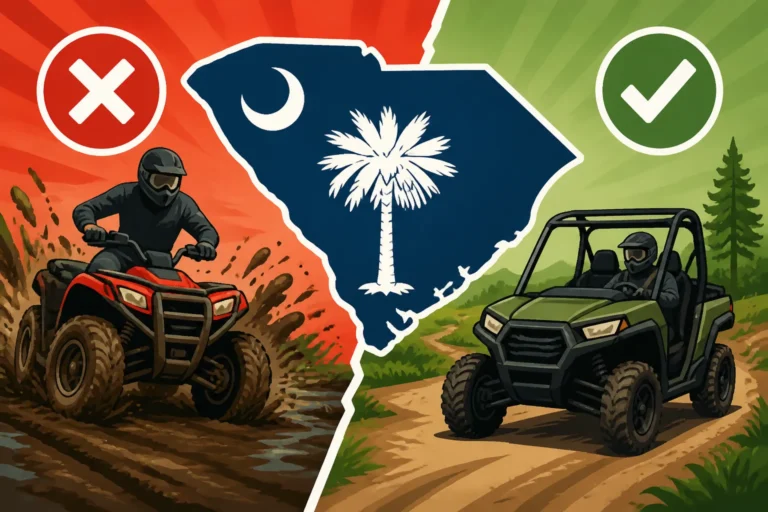
It's crucial to understand that while this new law is fantastic news for UTV owners, it doesn't apply to all off-road vehicles. Your traditional ATV, or "quad," for example, generally remains restricted from public road use. The law specifically carves out a niche for UTVs, largely due to their design, which often includes features more akin to a small car, like side-by-side seating, steering wheels, and sometimes even enclosed cabs. These distinctions are critical because attempting to operate an ATV under the UTV provisions will lead to penalties. The design differences contribute significantly to how these vehicles are perceived and regulated for road safety.
Similarly, while golf carts and low-speed vehicles (LSVs) have their own set of rules for road use in South Carolina, they are distinct from the new street-legal UTV classification. Golf carts, for instance, are typically limited by speed and a very strict radius of operation around your home, and usually only during daylight hours. LSVs have more stringent safety features and can travel at slightly higher speeds, but still within specific limits. The street-legal UTV occupies a unique space, allowing for greater speeds and a broader operational scope than a golf cart, while often being more rugged and trail-capable than a typical LSV. For context, you might want to review [South Carolina Golf Cart Road Rules] and [South Carolina Low-Speed Vehicle Rules] to see how these categories compare to the new UTV regulations.
Requirements for Street-Legal UTVs
So, what exactly does your UTV need to have to earn that coveted "street-legal" status? It’s not just about slapping a license plate on it and going. The law is very specific about the modifications and equipment required to ensure these vehicles are safe for shared road use. Skipping any of these steps could mean your ride isn't legal, and you could face fines or other penalties.
Machine Specifications and Equipment
To qualify as a street-legal UTV in South Carolina, your machine must adhere to a detailed list of specifications. These aren't just suggestions; they are mandatory safety features designed to bring your UTV closer to passenger vehicle standards for road operation. This includes things like overall width (usually capped at 80 inches), weight limits (often around 4,000 pounds), and passenger capacity. Beyond the basic dimensions, specific safety equipment is non-negotiable. You'll need functioning headlights, tail lights, brake lights, and turn signals – just like any other vehicle on the road. Many UTVs, especially those primarily designed for off-road, might need aftermarket kits to meet these lighting requirements. Companies like SuperATV offer extensive kits that provide all the necessary lighting and wiring to make your machine compliant.
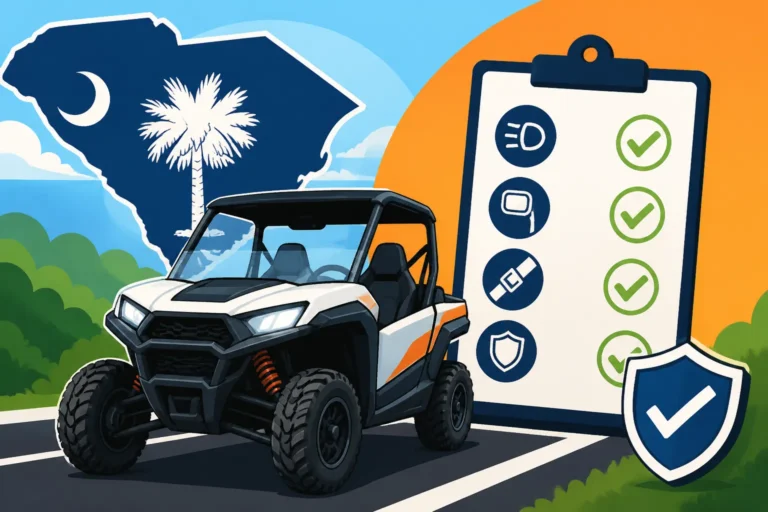
Furthermore, your UTV must be equipped with seat belts for all seating positions, a windshield, and a rearview mirror (or multiple mirrors to cover blind spots). A horn is also a must, as is a parking brake. These items are fundamental for safe road operation, allowing you to signal your intentions, see what’s behind you, and effectively communicate with other drivers. It’s about ensuring that when you hit the pavement, your UTV is predictable and visible, reducing risks for everyone on the road. Understanding the full list of requirements is essential, and you can find more specific details under [South Carolina Street UTV Machine Specs].
Driver Licensing and Age Restrictions
Just as important as the machine's specifications are the rules governing who can actually operate a street-legal UTV on public roads. This isn't a free-for-all for anyone with a UTV; proper licensing and age requirements are in place to ensure responsible operation. In South Carolina, to drive a street-legal UTV on public secondary roads, you must be at least 17 years old and possess a valid South Carolina driver's license. A beginner's permit simply won't cut it, as the state wants experienced drivers behind the wheel of these unique vehicles when they interact with regular traffic. This mirrors the responsibility required for operating any motor vehicle on state roads.
Beyond the driver's age and license, there are also rules concerning passengers, especially minors. While the specific details can sometimes vary, generally, passengers under a certain age (often eight or younger) are prohibited. For younger drivers, there may be specific helmet requirements, even if the driver is older. For instance, [South Carolina Street UTV Helmet Rules Under 21] might apply, mandating face shields or helmets for riders under that age, regardless of whether the vehicle has a windshield. It's about protecting our youngest riders and ensuring everyone in the UTV is safely secured and compliant with state law. These regulations ensure that the increased freedom to ride on roads comes with an increased responsibility for driver and passenger safety.
Where You Can Ride: The "Secondary Roads" Defined
This is where the rubber meets the road, quite literally. While the new law opens up possibilities, it doesn't mean you can just drive your UTV anywhere. There are specific limitations on which roads are accessible and how far you can travel on them. Understanding these boundaries is key to enjoying your street-legal UTV without running afoul of the law.
Understanding the 10-Mile Radius Rule
One of the most important aspects of the new street-legal UTV law is the "10-mile radius rule." This stipulation states that you can generally operate your registered UTV on approved secondary roads within a 10-mile radius of your registered address. This rule is designed to allow local use, such as trips to nearby stores, gas stations, or a friend's house, without turning UTVs into primary long-distance transportation. It’s a practical compromise that provides significant convenience for local errands and recreation, bridging the gap between off-road trails and daily life. It means you can leave directly from your property, assuming it’s connected to an eligible road, and explore your immediate surroundings. This radius is measured directly from the address where your UTV is registered, making it a clear boundary for your permissible travels.
It's worth noting that while the 10-mile radius is a general guideline, local ordinances might sometimes introduce variations or even prohibit street-legal UTVs on certain roads within their jurisdiction. It's always a good idea to check with your local municipality or county for any specific rules that might affect your riding area. However, the state law provides the overarching framework. This radius aims to keep the spirit of UTV use somewhat localized, preventing them from becoming everyday commuter vehicles on major thoroughfares. For more on this specific measurement, refer to [10 Miles Measured From Your Registered Address].
Speed Limits and Road Types
Beyond the radius, the law also dictates the types of roads and the speed limits at which street-legal UTVs can operate. Generally, these vehicles are permitted on secondary roads where the posted speed limit is 55 miles per hour or less. This explicitly excludes major highways, interstates, and primary state routes where traffic speeds are much higher, and the vehicle design of a UTV might not be suitable for such conditions. The intent is to allow UTVs on roads where they can safely coexist with other vehicles, typically in rural or suburban settings rather than high-speed environments. This distinction is crucial for both your safety and the safety of others on the road.
The state wants to ensure that these machines are used responsibly and in environments where their operational characteristics are appropriate. Therefore, you won't be seeing street-legal UTVs zipping down I-26 or I-95. Such roads are simply too fast and too high-traffic for these vehicles, and it's a critical safety measure. Understanding that [South Carolina Street UTV Road Speed Limits] are strictly enforced helps maintain the integrity of the law. For further clarity on what remains off-limits, the article on [Why South Carolina Interstates Stay Closed to ATVs] provides valuable insight into these restrictions, emphasizing the state's commitment to highway safety.
The Registration Process for Street-Legal UTVs
So, you've got your UTV properly equipped, you understand the age and road restrictions, and you're ready to hit the secondary roads. The final hurdle, and a crucial one, is getting your machine officially registered and plated with the South Carolina Department of Motor Vehicles (DMV). This isn't a complex process, but it does require attention to detail and having all your paperwork in order.
Step-by-Step Registration Guide
Getting your UTV registered for street use in South Carolina involves a few key steps at your local DMV office. First, you'll need proof of ownership, which typically means your Manufacturer's Certificate of Origin (MCO) if it's a new machine, or a properly assigned title if you bought it used. If you're coming from out of state, your previous title will suffice. You’ll also need to show proof of insurance, which is now mandatory for these street-legal machines, and a completed title and registration application form. It’s always wise to call ahead or check the SCDMV website for the most current forms and requirements to avoid multiple trips. Once your paperwork is processed and approved, you'll be issued a unique license plate that must be displayed on the rear of your UTV.
The fees involved are relatively straightforward. There's a titling fee, and then the registration fee for the street-legal UTV. It’s important to budget for both. The good news is that these costs are generally quite reasonable compared to other vehicle registrations. The biennial fee means you'll renew your registration every two years, keeping things simple. While it might seem like a bit of paperwork, it's a necessary step to legally enjoy the new road access. For a detailed rundown on the exact steps and what to bring, consult [South Carolina Street UTV Registration Steps] and for the fee structure, refer to [South Carolina's Biennial Street UTV Fee]. If you're also titling your UTV for the first time, you might be curious about [What a South Carolina ATV Title Costs].
Proof of Insurance and Plate Display
One of the most significant changes for UTV owners moving to street-legal status is the mandatory requirement for liability insurance. Just like a car or truck, your street-legal UTV must be insured to legally operate on public roads. This isn't optional; it's a fundamental part of responsible vehicle ownership when you're sharing the road with others. The state requires a minimum level of liability coverage to protect against financial responsibility in case of an accident. You'll need to provide proof of this insurance when you register your UTV at the DMV. This ensures that if an incident occurs, there's a safety net for damages or injuries to third parties.
Once registered, your UTV will be issued a unique South Carolina license plate. This plate is not just a formality; it's a visible declaration of your UTV's legal status and must be properly displayed. The law specifies that [South Carolina Rear Plates for Street UTVs] are required, and it must be clearly visible and securely mounted on the rear of the machine. Obscuring the plate or failing to display it properly can lead to a citation. This plate is your official permission slip to ride on secondary roads, so treat it with care. Always keep your insurance card and registration documents with you when riding, as law enforcement may ask to see them. For specific insurance requirements, see [South Carolina Street UTV Insurance Rules].
Here's a quick comparison of vehicle types and their road access in South Carolina:
| Vehicle Type | Road Access (Generally) | Speed Limit (if applicable) | Insurance Required | License Plate Required |
|---|---|---|---|---|
| Off-Road ATV | Private Land Only | N/A | No (for off-road) | No |
| Street-Legal UTV | Secondary Roads (≤ 55 mph, 10-mile radius) | 55 mph or less | Yes | Yes (Rear) |
| Golf Cart | Public Roads (4-mile radius, specific conditions) | 35 mph or less | No | No (Permit/Decal) |
| Low-Speed Vehicle | Roads (≤ 35 mph) | 35 mph or less | Yes | Yes (Standard Plate) |
Staying Compliant: Rules of the Road and Penalties
Having a street-legal UTV is exciting, but it also comes with the responsibility of adhering to all traffic laws and regulations. Operating your UTV on public roads means you're now part of the general traffic flow, and all the rules that apply to cars and trucks largely apply to you too. Understanding these rules and the consequences of not following them is paramount to a safe and enjoyable experience.
Important Operating Rules
When you take your street-legal UTV onto a public road, you must operate it just like any other motor vehicle. This means obeying all posted speed limits, traffic signals, stop signs, and yield signs. Signaling your turns with your UTV's functional turn signals is mandatory, and you must maintain a safe distance from other vehicles. Even though your UTV might feel more rugged, it's crucial to remember that it's sharing the road with much larger and faster vehicles. Driving defensively and being aware of your surroundings is critical. This includes operating during appropriate hours; [Driving a Plated UTV After Dark in South Carolina] is permitted, but only if your lights are fully functional and properly adjusted.
Regular maintenance is also key to ongoing compliance. Ensure your tires are in good condition, your brakes are working effectively, and all your lights (headlights, tail lights, brake lights, turn signals) are operational. A blown fuse or a broken bulb can turn a legal ride into a citation. Many riders proactively upgrade their UTV's components, perhaps with stronger axles or better suspension from a company like SuperATV, not just for trail performance but also for improved road handling and durability. Keeping your machine in top working order ensures it remains safe and compliant, preventing unexpected issues that could lead to trouble.
Enforcement and Penalties
Law enforcement officers in South Carolina are empowered to pull over any vehicle they suspect is not in compliance with state laws, and this now includes street-legal UTVs. If you're stopped, a deputy or officer can ask to see your valid driver's license, proof of insurance, and your UTV's registration. They may also check your UTV's equipment to ensure it meets the required specifications, such as working lights, seat belts, and mirrors. It's best to have all your documents readily accessible and to keep your UTV in road-ready condition to avoid any issues. For a clearer understanding of what an officer might request, see [What a South Carolina Deputy Can Ask to See].
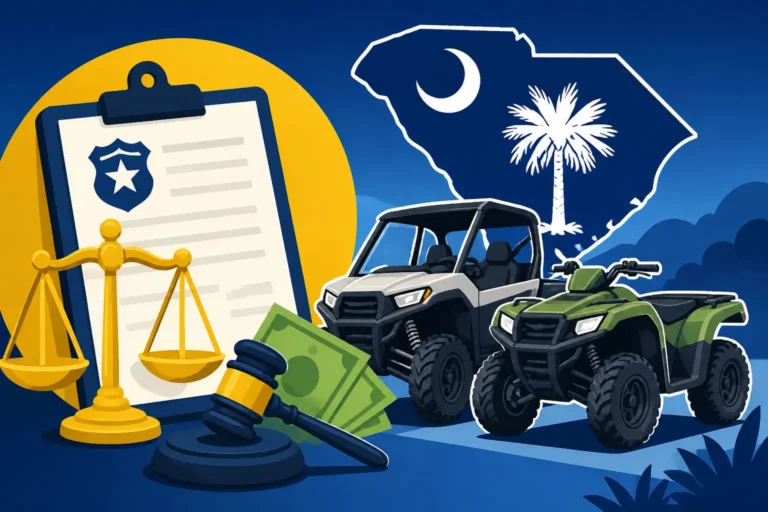
Failing to comply with the street-legal UTV laws can result in various penalties, similar to violations for other motor vehicles. These can range from minor citations for equipment violations to more significant fines for operating an unregistered or uninsured vehicle. [South Carolina Fines of $50 to $200] are common for various infractions, but more serious offenses, such as reckless driving or operating under the influence, can carry much heavier penalties, including license suspension and higher fines. It's imperative to treat your street-legal UTV with the same respect and adherence to the law as you would any other vehicle on the road.
Benefits and Considerations for Riders
This new law represents a significant step forward for the South Carolina ATV and UTV community. It’s not just about compliance; it’s about unlocking new potential for how you can use and enjoy your machine. However, with new freedoms come new responsibilities and considerations that every rider should keep in mind.
Expanded Riding Opportunities
The most obvious benefit of the new law is the vastly expanded riding opportunities it provides. Imagine being able to ride your UTV directly from your home to a nearby trail system entrance without having to trailer it, or taking a scenic cruise down country roads to a local fishing spot. This added convenience greatly enhances the utility and enjoyment of your machine. It reduces the hassle of transportation, allowing for more spontaneous rides and making your UTV a more integrated part of your local activities. Whether it's a quick trip to the hardware store, visiting friends down the road, or simply exploring the backroads, the flexibility is a game-changer.
This new accessibility can also indirectly support local businesses. Riders might be more inclined to stop at a small-town diner or local gas station if they can easily get there with their UTV. For enthusiasts, it means more time riding and less time fussing with logistics. For those who have invested in accessories and upgrades for their UTV, such as lift kits or robust winches from SuperATV for off-road adventures, being able to legally drive on pavement to reach those trails without a truck just adds another layer of value to their machine. This new law helps bridge the gap between dedicated off-road fun and everyday practicality.
Ongoing Responsibilities and Safety
While the freedom is great, it's critical to remember that operating a UTV on public roads comes with ongoing responsibilities. Safety must always be your top priority. UTVs handle differently than traditional cars, often having a higher center of gravity and different braking characteristics. Always drive cautiously, especially around corners, on uneven pavement, or in adverse weather conditions. Be mindful of other drivers who might not be accustomed to seeing UTVs on the road and may not anticipate your presence. Wearing appropriate safety gear, even if not legally mandated for adults, is always a smart decision.
Furthermore, staying informed about the law is an ongoing task. Laws and regulations can change, and local ordinances might be updated. It's your responsibility as a UTV owner to stay current with all applicable rules. This proactive approach ensures that you continue to enjoy your street-legal UTV without encountering legal problems. Regular mechanical checks, attentive driving, and respectful interaction with other road users will ensure that street-legal UTVs are seen as a welcome addition to South Carolina’s secondary roads, and not a nuisance.
Disclaimer
This article is for general informational purposes only and does not constitute professional advice. Laws, prices and regulations vary by location and change over time. Consult a qualified professional for guidance on your specific situation.