Day Passes Checked Against Your Tow Vehicle Plate
A South Carolina forest day pass is linked to a vehicle plate, which can catch riders off guard when they borrow a truck, rent a tow vehicle, or change plans after buying a pass. The key is to match the plate details at purchase with the vehicle you bring to the trailhead, then carry or display proof as directed.
What it means for a day pass to be tied to a plate
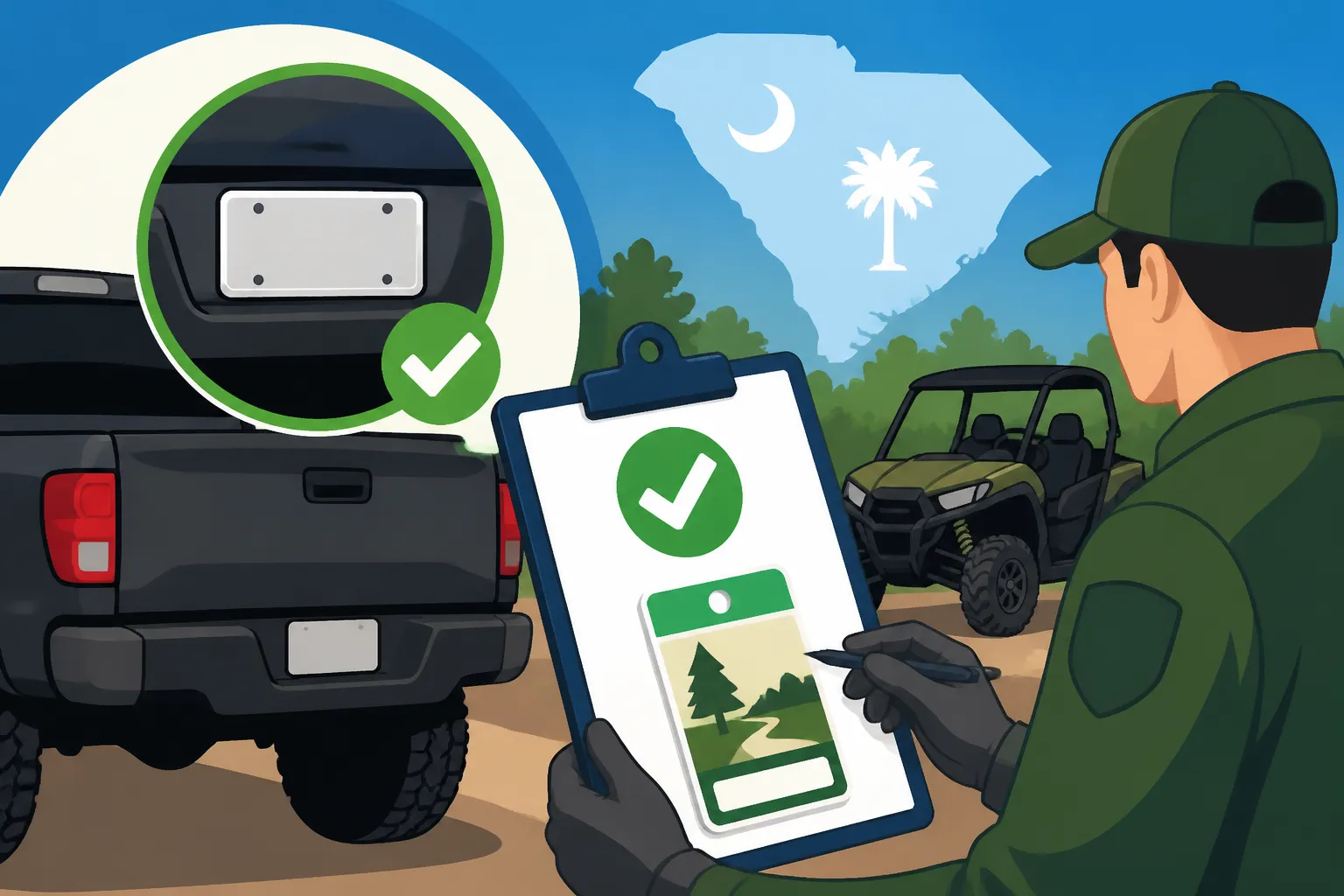
A forest day pass is not simply a receipt that any rider in a group can use with any vehicle. For the relevant South Carolina forest OHV fee system, a day pass is associated with the license plate of the tow vehicle. That connection gives staff a way to check whether the vehicle at the trailhead has the required pass.
When you buy a pass, enter the plate for the vehicle you will drive to the riding area. If you are trailering an ATV or UTV, that means the tow vehicle’s plate, not the off-road machine’s VIN, any machine registration number, or the trailer’s plate. Check the purchase instructions carefully if your setup does not fit that usual pattern.
This matters even if the off-road vehicle itself has no road plate. The pass check is about the vehicle used to reach the trailhead, so the truck or other tow vehicle can be the identifying detail. A receipt with a different plate may not show that the vehicle parked at the trailhead is covered.
The plate association is also separate from the pass rules for riders. A day pass’s link to a vehicle does not mean every rider can assume the pass covers every machine or every person in the group. Confirm the current terms for the particular pass and riding area, including how many machines it covers and whether each rider needs anything else. South Carolina National Forest OHV Passes explains the broader pass system.
A simple way to remember the distinction:
| Detail | What to use or check |
|---|---|
| Plate entered for a tow-in visit | The tow vehicle’s plate |
| ATV or UTV information | Check whether the pass terms ask for it separately |
| Proof of purchase | Follow the current instructions for keeping or displaying it |
| A different vehicle on ride day | Confirm whether the pass can be changed before arriving |
| More than one machine or rider | Check coverage rather than assuming the pass applies to the whole group |
The practical takeaway is straightforward: match the pass to the vehicle you actually bring. If your ride depends on a borrowed truck, rental, carpool, or last-minute vehicle swap, settle that detail before leaving home.
How to enter the right plate when buying a pass
Before you start the purchase, decide which vehicle will carry the trailer and travel to the trailhead. If someone else is driving, coordinate with that person first. A quick message asking for the plate can prevent a mismatch between the pass record and the vehicle on site.
Enter the plate exactly as requested. Be careful with similar-looking characters, spacing, and state abbreviations, and review the confirmation screen before completing the transaction. If the system asks for the state as well as the plate, check both fields. Do not substitute the trailer plate or the ATV’s serial number unless the current instructions specifically ask for it.
A useful purchase routine is:
- Confirm the riding area and the date you plan to visit.
- Check the current pass instructions for that location.
- Identify the tow vehicle that will be used on the visit.
- Enter its plate and state as requested.
- Review the details before submitting the purchase.
- Save the confirmation and follow the instructions about carrying or displaying it.
If you are not certain which plate belongs in the form, pause rather than guessing. The pass information and the instructions provided during purchase should make the required vehicle clear. If they do not, contact the administering agency or pass provider before you travel. The process and instructions can change, so old screenshots or a friend’s experience may not resolve your specific question.
Passes for South Carolina’s public forest trails are commonly handled through an online purchase process. Check the official purchase route and the current terms before paying; Forest Passes Sold on Recreation.gov and Nowhere Else covers where riders should look for the applicable pass. Avoid relying on an old saved link or a third-party page that does not clearly identify the administering agency and the riding area.
After purchasing, compare the confirmation with the vehicle information you intended to enter. A pass can be valid for the right date but still cause a problem if the plate is wrong. Fixing an error before the trip is usually easier than trying to explain it at a fee-compliance check.
Keep a record that you can access without a strong cell signal. A saved confirmation or printed copy can help if you need to verify what you bought, but it does not replace any required display method. Follow the pass’s current directions about where proof belongs and whether staff check the plate, a displayed pass, or both. South Carolina Pass Display Rules provides more detail on handling proof at the trailhead.
What to do if your vehicle changes
Plans change: a truck may need repairs, a friend may offer to tow, or a rental vehicle may be the only option available. Because the day pass is linked to a plate, do not assume that a pass purchased for one vehicle automatically transfers to another.
First, check the pass terms and the purchase account for a way to correct the plate. If the instructions do not clearly allow a change, contact the pass provider or the agency that manages the riding area before heading out. Ask specifically whether the pass can be updated, whether a new purchase is needed, and what proof you should bring. Do not assume an employee at the entrance can change the record on the spot.
A quick decision table can help:
| Situation | Best next step |
|---|---|
| You have not purchased the pass yet | Use the plate of the vehicle that will actually travel to the trailhead |
| You purchased it but have not left | Check whether the plate can be corrected and confirm the change |
| You need to switch to a borrowed vehicle | Ask the provider whether the pass can be associated with the replacement vehicle |
| You are using a rental | Check the pass terms and rental agreement, then use the correct vehicle information |
| The plate is unreadable or not yet assigned | Ask the agency or provider how to proceed before purchase or travel |
| You arrive and notice a mismatch | Do not assume the receipt is enough; follow posted instructions and contact staff |
For a borrowed vehicle, coordinate with the owner before entering their plate. You need accurate information, and the owner should know that the plate is being associated with a trail visit. If the owner later needs the vehicle for another purpose, that does not automatically answer whether your pass is still valid for the trip; the pass terms and provider should resolve that question.
Rental vehicles need extra attention because the final plate may not be known until pickup. Some rental arrangements also prohibit certain kinds of use or towing, so check the rental terms as well as the pass rules. If you cannot enter a plate until the rental is assigned, find out whether the provider allows updates after purchase. If not, ask about the correct timing before paying.
Carpooling can be convenient, but decide which vehicle is the one associated with the pass. If two tow vehicles arrive, do not assume one pass linked to one plate covers both. Review the pass conditions for vehicle coverage and buy or arrange additional coverage if the rules require it. [South Carolina Pass for a Second Machine] addresses a related question about using a pass with another machine; it is still important to distinguish machine coverage from the plate used for the tow vehicle.
If you bought a season pass instead, do not apply day-pass assumptions to it. Season passes may be linked to the individual pass holder rather than a tow vehicle, and they may have separate display and transfer rules. See South Carolina Day vs Season Pass Value for the difference between the two pass types, and Season Passes Are Per Person and Non-Transferable for the rider-based rules.
What to carry and what to expect at a trailhead
Before you leave, confirm three things: the pass covers the riding area and date, its plate information matches the tow vehicle, and you know how proof must be carried or displayed. Save the confirmation where you can open it offline, and print it if the instructions call for a paper copy or if you want a backup.
Do not rely only on a phone screen if the pass directions require a visible display in the vehicle. Conversely, do not assume a printed sheet is all that is needed if the current instructions specify another method. The point is to follow the exact directions attached to the pass, not to guess which format a staff member will accept.
At the trailhead, park and set up in a way that does not block signs, gates, or other users. If staff or a compliance check asks about the pass, keep the confirmation available and be ready to identify the tow vehicle. Clear, consistent details make it easier to resolve an ordinary question. How Rangers Read Your Plate at a Trailhead explains why a visible, accurate plate matters during checks.
A plate check is not necessarily the only way pass compliance is reviewed. Staff may also check the pass itself or ask for proof of purchase. Treat the vehicle plate and your receipt or display as complementary: the plate identifies the vehicle, while the pass record or displayed proof shows that the required access payment was made. The exact procedure can depend on the location and current instructions. What a Weekend Fee Compliance Check Looks Like gives a broader picture of what riders may encounter.
If the confirmation shows the wrong plate, do not alter it yourself or assume that a verbal explanation will fix the record. Contact the appropriate staff or provider and follow their direction. If you cannot resolve the mismatch, be prepared that you may need to purchase the correct pass or change your plans. The options depend on the current pass terms.
Keep in mind that a forest pass is only one part of planning a ride. Check whether the trail is open, whether the machines in your group are allowed, and whether weather or maintenance has affected access. South Carolina Trail Conditions Before You Haul is useful when you are deciding whether to make the drive. A pass does not guarantee that a trail is open or suitable for your machine on the day you arrive.
Common mistakes and a simple pre-trip check
Most plate-related pass problems are preventable. The frequent mistake is to treat the pass like a general admission ticket, then enter whichever plate is easiest to find. A second common mistake is to use the ATV’s identifying information when the instructions ask for the tow vehicle. A third is to buy early for one truck and forget to revisit the pass after a change in plans.
Avoid these habits:
- Do not enter the trailer plate when the pass asks for the tow vehicle plate.
- Do not use an ATV VIN or serial number in a plate field.
- Do not assume a pass linked to one tow vehicle covers a second vehicle.
- Do not assume a borrowed or rental vehicle is interchangeable without checking.
- Do not rely on an old confirmation if the plate or pass date has changed.
- Do not wait until you reach the trailhead to look for the pass instructions.
- Do not assume the pass is transferable because the receipt is easy to share.
A quick check the night before can catch most issues:
- Read the current pass instructions again.
- Verify the date and riding area.
- Compare the pass record with the tow vehicle’s actual plate.
- Confirm that the pass is valid for the machines and riders in your group.
- Save proof for offline access and prepare any required display.
- Check trail status, weather, and access notices.
- If anything does not match, contact the provider or managing agency before departing.
This check is especially worthwhile when a group has several trailers or vehicles. One person can coordinate the pass purchase, but the driver of each vehicle should know which plate is associated with which pass and what proof needs to stay in that vehicle. Make that part of the pre-ride plan rather than sorting it out in the parking area.
If your plans are still uncertain, wait to purchase until you know which tow vehicle will be used, unless the current terms say the plate can be updated. If you need to purchase in advance, confirm the change procedure first. South Carolina Passes Sold Only Online can help clarify the purchase channel, while [South Carolina Pass for a Rented Machine] covers another situation where the vehicle or machine arrangement may differ from a routine visit.
The core rule is simple: a South Carolina forest day pass tied to a plate should match the tow vehicle that arrives at the trailhead. Enter the correct plate, keep proof in the form required, and resolve any vehicle change before the trip. That small bit of preparation can prevent a pass question from disrupting a day that was meant for riding.
Frequently Asked Questions
Is the day pass tied to my ATV’s plate?
The day pass is tied to the tow vehicle plate. If you are trailering an off-road machine, use the tow vehicle’s plate when the pass instructions ask for it.
What if I take a different truck than the one I entered?
Check whether the pass can be updated and contact the pass provider or managing agency if the instructions are unclear. Do not assume a pass linked to one plate automatically covers another vehicle.
Should I print the pass or show it on my phone?
Follow the current instructions for that pass. Save the confirmation so you can access it offline, and use a printed copy if the instructions require one or you want a backup.
Does one pass cover every vehicle in my group?
Do not assume that it does. Check the terms for vehicle and machine coverage, especially if more than one tow vehicle is arriving.
Disclaimer
This article is for general informational purposes only and does not constitute professional advice. Laws, prices and regulations vary by location and change over time. Consult a qualified professional for guidance on your specific situation.