Forest Passes Sold on Recreation.gov and Nowhere Else
Forest Passes Sold on Recreation.gov and Nowhere Else
Planning a South Carolina national forest ride can be straightforward until it is time to buy the required pass. The key detail is that forest passes are sold through Recreation.gov, not at a trailhead cash tube or a local store. Knowing which pass to select, whose name it covers, and what to display helps prevent a last-minute scramble before the ride.
Where to Buy a South Carolina Forest Pass
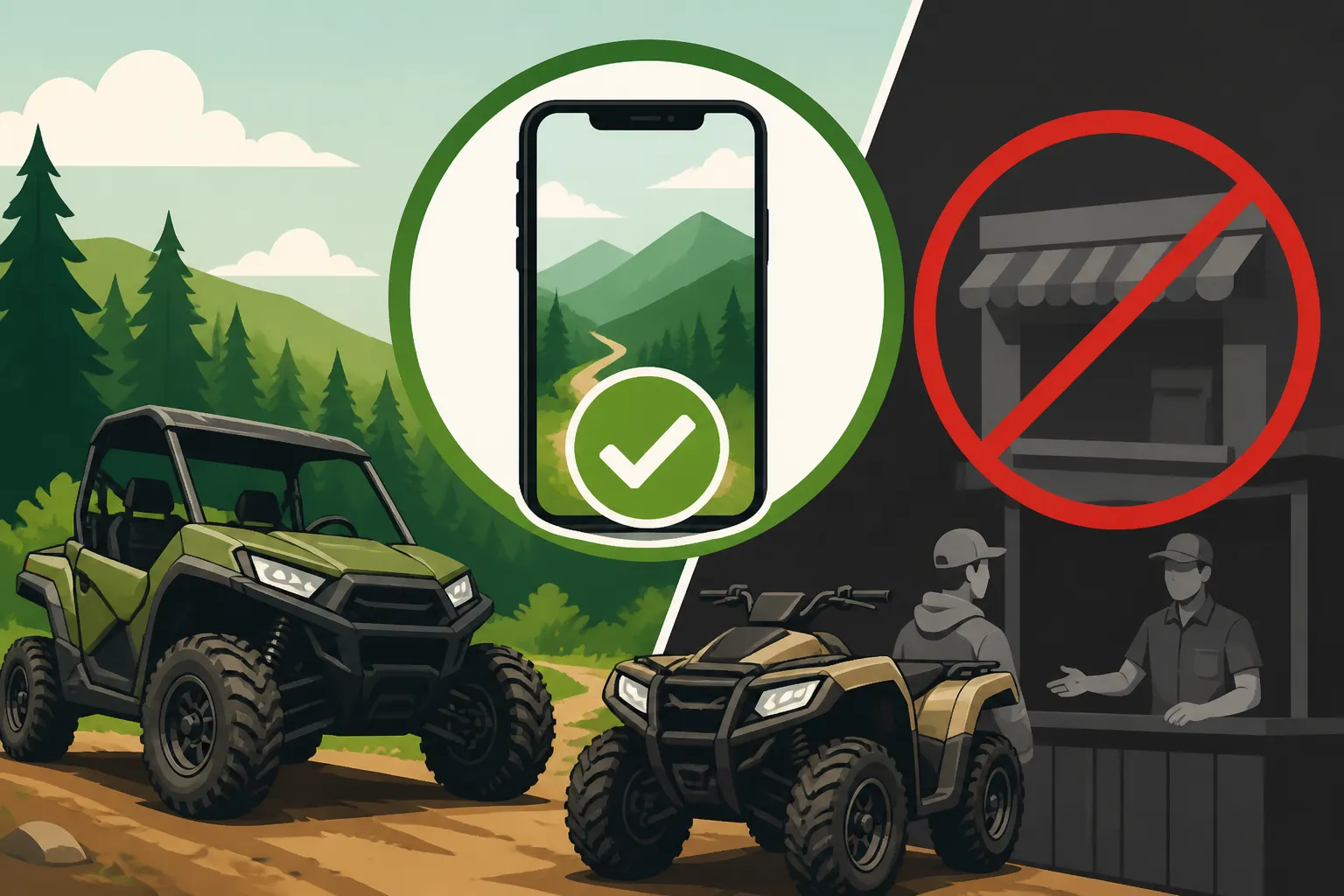
For the South Carolina national forest OHV trails that require a pass, use Recreation.gov. It is the designated purchase channel; do not plan on buying a pass at the trailhead or assume that a ranger, nearby business, or local office can sell one. The old cash tubes are gone, so arriving with cash is not a substitute for purchasing the pass online. See South Carolina Cash Tubes Are Gone for more on that change.
Start at the official Recreation.gov listing for the pass, rather than relying on a search result, an old screenshot, or an unofficial resale listing. The listing identifies the available pass options and their current terms. Read those details before checkout: a day pass and a season pass do not work the same way, and pass rules can determine which rider and vehicle information you need to provide.
If the purchase page is confusing, pause before paying and check the pass description. A receipt alone may not tell you whether you selected a pass for the correct date, season, or vehicle. Once you have confirmed the product and its terms, save the purchase confirmation and any pass document or instructions supplied with it.
A useful pre-purchase checklist:
- Confirm you are on the Recreation.gov listing for the South Carolina national forest OHV pass.
- Decide whether your trip calls for a day pass or a season pass.
- Read the current eligibility, validity, and display instructions on the listing.
- Enter the requested rider or vehicle details accurately.
- Save the confirmation and follow the instructions for carrying or displaying the pass.
- Check trail conditions separately before leaving home.
The pass is for access under the forest pass program; it is not a reservation that guarantees an open trail. Closures, weather, maintenance, and other access restrictions can still affect your ride. Check South Carolina Trail Conditions Before You Haul close to departure, especially if you are towing a machine a long distance.
For the broader pass program and the trails it covers, see South Carolina National Forest OHV Passes. The main takeaway is simple: buy through the official listing before the trip, and do not treat the trailhead as a backup sales counter.
Choosing Between a Day Pass and a Season Pass
The first choice is how long you need access. A day pass is designed for a particular riding day and has vehicle-related requirements. A season pass is intended for repeated use during the validity period stated on its listing, but it is tied to the individual rider rather than freely transferable between people.
Those differences matter when several people are riding together or when one person owns multiple machines. A season pass is not a family pass that can be handed from one rider to another. A day pass, by contrast, is associated with the tow vehicle’s plate under the program’s display rules. Review the current instructions for the exact pass you are buying, because selecting the wrong type can leave a rider or vehicle without the required proof.
| Pass type | What to check before purchase | Key use rule |
|---|---|---|
| Day pass | Riding date, vehicle information, and the listing’s display instructions | Tied to the tow vehicle’s plate under the program rules |
| Season pass | Validity period, rider eligibility, and display instructions | Per rider and non-transferable |
| Private riding-area pass | The private operator’s own rules and purchase page | Separate from a national forest pass |
A day pass tied to a tow vehicle does not mean that every passenger or rider automatically has an individual season pass. Likewise, having a season pass does not remove the need to read the instructions about where and how to display it. For the day-versus-season details, read South Carolina’s Day and Season Forest Passes. For the rider restriction, see South Carolina Passes Are Non-Transferable.
Consider these situations before you choose:
- One person planning one outing: A day pass may fit, subject to its date and vehicle rules.
- One rider expecting several forest rides: Compare the season option’s stated validity with the likely number of trips.
- A group traveling in multiple tow vehicles: Check whether each vehicle needs its own day pass and what information must match.
- Several riders sharing one machine: Do not assume one season pass covers everyone. Each rider should check the program’s requirements.
- A visitor renting a machine: Confirm who is responsible for the forest pass and what information the pass must identify. A rental agreement does not automatically satisfy forest access rules.
- A ride at a private park: Check that park’s pass system. A forest pass should not be assumed to cover private property.
Do not decide based on an old price or an old pass image. Pass costs and purchase terms can change, so use the current Recreation.gov listing to confirm what is offered and what the pass covers. If a ride plan involves several people, vehicles, or dates, settle the pass question before loading up rather than trying to interpret the rules at the trail entrance.
What to Do After Buying Online
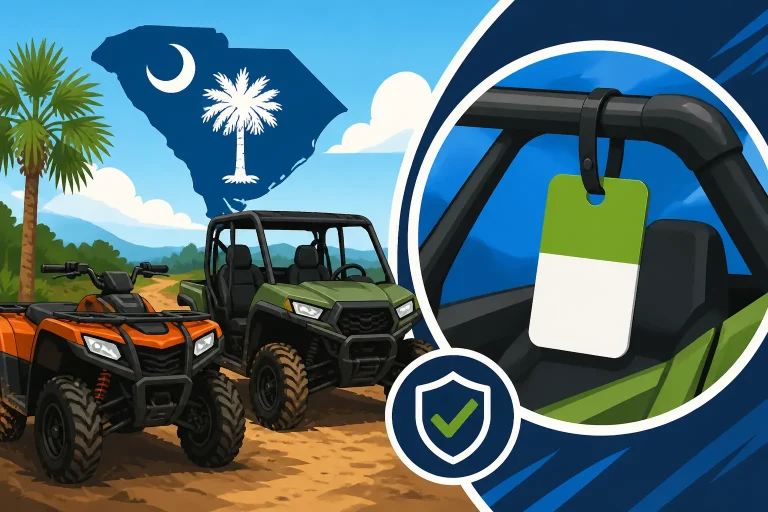
Purchasing through Recreation.gov is only one part of being ready to ride. Keep the confirmation available, then follow the pass-specific instructions for carrying or displaying proof. The display requirements differ by pass type: a season pass has tow-vehicle display instructions, while a day pass is tied to the tow vehicle’s plate. Do not guess based on what another rider did on a previous trip.
Check the details on the confirmation
Look over the purchase information as soon as it arrives. Check that the date or validity period is right and that any vehicle or rider details are accurate. If something is wrong, use the provider’s current directions to resolve it before the ride. Do not assume a confirmation for one pass type can be used as a substitute for another.
Save a copy where it will be accessible even if cell service is weak. That could mean keeping the confirmation on your phone and printing or downloading the relevant pass document if the instructions call for it. The point is not to invent an extra display rule; it is to be able to show the proof the program requires. If you print anything, make sure the text and identifying details are legible.
For annual-pass display specifics, see South Carolina Annual Passes Displayed in a Tow Vehicle. For the day-pass vehicle connection, see South Carolina Day Passes Tied to a Plate. Those details help explain why the pass you purchased and the vehicle you bring need to line up.
Make the display match the pass
Read the instructions for the exact pass, including whether it must be displayed in a tow vehicle or kept available for inspection. A pass meant to be displayed should not be left at home, buried under riding gear, or placed where its identifying details cannot be seen. If the instructions specify a particular location or method, follow them rather than relying on a rider’s informal workaround.
A practical departure check is to confirm that:
- The pass document or required proof is with the person or vehicle named by the instructions.
- Any required display is in place before entering the trail area.
- The tow vehicle information matches the day-pass requirements, when applicable.
- Everyone in the riding party understands which pass applies to them.
- The pass is still valid for the intended trip.
The pass is not a substitute for other requirements that may apply to a rider, machine, or trail. It does not grant permission to ride on private land, override a closure, or make a machine eligible for a trail that does not allow it. Check South Carolina Passes Cover All Four Trails to understand the forest program’s coverage, then check the specific trail’s current rules before setting out.
What the Forest Pass Covers—and What It Does Not
A forest pass is permission under the relevant forest OHV pass program, not a general riding permit for every place in South Carolina. The pass applies to the designated national forest trails described by the program. It does not act as a state ATV registration, a title, a permit for private property, or a pass for a private off-road park.
That distinction is easy to miss because “pass” can sound like broad access. In practice, access depends on the particular land manager and riding area. A South Carolina forest pass does not give permission to enter a Wildlife Management Area where riding is prohibited, or to cross a private gate without the owner’s permission. It also does not replace a private park’s admission pass, waiver, age limits, equipment rules, or other entry conditions.
| Access situation | Does a forest pass alone provide access? | What to verify |
|---|---|---|
| Designated national forest OHV trail | It may satisfy the pass requirement for that program | Current trail opening, machine eligibility, and pass instructions |
| Private off-road park | No | The park’s admission and vehicle rules |
| Wildlife Management Area | Do not assume so | Applicable land-use restrictions |
| Private timber or farm land | No | The landowner’s permission and access conditions |
| Road or route outside the designated OHV system | Not by itself | Road rules, land ownership, and any separate permit |
A pass also does not promise that a trail will be open on the day you arrive. Weather-related closures, maintenance, seasonal restrictions, or other management decisions may change access. Before departure, verify the status of the specific trail and be prepared to change plans. A pass can remain valid while a particular trail is temporarily unavailable.
The same caution applies to machines. A pass does not turn an oversized or otherwise ineligible vehicle into a permitted trail machine. Check the trail’s machine restrictions, including width or vehicle-type limits where applicable. A full-size side-by-side may not be allowed on a route designed for narrower OHVs, even if the rider holds the correct forest pass.
For information about visiting from another state, see South Carolina Registration Questions From Visitors. Forest access passes and vehicle registration are different questions: satisfying one does not necessarily settle the other. Keep the pass decision, machine eligibility, and any applicable riding rules as separate checks.
Avoiding Last-Minute Pass Problems
The easiest way to avoid a trailhead problem is to treat the pass as part of trip planning, not as an optional errand after the trailer is loaded. Buy in advance through Recreation.gov, read the full listing, and keep a clear record of the transaction. If the site or listing is unavailable, do not assume that a phone screenshot, cash, or an old pass is an approved substitute. Recheck the official purchase channel and confirm the current instructions before traveling.
Build pass checks into the trip plan
A short checklist can prevent common mistakes:
- Choose the riding area first. Confirm that it is one of the designated forest trails covered by the pass program.
- Check whether it is open. Look for current closures and conditions before you begin a long drive.
- Count the riders and tow vehicles. A pass rule tied to one rider is different from a rule tied to one vehicle.
- Select the right pass type. Match the pass to the riding date or season and the requirements shown on the listing.
- Complete the purchase online. Use Recreation.gov and retain the confirmation.
- Prepare the display or proof. Follow the specific instructions for the pass purchased.
- Check other requirements. Confirm machine eligibility, trail rules, and any separate land-access conditions.
Common assumptions to avoid
- “I can pay at the trailhead.” Do not count on it. Cash tubes are no longer the purchase method.
- “One season pass covers the whole group.” Season passes are per rider and non-transferable.
- “A day pass is just attached to the machine.” The program connects it to the tow vehicle’s plate; read the current display instructions.
- “A pass means the trail must be open.” Closures and conditions still apply.
- “A forest pass works at any off-road area.” Private parks and other properties set their own access rules.
- “My purchase confirmation is all I need.” The confirmation is useful, but the pass instructions determine what proof must be carried or displayed.
If a purchase question remains unclear, consult the current Recreation.gov pass listing and the forest information for the specific riding area. Ask before departure rather than relying on a guess at the entrance. A careful check is especially worthwhile when the trip includes several riders, a rental machine, a second tow vehicle, or a trail with specific machine limits.
Frequently Asked Questions
Can I buy a South Carolina forest pass at the trailhead?
Do not plan on it. Forest passes for the program are sold through Recreation.gov, and trailhead cash tubes are no longer the purchase option. Buy online before the trip and follow the current listing’s instructions.
Can one season pass be shared between riders?
No. Season passes are per rider and non-transferable. Each rider should confirm the applicable pass requirement rather than assuming another person’s pass covers them.
Is a day pass connected to the riding machine?
The day-pass rule connects it to the tow vehicle’s plate. Check the current instructions for the exact pass and make sure the vehicle information and display meet those requirements.
Does a forest pass guarantee that a trail will be open?
No. A pass does not override temporary closures, maintenance, weather restrictions, or other access limits. Check trail conditions shortly before departure.
Does a forest pass cover a private off-road park?
No. Private parks have their own admission and operating rules. Check the park’s requirements separately before traveling.
Disclaimer
This article is for general informational purposes only and does not constitute professional advice. Laws, prices and regulations vary by location and change over time. Consult a qualified professional for guidance on your specific situation.