Carrying Written Landowner Permission in South Carolina
Finding a place to ride in South Carolina is only part of the problem; you also need to know that the person who controls the land has actually allowed your machine and your planned route. Written permission helps prevent misunderstandings, especially on private timberland or leased hunting property. It is useful evidence of access, but it does not replace road rules, safety requirements, or permission for land you do not control.
What written permission does and does not cover
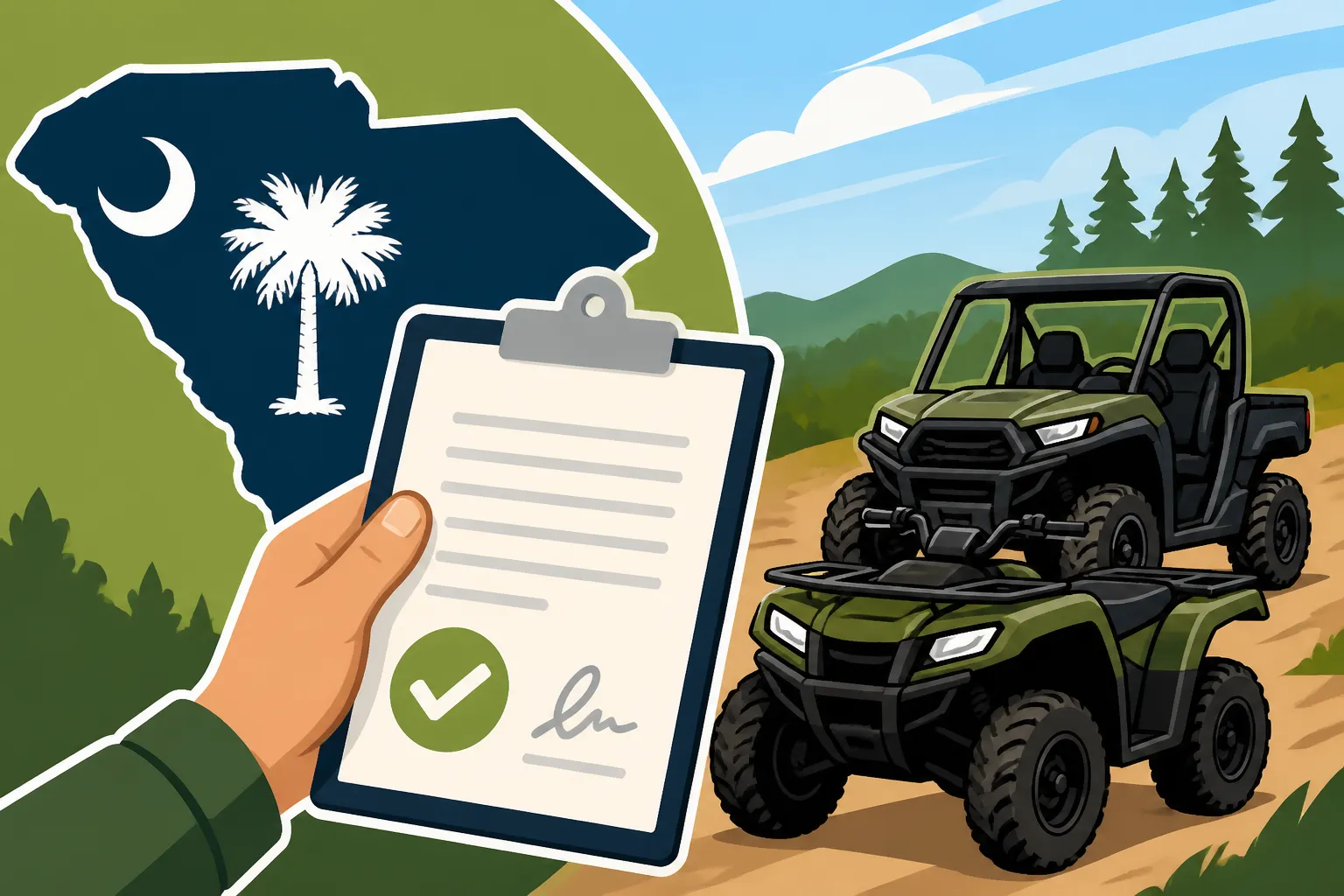
A note, text message, or signed letter from a landowner can help show that you were authorized to be on specific private property. It can be especially helpful if a neighbor, security worker, land manager, or law enforcement officer questions why you are there. A written record also gives you and the owner a way to confirm what was agreed: which machines may enter, where they may travel, and when access ends.
South Carolina does not use a single statewide ATV land-access permit that automatically grants a rider permission to cross private property. Permission comes from the person or organization with authority over the land. The details matter: a landowner may allow walking but not motorized riding, permit access to one parcel but not a neighboring tract, or authorize a particular route while closing the rest.
Written permission is not a general legal shield. It does not make an unauthorized route lawful, override a posted closure, or turn a public road into a trail. It also does not necessarily exempt a rider from state operating requirements. South Carolina’s ATV rules still matter when you are on private ground, and a property owner’s consent does not replace any safety or equipment obligation that applies. Review South Carolina Trespass Law for Riders and South Carolina Code Title 50 Chapter 26 when you need to understand how land access and ATV operation fit together.
| What permission may establish | What it does not establish |
|---|---|
| The owner or authorized manager allowed you onto a defined parcel | Permission to cross land outside that parcel |
| The machine types or riders covered by the agreement | A right to ride on a public road or closed trail |
| Any route, hours, dates, or conditions agreed with the owner | An exemption from applicable ATV laws |
| Whether access is for recreation, hunting, work, or another stated purpose | Permission for passengers, guests, or a group not included in the agreement |
| A record of the owner’s contact details and the terms discussed | A guarantee that the land will remain open |
A permission document is most useful when it describes a clear, limited arrangement. “You can ride on my land” may be understood differently by the owner and rider. A boundary description, a marked route, or a map attached to the permission can reduce uncertainty. If the owner’s permission is limited to a hunting lease, a farm road, or a particular event, do not assume it extends beyond that use.
Keep access and operating rules separate in your mind. The question “May I be on this property?” is different from “May I operate this ATV here, in this way, under these conditions?” For background on the state framework, see South Carolina Rules for Riding a Farm Road and South Carolina Proof of Ownership on the Trail. A landowner’s approval may answer the access question, but it does not answer every question about how or where the machine may be operated.
How to ask for permission and record the agreement
Ask before unloading or entering the property. A gate that is open, an old tire track, or a neighbor’s casual assurance is not the same as permission from someone authorized to grant it. If the land is managed by a company, club, leaseholder, or property manager, find out who can approve motorized access. A person who hunts on the property or maintains a road may not have authority to invite other riders.
Make the request specific and easy to answer. Explain who will ride, what type of machine each person will bring, the purpose of the visit, and the dates or time period you have in mind. Say whether you plan to bring passengers, tow a trailer, invite additional riders, or camp. If you will use a gate or travel near homes, livestock, crops, timber operations, or hunting areas, raise that in advance rather than assuming it is acceptable.
For a written record, ask the owner or authorized manager to confirm the terms in a signed note, email, or text. South Carolina riders should not treat a homemade form as an official state permit. Its purpose is to document a private agreement, not to create permission that the signer does not have authority to give.
Useful details to record include:
- Who is granting permission. Include the person’s name and, if relevant, their role as owner, authorized manager, or lease representative.
- Which property is covered. Use a property address, parcel description, map, gate name, or other clear identifier. If boundaries are uncertain, ask the owner to show them.
- Who may enter. List the named riders or clearly define the group. Permission for one person does not automatically cover friends, family members, or a riding club.
- What machines are allowed. Specify ATVs, UTVs, or other vehicles as appropriate. Do not assume approval for one type of machine includes another.
- Where riding is allowed. Identify approved trails, roads, staging areas, or access routes. Mark any areas that are off-limits.
- When permission applies. Record the relevant dates, hours, season, or event. If the arrangement can be withdrawn or changed, confirm how the owner will communicate that.
- Conditions and restrictions. Note speed limits, noise expectations, gate procedures, passenger limits, fire restrictions, hunting-season precautions, and any requirement to stay on established routes.
- How to contact the person responsible. Keep a phone number or other current contact method with the permission.
A map can be more useful than a long description, particularly on a large tract or a property with multiple gates. Ask the owner to mark the allowed route and any boundaries, sensitive areas, or closed sections. Do not rely on a map from a friend or an old screenshot unless the land manager confirms it still reflects current access.
Keep the record readable and available while riding. A printed copy in a waterproof sleeve is a practical option; a small document sleeve or notebook sold through Amazon may help keep paper from getting wet or muddy. A digital copy on your phone is useful too, but a phone can lose power, break, or have no signal. If you ride with a group, make sure each rider understands the terms instead of leaving the permission with one person who may be separated from the others.
Timberland, leases, and other complicated access
Private timberland can look like open riding country, but ownership and access rules may change from one tract to another. A timber company, land-management contractor, hunting club, or leaseholder may control access even when the property appears undeveloped. A gate that is unlocked does not necessarily mean the land is open to recreational riding. Ask who manages the tract and whether motorized use is allowed on the specific roads or trails you plan to use.
Timber operations create additional reasons to get clear instructions. Logging traffic, active work areas, temporary closures, and changing road conditions can make a route unsafe or unavailable. Permission to use a road does not necessarily mean permission to enter a work zone, ride off the road, or continue when signs or barriers indicate a closure. For more on these issues, see South Carolina Timber Land Access and What a Timber Company’s Access Policy Usually Says.
Hunting leases need particular care. Permission from a landowner to hunt does not automatically include permission to ride, and permission for a rider does not automatically include permission to hunt. A club or lease agreement may set its own rules about machine use, guest access, seasons, gates, or approved routes. Confirm the terms with the person or organization that manages the lease, not just with a member who assumes access is allowed. South Carolina Hunting Club Riding Rules can help clarify why a lease’s own policies matter.
Do not assume permission from a private landowner applies to nearby public land. A private parcel may border a wildlife management area, national forest, or public road. The property owner cannot grant access to land they do not control. In particular, do not treat a hunting license or a nearby landowner’s consent as permission to ride in a wildlife management area; check the applicable vehicle rules before entering. See South Carolina WMA Riding Is Prohibited and South Carolina Public Land Compared to Private.
The same boundary issue arises where a permitted route joins a public road. Permission to cross private land does not authorize an ATV to travel along a road where that machine is not allowed. Nor does it allow you to use a neighbor’s driveway or a connecting trail without separate authorization. If your planned route leaves the property described in the permission, stop and obtain permission for the next section before riding it.
A landowner may also be acting for someone else. If a renter, farm employee, hunting-club member, or caretaker offers access, politely ask whether they have authority to approve ATV use. When the answer is unclear, contact the property owner or manager directly. That small check is preferable to relying on a well-intentioned invitation that does not cover the land or activity.
Carrying permission and following its limits
Before each ride, check that the permission still applies. A past invitation may have covered a single weekend, a specific group, or a route that has since closed. Ask again when the date, riders, machines, or intended route changes. If the owner revokes permission or posts a closure, leave the property and do not argue that an earlier message gives you permanent access.
Carry the permission in a form you can show without searching through old messages. Keep the owner’s name and contact information with it. If the property is large, carry the agreed map as well. Tell your passengers and riding companions about the boundaries and restrictions before entering; a group member who wanders off the approved route can create a problem for everyone.
Follow the owner’s instructions on gates, parking, speed, noise, litter, fires, and interaction with livestock or equipment. Close gates as directed, and do not move barriers or signs to make a route easier. Avoid riding near homes or work areas unless the owner has specifically approved it. If you encounter an active operation, people on foot, or a condition that makes the route unsafe, stop and contact the owner rather than improvising a detour.
Permission also comes with a responsibility to leave the property in good condition. Stay on approved surfaces, avoid damaging crops or planted areas, and do not create new trails. Pack out trash and report damage, fallen trees, or a gate left open. If the owner has asked riders to avoid an area during wet conditions or hunting activity, respect that request even if the route appears passable.
Carry other relevant documents separately. A landowner’s note is not proof that you own the machine, and it does not replace a required trail pass or any other authorization tied to a particular riding area. Check the rules for the land you are visiting, and keep proof of ownership available when appropriate. South Carolina Trail Conditions Before You Haul and South Carolina National Forest OHV Passes are useful starting points when your plan includes a designated public trail rather than private property.
If an officer or land manager asks why you are on the property, stay calm, identify yourself, and show the permission if requested. Give a straightforward account of where you entered and where you were going. Do not assume the document settles every disagreement: the person questioning you may need to verify the boundaries or contact the owner. Cooperation and a clear written record can help resolve confusion, but the safest response to uncertainty is to stop riding and confirm access before continuing.
A simple, current permission record is especially valuable when access is informal or the land changes hands or managers. Keep it specific, carry it with you, and treat it as evidence of a limited agreement—not as a license to ride anywhere nearby. When in doubt, ask the person responsible for the property to clarify the boundary, route, riders, dates, and conditions before the machine leaves the trailer.
Disclaimer
This article is for general informational purposes only and does not constitute professional advice. Laws, prices and regulations vary by location and change over time. Consult a qualified professional for guidance on your specific situation.