Being Seen After Dark on a Country Road
Picture this: you're out enjoying the beautiful South Carolina countryside on your ATV or UTV, the sun is starting to dip below the tree line, and suddenly, that familiar path you know so well looks a lot less friendly. Riding after dark on our rural roads presents a whole different set of challenges, from hidden deer to cars that simply aren't expecting to see you. This guide is all about helping you understand those risks and equip your machine and yourself to maximize your visibility and safety when the lights go down in the Palmetto State.
The Harsh Reality of Night Riding on Carolina Country Roads
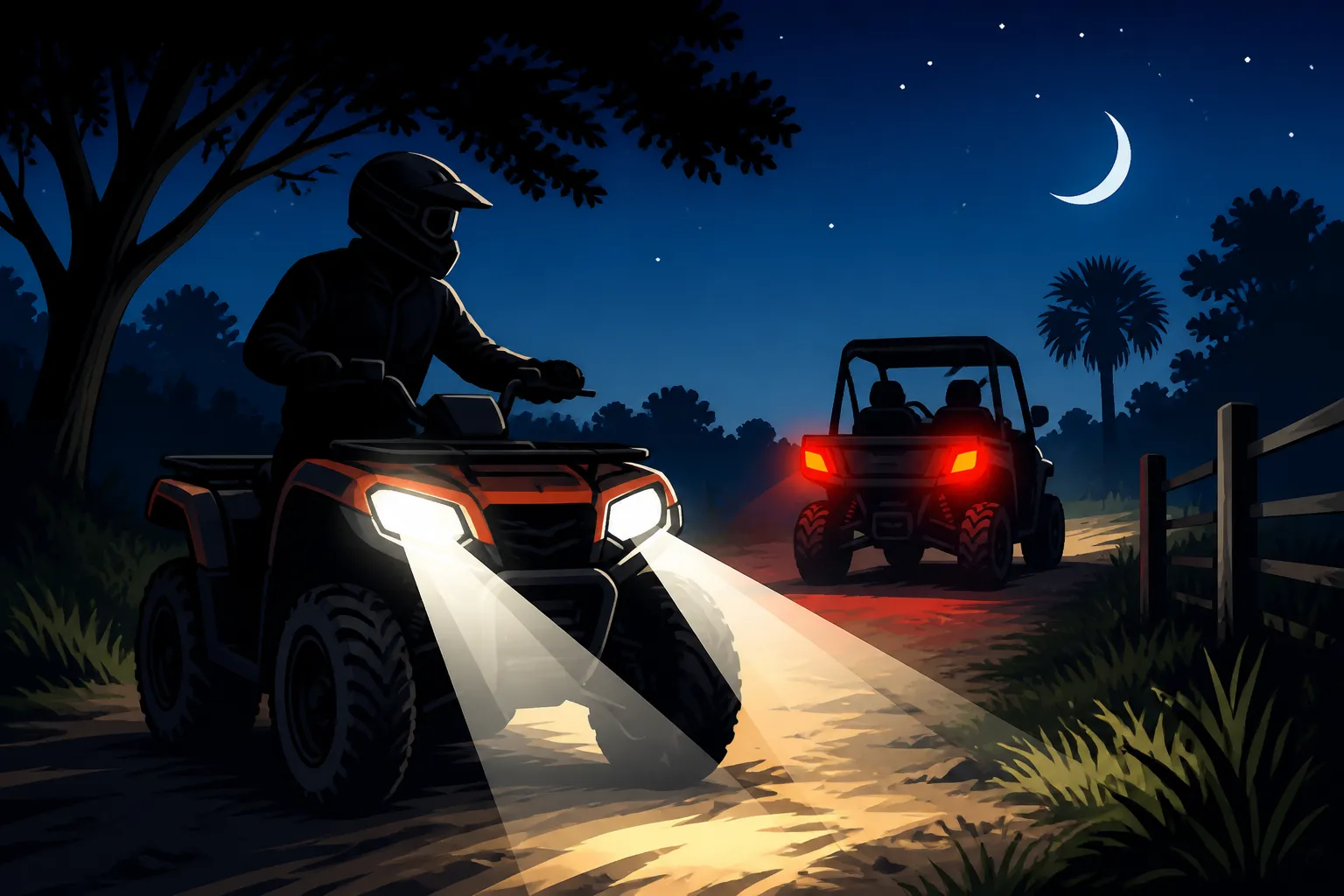
There’s a unique charm to South Carolina’s country roads once the sun sets. The quiet hum of cicadas, the scent of pine, and a sky full of stars you just don’t see in the city. But that beauty comes with a serious trade-off for ATV and UTV riders: visibility. When you're out on two or four wheels after dark, you're entering a high-stakes game where "seeing and being seen" is the absolute golden rule, and often, what you have from the factory just isn't enough.
Why Darkness is Your Biggest Challenge
Let's be real, most of us who love riding in South Carolina have a favorite back road or shortcut we swear by. During the day, it's an easy ride. At night? It becomes a gauntlet. The biggest challenge is simply the lack of ambient light. Many of our country roads, especially those winding through timberland or connecting small towns, have no streetlights, sometimes for miles on end. This isn't just about you seeing the road; it's crucially about other drivers seeing you.
Think about it: that logging truck coming around a bend, or a local farmer heading home after a long day – they're often not looking for an ATV or UTV, which typically sits lower and has a smaller profile than a car. Then there’s the wildlife. Deer, coyotes, even the occasional wild hog can bolt across the road with zero warning, and in the dark, they become practically invisible until it's too late. Add in dusty conditions from unpaved roads, and your visibility, and the visibility of others seeing you, plummets even further. It’s easy to think, "I know this road like the back of my hand," but night changes every single detail, introducing shadows, glares, and hidden obstacles that simply aren't there in daylight.
Legal Requirements vs. Real-World Safety
When it comes to hitting public roads in South Carolina, even briefly, there are some basic lighting expectations. For any vehicle operating at night, headlights and taillights are a given. The state has specific rules about when your lights need to be on, generally from a half-hour after sunset to a half-hour before sunrise, or whenever visibility is poor. You can learn more about [South Carolina Rules for Riding After Dark] and [Headlights a Half Hour After Sunset] to be sure. But here's the rub: meeting the minimum legal requirements, especially with stock ATV or older UTV lighting, often falls far short of what you truly need for real-world safety.
For instance, an older quad might have a single, somewhat dim headlight and a small taillight. Technically legal? Maybe. Safe on a dark, winding country road with oncoming traffic? Absolutely not. The new street-legal UTV regulations, which are a game-changer for many riders, do require more comprehensive lighting, including turn signals, brake lights, and proper headlamps. [South Carolina Street-Legal UTV Registration Arrives] and [South Carolina Street UTV Rules From November 2026] detail these requirements. Even with these upgrades, though, simply having a working light isn't the same as having effective lighting that truly makes you stand out and gives you a clear view of the road ahead. Many riders find that the factory setup, even on newer machines, just doesn't cut it when you're truly out in the dark, away from any semblance of urban light pollution. You need to consider not just legality, but also common sense and self-preservation.
Essential Lighting Upgrades for Maximum Visibility
So, you've understood the dangers and the difference between legal minimums and practical safety. Now, let's talk about what you can actually do to make yourself and your machine glaringly obvious (in a good way!) to anyone else sharing the road after dark. This isn't just about adding more lights; it's about adding the right lights in the right places.
Beyond Factory Headlights: Seeing and Being Seen
Your factory headlights are designed to meet basic safety standards, but "basic" doesn't cut it when you're navigating an unlit country road with potential hazards around every corner. The first and most impactful upgrade is often to your headlights themselves. Many riders swap out old incandescent bulbs for brighter, more efficient LED headlamps. These aren't just about throwing light farther; they often provide a whiter, clearer light that makes obstacles, road signs, and especially wildlife, pop out of the darkness. Look for LED options that offer a wider beam pattern as well, to illuminate the ditches and shoulders where deer love to lurk.
Beyond direct replacements, auxiliary lighting is your best friend. Light bars and powerful pod lights, often mounted on the bumper, roof, or A-pillars, can transform your night vision. Companies like SuperATV offer a fantastic range of these, from smaller 6-inch pod lights to massive 50-inch light bars, designed to withstand the rugged conditions of off-road use while providing incredible illumination. When installing these, however, it's crucial to consider proper aiming. While it's tempting to blast everything forward, you don't want to blind oncoming drivers. Many auxiliary lights are intended for off-road use only, so know when to switch them off when you encounter traffic on a public road. A good setup allows you to toggle between street-legal lights and your auxiliary "night vision" lights easily. Always check [South Carolina Equipment Requirements for ATVs] before making significant modifications.
Rear Visibility: Don't Be a Blind Spot
Being able to see is only half the battle; being seen is just as, if not more, important. Most factory taillights are adequate for city driving, but on a dark country road, they can easily get lost in the vastness. Upgrading your taillights to brighter LED units is a simple yet highly effective step. These lights illuminate quicker and are often significantly brighter than their incandescent counterparts, making your brake lights more noticeable.
But don't stop there. Consider auxiliary rear lights, sometimes called chase lights or rear-facing light bars. These can be amber or red and provide an extra layer of visibility, especially in dusty conditions or when you're riding with a group. They help drivers behind you gauge your distance and presence. For street-legal UTVs, a properly illuminated [Rear Plate a Street-Legal UTV Must Carry] also adds a critical point of identification.
Another incredibly effective, yet often overlooked, tool is reflective tape. This isn't just for kids' bikes! High-quality, automotive-grade reflective tape can be applied to the rear bumper, side panels, helmet, and even your riding gear. It catches even the smallest amount of light from an oncoming vehicle and reflects it directly back, making your machine appear to "glow" in the dark. It’s a low-cost, high-impact safety measure that works passively.
Side Visibility and Accent Lighting
While headlights and taillights cover your front and rear, many accidents happen due to poor side visibility, especially when turning or crossing intersections on poorly lit roads. Adding side marker lights, particularly amber LEDs, can significantly enhance your machine's profile. These small lights can be integrated discreetly into the bodywork or even attached to roll cages.
Rock lights, commonly used by off-road enthusiasts to illuminate the terrain directly under their vehicle, can also contribute to side visibility. While their primary purpose is trail navigation, their ambient glow around the wheels and undercarriage makes your machine look bigger and more present from the side, especially when stopped or moving slowly. Some riders even add underglow or accent lighting. While often chosen for aesthetic appeal, these vibrant lights can also serve a safety purpose by outlining the entire perimeter of your machine, making it unmistakably visible from a distance and from all angles. Brands like SuperATV offer kits for various types of accent lighting, allowing you to customize your visibility while adding a cool factor.
Rider and Machine Preparation for Night Operations
Beyond just bolting on more lights, preparing yourself and your machine specifically for night riding is crucial. It’s a holistic approach that combines proper gear, diligent checks, and smart riding habits. Overlooking these details can severely undermine even the best lighting setup.
Gear Up for Night: What You Wear Matters
Your machine might be lit up like a Christmas tree, but what about you? Your personal gear plays a significant role in your visibility.
First and foremost, reflective clothing is non-negotiable. A simple high-visibility vest or jacket with reflective strips can make a world of difference. Helmets with reflective decals or bright colors also increase your head's visibility, which is often the highest point of your profile. Remember, you want to be seen from all angles, not just head-on or from behind.
Another indispensable item for night riding is a good headlamp. While your machine's lights illuminate the path ahead, a personal headlamp gives you hands-free light for looking at maps, making a quick adjustment to your machine, or even spotting something just outside your primary light's beam. It's also vital for changing a flat tire or making a repair in the dark.
Finally, think about your eye protection. While tinted goggles or a shaded face shield are great for sunny days, they are a serious hazard at night. Always switch to clear goggles or a clear face shield when riding after dark. Even lightly tinted lenses can drastically reduce your vision in low-light conditions, turning minor dips or bumps into major surprises. For young riders, specific [South Carolina Helmet Rules for Young Riders] are in place, and ensuring their eye protection is appropriate for night conditions is part of that safety.
Pre-Ride Checks and Best Practices
Before you even think about rolling out after dark, a thorough pre-ride check of your lighting system is essential. It's not enough to assume everything works; you need to verify it.
- Inspect All Lights: Walk around your machine with someone else if possible, and test every single light: headlights (high and low beam), taillights, brake lights, turn signals, and all auxiliary lights. Make sure they're all functioning correctly and free of cracks or damage.
- Battery Health: All those extra lights draw power. Ensure your battery is in top condition and your charging system can handle the increased load, especially if you have a lot of aftermarket accessories. A dimming headlight is a sign of trouble you don't want to discover miles from home.
- Cleanliness is Key: Mud, dust, and grime drastically reduce the effectiveness of your lights. Give all lenses a good wipe-down before heading out. A clear lens can project light much more effectively than a dirty one.
- Slow Down: This might seem obvious, but it's worth reiterating. Your reaction time and stopping distance are directly affected by visibility. Slow down, especially on unfamiliar roads or in areas known for wildlife.
- Group Riding: If you're riding with others, establish clear communication signals. Consider staggering your machines slightly so that your lights don't blend into one, making each rider more individually visible. Proper spacing also allows for dust to settle a bit between riders, improving visibility for those behind.
- Emergency Preparedness: Night riding increases the stakes. Always carry a [First Aid on a Long Carolina Loop], a fully charged cell phone (with a power bank), and basic tools. Being prepared for a breakdown in the dark is essential.
Navigating South Carolina's Roads After Dark
Riding after dark isn't just about having the right gear; it's also about adopting the right mindset and strategic riding techniques. South Carolina’s diverse landscape, from coastal plains to the Upstate foothills, presents its own unique set of challenges that demand extra caution when the sun goes down.
Understanding South Carolina's Unique Roadways
Our state's roads are as varied as its geography. You might be on a smooth, paved highway one minute, and the next, you're on a narrow, winding dirt road that's barely wide enough for one vehicle.
- Paved vs. Unpaved: Paved roads might offer a smoother ride, but they also mean higher speeds for other vehicles, increasing the closing speed dynamic with your ATV or UTV. Unpaved country roads, on the other hand, often kick up significant dust, which can create a blinding cloud for anyone behind you, or even for you if it's windy. This is where those chase lights and reflective tape really earn their keep.
- Wildlife: We've mentioned it before, but it bears repeating: South Carolina has abundant wildlife. Deer are notorious for darting out, especially at dusk and dawn. But don't forget about other critters like foxes, coyotes, and even the occasional wild turkey or hog. In the dark, their eyes might reflect your lights, but by the time you see them, it can be too late. Always assume they're there, especially near wooded areas or fields.
- Shared Roads: Our country roads are working roads. You're sharing them with everything from oversized logging trucks and tractors to commuters who might be in a hurry. These larger vehicles often have blind spots, and they certainly aren't expecting a smaller ATV or UTV. Give them ample space and assume they haven't seen you.
Strategic Riding for Enhanced Safety
Once you’ve got your lights in order and your gear squared away, it’s time to focus on how you actually ride.
- Stay Right, Signal Clearly: Always hug the far right side of the road, giving as much room as possible to oncoming and passing traffic. Use your turn signals well in advance of any turns, even if you think no one is behind you. It's a habit that can save your life. If your machine doesn’t have turn signals, use clear hand signals, illuminated by your headlamp if possible.
- Responsible High Beam Use: Your powerful auxiliary lights and high beams are fantastic for illuminating empty stretches of road. However, be incredibly disciplined about dimming them for any oncoming traffic, or when you’re following another vehicle closely. Blinding another driver is dangerous and can lead to an accident. For specific rules regarding vehicle lighting, check [South Carolina Lighting Requirements on a Machine].
- Extreme Caution on Blind Corners and Crests: These are accident hotspots during the day, and even more so at night. Reduce your speed significantly, and be prepared to stop or react to anything on the other side. Listen for approaching vehicles, and if you have to, honk your horn as you approach to make your presence known.
- When Not to Ride: There will be times when the conditions are just too hazardous for night riding on certain roads. Heavy fog, torrential rain, or roads known to have very high-speed traffic might be best avoided after dark. Trust your gut. If it feels unsafe, it probably is.
- Paperwork Check: Always carry the appropriate [What Papers to Carry on a Back Road]. Should a deputy pull you over for a safety check or incident, having your documents in order, along with a well-lit machine, can make a difference. If you're involved in an incident, you'll need to know about [South Carolina Accident Reporting for an ATV Crash].
Being seen after dark on South Carolina's country roads is a multi-faceted challenge, but with the right preparation and vigilance, you can greatly increase your safety. It's about combining legal compliance with practical, real-world solutions.
Comparing Lighting Options for ATVs and UTVs
When you're looking to upgrade your visibility for those dark South Carolina country roads, you've got a lot of options. It's not just about what's brightest, but also what fits your machine, your budget, and your specific riding needs. Here's a quick comparison to help you weigh your choices.
| Feature | Stock/OEM Incandescent | Aftermarket LED Replacements (Head/Tail) | Auxiliary LED Light Bars/Pods | Reflective Tape & Gear |
|---|---|---|---|---|
| Cost | Lowest (already installed) | Moderate | Moderate to High | Lowest |
| Brightness | Low | High | Very High | Passive (reflects light) |
| Beam Pattern | Narrow/Limited | Wider, clearer, whiter | Flood, Spot, or Combo | N/A |
| Power Draw | Moderate | Low | High | None |
| Ease of Install | N/A (comes installed) | Easy (plug-and-play for many) | Moderate (wiring required) | Very Easy |
| Primary Benefit | Basic compliance | Improved "seeing" & "being seen" | Max "seeing" distance | Max "being seen" |
| Legal Use on Road | Generally Yes | Generally Yes | Often Off-Road Only | Always Allowed |
| Brand Example | Your Machine's OEM | SuperATV, Baja Designs | SuperATV, Rigid, KC HiLiTES | 3M, various brands |
This table helps illustrate that while your stock lights are, well, stock, they're really just a starting point. LED replacements offer a significant upgrade without a huge investment or complex installation. For serious night riding, auxiliary lights are a game-changer for seeing far down the road, though you need to be mindful of their legal use on public roads. And don't forget the simple, highly effective power of reflective tape and proper gear; they're your passive safety net, always working to make you visible, even if your lights momentarily fail. Combining several of these options gives you the most comprehensive safety package for riding our beautiful, but sometimes daunting, South Carolina country roads after dark.
Disclaimer
This article is for general informational purposes only and does not constitute professional advice. Laws, prices and regulations vary by location and change over time. Consult a qualified professional for guidance on your specific situation.