South Carolina Annual Passes Displayed in a Tow Vehicle
South Carolina’s annual OHV pass can be easy to misunderstand: it belongs to a rider, yet the printed pass is displayed in the vehicle towing the machine. Knowing what to print, where to place it and who needs a pass helps you avoid a frustrating stop at the trailhead. Here’s how to handle the display without confusing it with an ATV title, plate or park admission.
What the annual pass is for
A South Carolina National Forest OHV pass is for riding designated OHV trails in the national forests, not a general permit for every road, trail or parcel of public land. The pass system applies to the forest OHV trail areas; it does not automatically grant access to a state wildlife management area, private riding park or landowner’s property. Check the rules for your destination before hauling out.
The annual pass is associated with an individual rider. It is not a transferable permit for a tow vehicle, trailer or ATV, and another person cannot simply use it because the pass is sitting in the truck. This is why the display location can seem counterintuitive: the rider holds the pass, but the printed pass is placed in the tow vehicle for display at the trailhead. For a broader overview of which trail areas the forest passes cover, see South Carolina Passes Cover All Four Trails.
Displaying the pass does not register or title the machine. South Carolina does not use this forest pass as a statewide off-road ATV registration card. A rider may still need to keep ownership paperwork with the machine, and a street-driven vehicle may have separate registration and insurance requirements. The forest pass addresses access to covered OHV trails, not all paperwork or legal requirements for riding.
The key distinction is between who the pass belongs to and where its printed copy is displayed:
- The annual pass belongs to the named rider.
- The printed copy is displayed in the tow vehicle while using the covered trail system.
- The pass does not transfer to a friend, family member or later vehicle owner.
- The pass does not authorize riding outside the areas covered by its terms.
For a fuller explanation of forest access passes and their role, start with South Carolina National Forest OHV Passes. If you are comparing annual and day options, South Carolina’s Day and Season Forest Passes explains the different pass types.
Why display a rider’s pass in the tow vehicle
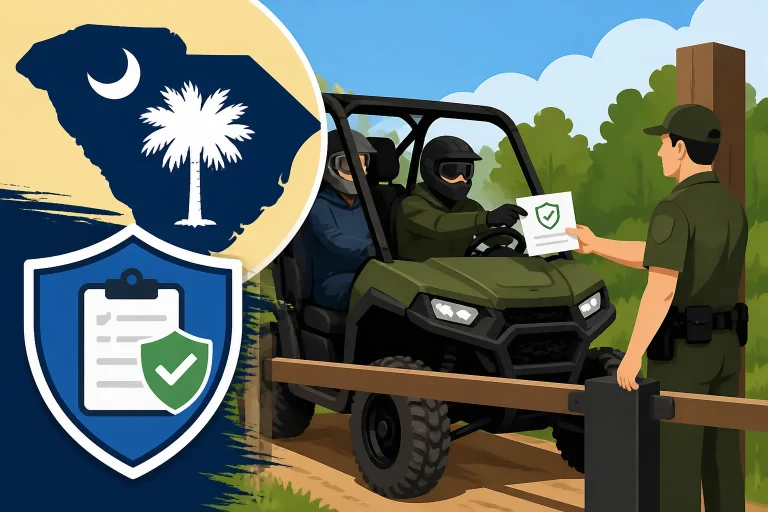
The tow vehicle is usually parked at the trailhead while the ATV or UTV is being ridden. A clearly displayed copy gives trail personnel a way to check that the rider has the required pass without asking the rider to leave it attached to the machine or carry a paper document through every part of a ride.
That arrangement is especially useful for a pass that belongs to a person rather than a particular ATV. A rider may take their own machine in one vehicle one weekend and arrive with a different towing setup another time. The pass still belongs to the same rider, but it needs to be displayed in the tow vehicle used for that visit. The display is a practical check at the parking area, not a transfer of the pass to the truck.
This setup also explains why an annual pass should not be treated like a dashboard permit that covers everyone in the vehicle. If several people are riding, each rider should check whether they need their own pass. Sharing one annual pass among a group can leave other riders without the required access credential. See South Carolina Season Passes Are Per Person and South Carolina Passes Are Non-Transferable for those limits.
Day passes can work differently. Their display or identification may be tied to a tow vehicle’s plate rather than to a rider’s annual pass. Don’t assume that the annual-pass instructions apply to a day pass, or vice versa. Compare South Carolina Day Passes Tied to a Plate and South Carolina Pass Display Rules before you purchase or travel.
| Pass detail | Annual pass | Day pass |
|---|---|---|
| What to check | The named rider and the pass terms | The vehicle identification and pass terms |
| Typical display concern | Display the printed annual pass in the tow vehicle | Follow the day-pass instructions for the vehicle |
| Can another rider use it? | Do not assume so; annual passes are personal | Do not assume it transfers; check the specific terms |
| Where it applies | Covered National Forest OHV trails | Covered trails for the day and vehicle identified |
| What it does not replace | Machine ownership papers or other legal requirements | Machine ownership papers or other legal requirements |
This table is a planning aid, not a substitute for the instructions issued with the pass. If the confirmation or current forest notice gives a specific display method, use that method.
How to print and display an annual pass
Use the pass document and instructions you received after purchase. A screenshot, order receipt or email confirming payment may not be the same thing as the pass itself. If the document contains a rider name, identification number or other information, make sure the printed copy is complete and readable.
A straightforward process is:
- Buy the correct pass for the rider. Check that you are choosing the annual option intended for the person who will ride, rather than a different pass type or a day pass.
- Save the pass document. Keep the confirmation and the pass file somewhere you can access before leaving home. If you are buying on behalf of someone else, confirm who the pass is issued to.
- Print a clear copy. Make sure the full pass and any required details are visible. Avoid cropping off an edge, printing so lightly that the information is hard to read, or relying on a phone screen if the instructions call for a displayed printed pass.
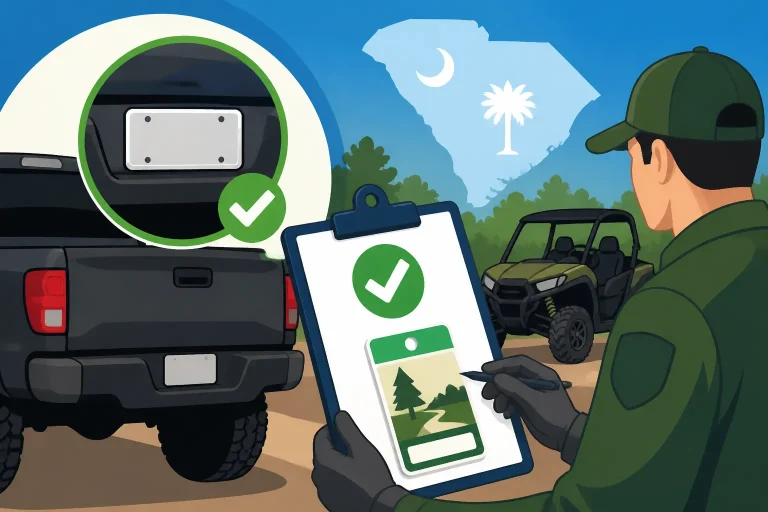
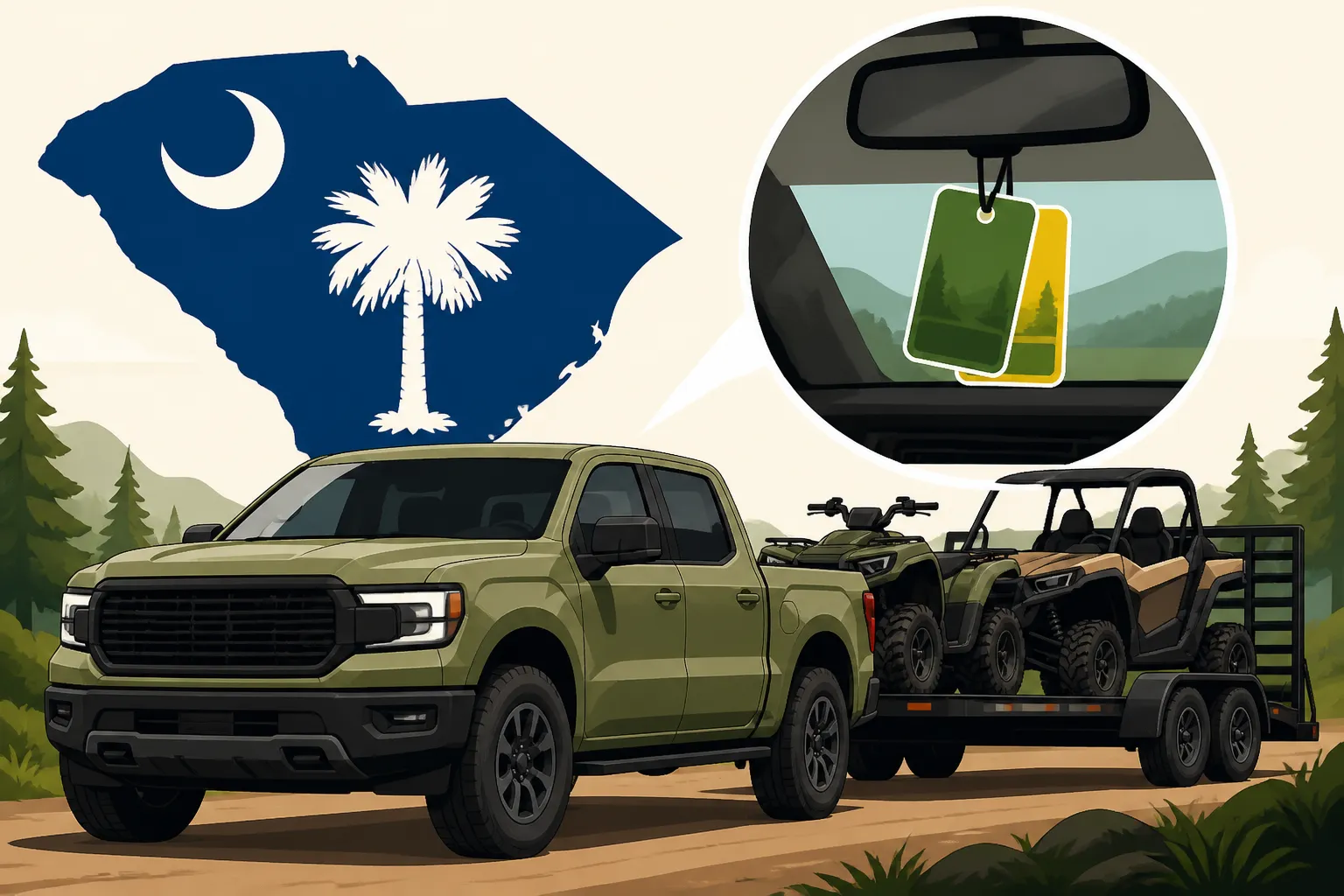
- Put it in the tow vehicle. Place the printed pass in the location specified by the current instructions. If no more precise location is given, a visible spot on the dashboard behind the windshield is a practical choice, provided it can be read from outside.
- Check it after parking. Before unloading, confirm that the pass is visible, is not face-down or covered by other papers, and matches the rider using it.
- Keep a backup copy separately. A second copy stored with your trip documents can help if the displayed printout is damaged or misplaced. A backup does not change the display requirement.
If you use a sleeve to keep the printout clean, make sure it does not make the information difficult to read or conflict with the official display directions. A clear document sleeve from an office supplier or Amazon can protect paper from rain and dust, but the sleeve is optional; it is not a substitute for the required pass or placement.
Do not place the pass where it blocks the driver’s view. The aim is to make it easy to see from outside while keeping the windshield and driving area clear. If the pass instructions specify a particular position, follow those directions instead of improvising.
The most common practical mistake is leaving the pass in the trailer, a gear bag or the glove box. Those places may keep the paper safe, but they do not display it for a check at the trailhead. Another is putting the pass on the ATV itself because it is an ATV riding credential. For an annual pass, follow the tow-vehicle display instructions.
For more detail about preparing the printout, Printing Your Annual Pass for the Tow Vehicle focuses on the document and placement. For what a trailhead check may involve, see How Rangers Read Your Plate at a Trailhead.
Planning for passengers, multiple machines and changes
A group arriving together still needs to think about individual pass eligibility. The truck does not become a group pass just because it is carrying several riders. Before departure, identify who will ride, which people hold annual passes and whether anyone else needs a separate pass. Do not plan to rotate one annual pass among riders or leave it displayed as though it covers everyone.
If two riders each have an annual pass, keep the documents distinct and make sure the required pass for each rider is displayed as instructed. If there is only one tow vehicle, do not assume that displaying one copy settles the pass requirement for every person riding. Check the current terms for how multiple riders’ passes should be shown in one vehicle. A clear, readable display is more useful than a pile of papers in which the passholder is hard to identify.
The same care matters when the group uses more than one tow vehicle. An annual pass belongs to its holder, not to the first truck that carried it. The passholder should bring the correct pass and follow the display instructions in the vehicle used for that outing. If a different person drives the truck, that change does not make the pass theirs.
Multiple ATVs on one trailer do not necessarily mean one annual pass is enough. The deciding point is the pass’s terms and who is riding, not simply the number of machines or tow vehicles. Likewise, one person riding more than one machine during an outing should not confuse the pass with a vehicle registration sticker. Check the current conditions before assuming how a pass applies to an unusual setup.
A move, vehicle change or replacement windshield can also prompt questions. Because the annual pass is tied to the rider, a new truck does not automatically make the pass invalid. But the display still needs to be handled correctly in the vehicle used for that trip. If the pass is damaged, lost or no longer readable, use the provider’s instructions for retrieving or replacing the document rather than altering the pass yourself.
Visitors should make the same distinction. An out-of-state ATV’s title, registration or insurance status is separate from a forest trail pass. A visitor who has permission to ride on a covered forest trail still needs to follow the pass rules that apply to that ride. Conversely, buying a forest pass does not make an otherwise restricted road or trail open to ATVs. South Carolina Registration Questions From Visitors can help separate trail access from registration questions.
Mistakes to avoid and how to verify the instructions
A few small errors can make a valid pass difficult to verify. Check these details before leaving:
- Using a receipt instead of the pass. Keep the receipt, but display the pass document if that is what the instructions require.
- Displaying an unreadable printout. Reprint it if the name or other required details are faint, cut off or hidden.
- Leaving it out of sight. A pass in a glove box or gear bag is stored, not displayed.
- Assuming one pass covers everyone. Annual passes are associated with individual riders; confirm each person’s requirement.
- Using the annual-pass method for a day pass. The day pass may be connected to the tow vehicle differently.
- Assuming the pass covers every public riding area. It applies only as described in its terms.
- Treating the pass as vehicle paperwork. It is not an ATV title, registration document, license plate or insurance proof.
Before each trip, review the pass confirmation and the current forest trail information. This is worthwhile even if you have visited the same area before: access conditions, closures and instructions can change. Confirm that the pass is valid for the intended area and date, that the person who will ride is the passholder, and that the tow vehicle display follows the latest directions.
Pass availability and purchase instructions are handled online; South Carolina Passes Sold Only Online covers where to obtain them. Save the official confirmation on your phone as a backup, but do not treat a saved file as a replacement for a printed display if the rules call for one. If the official directions are unclear, contact the pass provider or the forest office before traveling rather than relying on a guess at the trailhead.
A simple pre-trip check can prevent most problems:
- Confirm the destination is a covered OHV trail area and is open.
- Confirm which riders need individual annual passes.
- Print each required pass in a readable format.
- Place the pass or passes where the current instructions say in the tow vehicle.
- Keep ownership and other required machine documents separate from the forest pass.
This approach keeps the pass in its proper role: proof of access for the covered trail system, displayed in the tow vehicle for checking. It does not turn the tow vehicle into the passholder or make one rider’s annual credential available to the rest of a group.
Frequently Asked Questions
Does the annual pass belong to the tow vehicle?
No. The annual pass is associated with an individual rider. The printed copy is displayed in the tow vehicle as instructed, but that does not make the pass transferable to the vehicle or its other occupants.
Can I leave the pass in the glove box?
A pass stored in the glove box is not displayed. Follow the pass instructions for placing the printed copy in a visible location in the tow vehicle.
Does one annual pass cover everyone riding from the same truck?
Do not assume that it does. Annual passes are personal, so each rider should check the applicable requirement and carry or display their own pass as directed.
Is the annual pass the same as ATV registration?
No. The forest pass concerns access to covered OHV trails. It does not serve as an ATV title, registration, plate or insurance document.
Can I use the forest pass at a private riding park?
Not automatically. Private parks set their own admission and riding rules. Check with the park for its separate pass and access requirements.
Disclaimer
This article is for general informational purposes only and does not constitute professional advice. Laws, prices and regulations vary by location and change over time. Consult a qualified professional for guidance on your specific situation.