Sharing a Sumter Forest Trail With Hunters
A ride through Sumter National Forest can put you on the same narrow roads and trail corridors used by hunters heading to deer stands or checking hunting areas. That overlap can feel tense, especially when visibility is poor or trucks are parked near a trailhead. This guide explains how to plan ahead, stay visible, share space respectfully, and know when to turn around.
Plan the ride around hunting activity and trail status
Check which land and trail you are actually using
“Sumter Forest” can mean a broad area, not one continuous riding zone. The forest includes different districts and designated OHV routes, while nearby roads and parcels may have separate access rules. Before loading your machine, confirm the specific trail is open to your vehicle type and that motorized use is allowed on the route you intend to ride.
This distinction matters because a trail that looks rideable on a map may be closed, restricted to a particular kind of machine, or located on land with different rules. Some trails also have width limits that exclude full-size side-by-sides. Start with the relevant Forest Service district’s current alerts and trail information, then confirm pass and vehicle requirements in South Carolina National Forest OHV Passes. For a broader look at the forest routes, see South Carolina’s Four National Forest Trails.
An app such as onX Offroad can help you orient yourself, follow a planned route, and notice when a ride appears to approach a property boundary or a different road network. It is a planning aid, not permission to ride. A digital map may not reflect a same-day closure, a gate, a temporary restriction, or a land manager’s posted notice. Check official information before you leave, and obey signs at the trailhead even if your phone shows a route continuing ahead.
Find out whether hunting may be happening nearby
Hunting activity can change the feel of a riding area even when a designated OHV trail remains open. Deer season, other hunting seasons, and local access arrangements can bring more pickups to forest roads and more people walking away from parking areas. A forest road that seemed quiet on a weekday may have several vehicles along it during a busy hunting period.
Before your trip, check the forest’s alerts and relevant state hunting information. Don’t assume that a hunting season means all riding is prohibited, but don’t assume an open trail means there are no hunters nearby either. Forest access and wildlife management area rules can differ, and riding privileges on one route do not automatically extend to adjoining land. The distinction is important around South Carolina WMA Riding Is Prohibited and South Carolina Hunting Season and Trail Access.
If a route is posted closed, gated, or restricted, don’t use a hunting purpose, a trail app, or another rider’s tracks as a reason to proceed. And if you arrive to find a trailhead packed with hunting vehicles, consider choosing another open route or returning another day. A change of plan is frustrating, but it is much better than squeezing a machine past parked trucks or surprising someone on foot.
Stay visible and give hunters room
Make your machine and group easy to notice
Visibility is the biggest practical issue when riders and hunters use the same area. Trees, bends, brush, and uneven ground can hide a person until the last moment. Keep headlights on where appropriate, ride at a speed that lets you stop within the clear distance ahead, and avoid accelerating hard into blind corners. If you’re riding with a group, leave enough space that each person can react to something the lead rider sees.
Wear bright clothing or a high-visibility outer layer, especially during hunting periods. Blaze orange is a sensible choice because it is easy to spot against forest colors, but don’t treat it as a substitute for lights, cautious speed, or awareness. Before heading out, review South Carolina Blaze Orange in Hunting Season for context on visibility and seasonal riding considerations. Local rules and land-manager notices may have specific requirements, so follow posted guidance.
Keep your group together without bunching up around a bend or crossing. A rider who stops suddenly should have room to do so without being rear-ended. If someone needs to pull over, get fully out of the travel path and make sure the rest of the group knows where you are. On a narrow forest road, a machine stopped just beyond a curve can be difficult for an approaching hunter or vehicle to see.
Yield calmly when you meet someone on foot or in a vehicle
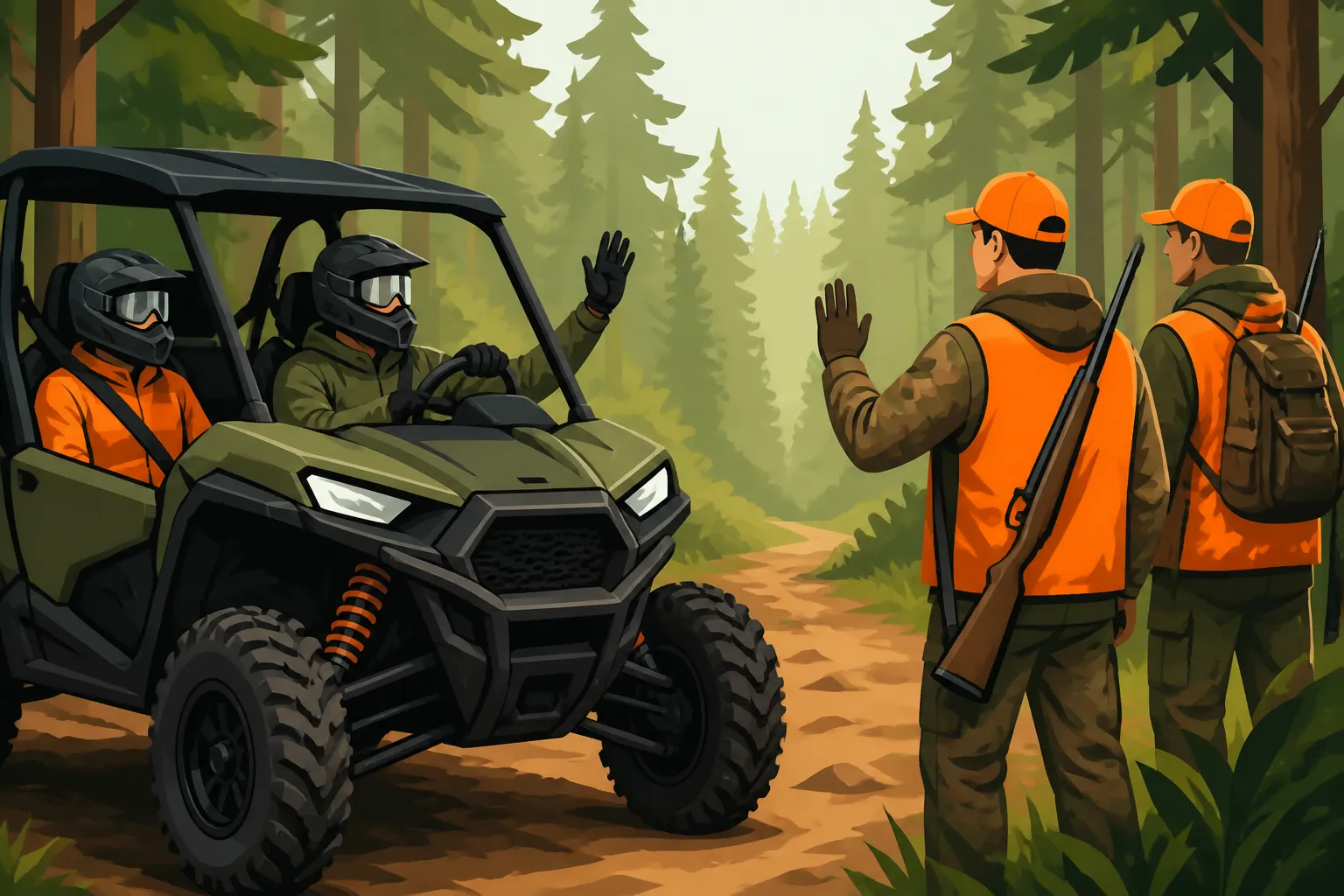
When you spot a hunter, hiker, or parked vehicle, slow down early. If there is room, pull over safely, stop your engine, and let the other person pass. A quiet pause is often more useful than trying to call out over an idling engine. Give people on foot extra space, especially if they are carrying equipment or moving along the road edge.
Don’t assume a hunter has seen you just because you can see them. Make your presence obvious without startling them: reduce speed, keep a predictable line, and avoid sudden revving or a fast approach. If a hunter is near a stand or crossing, wait until they are clearly out of your way before continuing. Never ride toward a person simply because the trail is narrow or your group is eager to keep moving.
Parked trucks deserve the same care. Don’t block a gate, road, turnout, or access point, and don’t drive around a vehicle onto unmarked ground to get past it. If you can’t pass without leaving the designated route or putting someone at risk, turn around or wait for a safe opportunity. Good etiquette is part of responsible riding, alongside South Carolina Trail Etiquette Locals Expect and Sharing a Sumter Forest Trail With Hunters.
| Situation | Safer response |
|---|---|
| You see a person ahead on a narrow trail | Slow early, stop if needed, and give them room to pass |
| A truck is parked beside the route | Do not block it or ride around it onto unmarked land |
| Your group reaches a blind bend | Reduce speed and keep enough distance to stop safely |
| A gate or closure sign blocks the route | Turn back and choose a confirmed open route |
| You hear activity but cannot see its source | Stop in a safe place, assess, and avoid moving toward it |
Ride responsibly on shared roads and trail corridors
Stay on the designated route
When visibility is limited or a trail is crowded, it can be tempting to cut around a group, parked truck, or muddy section. Don’t take an unmarked bypass through the woods. An unofficial track may cross private property, wildlife habitat, or a closed route, and it can create a new conflict for the next rider. Stay on the designated trail and respect closures even when they add time to your trip.
Use a map to understand where you are, but pair it with signs and current local information. onX Offroad may be useful for reviewing a route before the ride and keeping your group oriented if service is weak. Download or save what you need before entering a dead zone, and carry a backup plan if a phone battery dies. The app can help you avoid getting turned around; it cannot confirm that every line shown is legally open to motorized travel.
Trail width matters too. A route suitable for a narrow ATV may not accommodate a wider UTV, and attempting to squeeze through can damage the trail or force you off the marked surface. Confirm the route’s vehicle restrictions before setting out, particularly if you are taking a side-by-side. South Carolina’s 50-Inch Trail Width Limit explains why a route’s width designation can determine which machines may use it.
Be considerate around hunting access and forest work
Hunters may be carrying equipment, walking to a location, or using a road to reach a parking area. Make room rather than treating every vehicle or person as an obstacle to get around. Keep noise down near camps and parked vehicles, and don’t stop to inspect or photograph someone’s gear or hunting setup. A brief, polite greeting is fine; a group gathering around a hunter can feel intrusive.
Forest roads may also be used by maintenance crews, emergency responders, or logging vehicles. Give work vehicles plenty of space, follow any flagger’s instructions, and never ride past a closure barrier. A large truck may need the full road, and a driver may not be able to see a small ATV beside or behind it. The same cautious approach applies when sharing a road with other riders: slow down, communicate clearly, and pass only where there is room.
Pack out your trash and leave the trailhead as you found it. Don’t leave food, cans, or broken gear near a hunter’s vehicle or roadside pull-off. Small choices like these help keep access peaceful for everyone who uses the forest. For more on how to prepare for changing conditions and access issues, see South Carolina Trail Closures After Rain and South Carolina Trail Conditions Before You Haul.
Use a simple plan when the ride feels uncomfortable
Decide in advance when to stop or reroute
It helps to agree on a few decision points before the group starts riding. For example, decide that you’ll turn around if a trail is posted closed, if vehicles block the route, or if you cannot pass a person safely without leaving the designated trail. When everyone understands the plan, there’s less pressure to continue just because the group has already driven a long way to the trailhead.
If you encounter an unclear situation, stop somewhere safe and check the sign, map, or official trail information. Don’t ride deeper into an uncertain area in the hope that the route will become clearer. If you’re with a group, have one person stay with the machines while another checks information from a safe location. Keep the machines out of the travel lane and avoid blocking access for others.
A useful pre-ride check can be short:
- Confirm the exact trail and vehicle restrictions.
- Check official notices for closures or access changes.
- Review hunting-season activity and plan for people on foot.
- Save an offline map and carry a charged phone.
- Tell someone your route and expected return time.
- Agree on where the group will turn around if the route is not safe or open.
Keep your own group predictable
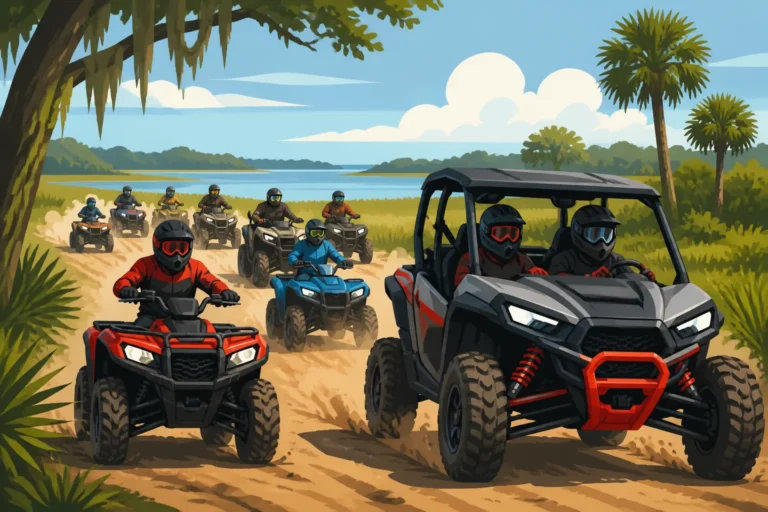
The lead rider should set a pace that the least experienced person can manage, not the pace of the fastest machine. The last rider should know the planned route and have a way to contact the group. Pause in safe, visible places so nobody feels forced to catch up at speed. If a rider becomes separated, stop at the agreed meeting point rather than sending several machines searching in different directions.
Use clear hand signals or radios if your group has them, but don’t rely on communication equipment as a substitute for space and visibility. Phones may have no service in parts of the forest. Before departure, make sure everyone knows what to do if the group separates, a machine breaks down, or a trail is unexpectedly closed. South Carolina Group Ride Planning can help you think through those details, while South Carolina Trailheads With Trailer Parking is useful when choosing a practical place to stage.
Above all, treat a hunter as another forest user with a legitimate reason to be there. A careful rider who slows down, stays on the route, and yields without fuss helps make shared access safer and less stressful. If the area is too crowded or the situation feels uncertain, choosing another open trail is a reasonable riding decision, not a wasted trip.
Disclaimer
This article is for general informational purposes only and does not constitute professional advice. Laws, prices and regulations vary by location and change over time. Consult a qualified professional for guidance on your specific situation.