Riding Etiquette at a Carolina Riding Park
A crowded riding park can turn an enjoyable day into a stressful one when riders meet at blind corners, ignore closed trails, or leave a muddy staging area for the next group. Good etiquette is more than being polite: it helps prevent collisions, protects trails, and keeps riding areas welcoming. This guide covers what to do before you unload, how to share trails, and how to leave the park in good shape.
Before You Ride at a South Carolina Park
Learn the park’s rules and trail system
Private riding parks do not all operate the same way. A park may set its own rules for helmets, passengers, vehicle types, age limits, sound, alcohol, pets, camping, and trail direction. Rules can also differ by trail, event, or weather conditions. Read the park’s current information before you head out, then check posted signs and listen to staff when you arrive. The basics in South Carolina Private Park Passes and Rules can help you understand why checking the individual park’s requirements matters.
Give yourself time to check in and orient yourself before unloading. Find out where to park your truck and trailer, where the staging area ends, which trails are open to your machine, and where to go if you need assistance. If a route is marked for dirt bikes or narrow ATVs, don’t assume a wider side-by-side can fit simply because the trail entrance looks clear. Width restrictions, gates, tight turns, and obstacles can make a route unsuitable for larger machines.
A park map can help you plan, but it should not replace local instructions. Apps such as onX Offroad can be useful for organizing a ride or viewing mapped routes, but compare what you see with the park’s official map and the signs on the ground. Trails can close, markings can change, and a route that appears nearby may not be open to visitors. For a better sense of what different routes may demand, review South Carolina Trail Difficulty Ratings before choosing a loop.
Prepare your machine and group
A loose strap, soft tire, or machine that will not start can cause a bottleneck right when other riders are preparing to leave. Do a basic pre-ride check while you are still in the staging area: inspect tires, brakes, lights, steering, and visible leaks, and make sure your gear is secured. Bring the equipment you need for the kind of ride you plan to do, including water and basic recovery or repair items appropriate to your group and vehicle.
Agree on a simple plan before anyone rolls out. Decide who will lead, who will sweep at the back, how often the group will regroup, and what everyone should do if riders become separated. Keep the plan realistic for the least experienced person in the group. A fast rider who disappears around every bend can leave a new rider feeling pressured to take risks just to keep up.
If you are coordinating several machines, South Carolina Group Ride Planning offers a useful starting point for thinking through the logistics. Share the route and expectations before the ride, not only at the trail entrance. A map in onX Offroad may help your group discuss the general plan, but make sure everyone understands that posted park directions and closures take priority.
| Before you unload | Why it helps |
|---|---|
| Check park rules and open trails | Prevents avoidable rule violations and wrong turns |
| Confirm your machine fits the route | Reduces the chance of getting stuck at a narrow trail or gate |
| Inspect the machine and secure gear | Helps avoid breakdowns and loose items on the trail |
| Choose a leader and sweep rider | Keeps the group organized if the pace changes |
| Check weather and trail notices | Helps you avoid unsafe or closed routes |
| Plan where to park and stage | Keeps access lanes and other visitors clear |
Sharing Trails With Other Riders
Slow down, stay alert, and yield thoughtfully
Trail riding is not a race unless you are taking part in an organized activity with specific rules. On a shared trail, keep a pace that lets you respond to people, animals, changing surfaces, and unexpected obstacles. Slow down as you approach blind turns, trail intersections, campsites, staging areas, and places where dust or vegetation limits visibility. If the trail is narrow, leave room for another rider to stop or maneuver rather than trying to squeeze through at speed.
When riders meet, communicate calmly and follow the park’s posted directions. Don’t assume the other person can see or hear you, especially around a bend or in a dusty stretch. Give other riders time and space to pass where it is safe. Avoid revving aggressively, crowding someone’s rear bumper, or pushing a slower rider to move faster than they are comfortable with. Yielding on a Narrow Carolina Trail explores the kind of judgment that makes tight encounters safer and less awkward.
Keep an eye out for walkers, parked machines, and people working around the trail. A rider stepping aside may be trying to move to a safer place, not inviting you to speed past. Pass slowly enough to avoid spraying dust or debris, and offer a brief, friendly acknowledgment when it feels natural. Small gestures can make a busy park feel much less intimidating for families and first-time visitors.
Keep your group together without blocking the trail
A group can stretch out quickly when riders have different machines, confidence levels, or ideas about what counts as an easy trail. Leave enough distance to see and react to the person ahead. Following too closely makes it harder to stop if they brake, encounter a fallen branch, or take a wrong turn. It also keeps dust from the leading vehicle from swallowing the view for everyone behind.
Regroup in a designated staging area or a safe, wide spot where your machines are fully out of the way. Avoid stopping just beyond a blind corner, in front of a trail entrance, or where other riders would have to squeeze past. If someone needs to stop unexpectedly, the rest of the group should avoid piling up behind them on the active trail. Move to a safer place when possible, then check that everyone is accounted for before continuing.
The person at the back of the group matters just as much as the leader. A sweep rider can notice a missed turn, mechanical problem, or rider who has fallen behind. Keep the pace comfortable enough that the group does not repeatedly split apart. If a trail is beyond someone’s ability or the machine’s limits, turn around or choose another route rather than treating the group’s schedule as more important than safety.
Protecting Trails and Being a Good Park Neighbor
Respect closures, weather, and trail conditions
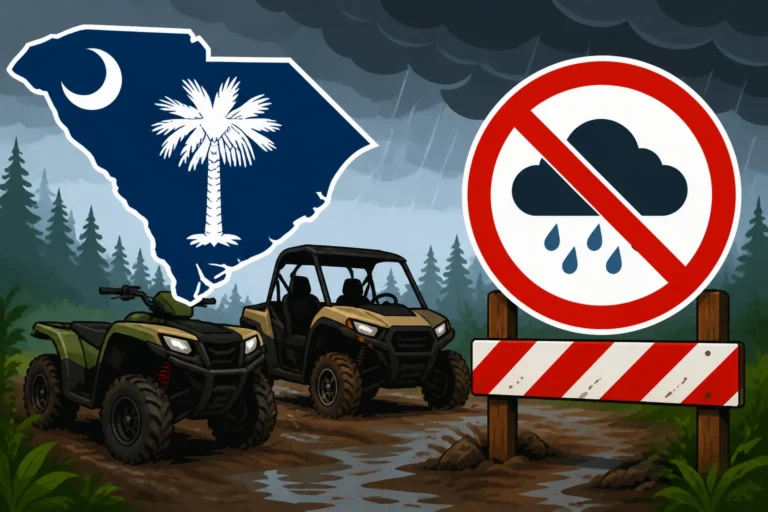
A trail closure is not a suggestion or an invitation to see whether the route is passable. Parks may close routes because of rain, erosion, maintenance, fire risk, or a hazard that is not obvious from the entrance. Riding around a barrier can damage the surface, create new ruts, or put you into a section that staff have closed for a reason. Check notices before leaving home and again at the park, since conditions can change after a forecast is made.
South Carolina’s clay and damp ground can become especially troublesome after rain. A trail that felt manageable on a dry day may turn slick or develop deep ruts when wet. If the park closes a route, respect the closure even if your machine has aggressive tires or you see tracks from another rider. The guidance in South Carolina Wet Weather Trail Closures and South Carolina Trail Conditions Before You Haul can help you think ahead about changing conditions instead of discovering them after you arrive.
Stay on marked routes. Cutting across a muddy patch, making a new bypass around a puddle, or riding through vegetation can widen the damaged area and make future maintenance harder. If you find a blocked trail, downed tree, damaged marker, or unsafe section, report it to park staff rather than creating your own route around it. A map app such as onX Offroad can help you keep track of your planned ride, but it cannot tell you that a trail is officially open unless you confirm that information with the park.
Manage noise, dust, and shared spaces
A riding park is a place for engine noise, but that does not mean every sound or behavior is considerate. Avoid repeated high-revving in the staging area, unnecessary idling near campsites, and aggressive throttle bursts when you are close to other visitors. If the park has sound requirements, take them seriously. Even where a machine is within the rules, being mindful around quiet areas and other people’s camps makes the day more pleasant for everyone. For practical examples, see Riding Quietly Past Carolina Camps.
Dust can also affect riders who are not in your group. Leave space behind the vehicle in front of you, especially on dry roads and open stretches. If visibility drops, slow down until you can see clearly rather than continuing at the same speed through the dust cloud. Near parked vehicles, tents, and people on foot, crawl past instead of kicking up a plume that coats gear and food.
Be considerate in shared facilities. Keep loading lanes open, do not spread tools and equipment across other people’s parking space, and dispose of trash properly. If the park provides wash stations, use them as directed and avoid leaving mud, packaging, or personal gear in the way. Check South Carolina Riding Areas With Wash Stations when choosing a place to ride if being able to clean up your machine is important to your plans.
Handling Problems and Leaving the Park Well
Respond calmly to breakdowns and conflicts
A breakdown can be frustrating, particularly when it happens far from the staging area. First, move yourself and the machine out of active traffic if it is safe to do so. Let your group know where you are, keep the trail clear as much as possible, and follow the park’s instructions for getting help. Don’t attempt a difficult recovery that could injure someone or damage another machine. If you need assistance, explain your location clearly using trail names, markers, or the park’s preferred method.
If another rider makes a mistake, avoid turning a tense moment into a bigger problem. Give people space, speak calmly, and focus on the immediate safety issue rather than arguing about who had the right of way. If a person is injured or there is a serious hazard, alert park staff or emergency services as appropriate. A minor disagreement is usually best handled without an audience, a raised voice, or a crowd of machines blocking the route.
When a rider in your group is less experienced, offer help without embarrassing them. A quick reminder about a turn or a suggestion to take a slower route can be more useful than teasing or pressure. Let people decide when they need a break. The goal is to finish the day safely, not to prove who can ride the hardest trail.
Leave the staging area and trailhead ready for the next group
Before you leave, check your parking space and the areas where your group stopped. Pick up food wrappers, drink containers, broken straps, and any other rubbish. Look for dropped items that may have fallen off a vehicle or trailer. If you brought tools or spare parts, make sure none were left behind. Leaving a Carolina Trailhead Tidy is a small but meaningful part of keeping riding areas open and welcoming.
Load machines without blocking the entrance, roads, or other visitors’ trailers. Keep children and pets away from moving vehicles, and take your time securing ramps and tie-downs. A rushed departure can turn a good ride into a preventable accident. If you notice damage, a spill, or a problem that needs staff attention, report it before heading out.
A good final check includes confirming that the group has everyone and everything, disposing of trash in the proper place, and leaving shared facilities as you found them. If the park asks visitors to follow specific cleanup or checkout steps, follow those rather than assuming a routine that works somewhere else will apply here. When riders take care of the details, staff can spend more time maintaining trails and less time dealing with avoidable problems.
Disclaimer
This article is for general informational purposes only and does not constitute professional advice. Laws, prices and regulations vary by location and change over time. Consult a qualified professional for guidance on your specific situation.