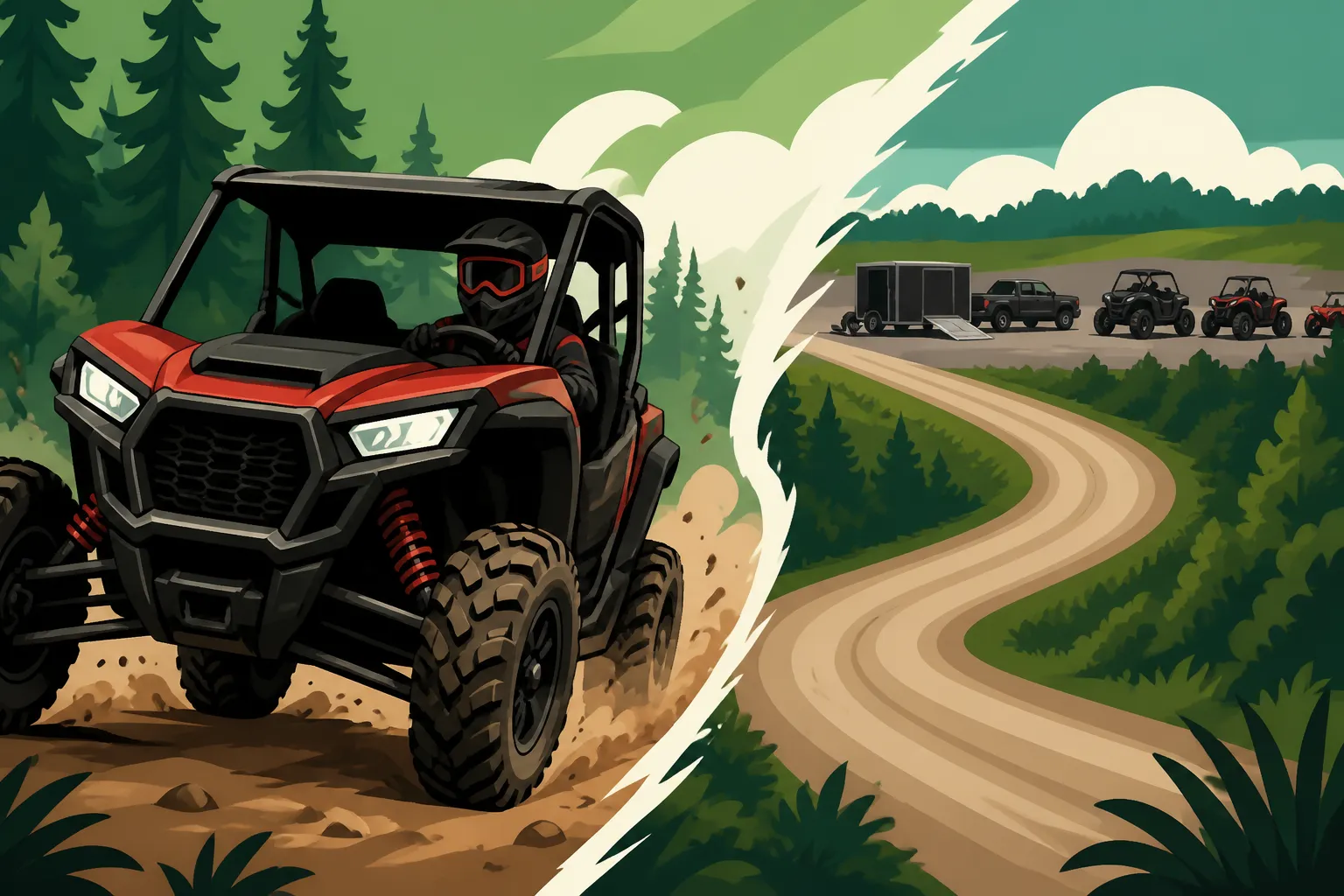
4 Miles of Road to a Staging Lot
A four-mile approach to an ATV staging lot can feel like a small detail until you’re towing a machine on a narrow, unfamiliar road. For a ride at Enoree OHV Trail in South Carolina, the key is to plan for that final stretch separately from the trail itself. This guide covers navigation, trailer preparation, parking, and what to check before leaving home.
Understand the four-mile approach
The access road is not part of the riding trail
When people talk about four miles of road to a staging lot, it helps to separate the drive from the ride. The approach gets you and your trailer to the place where you unload. The designated OHV trail begins from the riding area, not simply wherever the pavement ends or the forest road starts.
That distinction matters for safety and compliance. An ATV or UTV is not automatically allowed on every road leading to a trailhead, and being close to a riding area does not make an unmarked road an authorized trail. Follow posted signs, barriers, and current Forest Service directions. If you are unsure whether a route is open to your vehicle, confirm before driving onto it.
The access-road distance is also different from the trail mileage you may see in a map or trip description. Keep the two figures separate when estimating fuel, travel time, and the amount of daylight you’ll have for riding. For a broader look at the route system, see [Enoree OHV Trail in South Carolina] and [Enoree's 23 Miles in South Carolina].
Expect the last stretch to feel different from the highway
The drive can change character as you leave main roads and approach the staging area. A forest access road may be narrower, less familiar, or more affected by recent weather than the highway you used to get there. Even a short final stretch can take longer when you’re towing, meeting another vehicle, or slowing for rough patches.
Treat the four miles as a real part of the outing, not an afterthought. Allow extra time, especially if you’re arriving with a group or have a long trailer. A driver who is comfortable driving an unloaded pickup may find that tight turns, soft shoulders, or limited places to pull aside feel different with a trailer behind them.
Road conditions can change, so don’t assume that a route you drove on a dry weekend will be identical after rain or maintenance. Check current access information before setting out, and be ready to change plans if signs or conditions indicate the approach is unsuitable. [South Carolina Trail Conditions Before You Haul] is a useful related topic to review when planning a trip.
Plan the route before you leave
Use a map for the approach and another source for current access
A navigation app can help you get close, but a pin is not a guarantee that the road is open, suitable for towing, or the right entrance. Save the staging-area location in advance and review the final portion of the route while you still have reliable service. If you use onX Offroad, check the route details before departure and compare them with official access information and posted signs.
Download or save what you need before entering an area where cell reception may be unreliable. A paper map or a second offline map can be a helpful backup. The goal is not to collect every possible route line; it’s to know which roads you intend to use and where you can safely turn around if access is blocked.
A map should support your judgment, not override a gate, closure notice, or road sign. If the route shown on your phone conflicts with what you see on the ground, stop somewhere safe and reassess. Do not follow a device onto a closed road simply because it appears to lead toward the lot.
Make the approach part of your time estimate
A common planning mistake is to estimate only the drive to the nearest town or highway exit, then assume the staging lot is just around the corner. Build in time for the final approach, unloading, paperwork or pass checks if applicable, and getting ready to ride.
For example, a group may reach the general area on schedule but still need time to navigate the last stretch, find the correct lot, park a trailer, and unload several machines. If the group has children, first-time riders, or multiple vehicles, those small tasks can take longer than expected. Leaving a buffer is less stressful than trying to make up time once you arrive.
Think about your return trip, too. If you plan to ride until dusk, remember that you still need to load, secure the machines, and drive back out. Weather, fatigue, and slower travel on an unfamiliar road can make the return more demanding than the morning drive. For more preparation ideas, see [South Carolina Trailheads With Trailer Parking] and [South Carolina Riding Areas Reachable Without a Truck].
Get your vehicle and trailer ready
Check turning room, clearance, and load security
Before towing the final stretch, make sure your machines and trailer are secure. Recheck the tie-downs after the highway portion of the trip, confirm the ramp is fastened, and make sure loose gear cannot shift. A strap that seemed tight at home may loosen or settle after a long drive.
Consider the whole combination: truck, trailer, loaded machines, and any gear mounted outside the cab. On a narrow road, the trailer may track differently through a turn than the truck does. Avoid sudden steering corrections, and give yourself room to swing through corners without clipping a ditch edge, branch, sign, or roadside post.
Ground clearance matters as well. A low trailer may scrape on uneven approaches or sharp transitions. Don’t assume that a road is impassable just because it looks rough, but don’t force a loaded trailer through a section that risks damage or getting stuck. If there is a safe place to stop, inspect the route on foot before proceeding.
Decide what you’ll do if the road is blocked
Make a simple backup plan before you reach the last stretch. Identify a safe place to turn around or wait if a gate is closed, the road is obstructed, or conditions are worse than expected. Never block the road while you discuss options, and don’t use a private driveway or pullout without permission.
If several vehicles are traveling together, agree on how the group will communicate. Keep enough space between vehicles that nobody is forced to stop on a blind bend. If one driver needs to turn around, the others should wait in a safe, legal location rather than crowding the narrow road.
An onX Offroad route or saved map can help the group keep a shared sense of direction, but each driver should still know the plan. Do not assume that everyone’s phone will have service or battery power. A simple meeting point before the final approach can prevent a caravan from splitting up when one vehicle misses a turn.
Use the staging lot efficiently
Park with room for other riders
The lot is where the road trip turns into the riding day, and that transition can get busy. Park so your trailer is not blocking access, turning space, signs, or the path another vehicle needs to use. If the lot is crowded, avoid unloading in a way that forces arriving vehicles to wait in the access road.
Keep loading and unloading organized. Put ramps, helmets, tools, and loose gear where they won’t create a tripping hazard or spill into neighboring parking spaces. If you are traveling with a group, assign one person to guide vehicles into position while another handles unloading. Clear communication is especially helpful when trailers are backing in a tight area.
Before unloading, take a moment to check the posted information. Trail access, closures, pass requirements, and permitted vehicle types can vary by site and may change. The staging lot is a good place to confirm that everyone understands the route and the day’s boundaries before machines start moving.
Keep road and trail rules separate
Do not assume that the rules for the OHV trail automatically apply to the access road. Use your truck or tow vehicle for the approach unless signs clearly authorize another arrangement. Likewise, do not ride an ATV or UTV on a road simply because it leads to the staging lot.
South Carolina has distinct rules for trail machines, street-legal UTVs, golf carts, and other vehicle categories. A plate or permit for one category does not necessarily authorize use in another setting. If you’re sorting out the difference between road use and trail access, review [South Carolina Registration Questions From Visitors], [South Carolina's 50-Inch Trail Width Limit], and [South Carolina Public Land Compared to Private].
At the staging area, follow any posted directions about unloading, riding from the lot, or where machines may be operated. If a trail entrance is marked, use it rather than creating a shortcut through vegetation or around a barrier. Staying on designated routes protects the trail and helps keep access available to other riders.
Prepare for weather, navigation, and a smooth return
Rain can affect the approach as well as the trail
Rain changes more than the riding surface. It can leave mud, standing water, soft shoulders, and debris on the access road. A route that felt easy on a dry day may require slower driving after wet weather, particularly when a loaded trailer has less traction.
Before you go, check for current trail and road notices, and be willing to postpone if access is restricted or conditions seem unsafe. Avoid driving around a closure sign or through a barrier. If you reach a muddy section and cannot tell whether your vehicle and trailer can pass safely, don’t gamble on it just to keep the schedule.
Wet conditions can also affect the staging lot itself. Keep footwear and loading ramps in mind, and leave extra time to secure muddy machines before heading home. For a more detailed look at weather-related access decisions, see [South Carolina Trail Closures After Rain] and [South Carolina Trail Riding After Heavy Rain].
Pack for the drive out, not only the ride
It’s easy to focus on riding gear and forget that you’ll need to navigate back along the same access road. Keep your phone charged, have a charging option available, and save your route offline. A basic first-aid kit, flashlight, water, and a small tool kit can be useful if the return takes longer than expected.
Before loading up, check the machine and trailer for loose items, leaks, or damage. Secure ramps and tie-downs, and do a walk-around before moving. If the group is tired, take a short break before towing back through a narrow or unfamiliar stretch. Fatigue can make a routine road feel harder, particularly after a full day on the trail.
If you’re riding with friends, agree on the order of travel and a regrouping point before leaving. Don’t let a gap between vehicles turn into a guessing game at an intersection. An offline map, including a saved route in onX Offroad, can be a helpful reference, but the group should also know the intended way back without relying on a single person’s phone.
A practical pre-trip checklist
| Before leaving home | At the staging area | Before driving out |
|---|---|---|
| Save the route and check current access information | Read posted signs and confirm trail access | Secure machines, ramps, and loose gear |
| Download an offline map or bring a paper backup | Park without blocking traffic or turning space | Check trailer lights and tie-downs |
| Inspect the trailer, tires, hitch, and straps | Unload in an orderly way | Make sure everyone knows the return route |
| Allow extra time for the final approach | Keep machines on authorized routes | Take a break if the group is tired |
| Agree on a backup plan if access is blocked | Confirm the group’s route and meeting point | Drive slowly and leave room on narrow roads |
The four-mile approach is manageable when you treat it as part of the outing rather than a short, forgettable link between the highway and the trail. Confirm the route, leave room for changing conditions, tow patiently, and use the staging lot in a way that leaves access clear for everyone behind you. A little planning on the way in can make the ride day calmer from arrival to the drive home.
Disclaimer
This article is for general informational purposes only and does not constitute professional advice. Laws, prices and regulations vary by location and change over time. Consult a qualified professional for guidance on your specific situation.