80 Acres Built for Rock Crawling
A rock-crawling day can go sideways before you reach the first obstacle: the machine may not fit the park’s vehicle rules, recent rain may change trail conditions, or a route may be harder than it looked on a screen. This guide explains what to plan for at Gulches ORV Park in South Carolina and how to prepare for a safer, more rewarding ride.
What to expect at Gulches ORV Park
A compact park with a rock-crawling focus
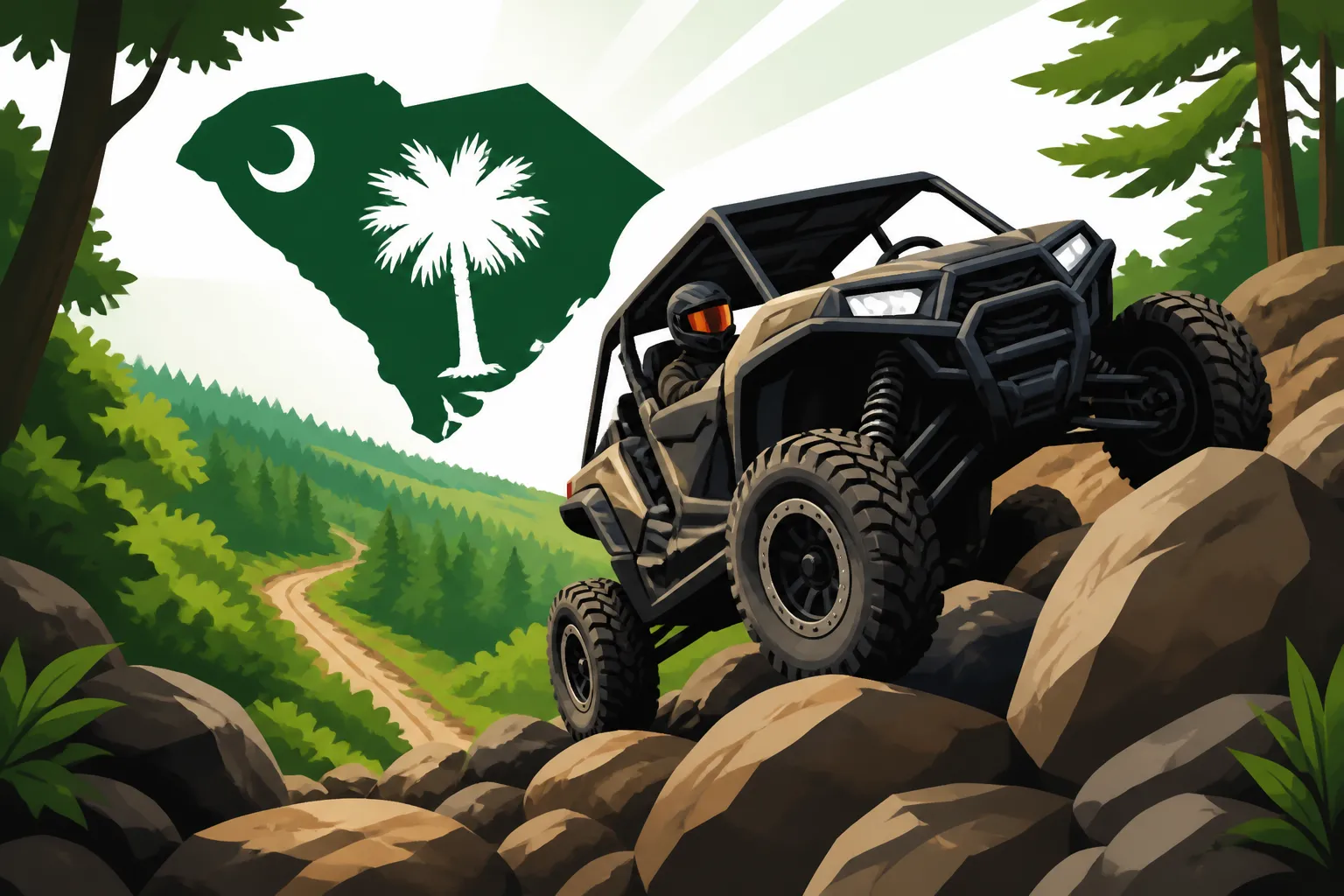
Gulches ORV Park is a private riding area in the Waterloo area of South Carolina, known for terrain built around off-road challenges. Its roughly 80 acres include rock-crawling terrain, making it a very different kind of outing from cruising long, flowing forest roads. The appeal is the obstacles: uneven rock, steep sections, and routes where careful tire placement and controlled throttle matter more than speed.
A compact area can still offer a full day of decisions. One line may look manageable from the driver’s seat and become much steeper as you approach it; another may have a bypass that is easier on a machine, but still requires attention. The goal is not to conquer every feature. A good day is one where you choose terrain that suits your machine and experience, ride within your comfort level, and finish without preventable damage.
The park is especially associated with full-size rigs and Jeep-style rock crawling. That does not automatically mean every ATV or UTV is suitable for every trail—or even that every vehicle type is accepted under the park’s current rules. Before hauling, confirm which machines may enter and which trails are open to them. [Gulches ORV Park Is Built for Full-Size Rigs] offers more context about the park’s full-size focus, while [Gulches' 80 Acres in South Carolina] covers its acreage and setting.
Think about the vehicle before you think about the obstacle
A vehicle’s name or engine size does not tell the whole story. Width, wheelbase, ground clearance, tires, protection underneath, and the driver’s experience all affect whether a route is a sensible match. A short-wheelbase ATV and a wide, heavy side-by-side can behave very differently on the same rocky slope. A route that feels stable in one machine may leave another with limited room to turn or avoid a ledge.
Before leaving home, call or check the park’s own visitor information to confirm vehicle eligibility, trail access, equipment expectations, and any restrictions. Ask specifically about your machine’s type and dimensions rather than assuming that “ATV” or “UTV” covers every configuration. If you have a lifted machine, aftermarket tires, a roof, or a long wheelbase, mention those details. The same practical check applies to passengers: make sure every occupant is permitted and has the appropriate safety gear.
For a broader comparison of where different machines may ride, see [South Carolina Trails That Allow Side-by-Sides]. It is useful context, but park-specific rules still take priority. Private parks set their own access conditions, so [South Carolina Private Park Passes and Rules] is also worth reviewing before you plan the trip.
How to choose a route and ride rock terrain
Match the trail to your skill and your machine
Rock crawling is not a contest to take the hardest line. It is a slow, deliberate style of riding that rewards patience, clear communication, and knowing when to back out. A rider new to rocky terrain should start with easier ground, learn how the machine responds to small changes in throttle and steering, and build confidence gradually. If you are traveling with a group, choose a route that the least experienced driver can handle rather than letting the most capable machine set the day’s pace.
On a steep or uneven section, pause before committing. Look for loose rock, sharp edges, a possible rollover angle, and places where the tires could lose contact. Consider whether there is room to turn around if the line becomes uncomfortable. If you cannot see what lies beyond a crest or obstacle, do not charge into it just to find out. A spotter can help, but only if the driver and spotter agree on clear signals and keep a safe distance from the machine’s path.
Even a familiar route can feel different after a weather change or heavy use. Wet rock, mud over stone, and loose debris can reduce traction and make a previously manageable obstacle more demanding. Use the park’s current guidance and ask staff about conditions when you arrive. [South Carolina Trails With Rock Sections] and [South Carolina Trail Difficulty Ratings] can help you think through terrain and capability, but they cannot replace an on-site check of the actual line.
Use maps as a planning aid, not permission to roam
A digital map can help you understand the drive to the riding area, plan fuel and food stops, and keep track of where you have traveled. Tools such as onX Offroad can be useful for organizing a route and reviewing map information before a trip. Download or prepare the information you need before entering an area with weak service, and bring a backup plan rather than depending on a phone signal at every turn.
A map does not grant access. At a private park, follow the signed route system and the park’s instructions even if a navigation app appears to show another track nearby. Do not use a road, trail, or cut-through simply because it appears on a screen. If the route markings are unclear, stop in a safe place and ask park staff instead of guessing.
You can also use onX Offroad to help plan the road portion of your trip and keep your group oriented, but treat the park’s own directions and signs as authoritative for on-site riding. Before leaving, share the arrival plan with your group, identify a place to regroup if riders get separated, and agree that nobody will explore an unapproved route alone.
| Before you commit to a rock section | What to check |
|---|---|
| Machine fit | Vehicle type, width, wheelbase, clearance, tires, and park eligibility |
| Route choice | Difficulty, slope, turning room, line of sight, and a safe way to stop or turn back |
| Surface | Wet rock, mud, loose debris, and recent weather |
| Group plan | Spotter signals, regrouping point, and a rule against riding beyond the group |
| Navigation | Park signs and instructions first; digital maps as planning support |
| Recovery readiness | Recovery gear, communication, and a plan for calling for help |
Plan the trip before you load the trailer
Check conditions, access, and practical details
A little preparation can save you from a long, frustrating haul. Confirm operating information directly with Gulches before setting out, including access, vehicle rules, trail availability, and any seasonal or weather-related changes. Do not assume that a previous visit, a friend’s recollection, or an old social post reflects current conditions. [South Carolina Trail Conditions Before You Haul] explains why checking before departure matters, especially when weather can affect access or the condition of a route.
Plan the drive as carefully as the ride. Confirm the park’s location and directions, identify suitable fuel stops, and leave enough time to arrive, unload, and review the rules without rushing. If the group is traveling in multiple trucks or trailers, decide where everyone should meet and make sure each driver has the same directions. A lead vehicle and a clearly identified sweep vehicle can help keep a convoy together on unfamiliar roads.
Check that your trailer, tie-downs, tires, lights, and hitch are in good condition before loading. Bring the tools and basic supplies you normally need for your machine, along with drinking water, weather-appropriate clothing, and a first-aid kit. Rock riding can be physically demanding even when the machine is doing the hard work: walking a route, spotting, and helping a rider reposition all take energy.
Prepare for recovery without treating it as a guarantee
Rock terrain makes recovery planning important. Inspect your machine before the trip, including tires, steering, brakes, battery connections, and any protective equipment installed underneath. Secure loose gear so it cannot shift during a steep climb or become caught in moving parts. If you carry recovery equipment, know how it is designed to be used and whether it is appropriate for your vehicle. Improvised attachment points and unclear hand signals can turn a manageable stuck machine into a dangerous situation.
Talk with your group about what to do if a vehicle becomes stuck or disabled. Decide who will stop traffic, who will communicate with the driver, and who is responsible for getting help. Keep bystanders away from tensioned straps and from the direction a vehicle could move if a recovery line releases. If a situation feels beyond the group’s skill or equipment, stop and seek assistance through the park’s procedures rather than escalating the attempt.
It is also wise to know your own limits as a rider. If you are tired, frustrated, or feeling pressured to attempt an obstacle, take a break or choose another route. A scratched skid plate or an uncompleted trail is usually a better outcome than a rollover or an injury. Keep your phone protected, but do not assume service will be available everywhere; agree on a backup way to regroup if members of the group lose contact.
Ride responsibly and leave room for the next visit
Keep the group safe on shared trails
At a private off-road park, riders may have different machines, different experience levels, and different plans for the day. Make your intentions clear before a challenging section, give other groups room, and avoid stopping where a passing rider cannot see you. If someone is spotting, keep the driver’s attention on the agreed signals and do not let extra people crowd the obstacle.
Follow posted speed limits and route markings, and stay on designated trails. Cutting around a difficult feature can damage the surrounding ground or lead into an area that is not open to riding. Do not assume a bypass is safe or permitted unless it is marked or park staff confirm it. [South Carolina Trail Etiquette Locals Expect] provides useful general guidance for sharing riding areas respectfully.
Before you head out, check that your group has all riders and machines accounted for. Look over the vehicles for damage, loose parts, and debris caught underneath. A quick end-of-day inspection is also a chance to spot issues that could become serious on the drive home.
Know the difference between a park ride and public-land riding
Gulches is a private riding destination, so its rules and access system are distinct from riding on South Carolina public land. Do not assume that a route shown near the park is open for public ATV or UTV use. Public forests and other land managers have their own access rules, passes, closures, and vehicle restrictions. For example, [South Carolina's Four National Forest Trails] is relevant if you are comparing a private park outing with a ride on designated forest trails.
That distinction matters when you use navigation tools, too. onX Offroad may help you review a larger area or plan the drive, but a mapped line is not proof of permission to ride it. Confirm land ownership and access rules through the relevant land manager, and keep your machine on routes you are authorized to use. If you want to combine a park weekend with public-land riding, research each location separately and plan for different rules at every stop.
Finally, treat conditions and access information as something to verify close to departure. A route that was open on one visit may be unavailable later, and the machine that worked well on one trail may not be a good fit for another. A quick call, a careful vehicle check, and an honest conversation about your group’s experience can make the difference between a stressful day and a ride you are glad you planned.
Disclaimer
This article is for general informational purposes only and does not constitute professional advice. Laws, prices and regulations vary by location and change over time. Consult a qualified professional for guidance on your specific situation.