Winches for a Buried Carolina Machine
A Carolina machine can go from cruising to axle-deep in soft clay, creek-edge mud, or a rain-soaked rut in seconds. That is frustrating—and a rushed recovery can damage the ATV, UTV, trail, or people nearby. This guide explains how to choose and use a winch, prepare before a ride, and recover a buried machine with a safer, more deliberate plan.
Why Carolina machines get buried
Clay, rain, and ruts can defeat momentum
South Carolina riding conditions can change quickly. A trail that felt firm on the way in may become slick after rain, and red clay can cling to tires instead of letting them bite. In low spots, soft ground can conceal a rut or a patch of mud deep enough to high-center an ATV or UTV. A machine may look only slightly stuck while its frame or skid plate is resting on the ground and its tires are spinning freely.
The first mistake is often adding more throttle. Spinning tires can dig a machine in deeper, pack mud around the tires, and make the ground underneath less useful as traction. If the machine is sliding toward a tree, ditch, or creek bank, more throttle can also turn a manageable situation into a dangerous one. Stop as soon as you realize the tires are not moving the machine forward.
Before you ride, think about the terrain and the route—not only the machine’s advertised capability. Check recent trail conditions and closures, especially after heavy rain, and pay attention to whether a route allows your type of vehicle. South Carolina Trail Conditions Before You Haul and South Carolina Trail Closures After Rain are useful topics to review when planning a trip. An app such as onX Offroad can help you prepare a route and understand the terrain, but a map does not replace posted signs, local rules, or permission to use a road or trail.
A winch is one tool, not a recovery plan
A winch can help pull a machine toward a suitable anchor, but it cannot make every recovery safe. The setup depends on the machine’s weight, the winch and line condition, the anchor, the direction of pull, and the ground beneath the tires. A line that is badly angled or attached to an unsuitable point may cause damage or fail under load. Even a well-rated winch can be overwhelmed if the vehicle is high-centered, the tires are buried, or the pull is working against a steep slope.
It helps to distinguish a simple self-recovery from a situation that calls for another plan. If the machine is stuck on a relatively stable trail, has a clear direction of travel, and has an approved recovery point, a careful winch pull may be reasonable. If it is leaning, partly submerged, close to a drop-off, tangled in brush, or positioned where a line could cross the rider’s body, stop and reassess. A second capable machine, trained assistance, or a park’s recovery process may be safer.
| Situation | First response | Why it matters |
|---|---|---|
| Tires spin but the machine is stable | Stop, inspect, and clear loose debris around the tires if safe | More throttle can dig the machine deeper |
| ATV or UTV is high-centered | Check whether the frame or skid plate is holding it up | A straight pull may not free the machine |
| Machine is leaning or near an edge | Keep people clear and avoid a rushed pull | The machine can shift or roll as tension changes |
| No suitable anchor or recovery point is available | Do not improvise with a ball hitch or weak attachment | A failed attachment can become a dangerous projectile |
| Water, injury, or serious mechanical damage is involved | Pause and get qualified help | A winch cannot solve every safety or medical problem |
Choosing and carrying the right winch gear
Match the winch to the machine and its use
Start with the ATV or UTV manufacturer’s guidance and the winch manufacturer’s instructions. Choose equipment intended for the vehicle and the kind of recovery you expect to encounter. The machine’s loaded weight matters: passengers, cargo, accessories, and mud can all add to what must be moved. A heavier side-by-side used for hunting or hauling needs a different setup from a light trail quad.
Look beyond the winch itself. Check that its mounting plate is made for your machine, the electrical connections are secure, and the recovery point is approved for pulling. The winch line should be in good condition, with no damaged strands, cuts, kinks, or signs of heat or abrasion. Inspect the hook, fairlead, remote, and mounting hardware before the season and again before a demanding ride. If anything looks questionable, fix it before you are relying on it in the woods.
A synthetic rope is lighter and does not develop the same sharp wire strands that can appear on damaged steel cable, but it still needs protection from abrasion, heat, and sharp edges. Steel cable has its own handling and inspection needs. Neither type is maintenance-free. Follow its maker’s guidance, keep it clean and properly wound, and replace damaged equipment rather than hoping it will hold for one more pull.
Pack recovery accessories and personal protection
A compact recovery kit makes it easier to set up a controlled pull. Useful items may include a tree-saver strap, a rated soft shackle or suitable connecting hardware, a winch-line damper, and gloves appropriate for handling the line. A snatch block can change the direction of pull or help create a different rigging arrangement, but it must be rated for the load and used as directed. More components mean more connections to inspect, so learn how each piece works before carrying it into a difficult recovery.
Gloves are important, but they do not make it safe to touch a moving line. Keep hands away from the fairlead, hook, and any part of the line under tension. A damper placed on the line can help reduce the danger if a line or connection fails, but it is not a substitute for keeping everyone clear. Keep bystanders out of the line’s path and away from the area where a strap, shackle, or anchor could move if something breaks.
Plan for basic contingencies too. Bring a charged winch remote or know how the wired control works, carry a headlamp, and keep a phone or other communication option accessible. In wooded areas, service may be unreliable, so tell someone your route and expected return. Using onX Offroad before departure can help you organize your planned route, but save or carry whatever navigation information you need in a form that remains usable if reception drops. Review South Carolina Trailhead With Trailer Parking when choosing where to stage, and South Carolina Trail Etiquette Locals Expect for considerate conduct around other riders.
How to winch out a buried ATV or UTV
Stabilize the scene before connecting the line
Begin by stopping the engine if the machine is unstable, people are close to moving parts, or you need to inspect the situation. Ask passengers to get out only if they can do so safely. Move everyone well away from the line, the machine’s likely path, and the anchor. Put on gloves, but do not let them create a false sense of security. If the vehicle is at risk of tipping or sliding, do not stand downhill or in front of it.
Next, identify what is actually holding the machine. Look for a buried tire, a rut gripping the chassis, a skid plate resting on earth, a blocked wheel, or a branch caught underneath. If it is safe, clear loose material from around the tires and remove debris that is not trapped under load. Do not crawl beneath a machine that could shift, and do not put hands or feet near a tire that might suddenly turn.
Choose the direction that gives the machine the clearest route to firm ground. A direct pull is not always best; a slight change in direction might avoid a tree or rut, but the winch and rigging must be set up for the pull. Use a suitable, stable anchor and a manufacturer-approved recovery point on the vehicle. Never attach the winch line to a trailer ball, a bumper that is not designed for recovery, an axle, or a random suspension component. If you cannot identify a safe anchor or attachment point, do not guess.
Set up a slow, controlled pull
If using a tree as an anchor, wrap a tree-saver strap around the trunk rather than placing a bare winch line around it. Choose a healthy tree that can handle the load, and protect the bark. Do not use a small sapling, loose post, another rider’s vehicle without permission, or an object whose stability you cannot assess. If the ground or anchor is shifting, stop and change the plan.
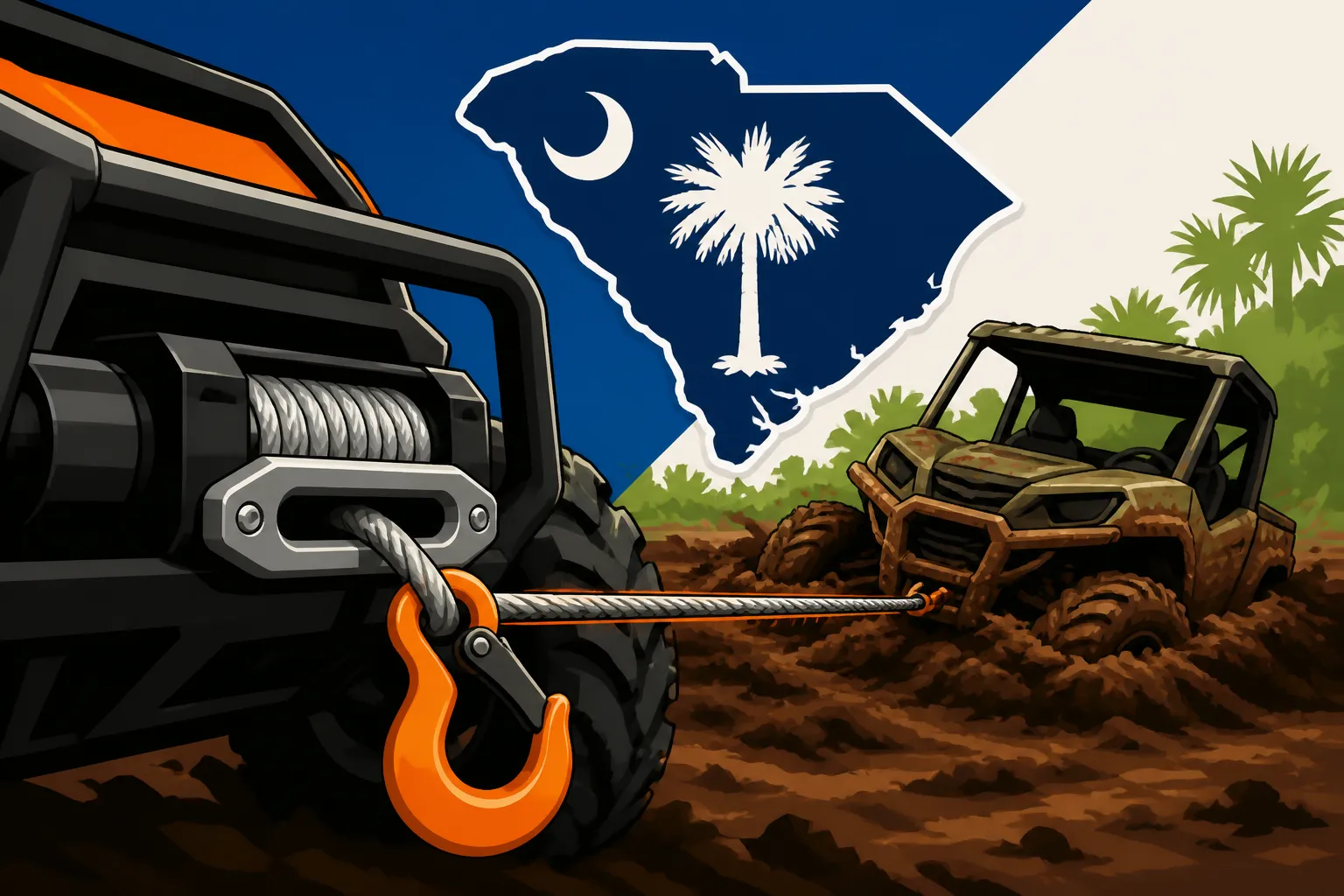
Make sure the line is routed cleanly and will not rub against a sharp edge. Connect the hardware as instructed by its manufacturer, close and secure any applicable connectors, and place a damper on the line. Everyone should stand clear of the line and its likely path. Operate the winch from a position that keeps you out of the danger zone, using the controls as directed. Keep the pull steady and slow; avoid jerking the line or using sudden throttle to help it along.
Watch the vehicle, line, anchor, and ground throughout the pull. If the line bunches, the anchor shifts, the machine begins to tip, or any connection looks wrong, stop and release tension only when it is safe to do so. Once the machine is free, move it onto firmer ground before disconnecting the line. Rewind the line carefully under light tension according to the manufacturer’s instructions. Check the recovery point and gear for damage, and do not resume riding if the machine’s steering, brakes, tires, suspension, or electrical system may have been affected.
When to stop, ask for help, and prevent the next recovery
Know when a winch pull is the wrong choice
A machine that is seriously tilted, trapped near moving water, or close to a steep drop can shift unpredictably. A single winch attached to a poor anchor may pull it in the wrong direction or make it less stable. If the line would have to pass through a crowded area, across another rider, or around an unsafe angle, do not proceed just because the winch is available. The safest recovery may be to leave the machine in place while you get qualified help.
A stuck vehicle may also need a different recovery method if its frame is resting hard on the ground, the tires are buried beyond the point where they can turn, or the machine has a mechanical problem. Pulling harder can damage the frame, mount, or driveline. If the winch motor is overheating, the battery is weakening, or the line and hardware are showing signs of strain, stop and follow the product instructions. Do not keep cycling the winch in the hope that one more attempt will work.
Trail access matters during recovery. Do not cut vegetation, damage a bank, block an active route unnecessarily, or drive around a muddy section and create a new track. If you are riding in a managed area, follow its signs and staff instructions. The guidance in South Carolina ATV Trails: Where to Ride and South Carolina Trail Difficulty Ratings can help you choose routes that better fit your experience and equipment. Before entering a trail system, confirm that your vehicle is allowed; South Carolina Trails That Allow Side-by-Sides is a relevant planning topic for UTV riders.
Reduce the chances of getting stuck again
Prevention starts before the tires reach the mud. Check the forecast and recent trail conditions, but treat them as clues rather than guarantees. A route can vary from firm sand to slick clay and shallow water in a short distance. If the ground ahead looks questionable, stop at a safe spot and inspect it on foot. Look for hidden ruts, soft shoulders, water depth, and a route back out. Do not enter water or mud when you cannot judge the bottom or the exit.
Use a pace that leaves room to react. Maintain enough momentum for the terrain without charging blindly into an unseen obstacle. Avoid sharp steering or abrupt throttle changes in slippery conditions. If you feel the machine bogging down, ease off and reassess rather than spinning the tires. On group rides, give the rider ahead space and agree on a place to stop if conditions change. A route-planning tool such as onX Offroad may help you prepare, but always follow current signs and land-use rules on the ground.
After the ride, clean mud from the winch line, fairlead, and machine, then inspect the equipment before storing it. Check that the line winds evenly and that connectors, straps, and the mounting hardware remain in good condition. Replenish anything used, recharge equipment that needs it, and discuss what went wrong with your riding group while the details are fresh. Knowing where the machine became stuck—and whether it was a rut, high-centering, poor traction, or a route choice—makes the next trip safer and less stressful.
Disclaimer
This article is for general informational purposes only and does not constitute professional advice. Laws, prices and regulations vary by location and change over time. Consult a qualified professional for guidance on your specific situation.