Packing for Carolina Humidity
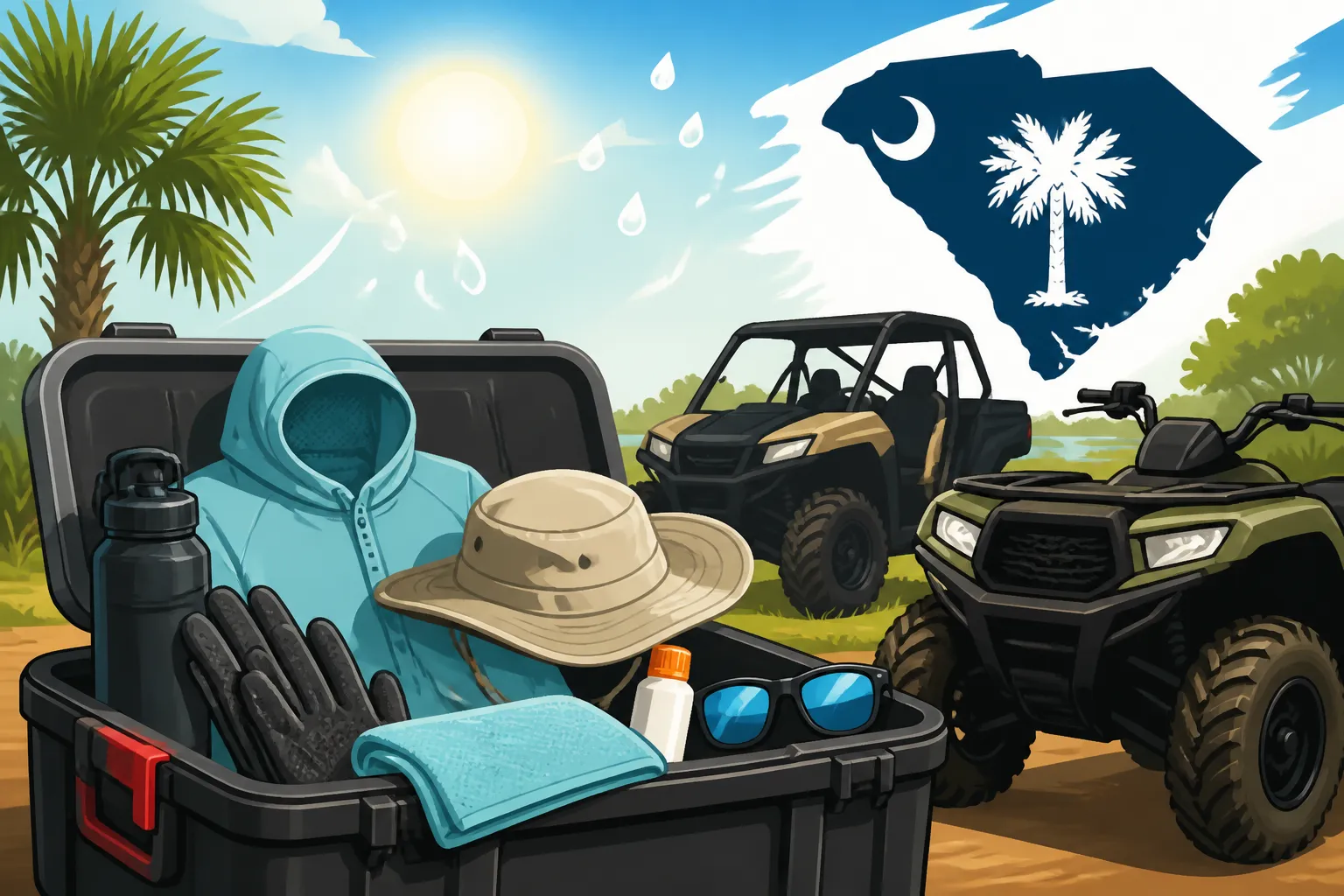
South Carolina humidity can turn an ordinary trail ride into a sweaty, uncomfortable slog, especially when you’re geared up, moving slowly, or stopping in a sunny clearing. Packing well means more than bringing extra water: you need breathable layers, sun and bug protection, dry storage, and a plan for changing weather. This guide helps you prepare for a more comfortable ride from the Upstate to the Lowcountry.
Build a clothing system for heat and sweat
Choose breathable layers that dry quickly
Cotton feels comfortable when you first put it on, but once it gets damp with sweat or creek spray, it can stay wet and heavy. For a South Carolina ride, lightweight synthetic or merino-blend shirts and socks are often easier to manage because they dry faster. A long-sleeved shirt can also protect your arms from sun, brush, and insects without requiring a bulky layer.
Wear sturdy riding pants that can handle contact with branches and equipment, but avoid piling on thick layers unless conditions call for them. A trail winding through shaded hardwoods near Parsons Mountain may feel different from a sun-exposed stretch or open staging area. Start with a light base layer and bring a compact shell that can go on if rain, wind, or a cooler evening makes the ride less comfortable.
Pack a clean change of clothes in a sealed bag for the ride home. It may seem like an unnecessary extra, but sitting in damp clothes during the drive from a trailhead can be miserable. A dry shirt, socks, and underwear can make a big difference after a long day in the saddle.
Protect yourself without overheating
A helmet, eye protection, gloves, and sturdy footwear are basic riding gear, but the details matter in humid weather. Ventilated gloves can feel less stifling than heavy insulated ones. Choose boots that protect your feet and ankles while still allowing them to dry after a wet section. If your boots get soaked early in the day, a spare pair of socks stored in a waterproof bag is a small, worthwhile backup.
Sun protection deserves a place in your gear even when the sky looks hazy. The canopy on a forest trail can provide shade, but it doesn’t protect you during loading, breaks, or exposed stretches. Apply sunscreen before gearing up, and carry a small container for reapplication. A neck gaiter or lightweight sun hood can protect exposed skin, but make sure anything you wear doesn’t interfere with your helmet fit, vision, or safe operation of the machine.
If you’re planning a summer ride, review South Carolina Riding in Summer Heat and South Carolina ATV Helmet Law before you head out. Comfort should never mean removing protective equipment or choosing clothing that can snag on controls or moving parts.
Keep a dry backup kit
Humidity makes damp gear slow to dry, and rain can arrive while you’re away from the truck. Put your spare clothing, phone, wallet, and any important papers in waterproof bags or a dry bag. A heavy-duty resealable bag can work for small items, while a roll-top dry bag is handy for a change of clothes.
It helps to divide your kit into separate bags rather than placing everything together. Keep one bag for dry clothes, another for electronics, and a small pouch for first aid and personal items. If one bag gets wet or muddy, the rest of your supplies stay usable.
Pack for hydration, shade, and changing weather
Plan water around the ride, not just the forecast
Hot, humid weather can make exertion feel harder, and riders may not notice how much they’re sweating while concentrating on the trail. Carry water where it’s easy to reach during breaks. A hydration pack can be convenient, but some riders prefer bottles secured to the machine or kept at the staging area. Whichever setup you choose, make sure it stays secure and doesn’t interfere with riding.
Don’t wait until you feel parched to take a break. Build in regular stops to drink, cool down, and check how everyone in the group is doing. If you’re riding with children, newer riders, or someone who isn’t used to the heat, plan breaks around the least experienced person rather than the strongest rider.
Water is only part of a hot-weather plan. Bring snacks that are easy to eat and won’t melt into a mess, and consider electrolyte products if they suit your needs. Follow product directions and don’t treat them as a replacement for water, rest, or medical care. For more practical preparation, see Hydration at a Carolina Riding Park and Heat Illness on a Carolina Summer Ride.
Expect rain even when the morning looks clear
A warm, sticky morning doesn’t guarantee a dry afternoon. Pack a lightweight rain layer and a waterproof cover for the gear you want to keep dry. A compact shell can help during a shower, but avoid wearing anything so loose that it catches on the machine. If storms are possible, think about where you’ll stop and how you’ll get back safely rather than assuming you can simply ride through the weather.
Check the trail and access conditions before loading up. Heavy rain can affect dirt surfaces, creek crossings, parking areas, and the route you planned to use. A trail that was manageable on a dry day may be slick or muddy after a downpour. South Carolina Trail Conditions Before You Haul is a useful related read when you’re deciding whether to make the trip.
A map is helpful when weather, closures, or a wrong turn changes the plan. onX Offroad can help riders review mapped routes before leaving home, but don’t rely on a phone as your only navigation tool. Download or save what you need ahead of time, carry a charged phone in a protected case, and consider a paper map or another backup if you’ll be riding where service may be unreliable. onX Offroad is most useful when you’ve prepared your route before reaching a spot with poor reception.
Make a simple heat-and-weather check before departure
Use the forecast as one part of your decision, not the whole decision. Consider the length of the ride, how much shade the route offers, whether there are water stops, and how quickly your group can return to the staging area. If the day is unusually hot or storms are developing, shortening the ride may be the sensible choice.
Before unloading, check that everyone has water, eye protection, sun protection, and a way to keep essential items dry. Agree on a turnaround point and a plan for regrouping if riders get separated. For a route through a less familiar area, review the map while you still have a reliable signal. onX Offroad can be one planning aid, but your group should also know the route and have a backup plan.
Protect against bugs, mud, and wet gear
Bring insect protection you’ll actually use
Insects can make a shaded stop beside a trail more uncomfortable than the ride itself. Pack repellent and follow the label directions. Apply it thoughtfully, avoiding contact with eyes, mouth, and damaged skin. If you use sunscreen too, check the product instructions for how to apply both.
Long sleeves and pants help reduce exposed skin, but they don’t make insect protection unnecessary. Check yourself after the ride, especially around sock lines, waistbands, and other places where insects may be harder to spot. A small tick-removal tool can be useful to carry, and it’s worth knowing how to check your skin and clothing after time in wooded or grassy areas.
Keep repellent in a secure, easy-to-reach pocket rather than buried beneath spare gear. The same goes for sunscreen. If you’re riding from a truck or trailer, leave a second bottle at the staging area so it’s available during a longer break. For seasonal details, see Bug Spray in a Carolina June and South Carolina Tick Season and Riding Gear.
Separate clean gear from muddy gear
Red clay, wet leaves, and trail mud can spread quickly from boots to bags, seats, and clean clothes. Bring a tough bag or plastic bin for dirty gear and a separate container for anything you want to keep clean. A small towel is useful for wiping hands before handling food, phones, or vehicle keys.
A few extra items can make cleanup less frustrating: work gloves for loading muddy equipment, a brush for knocking dried debris off boots, and a change of footwear for the drive home. Keep cleaning supplies contained so mud doesn’t end up on the clean towels or clothing. If you’re camping overnight, separate the sleeping clothes from the riding kit so you’re not climbing into a damp, gritty layer at the end of the day.
Keep electronics and personal items protected
Phones, vehicle keys, identification, and payment cards should be kept in secure, water-resistant storage. A phone case helps against splashes, but it is not a substitute for a sealed bag if you expect heavy rain or a creek crossing. Carry your phone where it won’t fall out when you lean or shift your weight.
Before riding, save emergency contacts and the address or location of your staging area in a way you can find without searching through several apps. If the group is spread out, agree on a meeting point before starting. A navigation app such as onX Offroad may help with route planning, but keep your phone charged and protected, and don’t assume you’ll have a usable signal throughout the ride.
Use a packing checklist that fits your route
The right setup depends on whether you’re riding for a short morning, spending a full day at a trail system, or camping nearby. You don’t need to bring every item for every trip. Start with the essentials, then add gear based on the forecast, distance from the staging area, and experience level of the group.
| Packing category | Useful items | Why it matters in humid weather |
|---|---|---|
| Riding gear | Helmet, eye protection, gloves, sturdy boots, suitable riding clothes | Protects you while keeping layers practical for heat and sweat |
| Water and breaks | Water, accessible bottle or hydration system, snacks | Makes it easier to drink regularly and pause before riders feel worn down |
| Sun protection | Sunscreen, sunglasses for breaks, lightweight coverage | Helps during loading, open sections, and time outside the canopy |
| Insect protection | Repellent, long sleeves, tick-removal tool | Helps manage bugs during wooded rides and trail stops |
| Weather protection | Compact rain layer, waterproof bags, spare socks | Keeps essential items dry when showers or wet trail sections arrive |
| Navigation and communication | Charged phone, saved route, backup map, group meeting plan | Helps the group stay oriented if service drops or plans change |
| Cleanup and comfort | Towel, clean clothes, dirty-gear bag, spare footwear | Makes the drive home and post-ride cleanup more comfortable |
| Basic first aid | Personal medication, bandages, basic first-aid supplies | Gives the group a practical response for minor problems away from the truck |
Tailor the list to the riding area
For a shorter ride close to the staging area, you may be able to leave bulky backups in the truck. On a longer loop, pack water, basic first aid, a map, and a way to keep your phone dry with you. A ride at Enoree or another forest trail can involve different conditions from a private riding park, so check the location’s access information and rules before you go.
If you’re heading to an unfamiliar trailhead, review the route and parking plan before leaving home. Cell service can vary by location, and a map displayed online at home may not be available once you’re out on the trail. Save the information you need beforehand and tell someone where you plan to ride. South Carolina Trailhead Conditions Before You Haul and South Carolina Trail Etiquette Locals Expect can help you think through the trip beyond the gear itself.
Do a quick pack check before you leave
Lay out the gear the night before rather than trying to remember everything while loading in the morning. Check that your water containers are clean, your phone is charged, and your spare clothes are sealed away from wet equipment. Confirm that everyone in the group has the protection and supplies they personally need.
Then do one last check at the trailhead. Make sure bags are secured, nothing can interfere with the controls, and important items are easy to reach without digging through the entire load. If the heat is stronger than expected, a trail is wet, or someone in the group feels unwell, change the plan. Turning around early is a better outcome than pushing through a ride that no longer feels safe or manageable.
Disclaimer
This article is for general informational purposes only and does not constitute professional advice. Laws, prices and regulations vary by location and change over time. Consult a qualified professional for guidance on your specific situation.