80 Inches Wide at Most
Trying to figure out exactly what it takes to get your UTV on the road in South Carolina can feel like navigating a maze. There are so many specific rules and dimensions, and one of the most important – and often overlooked – is the 80-inch width limit. This guide is here to cut through the confusion and explain precisely why your UTV's width, along with other critical specifications, is paramount for street legality in the Palmetto State, helping you confidently get your machine plated.
Demystifying the 80-Inch Width Limit for South Carolina Street-Legal UTVs
When the new laws for street-legal UTVs in South Carolina finally arrived, they brought with them a very specific set of requirements designed to ensure these machines could safely share our public roads. Among the most crucial of these is the width restriction: your UTV cannot be more than 80 inches wide if you intend to register it for street use. This isn't just a suggestion; it's a hard limit that the South Carolina Department of Motor Vehicles (SCDMV) will scrutinize during the registration process. Ignoring this detail can lead to a lot of wasted time and frustration, sending you back to the drawing board instead of out on the open road.
Why 80 Inches is the Magic Number for On-Road Use
The 80-inch width limit isn't arbitrary. It's in place to ensure that these vehicles can safely share lanes with other cars and trucks, navigate standard road widths, and fit comfortably within typical parking spaces. Think about the average lane width on a secondary road or even a two-lane highway – a vehicle much wider than 80 inches starts to encroach on other vehicles' space, creating potential hazards. It's about maintaining traffic flow and safety for everyone, preventing an otherwise fun off-road machine from becoming a nuisance or a danger on a paved road. This regulation reflects a broader effort to integrate UTVs into the existing road infrastructure without causing undue disruption or risk. The state wants to open up more riding opportunities, but not at the expense of public safety. This also aligns with regulations seen in other states and on federal highways, setting a standard for "motor vehicle" dimensions.
Another reason for this specific measurement relates to the vehicle's footprint on the road. Larger, wider vehicles generally have larger blind spots, can struggle more on narrower roads, and might even have issues with turning radii in certain situations, like tight intersections or neighborhood streets. By setting a clear width limit, the state aims to keep street-legal UTVs maneuverable and predictable, similar in general footprint to many smaller passenger cars or compact pickup trucks. If your machine is significantly wider than this, it might be perfectly capable off-road, but it simply won't meet the profile for safe, legal street operation in South Carolina. This means checking your factory specifications and any modifications you've made, as even a slight increase in tire offset or fender flares can push you over the edge.
How to Accurately Measure Your UTV's Width
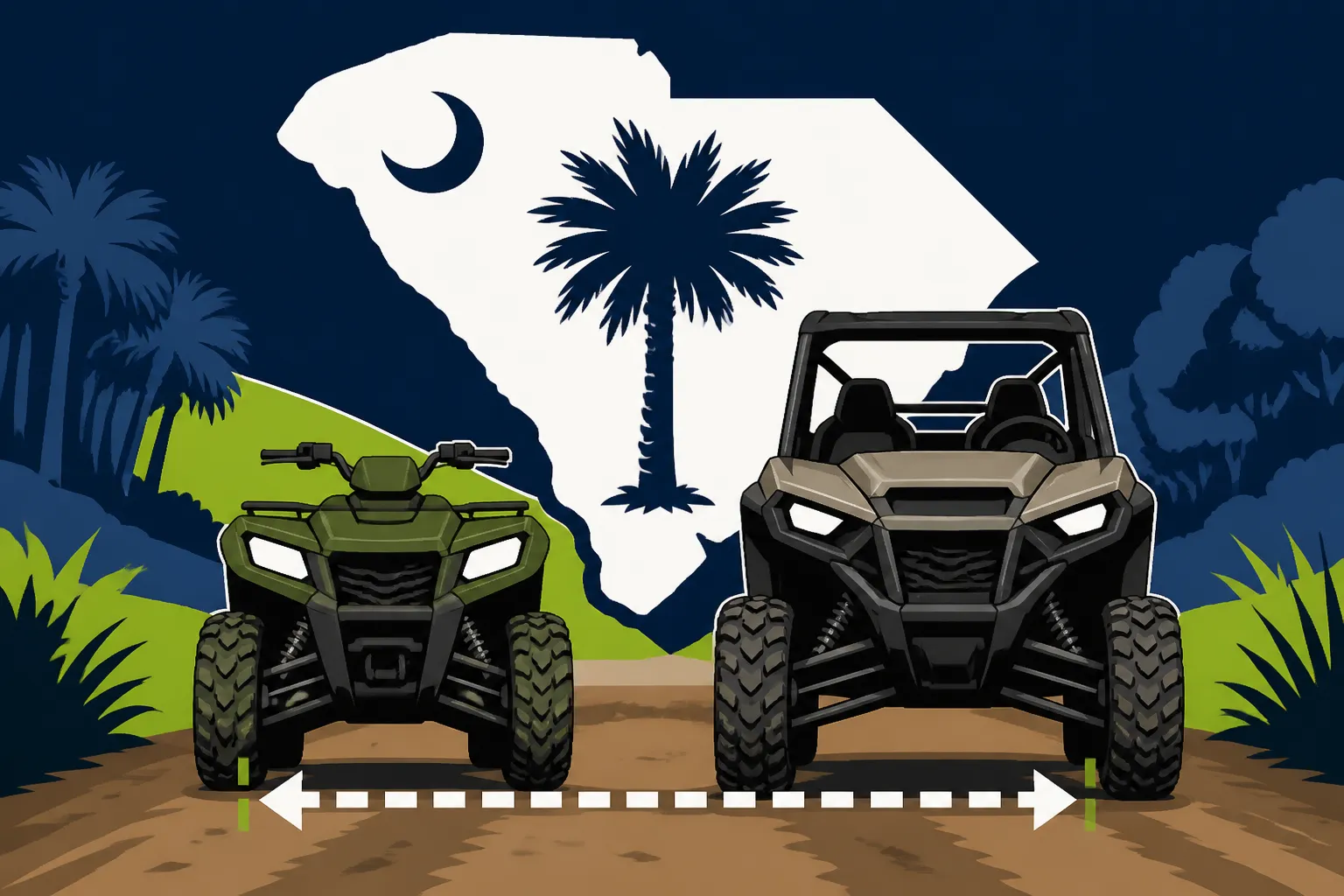
Measuring your UTV accurately is a critical step, and it's something you should do before you even consider heading to the DMV. You'll want a reliable tape measure, and it's best to have a friend help you. The official measurement typically refers to the widest point of the vehicle, which almost always means measuring from the outermost edge of one tire to the outermost edge of the tire on the opposite side. This isn't just the width of the chassis or the body; it includes everything that protrudes, especially the tires and wheels. Park your UTV on a flat, level surface and stand directly in front or behind it. Extend your tape measure from the furthest point on one side (usually the sidewall of the tire or a fender flare, whichever is wider) straight across to the furthest point on the other side. Do this both front and rear, as widths can sometimes vary slightly.
Don't forget to account for any aftermarket accessories that might add width, such as extended fender flares, wheel spacers, or even certain types of custom wheels with a significant offset. If you've invested in a SuperATV portal gear lift, for instance, or upgraded to wider A-arms and larger tires, these modifications can easily push your UTV beyond the 80-inch threshold. It’s absolutely crucial to measure the actual width of your machine as it currently sits, not just rely on the manufacturer's spec for a stock model. A deviation of even an inch could be the difference between getting your plate and being told no at the counter. Double-check your measurements, perhaps even doing it twice with different people, to ensure you have a precise figure.
The Ramifications of Exceeding the Width Limit
So, what happens if your UTV is wider than 80 inches? The most immediate and significant consequence is that it simply will not qualify for street-legal registration in South Carolina. You won't be able to get a license plate, which means you won't be able to legally drive it on public roads. This can be a huge disappointment, especially if you've already invested time and money in other modifications and paperwork, only to be turned away because of one dimension. The DMV clerks follow strict guidelines based on [South Carolina Street UTV Machine Specs], and they won't make exceptions for vehicles that don't meet the criteria. This isn't a rule that has much wiggle room.
Beyond the registration hurdle, attempting to operate an over-width UTV on public roads without proper registration can lead to serious legal trouble. You could face fines for operating an unregistered vehicle, and potentially even more severe penalties if you're involved in an accident. Insurance coverage could also be complicated if your vehicle isn't legally registered for road use. It's not just about the fine; it's about the safety implications and the state's intent to regulate these vehicles responsibly. If your machine is too wide, it's destined for the trails and private land only, unless you're willing to modify it to meet the strict 80-inch requirement. It might be tempting to risk it, but the potential downsides far outweigh the convenience of a quick trip down a paved road.
Beyond Width: Other Key Machine Specifications for South Carolina Street Legality
While the 80-inch width limit is paramount, it's just one piece of the puzzle when it comes to making your UTV street-legal in South Carolina. The state's regulations, stemming from [The Law Behind South Carolina's Street-Legal UTVs], are comprehensive and cover several other critical machine specifications that you absolutely must meet. These rules are designed to ensure that UTVs, once on public roads, function similarly to other street-legal vehicles in terms of safety features and basic dimensions. Don't assume that just because your side-by-side looks like a car, it automatically qualifies. Every detail matters, from its overall size to the type of seatbelts it has.
Understanding Weight, Height, and Passenger Capacity Rules
Beyond width, South Carolina also sets limits on the overall dimensions and capabilities of a street-legal UTV. For instance, your UTV cannot exceed 4,000 pounds in weight. This is a crucial detail for larger, more heavily accessorized machines. Many utility-focused UTVs, especially those with cabs, plows, or other heavy attachments, could potentially creep close to or over this limit. You'll need to know your UTV's curb weight, which is its weight without passengers or cargo. If you're unsure, a certified weigh station can give you an accurate figure. Similarly, there's a height limit, generally 80 inches, though this is less commonly an issue for stock UTVs than the width limit is. However, if you've installed a significant lift kit or a tall roof rack, it's worth checking.
Passenger capacity is another aspect that comes under scrutiny. A street-legal UTV must be designed by the manufacturer to carry no more than eight occupants. This means a machine with two, four, or six factory seats is generally fine, but you can't simply add extra seats to the bed of a UTV and expect it to pass muster. Each occupant must have a dedicated seat and a seatbelt. These limits ensure that the vehicle remains stable and controllable with a full load, and that all passengers are properly restrained, mirroring the safety standards of conventional vehicles. It's not just about fitting people in, it's about ensuring their safety according to state law.
Mandatory Equipment for a Street-Legal UTV in South Carolina
South Carolina requires street-legal UTVs to be equipped with a specific list of safety features and components to be roadworthy. These aren't optional upgrades; they are mandatory. Your UTV must have:
- Headlights: Working high and low beams, just like a car.
- Taillights: Red, visible from the rear.
- Brake Lights: Illuminating when the brakes are applied.
- Turn Signals: Both front and rear, indicating your intended turns.
- Rear-view Mirrors: At least one on the left side of the vehicle, and often a center mirror is recommended for better visibility.
- Windshield: Made of safety glass, providing protection from debris.
- Windshield Wiper: To maintain visibility in inclement weather.
- Horn: An audible warning device.
- Seatbelts: For all designated seating positions.
- Brakes: Adequate for the vehicle's weight and capable of stopping it safely.
- Tires: DOT-approved tires suitable for highway use, not just off-road terrain.
- Speedometer: To monitor your speed.
Many UTVs, especially those primarily designed for off-road use, will not come standard with all these features. This is where aftermarket parts and conversion kits from companies like SuperATV become incredibly useful. You'll likely need to add items like a turn signal kit, a horn, a proper glass windshield with a wiper, and potentially even street-legal tires to meet these requirements. Each of these components needs to be fully functional and properly installed. The SCDMV will confirm the presence and functionality of these items as part of the registration process for [South Carolina Street-Legal UTV Registration Arrives].
Vehicle Identification Number (VIN) and Manufacturer's Statements
Just like any other vehicle that operates on public roads, your street-legal UTV needs a proper Vehicle Identification Number (VIN). This 17-character alphanumeric code is the unique identifier for your specific machine, and it's absolutely essential for titling and registration. The VIN is usually stamped on the frame or chassis of the UTV, often in an easily accessible location, like under the driver's seat, on a frame rail near the front wheel, or under the hood. Make sure the VIN is clear, legible, and matches any paperwork you have, like the Manufacturer's Certificate of Origin (MCO) or previous titles. A missing, defaced, or inconsistent VIN will halt your registration process immediately, as it raises red flags about the vehicle's history and legality.
In addition to a clear VIN, for a new UTV, you will need the Manufacturer's Certificate of Origin (MCO) or a Manufacturer's Statement of Origin (MSO). This document is essentially the "birth certificate" for your UTV, proving that it's a new machine and detailing its specifications as manufactured. For a used UTV, you'll need a properly assigned title from the previous owner. The MCO or MSO is particularly important because it often contains details about the vehicle's original classification and dimensions. While it might not explicitly state "street-legal," it provides the foundational information that the DMV uses to verify the UTV's identity and original specifications. Without an MCO or a valid title, you'll face significant challenges proving ownership and meeting the necessary requirements for [South Carolina Paperwork for a Street UTV]. Always ensure you have this critical documentation in hand and that it's correctly filled out and legible.
Navigating Registration and Compliance with Your Street-Legal UTV
Once you've ensured your UTV meets all the physical specifications, including the crucial 80-inch width limit and mandatory equipment, the next step is navigating the actual registration process with the SCDMV. This involves not only paperwork for your machine but also understanding the requirements for who can actually drive it on the road. Getting a license plate for your UTV in South Carolina means adhering to all the rules laid out in [South Carolina Act 164 and Street UTVs], which opened up these new possibilities for riders. Skipping any step in this process can lead to delays, frustration, and ultimately, an unplated machine.
The Registration Process for a Compliant Side-by-Side
Registering your UTV for street use in South Carolina will require a trip to your local SCDMV office. You'll need to bring several key documents and be prepared to pay the necessary fees. Here's a general checklist of what to expect:
- Proof of Ownership: This means your Manufacturer's Certificate of Origin (MCO/MSO) for a new machine, or a properly assigned title if you bought it used. If you don't have a title for a used machine, you'll need to explore options for [South Carolina Proof of Ownership Without a Title], which can complicate things.
- Completed Application: You'll fill out Form 400, the South Carolina Application for Certificate of Title and Registration. Make sure you check the appropriate boxes for "Title and Registration" or "Registration Only" if you already have a title. This form covers the essential information about your UTV and your ownership.
- Proof of Insurance: [South Carolina Street UTV Insurance Rules] mandate liability insurance for street-legal UTVs. You'll need to show proof of current insurance that meets the state's minimum requirements, just like you would for a car.
- Verification of Specifications: The DMV may visually inspect your UTV or require a verified statement that it meets all the physical requirements, including the 80-inch width, 4,000-pound weight, and all mandatory equipment. Be ready to demonstrate compliance.
- Payment for Fees: There will be fees for titling and registration. For street-legal UTVs, expect a biennial registration fee of $10, which means it renews every two years. There's also a one-time title fee. Make sure you have the correct payment methods ready. You can also pay an [South Carolina Expedite Fee of $20] if you want to walk out with your title that day.
Once everything is verified and fees are paid, you'll be issued a South Carolina license plate and registration card for your street-legal UTV. This plate must be displayed on the rear of your machine, visible and properly illuminated.
Driver Requirements and Restrictions for Street UTVs
It's not just about the machine; the driver has requirements too. To legally operate a street-legal UTV on South Carolina roads, the driver must be at least 17 years old and possess a valid South Carolina driver's license. A beginner's permit is not sufficient for operating these vehicles on public roads. This age requirement is higher than for some other powersports vehicles and underscores the state's cautious approach to integrating UTVs into general traffic. The [South Carolina Street UTV Age of 17] rule is firm.
Furthermore, there are specific rules regarding passengers and helmet use. While adults operating a street-legal UTV on the road are not generally required to wear helmets, anyone under 21 years of age must wear an approved helmet and face shield when riding in or on a street-legal UTV. There are also restrictions on young passengers: children eight years old and younger are prohibited from being passengers in a street-legal UTV on public roads. These regulations, part of the broader [South Carolina Street UTV Requirements Explained], are in place to enhance safety, especially for younger riders, who are more vulnerable in any type of vehicle accident. Always be mindful of these rules before you hit the pavement.
Maintaining Compliance and Avoiding Penalties
Once your UTV is street-legal, the responsibility doesn't end there. You must continually maintain compliance with all state laws to avoid penalties. This includes:
- Renewing Your Registration: The $10 biennial fee for [Street-Legal UTVs Cost $10 Every Two Years] is mandatory. You'll receive renewal notices, and it's your responsibility to ensure your registration stays current.
- Maintaining Insurance: Always keep your liability insurance active. Driving without it is illegal and can lead to severe penalties, including fines and suspension of driving privileges.
- Keeping Equipment Functional: All the mandatory equipment – lights, horn, windshield, seatbelts, etc. – must remain in good working order. Regular inspections by law enforcement can check for this. A broken turn signal or non-functioning brake light could result in a citation.
- Adhering to Road Rules: Drive your street-legal UTV just like any other motor vehicle. Obey all traffic laws, speed limits (which are restricted to roads with a posted speed limit of 55 mph or less for UTVs), and road signs. Be especially mindful of the [South Carolina Street UTV Road Speed Limits] and where you can legally operate.
- No Modifications that Affect Compliance: Be cautious with further modifications, especially those that might alter the width or other regulated dimensions of your UTV. Adding wider tires or suspension components that push your UTV beyond the 80-inch limit after registration could put you out of compliance, potentially leading to tickets or even revocation of your street-legal status. For example, some SuperATV products might enhance off-road performance but could inadvertently push a UTV over the street-legal width if not chosen carefully.
By staying vigilant about these rules, you can enjoy the freedom of legally operating your UTV on South Carolina's secondary roads for years to come.
| South Carolina Street-Legal UTV Requirements | Specification | Details |
|---|---|---|
| Max Width | 80 inches | Measured from the widest point of the vehicle, including tires/fender flares. Crucial for lane sharing and road safety. |
| Max Weight | 4,000 pounds | Curb weight of the vehicle without passengers or cargo. Check for heavy accessories. |
| Max Height | 80 inches | Less common issue, but check for extreme lift kits or tall racks. |
| Passenger Capacity | 8 occupants | Must have factory-designed seating and seatbelts for each occupant. No improvised seating. |
| Minimum Driver Age | 17 years old | Must possess a valid South Carolina driver's license. No beginner's permits. |
| Helmet Requirement (Driver) | Not required | For drivers 21 and older. |
| Helmet Requirement (Under 21) | Mandatory | Approved helmet and face shield required for all occupants under 21. |
| Minimum Passenger Age | 9 years old | Passengers 8 years old and younger prohibited on public roads. |
| Mandatory Equipment | Yes | Headlights (high/low), taillights, brake lights, turn signals, rear-view mirror(s), safety glass windshield, windshield wiper, horn, seatbelts for all seats, DOT-approved tires, speedometer. |
| Road Restrictions | Yes | Only on roads with a posted speed limit of 55 mph or less. Interstates are prohibited. |
| Insurance | Mandatory | Liability insurance required, meeting state minimums. |
Disclaimer
This article is for general informational purposes only and does not constitute professional advice. Laws, prices and regulations vary by location and change over time. Consult a qualified professional for guidance on your specific situation.