Driving a Plated UTV After Dark in South Carolina
There’s a special kind of freedom that comes with cruising your UTV, feeling the breeze, and exploring the beauty of South Carolina. But for the longest time, the idea of extending those adventures onto public roads, especially after the sun dipped below the horizon, felt like a distant dream for many of us. With the exciting changes in South Carolina's laws, that dream is now a reality for plated UTVs. This guide is all about shedding light on what it means to drive your street-legal side-by-side after dark in our beautiful state, ensuring you stay safe, legal, and truly enjoy every moment.
The Basics of South Carolina's Street-Legal UTV Laws for Night Riding
Getting your UTV street-legal in South Carolina was a game-changer, opening up new possibilities for exploration and convenience. But when the lights go down, the rules and necessities shift a bit, and it's vital to understand what that entails for your after-dark adventures.
What "Plated" Actually Means for Your UTV
For years, many UTV owners here in the Palmetto State felt a bit stuck. Our machines were perfect for the trails or the farm, but getting them to and from those spots often involved trailering, which isn't always convenient. That all changed with the recent legislation that officially created a pathway for UTVs to become street-legal. When we talk about a "plated" UTV, we're specifically referring to a side-by-side that has gone through the necessary steps with the South Carolina Department of Motor Vehicles (SCDMV) to be registered and issued a legitimate license plate. This isn't just a nod and a wink; it's a specific classification that comes with its own set of rules and equipment requirements.
It’s crucial to understand that this street-legal status is a distinct category. It's not the same as a golf cart permit, which has its own very specific limitations, nor is it to be confused with a low-speed vehicle (LSV) that has different manufacturing standards. The new law specifically carves out a place for UTVs that meet certain criteria to share our roads. If you're looking into this, you'll want to check out the details on [South Carolina Street-Legal UTV Registration Arrives] to get the full scoop on how this new era began for UTV owners in our state. It's an exciting time, but it does come with responsibilities, especially when you plan to drive after dark.
The process of getting your UTV plated involves showing proof of ownership, meeting specific equipment requirements, and, of course, applying for that all-important registration and plate. It's definitely worth doing your homework on [South Carolina Street UTV Registration Steps] so you know exactly what to expect when you head to the DMV. Once you have that plate, your UTV transforms from a strictly off-road machine into a versatile vehicle that can connect trails, run errands, or simply take you on a scenic drive, even once the sun has set. This opens up a whole new world of evening possibilities, but those possibilities come with a heightened need for preparedness and adherence to the law.
Essential Equipment for Night Driving
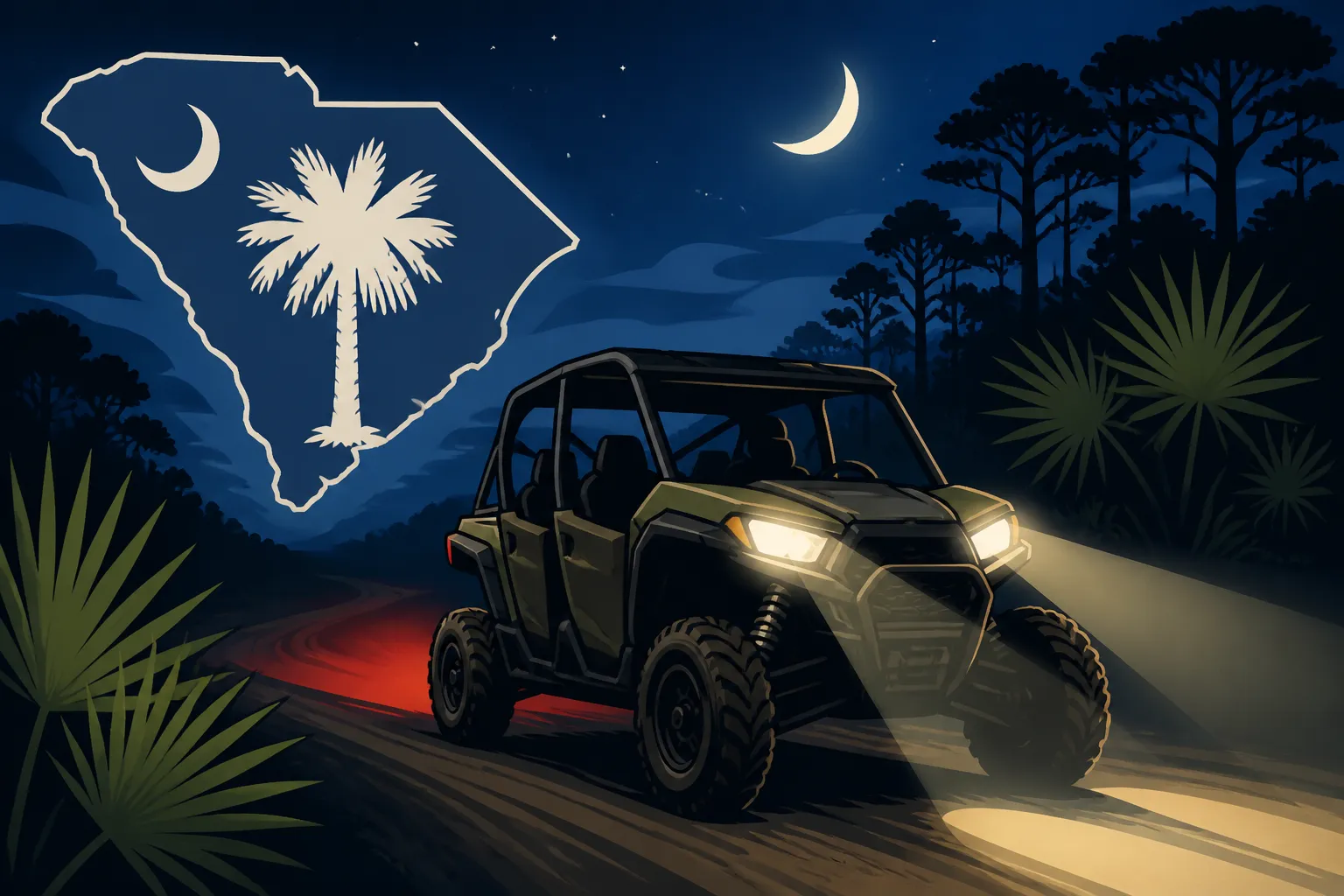
When you're driving a plated UTV after dark in South Carolina, your machine isn't just another vehicle on the road – it's still a UTV, and while it's now street-legal, it needs to be seen. The legal requirements for street-legal UTVs include a whole host of equipment designed to make them safe for public roads, and these become absolutely non-negotiable once the sun sets. We're talking about fully functional headlights, both high and low beam, to illuminate the road ahead and ensure you can react to whatever comes your way. Just as important are your taillights and brake lights, which tell drivers behind you where you are and what you're doing. Turn signals are also a must, clearly indicating your intentions to change lanes or make a turn.
Beyond lighting, your UTV needs functional rearview mirrors to give you a clear view of traffic approaching from behind. A windshield is required, often with wipers, to maintain visibility, especially if you encounter any rain or heavy dew. And, of course, seatbelts for every occupant are paramount for safety at all times, day or night. For a complete rundown of what your UTV needs to have to be considered street-legal, definitely check out [South Carolina Street UTV Requirements Explained]. Meeting these standards isn't just about avoiding a ticket; it's about your safety and the safety of others sharing the road.
Now, while the law specifies the minimum equipment, many of us who regularly drive our UTVs after dark go above and beyond. Stock headlights are good, but for true South Carolina backroads or areas with limited streetlights, they might not be enough. This is where auxiliary lighting can make a huge difference. Think about adding a robust LED light bar across the roof or a set of powerful cube lights to fill in blind spots. Brands like SuperATV offer a fantastic range of aftermarket lighting solutions that can dramatically improve your visibility and make night driving much more comfortable and safer. It's about seeing and being seen. And remember, the law is specific about when your lights must be on – generally from a half-hour after sunset to a half-hour before sunrise, or whenever visibility is poor. Knowing exactly when to flip those lights on is covered under rules like [Headlights a Half Hour After Sunset], so make sure you're always in compliance.
Navigating South Carolina Roads After Dark with a Plated UTV
Taking your plated UTV out after dark is an incredible experience, offering a different perspective on familiar roads and landscapes. However, it’s not simply a matter of turning on your lights and going wherever you please. There are specific guidelines and restrictions that you absolutely must adhere to for your safety and to remain legal.
Where You Can (and Can't) Go After Sunset
One of the most important aspects of driving a plated UTV in South Carolina, especially at night, is understanding where you're actually allowed to operate. The law states that street-legal UTVs can generally be driven on secondary roads with a posted speed limit of 55 mph or less. This opens up a lot of our country roads, rural highways, and even some main thoroughfares within towns and communities. However, major interstate highways are strictly off-limits to UTVs. Trying to take your side-by-side onto an I-26 or I-95 at night is not only illegal but extremely dangerous due to the high speeds and heavy traffic. For more on this, you'll want to review [Why South Carolina Interstates Stay Closed to ATVs]. It's a critical safety measure that applies at all hours.
Beyond the major speed limit and highway restrictions, there’s also the often-misunderstood "10-mile radius" rule. This rule generally states that you can only operate your street-legal UTV within a 10-mile radius of your registered address. While this might sound limiting, there are exceptions, particularly if you're traveling directly to or from a specific destination like a gas station, grocery store, or even a local trail system, as long as it's on an approved road. However, these radius rules can sometimes be confusing, and they apply just as much after dark as they do during the day. Keeping [10 Miles Measured From Your Registered Address] in mind will help you understand the boundaries of your travels.
It's also worth noting that while the state sets the general framework, individual cities and counties in South Carolina can (and often do) enact their own local ordinances regarding UTV use on their roads. This means that a plated UTV might be allowed on a certain type of road in one town, but restricted in another, especially concerning nighttime operations. Always do your due diligence and check with local authorities if you're unsure about specific areas, particularly if you're venturing outside your home turf. The last thing you want is to be pulled over late at night in an unfamiliar town because of a local rule you weren't aware of.
Driver and Passenger Requirements for Night Operations
Operating a street-legal UTV on public roads, day or night, comes with specific driver qualifications, and these are especially important when visibility is reduced after sunset. First and foremost, the driver of a plated UTV in South Carolina must be at least 17 years old. This isn't like driving a golf cart; it's a full-fledged vehicle on public roads. Additionally, that driver must hold a valid Class D (standard) driver's license. A beginner's permit or a restricted license simply won't cut it. You can learn more about this crucial age requirement in [South Carolina Street UTV Age of 17] and the licensing details in [South Carolina Street UTV License Requirements]. These aren't suggestions; they are legal mandates to ensure that those operating these machines have the necessary experience and qualifications.
When it comes to passengers, there are also important rules to follow. While there isn't a specific "nighttime" passenger rule, all general passenger requirements still apply with increased importance due to the reduced visibility. For instance, if you have any riders under the age of 21, they are legally required to wear a helmet, even in a street-legal UTV. This rule is clearly outlined in [South Carolina Street UTV Helmet Rules Under 21] and is a critical safety measure to protect our younger riders. Additionally, there are specific age limits for who can be a passenger, generally prohibiting very young children. Always consult [South Carolina Street UTV Passenger Age Limits] to ensure everyone in your UTV is riding legally and safely.
And it almost goes without saying, but it's particularly vital when driving at night: never operate any vehicle, including a plated UTV, under the influence of alcohol or drugs. Reduced visibility, coupled with impaired judgment, is a recipe for disaster. Law enforcement takes DUI offenses very seriously, and the consequences for operating an off-road machine under the influence, even on private land, can be severe, as detailed in [South Carolina DUI Law and Off-Road Machines]. When you're driving on public roads after dark, your responsibility to yourself, your passengers, and other drivers is paramount.
Safety and Practical Considerations for Night UTV Driving
Once you understand the legal framework, the next step is to embrace a mindset of heightened awareness and proactive safety measures. Night driving in any vehicle presents unique challenges, and a plated UTV is no exception. Thinking ahead and preparing your machine and yourself can make all the difference.
Enhancing Visibility and Awareness
While your plated UTV meets the minimum legal lighting requirements, "minimum" isn't always "optimal" when you're out after dark on a less-traveled South Carolina road. Beyond the standard headlights and taillights, many experienced riders add auxiliary lighting to dramatically improve both their ability to see and their chances of being seen. This is where products like powerful LED light bars or spot/flood lights really shine – literally. They can illuminate ditches, tree lines, and distant road hazards that might remain invisible with just factory headlights. Many riders, myself included, often look to brands like SuperATV for robust light bars and auxiliary lighting to really cut through the darkness on those backroads, helping spot everything from deer to potholes.
But it’s not just about throwing more light forward. Making your UTV more visible to other drivers is equally important. Consider adding reflective tape to the sides and rear of your machine, especially if it’s a darker color. This simple addition can make your UTV stand out when hit by another vehicle’s headlights. As a driver, you should also consider wearing bright or reflective clothing, especially if you might need to exit your vehicle on the roadside for any reason. Keeping your windshield meticulously clean is also vital, as streaks or grime can severely distort your vision, especially with oncoming headlights.
Perhaps one of the most significant challenges of night driving in South Carolina is the increased activity of wildlife. Deer, hogs, and even smaller critters like raccoons are much more active between dusk and dawn. They can appear suddenly from the treeline, and their eyes often reflect light, giving you a split-second warning. Driving at a cautious speed, especially on rural roads where wildlife is prevalent, gives you more time to react. The enhanced lighting from a quality aftermarket system, such as those offered by SuperATV, can provide that crucial extra distance to spot a pair of glowing eyes before it's too late.
Preparing Your UTV for After-Dark Adventures
A thorough pre-ride check is always a good idea, but it becomes absolutely critical before a night drive. Before you even think about hitting the ignition, check that all your lights are functioning perfectly: headlights (high and low), taillights, brake lights, and turn signals. Even a single burnt-out bulb can compromise your safety and lead to an unwelcome interaction with law enforcement. Beyond lights, ensure your tire pressure is correct, your fuel tank has plenty of gas, and all fluids (oil, coolant, brake fluid) are at appropriate levels. Breaking down in the dark is far more inconvenient and potentially dangerous than a daytime breakdown.
Consider packing an emergency kit tailored for night use. This should include essentials like a fully charged cell phone (and a portable charger!), a small toolkit, a spare tire (if applicable to your UTV), and a tire repair kit with an air compressor. A first-aid kit is a must, as are a warm blanket, some water, and non-perishable snacks. If your night adventures take you into more remote, unpaved areas (where legally permitted for plated UTVs), a reliable winch is practically indispensable. And if your night adventure takes you onto unpaved, approved secondary roads, a reliable winch – say, from a brand like SuperATV – can be a real lifesaver if you find yourself in a tricky spot. These preparations can transform a potentially scary situation into a manageable inconvenience.
Finally, think about communication. If you're riding with a group, a two-way radio system or Bluetooth communicators for helmets can be incredibly helpful for staying in touch, especially when visual cues are harder to spot in the dark. Always let someone know your planned route and estimated return time, especially if you're riding solo. Simple safety habits like these can make night riding a truly enjoyable and worry-free experience.
Insurance and Documentation
Just because your UTV is plated and street-legal doesn't mean it's exempt from the responsibilities that come with driving on public roads. One of the most critical requirements is proof of insurance. South Carolina law mandates that all street-legal UTVs carry liability insurance, just like cars and trucks. This is not optional; it's a legal necessity. You can find more specific details about what's required in [South Carolina Street UTV Insurance Rules]. Driving without adequate insurance can lead to significant fines, license suspension, and other severe penalties, especially if you're involved in an accident.
Beyond insurance, you must always carry your valid driver's license and your UTV's registration document whenever you're operating it on public roads. These documents are your proof that you're legally allowed to drive and that your machine is legally allowed to be on the road. If you're stopped by law enforcement, these are the first things they'll ask to see. For a reminder of what papers you should always have on hand, refer to [What Papers to Carry on a Back Road]. A simple oversight like leaving your registration at home can quickly turn a pleasant evening ride into a frustrating one.
Imagine this scenario: you're enjoying a beautiful night ride, perhaps stargazing from a quiet secondary road, and you get pulled over for a routine check. If you can't produce your license, registration, or proof of insurance, you could be facing a citation. These tickets can lead to fines, court costs, and points on your driving record. Knowing the potential costs involved, as detailed in [South Carolina Ticket Costs for Riders], can serve as a strong reminder to always be prepared. Being diligent with your documentation ensures that your night drives remain stress-free and enjoyable, just as they should be.
Here's a quick comparison of what to keep in mind when venturing out after dark:
| Feature | Daytime Driving (Plated UTV) | Nighttime Driving (Plated UTV) |
|---|---|---|
| Visibility | Generally good; natural light aids perception. | Reduced significantly; relies on vehicle lighting and driver alertness. |
| Required Equipment | Standard street-legal UTV equipment (lights, signals, mirrors). | All standard equipment plus ensuring all lights are fully functional, often enhanced auxiliary lighting is recommended. |
| Hazards | Other vehicles, pedestrians, road debris, familiar surroundings. | Other vehicles, pedestrians (less visible), road debris (harder to spot), wildlife (increased activity), reduced depth perception. |
| Driver Alertness | Standard vigilance. | Heightened vigilance, awareness of fatigue, slower speeds often necessary. |
| Passenger Rules | Standard age and restraint rules. | Same, but extra care due to reduced visibility affecting passenger comfort/safety perception. |
| Aftermarket Upgrades | Primarily for performance or aesthetics (e.g., lift kits). | Crucial for safety and usability (e.g., light bars, winches like those from SuperATV). |
| Legal Speed Limits | Up to 55 mph on approved roads. | Still up to 55 mph, but practical, safe speeds often lower due to visibility. For more details, see [South Carolina Street UTV Road Speed Limits]. |
Disclaimer
This article is for general informational purposes only and does not constitute professional advice. Laws, prices and regulations vary by location and change over time. Consult a qualified professional for guidance on your specific situation.