How Rangers Read Your Plate at a Trailhead
A trailhead plate check can feel unclear when your ATV has no road plate, or when the pass was bought online for a different vehicle. In South Carolina, the plate can help staff verify a forest pass, but it is not the pass itself. Here’s what may be checked, which vehicle matters, and how to avoid a mismatch.
What a plate check at a South Carolina trailhead is for
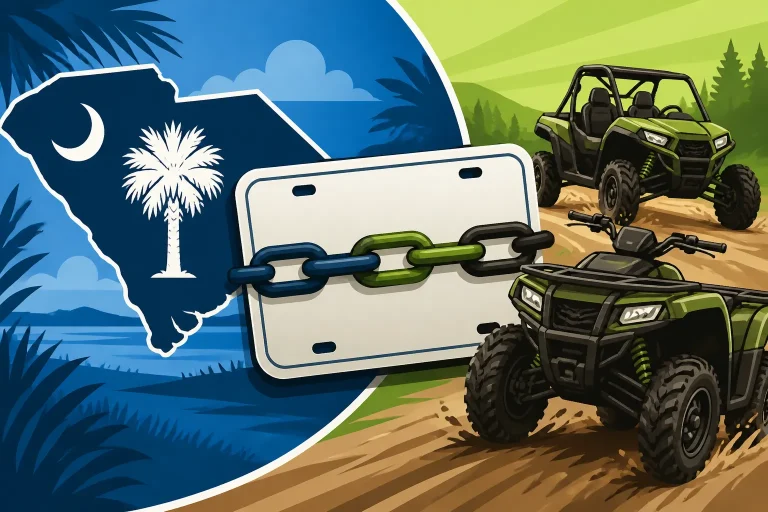
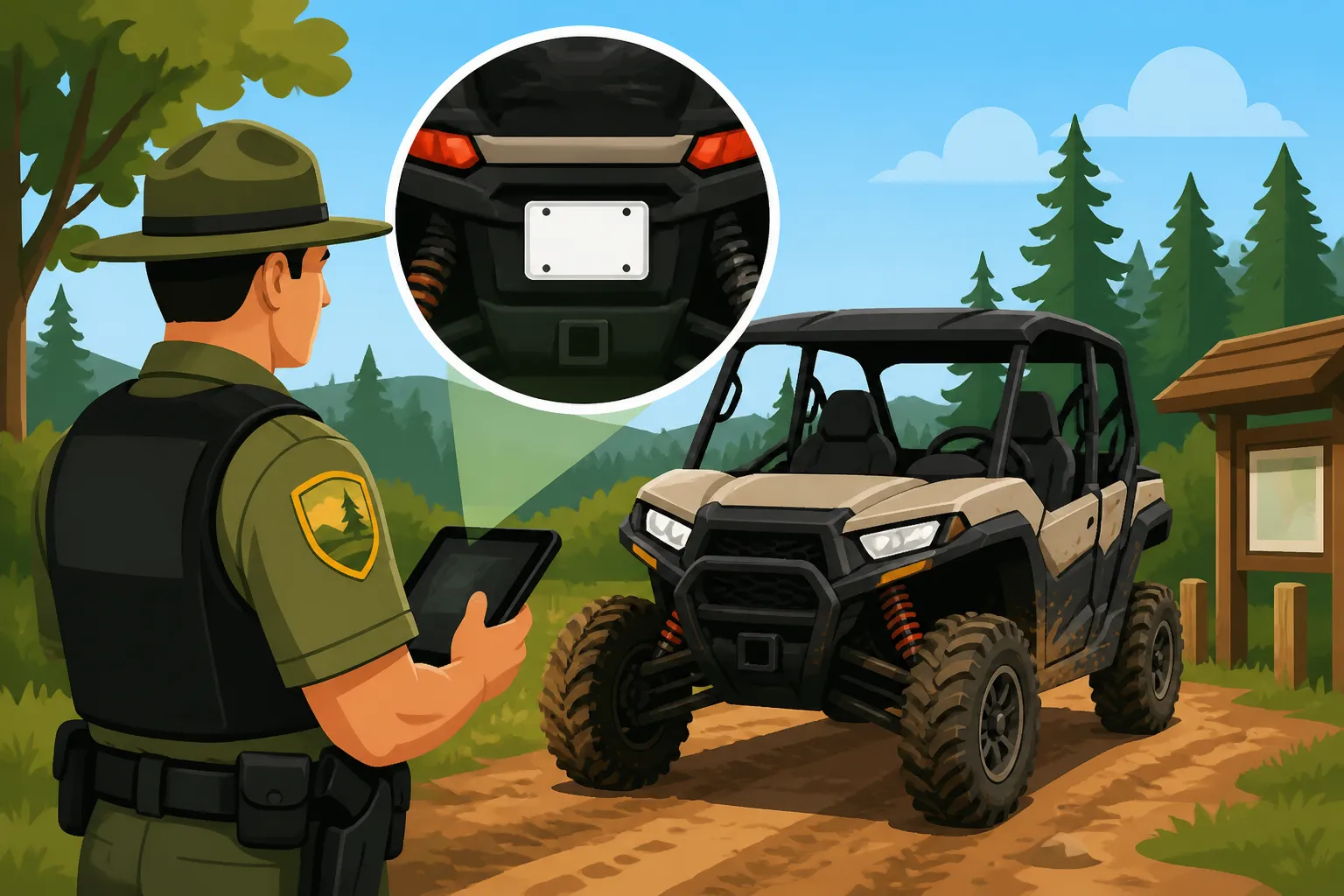
At a fee-controlled trailhead, staff may use a vehicle’s license plate to check whether the required pass has been obtained and whether its details match the vehicle covered by the pass. The plate is an identifier for the check, not proof by itself that you have permission to ride.
This matters because an off-road ATV may not have a road registration plate. For a trail visit, the relevant plate may instead be on the vehicle you drove to the trailhead or are using to transport the ATV. South Carolina forest-pass instructions distinguish between passes associated with a plate and passes that must be displayed in a tow vehicle. Check the terms for the pass you bought rather than assuming the ATV’s identification is what staff will look for.
A check does not necessarily mean a camera has scanned your plate. Staff may read it directly, check pass information another way, or ask you to show your pass or purchase confirmation. Don’t count on a particular method: make sure you can show the required proof and that the plate information you provided when buying the pass is accurate.
Forest passes are separate from DMV registration, title documents, and permissions to access private land. A pass may satisfy a forest recreation fee requirement, but it does not make an ATV street legal or grant access to closed areas. For the broader pass rules and which trails they cover, see South Carolina Passes Cover All Four Trails.
Which plate may be checked
The answer depends on how you reach the trail and which kind of pass you have. The plate of a tow vehicle is often the useful reference point when you arrive with an ATV on a trailer. If you ride a street-legal vehicle to a trailhead, or rent a vehicle for the trip, the pass terms may point to a different plate or proof requirement.
| How you arrive | Plate that may be relevant | What to check |
|---|---|---|
| ATV on a trailer | The tow vehicle’s plate may be used to match the pass | Whether the pass is tied to that plate and must be displayed in the tow vehicle |
| ATV in a truck bed | The truck’s plate may be the identifying plate at the trailhead | Whether your pass details match the truck and whether proof must be visible |
| Street-legal machine driven to the area | The machine’s plate may be relevant, depending on the pass terms | Whether the pass applies to that vehicle and activity |
| Rental or borrowed tow vehicle | The vehicle’s plate may not match the details you entered when buying the pass | Whether you can update the plate or need a different pass |
| More than one tow vehicle | The plate associated with the pass may not cover every vehicle | Whether a separate pass or change is needed |
The pass rules may treat an annual pass differently from a day pass. A day pass may be associated with a specific plate, while annual-pass display requirements may call for the printed pass to be placed in the tow vehicle. These details can affect how staff verify your purchase. Read the pass instructions before driving to the trailhead; South Carolina Day Passes Tied to a Plate and South Carolina Annual Passes Displayed in a Tow Vehicle explain those distinctions.
If the ATV is in a truck bed rather than on a trailer, don’t assume the check works differently just because the machine is not behind the truck. The important question is which vehicle the pass is linked to and what its terms say to display. Bring the pass proof with you so you can resolve uncertainty at the trailhead.
How to avoid a mismatch before you arrive
Most plate-check problems are preventable. They often come down to buying a pass for one vehicle and arriving in another, entering the wrong plate details, or leaving required proof at home.
- Confirm the trail and pass requirement. Make sure the pass applies to the trail you plan to ride and to your type of visit. Forest pass rules are not the same as a private riding park’s admission rules.
- Identify the vehicle the pass refers to. If you are towing the ATV, check whether the pass is tied to the tow vehicle’s plate. Don’t enter the ATV’s serial number or assume its off-road identity substitutes for the plate details requested.
- Enter the plate carefully. Check each letter and number against the actual plate. A minor typo can make a legitimate purchase harder to match during a check.
- Check the display instructions. If the pass must be printed and displayed in the tow vehicle, put it where it can be seen as directed. If an electronic confirmation is accepted, keep it accessible rather than relying on a message you may not be able to retrieve.
- Keep a copy of the confirmation. Save the purchase confirmation on your phone and, when the instructions call for it, carry a printed copy. A saved confirmation is useful evidence of purchase, though it does not replace a required displayed pass.
- Recheck the plate if your plans change. If you switch trucks, borrow a vehicle, or rent one after buying a pass, review the provider’s rules before setting out. A pass associated with one plate may not automatically transfer to another.
Passes are sold through the specified official purchase channel, so avoid relying on a third-party listing or an old screenshot of someone else’s pass. The current instructions for buying and displaying a forest pass are covered in South Carolina Passes Sold Only Online and South Carolina Pass Display Rules.
It is also worth checking the rules for a second vehicle before you bring another truck or change your transport plan. A second vehicle may need its own pass or a permitted update to the original purchase; don’t assume one pass covers every vehicle in your group. See South Carolina Pass for a Second Machine if you are trying to plan a visit around more than one machine.
What to do when staff check your plate
A routine check is usually straightforward: staff compare the plate or pass information, then ask to see proof if something needs clarification. Keep the conversation calm and make it easy to verify the information.
Have the following ready:
- The vehicle’s plate, unobstructed and readable
- The printed pass, if the instructions require one
- Your purchase confirmation or other accepted proof
- The trail and pass details you selected
- Any relevant rental or borrowing information, if the vehicle is not yours
If the plate does not match, explain the situation plainly. For example, you may have changed tow vehicles after buying the pass or entered a character incorrectly. Ask what the current process allows; do not assume a verbal explanation automatically fixes the mismatch. Staff may direct you to correct the information, obtain the appropriate pass, or leave the fee-controlled area.
A plate check is not a substitute for carrying proof. Nor does a readable plate mean the machine is eligible for every trail. Trail access can depend on vehicle type, trail restrictions, closures, and other rules. Review local conditions before hauling out, and keep in mind that a forest pass does not override a closure or a separate trail restriction.
If you are visiting from out of state, do not assume that a home-state registration or another state’s permit serves as a South Carolina forest pass. The pass requirement is separate from whether your machine is titled, registered, or allowed on a particular road. For questions about how checks work, see South Carolina License Checks at a Fee Compliance Stop and South Carolina Permit Questions Riders Ask.
Before leaving home, take a moment to compare the pass details with the vehicle you will actually bring. That simple check can prevent a delay at the trailhead and make it easier to show that you have the right pass for your visit.
Disclaimer
This article is for general informational purposes only and does not constitute professional advice. Laws, prices and regulations vary by location and change over time. Consult a qualified professional for guidance on your specific situation.